Economic crisis | Private investment | Insurance loss | Reconstruction 2026
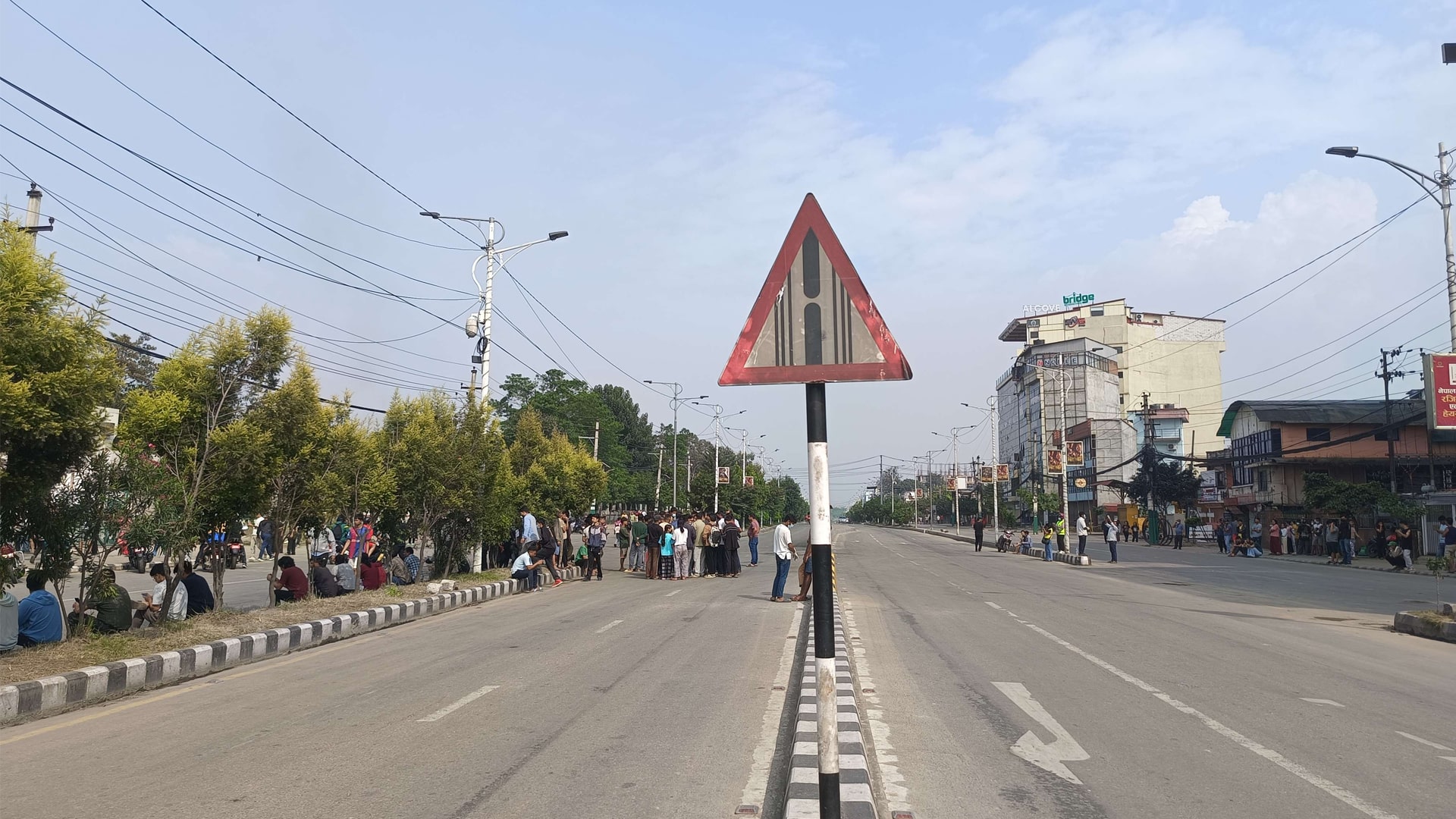
The World Bank has slashed Nepal’s growth forecast for the current fiscal year to 2.1%, down sharply from the 5.2% projection made in April 2025.
According to the World Bank’s latest South Asia Development Update, the recent unrest and heightened political and economic uncertainty is expected to cause growth to decline to 2.1% in fiscal year 2025/26, with a potential range of -1.5% to 2.6%.
The forecast reflects a potential sharp decline in international tourist arrivals, asset losses and impact on the insurance industry, weaker investor confidence impeding private investment and nonhydro construction and delayed rainfall in a major rice-producing province. The update released on Tuesday however does not appear to account for the heavy rainfall on 3rd and 4th October and its potential impact.
According to the bank, the recent protests reflect frustration with governance and deeper discontent over the lack of economic opportunities for Nepal’s youth.
While the full extent of the loss is still being assessed, the World Bank points to structural weaknesses limiting private enterprise—such as a complex and uncertain business environment, corruption, high trade and transport costs, and inadequate infrastructure. As a result, growth has been slower than peers, averaging 4.3% over FY12 to FY24 while job creation has been limited.
Youth unemployment hit 22.7% in FY23, among South Asia’s highest. Labor migration has surged, with remittances, equivalent to nearly 25% of GDP, supporting basic consumption.
Reconstruction efforts are expected to support the recovery in FY 26/27 and gain momentum in FY27/28, the bank says. Recovery depends on restoring investor confidence through governance reforms, trade openness, and better use of digital and human capital in the Artificial Intelligence era. Key priorities include regulatory reform, improved connectivity, labor mobility, and stronger social safety nets.
Read More Stories

NEPSE falls nearly 75 points as market sentiment wavers
The stock market was unable to maintain the gains seen on Tuesday, slipping...
India has begun its long-delayed population census. Here's why it matters
India has begun the worlds largest national population count, which could reshape welfare...

The United Nations has called on Israel to repeal a law passed by...


Business + Finance + Economy + Tech + Environment + Nepal & South Asia + In-depth Analysis + News + Investigation + Research + Expert Opinion + Anatomy of Complex Issues.