Party Manifesto | Political Agenda | HoR Election 2026 | JSP-N
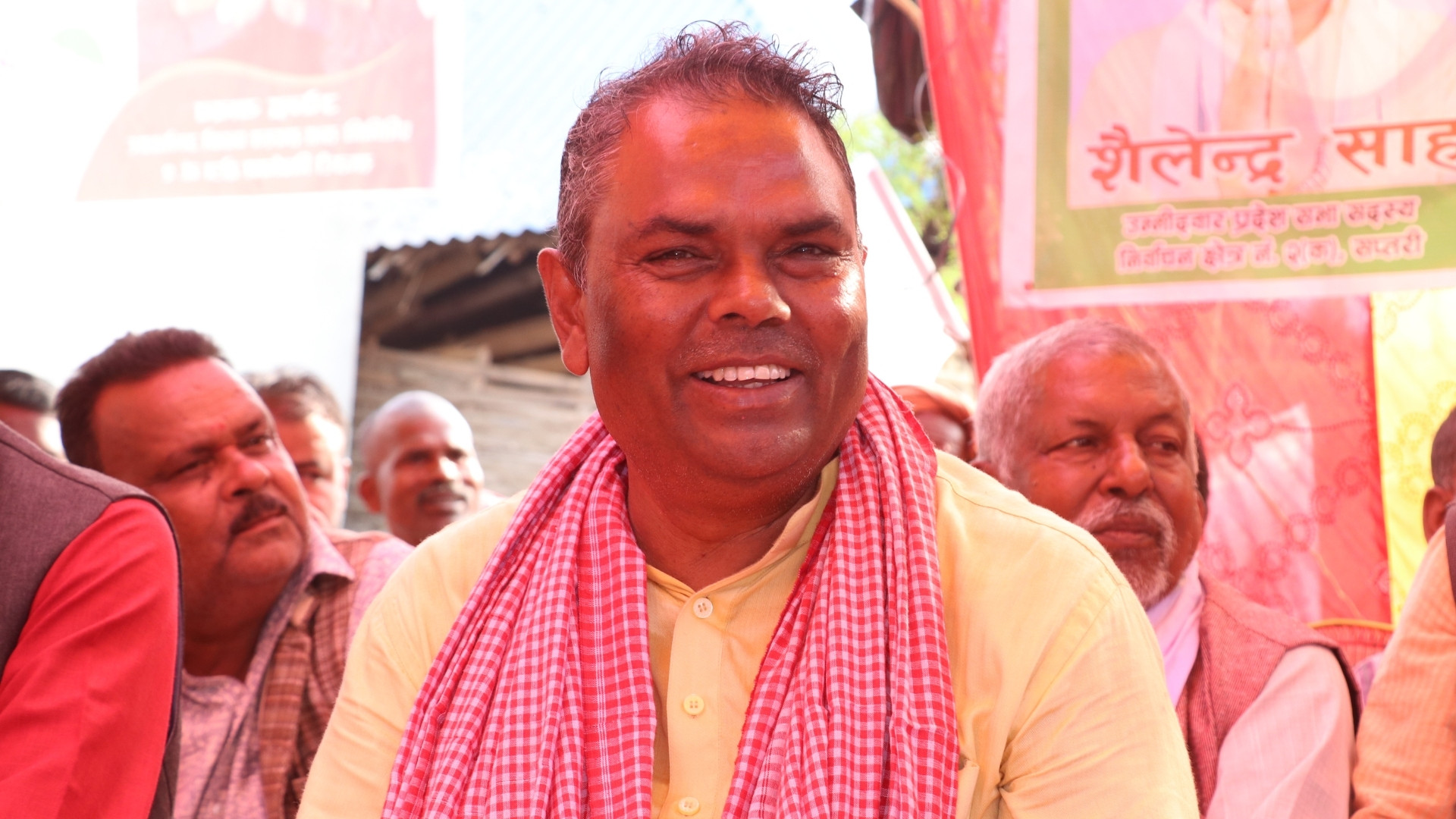
The Janata Samajwadi Party, Nepal (JSP-N) released its election manifesto on January 25. The document reiterates long-standing demands for constitutional overhaul, identity-based federal restructuring and proportional inclusion.
It also expands into areas such as climate change, social protection and local infrastructure. The manifesto comes as the party continues to reassess its political relevance after a poor showing in the 2022 federal and provincial elections.
The party is led by Upendra Yadav, a central figure in Madhes politics for more than two decades. Yadav rose to national prominence through the Madhes movements and has consistently positioned himself as a leading voice on federalism, inclusion and identity-based politics.
Once a kingmaker in the 2017 elections, JSP-N failed to convert coalition leverage into sustained electoral support. In 2022, the party lost ground amid internal splits, governance fatigue in the province and competition from newer political forces like CK Raut-led Janmat Party.
That record shapes how its latest promises are likely to be judged.
JSP-N traces its political lineage to the three Madhes movements that reshaped Nepal’s post-2006 political landscape. The first Madhes movement (2007) pushed the agenda of federalism, proportional representation and recognition of Madhesi identity.
The second, in 2008, intensified demands for autonomy and inclusion during constitution drafting. The third, during the drafting and promulgation of the 2015 constitution, protested the perceived exclusion of Madhes concerns.
These movements cemented Yadav’s role as a key negotiator between the state and Madhes-based forces. They also affirmed the ideological foundation for the party’s persistent focus on constitutional change and identity-based restructuring, which its manifesto reflects this election cycle.
A familiar roadmap in manifesto
The 27-point manifesto is anchored in the party’s ideological claims of freedom, equality, social justice, prosperity and socialism. It places constitutional change at the centre of its political vision.
The party calls for the amendment or rewriting of the constitution to resolve what it describes as national problems. It backs state restructuring based on the 2068 High-Level State Restructuring Commission report, which recommended a ‘10+1’ provincial model rooted in national and ethnic identity.
These demands closely mirror JSP-N manifestos from the 2017 and 2022 election cycles. They also reflect the unresolved agendas raised during the Madhes movements. What has changed is the party’s electoral strength.
From kingmaker to governance fatigue
In 2017, JSP-N and its predecessor formations emerged as decisive players in coalition politics. Through mergers and realignments of Madhes-based parties, the JSP-N became part of the federal ruling arrangement. It also secured leadership of the Madhesh provincial government, which it ran for a full term from 2017 to 2022.
The provincial government, however, faced repeated corruption allegations. Questions were raised over procurement, appointments and budget allocation. While the government enacted several laws pertaining to devolution of powers and rights and the needs of marginalised communities, execution remained weak, let alone service delivery under its jurisdiction.
The party was also perceived as favouring a particular caste and a narrow leadership circle. Critics argued that this perception contradicted its long-standing claim of representing all marginalised communities. Others pointed to weak internal democracy, frequent power struggles and an inability to manage provincial coalitions.
By the 2022 elections, voter disillusionment had grown. JSP-N’s organisational strength in Madhes weakened, and its electoral base fragmented.
Institutional reform without reflection
The manifesto reiterates demands for a directly elected executive president. It calls for proportional and inclusive representation in parliament.
It seeks population-based constituency delimitation. It proposes reserved constituencies for Dalits and women. It also calls for proportional representation in the National Assembly based on provincial population.
These proposals repeat earlier pledges. The document does not reflect on why similar commitments failed to gain public trust, even when the party controlled a provincial government for five years.
Youth, rights and social protection
The manifesto explicitly addresses ‘Gen Z’ and youth-led grievances. It promises job creation, startup capital, skills training and unemployment allowances until employment is secured.
It also commits to free and quality education, state responsibility for healthcare, scholarships for the poorest and technical training for marginalised Dalit and women communities. The party pledges social security for persons with physical and mental disabilities. It promises legal and social protection for sexual and gender minorities.
These commitments broaden the party’s social agenda. They also raise questions about implementation, given the party’s mixed record in governance.
Climate change and environment enter the agenda
The manifesto includes commitments on climate change and environmental protection. It calls for Chure conservation to prevent desertification in Terai-Madhes. It also pledges forest protection, green development and pollution control.
The party promises protection for communities affected by climate change. It commits to biodiversity conservation and environmental sustainability. These issues were less prominent in earlier JSP-N manifestos and reflect growing public concern over climate risks and disasters, particularly in the Tarai-Madhes region.
However, the document provides little detail on institutional responsibility, funding or coordination across federal, provincial and local levels.
Economic ambition, familiar gaps
On the economy, the manifesto blends socialist language with investment-friendly rhetoric. It promises scientific land-use planning, agricultural modernisation and commercialisation.
It commits to subsidised agricultural loans, irrigation, fertiliser supply and market access. It calls for industrial expansion through domestic and foreign investment. It proposes ration cards for the poorest households to manage inflation.
As in previous election cycles, the manifesto remains vague on financing, timelines and administrative capacity. These gaps echo criticisms faced by the party during its tenure in the Madhesh government.
Overall, the manifesto signals continuity rather than course correction. For a party that once shaped coalition politics and governed Madhesh for a full term, the absence of self-assessment is notable.
After the 2022 setback, voters may judge this manifesto less by its intent and more by whether JSP-N can explain why familiar promises should succeed now. The document does not clearly answer that question.
Read More Stories

NEPSE falls nearly 75 points as market sentiment wavers
The stock market was unable to maintain the gains seen on Tuesday, slipping...
India has begun its long-delayed population census. Here's why it matters
India has begun the worlds largest national population count, which could reshape welfare...

The United Nations has called on Israel to repeal a law passed by...


Business + Finance + Economy + Tech + Environment + Nepal & South Asia + In-depth Analysis + News + Investigation + Research + Expert Opinion + Anatomy of Complex Issues.