Party Manifesto | Political Agenda | HoR Election 2026 | CPN-UML
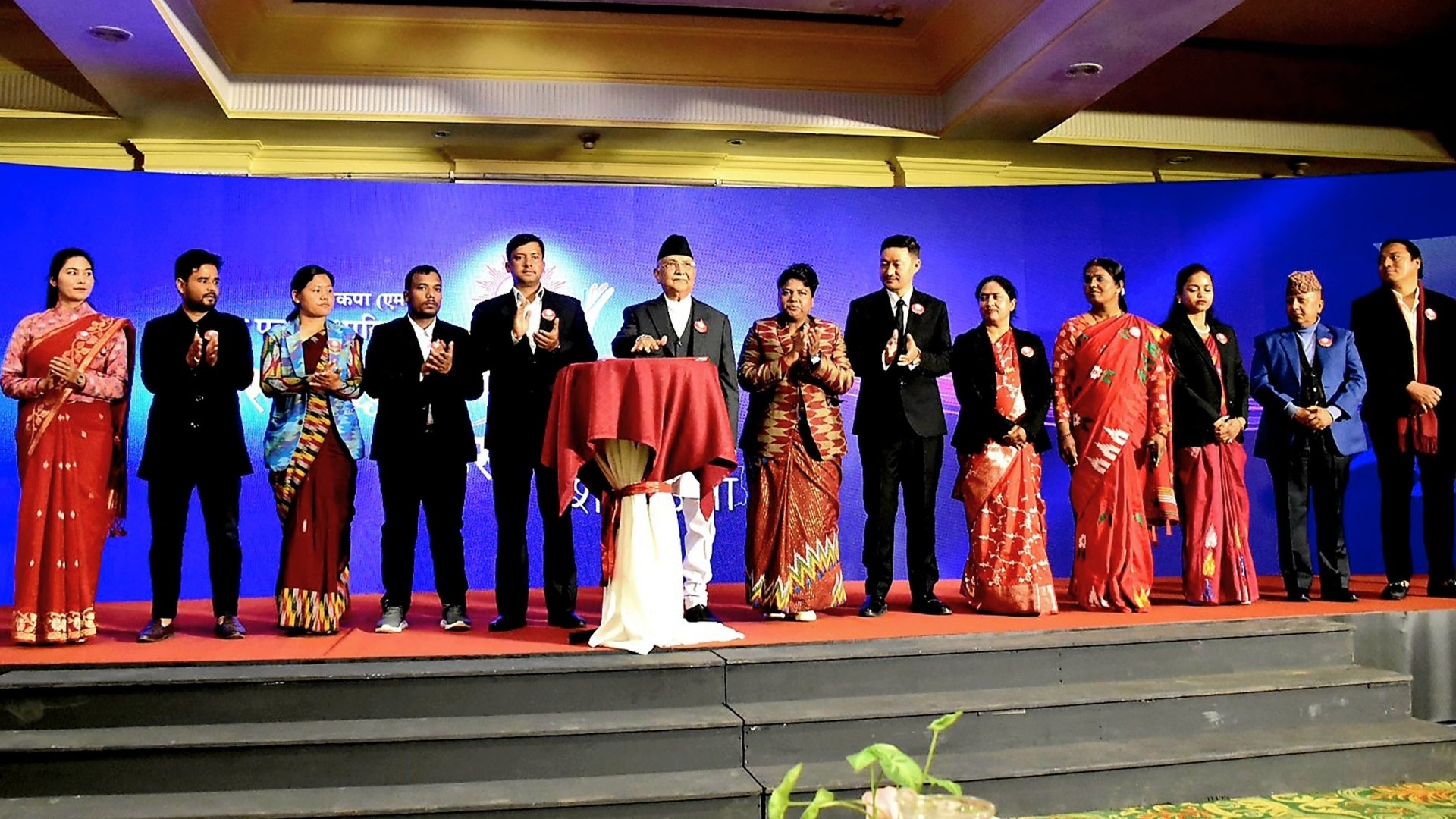
As Nepal approaches the March 5 general election, the CPN-UML has unveiled an expansive 2026 manifesto built around two pillars: a 25-point national transformation roadmap and 10 immediate decisions it says it will endorse in its very first Cabinet meeting.
Unlike many campaign documents heavy on rhetoric, this one is packed with numerical targets, timelines and policy instruments. It promises not only prosperity, but measurable delivery, from GDP expansion and export growth to irrigation coverage and social security enrollment.
NRs 20 trillion economy
At the core of the 25-point resolution is a dramatic macroeconomic projection: Nepal’s economy will grow to NRs 10 trillion within five years and NRs 20 trillion within ten, sustained by 7–9% annual growth. However, with the current GDP at NRs 6.1 trillion, the required rate for the next five years comes out to be at least 9.5%. The party promises a per capita income of $3,000 within five years, with extreme poverty eliminated through equitable development.
To achieve this, UML outlines sector-driven growth: modernisation of agriculture to release surplus labour into industry and services; expansion of hydropower and mineral extraction; promotion of IT exports; and accelerated infrastructure development.
Public debt, the party says, will be limited to productive priority projects. Inflation will be controlled, capital markets strengthened, and budget discipline enforced through legal penalties for delays and cost overruns. The party aims to shift Nepal from a remittance-dependent, import-heavy economy into a production- and export-oriented one.
500,000 jobs annually
The party pledges to create 500,000 jobs every year, of which 400,000 would come from “broader economic growth” and 100,000 through targeted programs, particularly in IT and innovation. UML promises a labour productivity growth of 7% annually to double labour income within five years.
To support this, UML proposes municipal labour desks to formalise informal employment and integrate workers into contributory social security. The party echoes decades-old narrative, presenting Nepal as a logistics bridge between India and China, turning its geographic constraints into a competitive advantage.
Export targets and industrial expansion
Exports are promised to double within three years and triple within five, supported by 24-hour customs operations and a national single-window trade system. Special Economic Zones will operate in each province, while the party also targets industrial contribution to GDP to rise to 20%.
The manifesto commits to the commercial production of domestic resources, including Dailekh gas and Dhaubadi iron ore. Industrial approvals would move to a digital one-stop service centre to reduce bureaucratic delays.
Agriculture and irrigation
Agriculture is framed as a structural pivot.
UML commits to expanding irrigation coverage to 75% of arable land within five years, adding 300,000 hectares of additional irrigation. Land banks, smart irrigation systems and targeted subsidies for staple and high-value crops are proposed. The party also seeks to develop Nepal as an organic production hub, reduce food imports, and ensure food security.
Water, housing and urban development
The party promises basic access to drinking water and sanitation to all households within two years; safe and quality water nationwide within five years. The document proposes using GIS mapping and smart monitoring systems in drinking water management to improve quality.
The party commits to affordable housing for landless and low-income citizens, financed through a new ‘Citizen Housing Fund’, supported by contributions from institutions such as the Employees Provident Fund, Citizen Investment Trust, Social Security Fund, as well as social organisations and private housing developers.
Education, health and digital governance
The party repeats the promise of gradually making education free and compulsory, with curriculum reform emphasising digital literacy and entrepreneurship, science parks and innovation centres.
On health, UML pledges universal, free and reliable basic healthcare, restructuring of the insurance system, and at least one MDGP doctor in each primary health centre.
Digital governance reform includes public services moving online, industrial approvals digitised, and a national satellite launched to ensure connectivity and administrative sovereignty.
Beyond long-term goals, UML says it will take 10 concrete decisions immediately upon forming government:
- Provide 10GB of free internet per month for one year to citizens aged 18–28. (For this programme, the government would need to spend more than NRs 20 billion.)
- Issue a $10,000 equivalent dollar card to youth and entrepreneurs for international digital transactions and startup activities.
- Deposit NRs 5,000 annually into the bank accounts of remittance-sending migrant workers while ensuring their social security continuity.
- Provide up to NRs 2 million in interest-free loans for technical higher education and guarantee paid internships.
- Ensure free sanitary pads for schoolgirls and midday meals for students up to Grade 10.
- Raise the minimum monthly wage to NRs 25,000 and extend social security to all workers.
- Integrate all teachers into contributory social protection and define a formal status hierarchy.
- Increase annual allowance for female community health volunteers to NRs 20,000 and include them in the social security fund.
- Provide up to NRs 2 million interest-free loans to women entrepreneurs, NRs 20,000 maternity nutrition allowance per birth, and NRs 500,000 life insurance coverage for pregnant women.
- Waive up to NRs 25,000 in loans for state-identified poor households and enrol them in social security.
Although these pledges are presented as immediate executive actions within a broader 10-year vision, the party’s repeated commitments in past election cycles, coupled with its governance record, suggest that the 2026 manifesto is largely a recycled blueprint.
Continuity across 2017, 2022 and 2026
Much of the 2026 manifesto echoes earlier election cycles.
The UML’s 2017 manifesto centred on prosperity, industrial growth and employment generation. The 2022 document reiterated structural reform, productivity gains and national development. Across three cycles, the language of economic transformation, job creation, welfare guarantees and governance reform has remained static.
What differs today is the scale of the numbers and the sharper emphasis on digitalisation and export competitiveness. The architecture of promises, however, is familiar.
Record and credibility
That continuity inevitably brings scrutiny to the party’s governance record. After the 2017 election, UML emerged as the largest force in the House of Representatives with 121 seats.
Following its merger with the Maoist Centre, the newly formed Nepal Communist Party held a majority capable of governing a full term, an uncommon opportunity for stability in the country’s fragmented politics.
Instead, internal factionalism and power consolidation dominated the period. Then Prime Minister and party chair KP Sharma Oli dissolved the House twice within months, moves that were overturned by the Supreme Court later. The episodes triggered constitutional crises and interrupted legislative continuity.
In 2022, UML’s seat share declined, placing it second in the House. Yet it remained central to coalition arithmetic, engaging in alliance formation and withdrawal that critics say reflected tactical manoeuvring rather than stable governance.
Ambition meets memory
The 2026 document stands at the intersection of ambition and institutional memory. Its economic projections are sweeping, as well as an emphasis on expanding social security nets. Looking at its announcements, it will have to spend big, but financing pathways are not fully elaborated
Its job targets are compelling, but productivity and administrative bottlenecks persist. Its governance reform promises speak to public frustration, yet past instability lingers in voters’ minds. Prosperity, industrial expansion, welfare guarantees and governance reform have been recurring themes for nearly a decade.
What remains uncertain is whether this election marks a recalibration shaped by past turbulence, or another reiteration of expansive commitments yet again mired by power struggles the party and, particularly, its chair, KP Sharma Oli, often lands in.
Read More Stories

NEPSE falls nearly 75 points as market sentiment wavers
The stock market was unable to maintain the gains seen on Tuesday, slipping...
India has begun its long-delayed population census. Here's why it matters
India has begun the worlds largest national population count, which could reshape welfare...
The United Nations has called on Israel to repeal a law passed by...


Business + Finance + Economy + Tech + Environment + Nepal & South Asia + In-depth Analysis + News + Investigation + Research + Expert Opinion + Anatomy of Complex Issues.