Politics | Good Governance | Anti Corruption | Democracy | Youth In Politics | Public Procurement
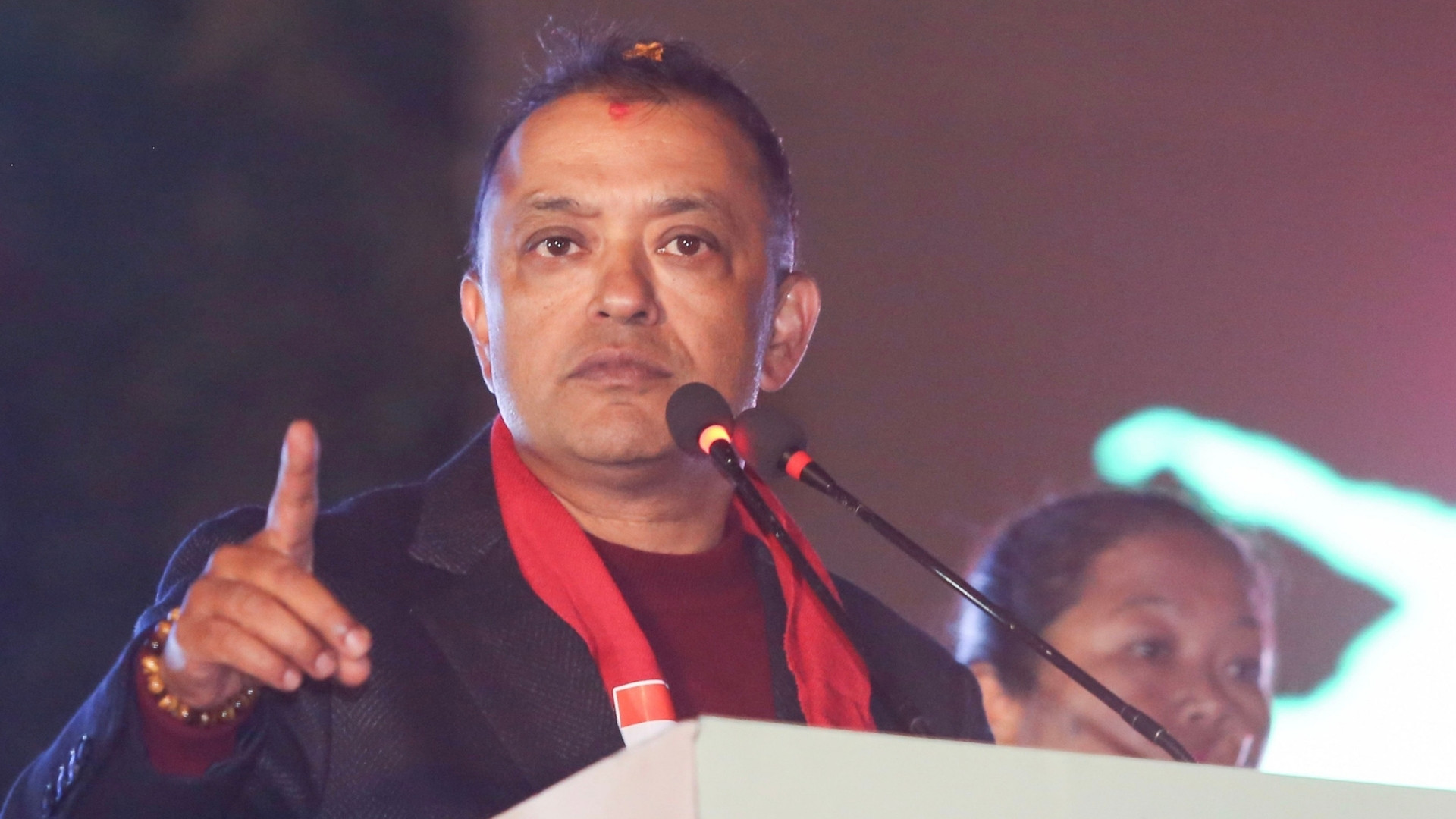
The Nepali Congress General Secretary has presented a 17-point political resolution during the closed session of the party’s Special General Convention on Monday.
The convention is largely seen as a revolt from the general-secretary duo, including Bishow Prakash Sharma against the party’s autocratic structures led by chairman and former Prime Minister Sher Bahadur Deuba along with other senior leaders including Krishna Prasad Situala, Bimalendra Nidhi, Prakash Man Singh, Gopal Man Shrestha, Shashank Koirala, Bijay Kumar Gachhadar and Prakash Man Singh. The move has drawn widespread attention and is expected to reinvigorate party members. While others see the move can split the party as the party establishment hasn’t endorsed the special general convention.
In Monday's closed session, general secretary Thapa has outlined its stance on the country’s current political situation, placing strong emphasis on youth discontent, governance reform, anti-corruption measures, and the protection of democratic values. The party presented the document as an exercise in self-reflection, appealing for forgiveness from the Nepali public and as a roadmap for democratic renewal.
Thapa’s resolution expresses serious concern over incidents of violence, repression, and alleged human rights violations during the events of September 8 and 9, calling for an independent and impartial investigation. The party stated that those responsible must be held legally accountable, concluding that public anger during the September events is a product of political, economic, social and governance failures.
Moving ahead, Thapa has proposed a two‑term limit for prime ministers, with the Nepali Congress taking the lead in pursuing the necessary constitutional amendments.
Thapa vowed that Nepali Congress will return to principle-driven politics, emphasising that it will not compromise on its core values, democratic ideals, or organisational integrity ahead of upcoming elections. The party emphasised that it will not form pre-election alliances based on opportunism or convenience, but will instead rely on its own mandate and voter support.
Thapa committed to depoliticise state mechanisms and focus on institutional reforms. For this his resolution proposes merit-based appointment of constitutional appointments for which he recommends cooling-off for a period of two years for politicians and bureaucrats.
The proposal seeks to reform public service delivery by introducing fixed timelines for service delivery with accountability, creating integrated digital or physical service platforms for essential services, and strengthening staff through training, fair pay, and capacity-building to ensure professionalism and integrity.
To fight endemic corruption in the country, Thapa proposes forming a high-level commission to investigate assets of all public officials since 2006, including former judges and military officials, while anyone assuming any level of public office must disclose assets.
In the report, Thapa pinpoints Nepal’s public procurement and contracting system as the major source of corruption. To overhaul it, all procurement processes will be digitised, transparent, and open to citizen monitoring, with mandatory public disclosure of contract details, costs, progress, and payments. Laws will be amended to legally recognise oversight by civil society, media, and communities, from local to central levels, proposes the report.
“All political settlements for constitutional bodies, universities, public enterprises, and service-providing organisations shall be ended and restructured to ensure professionalism, non-partisanship, merit-based selection and inclusivity,” the political document says.
Other measures include amendment of anti-corruption and civil service laws, depoliticisation of state institutions, including universities and schools and initiatives to address conflicts of interest. Agencies like the Commission for Investigation of Abuse of Authority (CIAA) and Auditor General will be made fully independent and modernised with technology and skilled investigators.
To strengthen internal party democracy and reform party structures, Thapa calls for elected leadership at all levels. Other key measures include primary-based candidate selection, one-time proportional representation to prevent repeated office-holding by the same individuals, and recognising long-term contributions of professionals and activists within the party through suitable lateral entry.
Additionally, Thapa proposes reforms to make elections more inclusive, transparent, and accountable. Key measures include reserved constituencies with single-rotation implementation, Right to Reject (No Vote), voting rights for Nepalis abroad, primary-based candidate selection, and transparent public funding for parties tied to vote weight.
Addressing the rising populism and anarchism in the country, Thapa calls on the public to remain vigilant to protect democracy and the Constitution.
Read More Stories

NEPSE falls nearly 75 points as market sentiment wavers
The stock market was unable to maintain the gains seen on Tuesday, slipping...

India has begun its long-delayed population census. Here's why it matters
India has begun the worlds largest national population count, which could reshape welfare...
The United Nations has called on Israel to repeal a law passed by...


Business + Finance + Economy + Tech + Environment + Nepal & South Asia + In-depth Analysis + News + Investigation + Research + Expert Opinion + Anatomy of Complex Issues.