Hello, and welcome.
Thank you for joining us in our first edition of Wednesdays, our thoughtfully curated newsletter series. We are delighted to have you with us on this new journey!
In this inaugural edition, we take a closer look at the institutions that shape everyday life in Nepal—from classrooms to fertility clinic regulations and IVF and its dark sides to labour lines.
Nepal is facing important questions about schools, education, governance, fairness, and the scale of its foreign employment migration. Our inaugural edition touches on these issues.
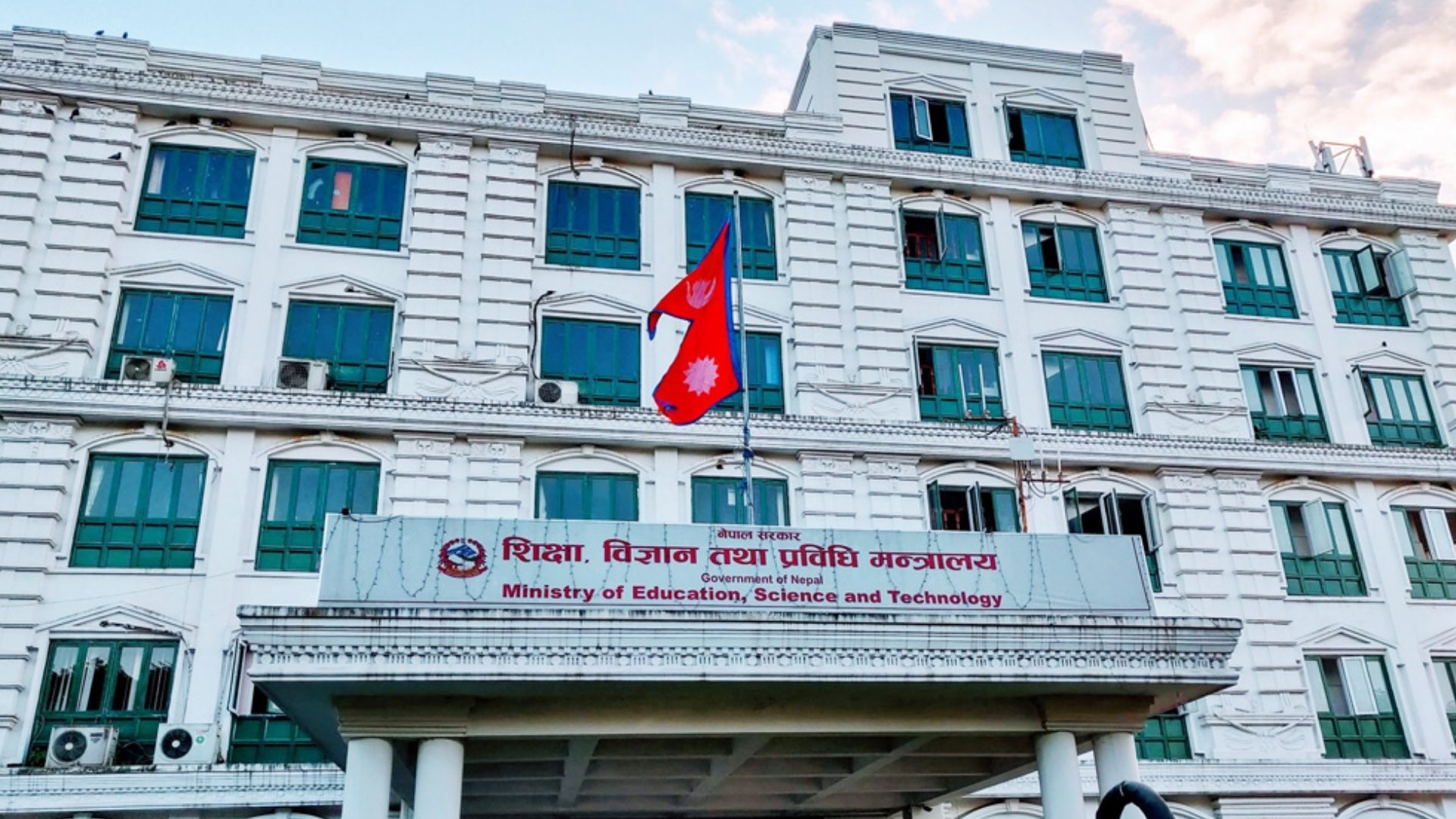
Our Deep Dive this week explores classroom reforms and the ongoing power struggle in Nepal's schools, as the long-awaited School Education Bill 2025 sparks nationwide protests, policy confusion, and questions of equity and control.

Also in this issue: Nepal’s regulatory push in its fertility-care and a disturbing scandal that followed; a controversial policy amendment; and a striking look at the scale of migration trend.
Deep Dive: Who holds the power in Nepal’s classrooms?
As the School Education Bill 2025 moves through the Parliament, unresolved disputes over teacher management and scholarship mandates highlight the delicate balance between reform, equity, and federal authority.
A city brought to a halt
On April 2, thousands of teachers poured into Kathmandu, waving placards and chanting slogans that echoed through the capital’s streets. By mid-April, rallies had almost shut the city down, postponed Grade 12 exams nationwide, and forced the resignation of Education Minister Bidya Bhattarai. Clashes near Singha Durbar left dozens injured.
It was one of the largest teacher movements in Nepal’s history—and it erupted over a law meant to reshape classrooms.
What the bill promises
The School Education Bill, spanning more than 170 clauses, is pitched as a complete overhaul. It aims to align schools with federalism and correct decades of inequity.
Public school reforms: Basic education begins with a two-year early child development and education program and ends at Grade 8; secondary runs through Grade 12. Exam authority is split between local (Grade 8), provincial (Grade 10), and national (Grade 12) governments. Principals are to be appointed through competitions.
Teachers must declare property annually, face new promotion standards, and navigate revised pensions. Local governments gain the power to merge or close schools based on enrollment and proximity between two schools. Additionally, teachers are restricted from engaging in any form of political activity, including becoming members of political parties or their affiliates or even participating in elections (although this also limits their fundamental political rights).
The bill sets aside funds for students from marginalised communities, including Dalit, Janajati, Madhesi, rural and deprived regions. Teachers and employees in public schools who are not eligible for retirement benefits, and those in private schools, must enrol in the social security fund, a contribution-based social protection scheme.
Private sector changes: Schools must offer full scholarships, including tuition, uniforms, meals, and books, to 10 to 15% of the total student population. Institutional schools are presently encouraged to convert into non-profit trusts, but a separate clause states that they will be gradually turned into non-profit trusts.
Private schools are required to set fees in accordance with a national standard, which will be enacted later. Their teachers and staff must receive services and benefits as per regulations approved by the local government, and these must meet or exceed the minimum salary and benefits established under existing law.
Additionally, if private schools restructure as a public trust, they are eligible for incentives, including exemptions on land registration fees, customs duties on vehicles for school use, educational and laboratory materials, and any other tax, tariff, duty, fee, or charge under prevailing laws.
Public duty, private burden
Nepal recognised education as a state responsibility after the fall of the Rana regime in 1951, expanding access beyond elites. The 1971 Education Act formalised state oversight, allowing private schools under regulation. The 1990 Constitution made education a fundamental right, cementing the government’s duty to provide free basic education. Subsequent provisions in the 2007 interim constitution and the prevailing constitution reinforced this principle to ensure equitable access for all.
Yet, decades later, this promise remains largely unfulfilled. The state should have ensured that education costs remain low, but rising fees and avoidable charges—foreign tour packages, bus rentals, extra activity fees, lab material surcharges—keep quality education out of reach for many families.
While Nepal has achieved a high net enrollment rate of 96.9% at the primary level (Grades 1–5) and 92.7% at the basic level (Grades 1–8), the sharp decline to 46.4% at the secondary level (Grades 9–12) signals a troubling drop-off. This indicates that a significant number of students are not continuing their education beyond Grade 8, underscoring growing challenges in sustaining enrollment through to higher grades. Financial constraints are definitely a major barrier, which makes equitable and affordable access to school education unlikely anytime soon.
Meanwhile, under the Education Bill, private schools restructuring as public trusts receive incentives such as exemptions on land registration fees, customs duties on vehicles, educational and lab materials, and other taxes or charges. While well-intentioned, these measures underscore a tension: the state rewards private restructuring but fails to make existing private structures genuinely affordable for the majority of students.
Teachers revolt
For public-school teachers, the flashpoint was survival. The bill transferred recruitment and management to local governments—something unions feared would open the door to politicised interference and favouritism.
On April 30, after weeks of strikes that paralysed classrooms, newly appointed Education Minister Raghuji Pant struck a nine-point deal with the Nepal Teachers’ Federation (NTF). It promised salary parity with civil servants, new healthcare benefits, allowances for remote postings, recognition for early childhood facilitators, and a commitment to pass the bill by mid-June.
Teachers returned to classrooms. Exams resumed. But mistrust lingered.
A fragile truce
By July, unions accused the government of stalling—watering down commitments on promotions, retirement options, and the ratio for converting temporary teachers into permanent staff. When the House of Representatives’ Education, Health and Information Technology Committee advanced an amended bill in August, many grievances remained unresolved. The NTF again threatened to take to the streets.
Private pushback
Meanwhile, private schools mobilised. From August, associations such as PABSON, N-PABSON, and HISSAN staged marches and black-flag rallies outside the Parliament. They branded the scholarship mandate financially unsustainable and the trust requirement a death knell for private investment.
What teachers saw as a battle for professional dignity, school owners painted as a fight for survival.
The road ahead
At its core, the Education Bill is about fairness, accountability, and aligning a fragmented system with federalism. But its rollout has exposed a deep trust deficit between the state and the people who run its classrooms.
Teachers in public schools fear political capture. Private schools fear financial ruin. Parents and students are left to endure closures, uncertainty, and disrupted exams.
Parliament now faces three unresolved flashpoints:
Until those questions are answered, education policy in Nepal will remain less about teaching children—and more about how a young federal republic decides to balance power, equity, and identity.
And… what do you think?
Can the state provide comprehensive education across the country without relying on private investment, even as people—especially in urban centres—can afford to pay? At the same time, the national fee standard mentioned in the bill must prevent private schools from imposing unnecessary or avoidable charges.
Quick takes: What matters this issue
Nepal’s new dawn in fertility care
On August 17, 2025, the Ministry of Health and Population approved the Guidelines for the Operation of Infertility Management Services, 2025, aiming to bring structure to a previously unregulated market.
These sweeping regulations mandate that all infertility centres, including those offering In Vitro Fertilisation (IVF) and Intrauterine Insemination (IUI), must obtain Ministry approval, employ qualified specialists, and meet stringent infrastructure and laboratory standards. Fees are now to be regulated by the Ministry, and clinics must provide 10% of services free to low-income patients. Donor protocols have been tightened, with age limits (20–35), infectious-disease screenings, spousal consent, donation caps, confidentiality, and a ban on coercion or financial inducement.
Until now, costs varied sharply. Government hospitals charged around NRs 100,000 per cycle, while private clinics billed anywhere from NRs 300,000 to as much as NRs 1 million per cycle. These disparities often trap families in catastrophic health expenses.
The timing is poignant. Nepal’s total fertility rate fell to 1.94 children per woman in 2021, well below the replacement threshold of 2.1. As couples delay childbirth or migrate, the demand for assisted reproductive technologies (ART) grows steadily.
With 12 officially licensed fertility centres—seven in Kathmandu—and many more awaiting approval, the new framework promises greater accountability, transparency, and ethical care. While the specific standardised fees are yet to be published, this regulatory milestone signals more than oversight—it marks the beginning of a more equitable and hopeful path to parenthood. However, there’s a dark underbelly in the fertility care industry.
Illegal egg trade exposes IVF’s dark side
Just as Nepal began charting a more transparent path for fertility care, a scandal laid bare the industry’s dangerous underbelly. In mid-July 2025, reports emerged that Hope Fertility and Diagnostic in Babarmahal and another clinic were harvesting eggs from underage girls, paying them a pittance (NRs 10,000–15,000) while charging clients up to NRs 2 million per IVF cycle.
The Central Investigation Bureau (CIB) confirmed that teenage donors underwent hormone injections for roughly 10 days, followed by surgical egg retrieval—often without proper consent or legal oversight. Although several clinic staff members and middlemen were detained, they were released on bail due to the lack of clear legislation regarding egg donation in Nepal.
Then, on August 19, mere days after the government approved the new infertility guidelines, the Supreme Court, led by Justice Tek Prasad Dhungana, issued an interim order banning the extraction and storage of women’s—and underage—eggs, and directing strict regulation of fertility clinics.
This unfolding saga underscores the stark double-edged sword of Nepal’s IVF boom. Positive regulatory momentum now confronts the shadow side of weak oversight—exploitation of minors in pursuit of profit. While the guidelines promise ethical rigour and access, the scandal serves as a potent reminder: regulations must translate into enforcement to shield the vulnerable.
Polygamy amendment: Pulled back, but questions linger
Polygamy has resurfaced in public debate after Setopati, in one of its news reports, claimed Lekh Jung Thapa, Rastriya Swatantra Party’s Rupandehi-3 bypoll candidate, of a second marriage without divorcing the first. While Thapa has made a rebuttal, disclosing the divorce document with his first wife publicly, the broader issue connects directly to a recent, controversial proposal by the federal Law Ministry.
The ministry recently proposed amending Section 175 of the Criminal Code, allowing legal recognition to a second marriage if the woman gets pregnant or a child is born. It had kept polygamy a crime, though. After widespread backlash, the draft has been withdrawn for further cabinet review, but the debate it sparked raises enduring questions about law, incentives, and the protection of women and children.
The draft sought to equalise liability for women, compensate deceived spouses, and validate second marriages based on pregnancy. While parity and compensation are defensible, the pregnancy trigger drew heavy criticism. Critics warned it could reward criminal behaviour, encourage coercion, erode deterrence, and harm first wives.
Globally, polygyny correlates with higher anxiety, stress, loneliness, and social isolation among first wives. Normalising a legal foothold for the second marriage would likely amplify these harms, while trapping many second women in criminally tainted unions.
Legal scholars propose a clearer path:
This approach protects children and second partners without granting offenders a legal upgrade or undermining first wives’ rights. Nepal’s equality guarantees and CEDAW obligations make the pregnancy-based validation hard to justify.
The withdrawal offers a pause to recalibrate: parity and compensation remain constructive, but the pregnancy/childbirth trigger is flawed, normatively perverse, and likely to worsen harms. The rational legislative path is clear: maintain the ban, enforce support, and uphold constitutional equality—protecting women and children without legitimising criminal behaviour.
Over 100,000 Nepalis apply for just 5,300 South Korean work permits
In a striking display of economic duress, over 103,000 Nepali youth submitted applications for South Korea’s Employment Permit System (EPS) in mid‑August, even as the country offers just 5,300 slots this year—3,500 in manufacturing and 1,800 in agriculture and livestock. The EPS exam period from August 11 to 16 witnessed this unprecedented surge, with exam schedules spread across five daily shifts.
In December 2023, two Korean job aspirants succumbed to their injuries after police crackdown on EPS-related protests following a group of unqualified applicants attempting to forcibly enter the EPS exam centre.
This overwhelming response spotlights pressing socio-economic challenges at home. Nepal’s overall unemployment rate stood at 10.7% in 2024, while youth unemployment topped 20.8%. The lack of viable jobs is pushing young Nepalis to look abroad in large numbers.
Last fiscal year, 14,225 Nepalis left for work in South Korea, including 489 reentries. Overall, approvals were granted for 505,957 first-time foreign employment workers and 333,309 re-entries. The figure doesn’t include the number of Nepali students emigrating.
The hidden cost: Lost productive hours
Over 100,000 submissions mean each applicant spent time searching for jobs, preparing for exams, and handling complicated applications. Assuming each person spent about at least 20 hours on this, that adds up to over two million hours lost—potentially diverted away from local economic contributions. This shows how important it is to create more jobs in Nepal and streamline employment support.
On this note, we thank you for reading our first issue of Wednesdays. Stay informed. Subscribe. Share.
Editor’s Note: Wednesdays is produced with research support from Farsight Impact, under editorial guidelines and oversight of the_farsight.
Read More Stories

NEPSE falls nearly 75 points as market sentiment wavers
The stock market was unable to maintain the gains seen on Tuesday, slipping...

India has begun its long-delayed population census. Here's why it matters
India has begun the worlds largest national population count, which could reshape welfare...
The United Nations has called on Israel to repeal a law passed by...


Business + Finance + Economy + Tech + Environment + Nepal & South Asia + In-depth Analysis + News + Investigation + Research + Expert Opinion + Anatomy of Complex Issues.