Hello, and welcome back.
This week’s Wednesdays reaches you on a Friday—a brief detour forced by last week’s turbulence. We’ll be back to our midweek rhythm soon.
Nepal’s politics takes the spotlight. After days of violent unrest, the Prime Minister’s resignation and escape, the dissolution of the House of Representatives, and the formation of an interim government have pushed the nation into uncharted territory.
With fresh elections for the lower house scheduled for March 5, 2026, the country is now gripped by urgent debates:
There are calls for immediate constitutional amendments through ordinances, if required, to pave the way to meet the emerging demands. However, these demands are not only disorganised, but also impulsive, lack sufficient legal basis and constitutional awareness.
Beyond the immediate crisis, we also revisit Nepal’s constitutional journey, the staggering financial cost of elections, and the deep frustration that continues to feed demands for new systems.
Our Deep Dive this week examines the cost of democracy—financially, politically, and constitutionally—as Nepal grapples with elections under extraordinary uncertainty.
Deep Dive: Election, costs and constitution
Elections are critical to understand a fresh public mandate, but they are also costly. It’s well known that conducting elections requires a tremendous amount of budget.
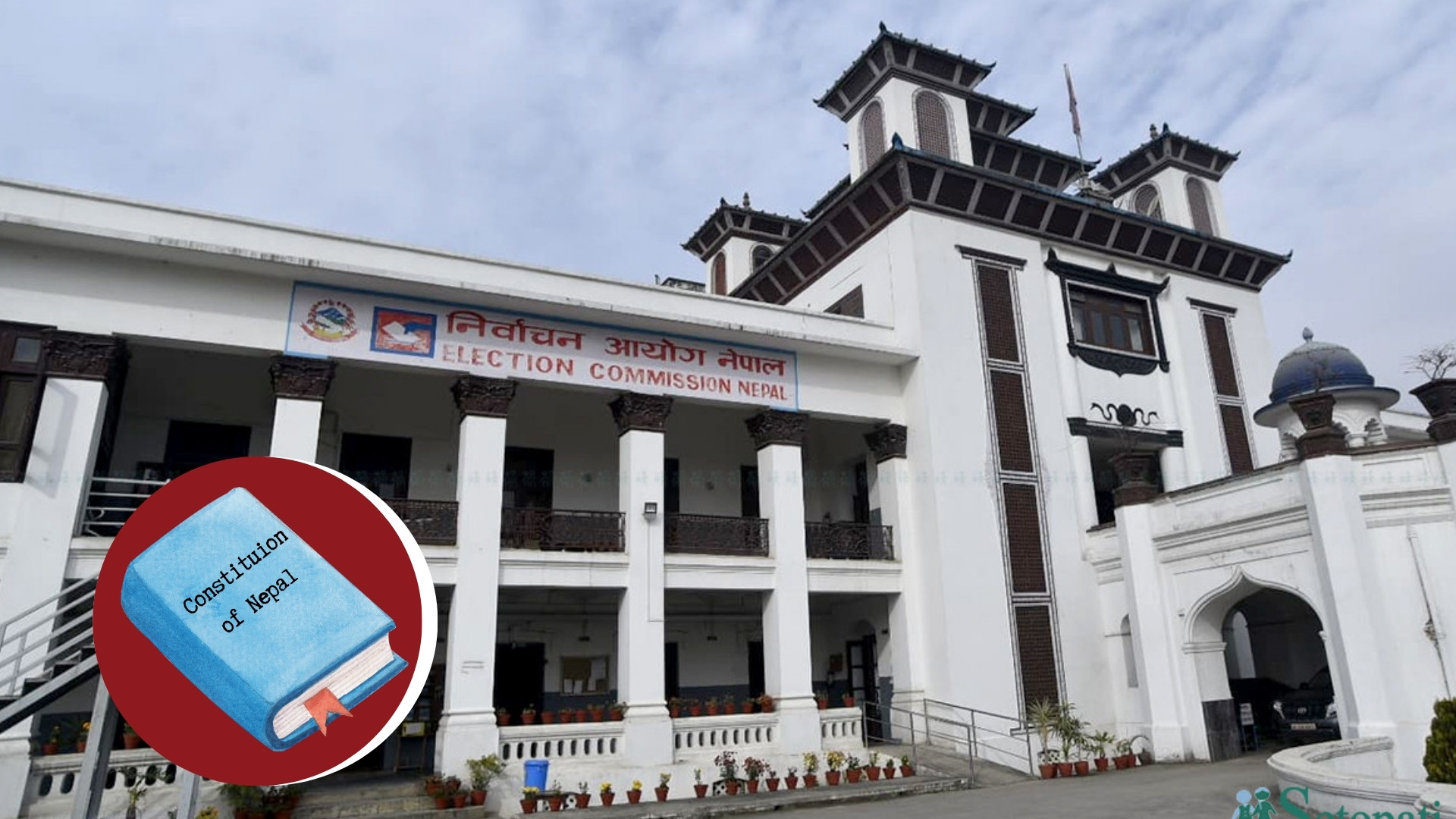
In 2017, the Election Commission of Nepal (ECN) spent a total of NRs 7.76 billion for the lower house and provincial assembly elections, which were held in two immediate phases: 26 November and 7 December. Additional spending was incurred for the election of the President, Deputy President and National Assembly, along with operating costs of the ECN totalling NRs 120.2 million.
The 2022 elections were conducted at a relatively lower cost, with NRs 6.67 billion spent on the lower house and Provincial elections held on November 22, 2022, despite an allocation of NRs 8.5 billion. It’s noteworthy, the commission managed to reduce costs by 14% over five years for these elections compared to 2017. Additional costs amounted to almost NRs 100 million in 2022.
The exact budget requirement for the upcoming elections in March is expected to be announced in the coming days. While estimating costs remains challenging, overall election expenses are likely to rise significantly with two major elections now set to occur just two years apart—unlike before, when elections were held in quick succession. The country will now be in election mode more frequently, potentially affecting governance and long-term policy focus.
These figures and challenges highlight the potential of adopting digital polling as a more cost-efficient alternative. But how quickly such a system could be implemented across the country, given infrastructure and logistical limitations and whether voters will be able to adopt the new technology remains a challenge. The country will perhaps have to wait until the assembly elections to pilot this approach.
Campaign expenditures, hidden costs, and economic implications
In the past, high levels of election campaign expenditures have often raised concerns about the influence of money in elections and politics. Research shows that winning parliamentary candidates in 2017 spent an average of NRs 21.3 million, far above the legal ceiling of NRs 2.5 million. According to the ECN’s official website, during the 2022 HoR and Provincial Assembly elections, more than 1,000 candidates failed to submit their expenditure details. Such excessive electoral spending risks diversion of resources from critical priorities like health and education.
With the announcement of a fresh election in March amidst the decline of traditional political parties, peak uncertainty, new political agendas in sight, and a high probability of the emergence of new parties, there is a high chance that money will flow this election, too. A greater concern is the potential for deeper political polarisation. Add the influence of social media to the mix, and the challenges multiply. All this will place intense pressure on the ECN and the interim government to manage unchecked campaign expenditures as well as law and order.
Amid concerns for high election expenditure, it is important to point out that the local level elections in 2017 had one of the highest levels of voter-spending wastage globally. Total spending per voter was NRs 4,923 (including polls and campaigns), where 17% of votes cast were invalid, according to the Election Observation Committee. An estimated NRs 11.42 billion effectively went to waste as a result.
From Constituent Assemblies to the 2015 Constitution
The demand for a directly elected Prime Minister is not new, but recent events have intensified its momentum. Alongside this, several other demands have surfaced—many of which lack a constitutional basis. While some people argue that the burning of institutions such as the Federal Parliament building, the Supreme Court, Singha Durbar, and the President’s Office calls into question the legitimacy of the prevailing constitution.
Perhaps now is the best time to pause and reflect on Nepal’s constitutional journey so far.
After the Maoists finally entered mainstream politics in 2006, after a decade-long People’s War, Nepal began its long march to writing its new constitution. On April 10, 2008, it elected its first Constituent Assembly, consisting of 601 members tasked with writing the new constitution. The election alone came at a heavy financial cost of around NRs 7.6 billion. After four years of political deadlock, the CA was dissolved without completing its task.
An interim government led by incumbent Chief Justice Khil Raj Regmi then oversaw the election of the second Constituent Assembly on November 19, 2013, which again elected 601 members. The election cost then was about NRs 11.25 billion. The deadline was January 22, 2015. But failure to meet consensus delayed it.
A deadly earthquake devastated the country on April 25 and May 12, killing over 9,000 people. In the midst of relief and recovery, the constitution-writing process suddenly gained momentum and was in many ways also rushed.
On June 8, 2015, four major parties—Nepali Congress, CPN-UML, UCPN (Maoist) and Madhesi Janadhikar Forum-Loktantrik—signed a 16-point agreement. This was followed by a preliminary draft on June 30, public feedback on July 20–21, and the Constitution Bill on August 23.
On September 20, 2015, the country got a new constitution after prolonged uncertainty, political infighting, economic disruptions and corruption and widespread public frustration. But it was also born amid a lack of consensus. Madhesi and Tharu population of the country protested against the new federal boundaries, marking of electoral constituencies, and citizenship provisions, among others. Violent clashes in the southern plains marked the final days of drafting, showing that the new constitution written by an elected body had left behind anger and division. Others were unhappy with secularism, federalism and the overthrow of the monarchy, which are significantly present in the country’s political discourse.
For people, this entire episode led to mental exhaustion, anger, and frustration—feeding today’s growing debates about constitutional change and the demand for new systems.
The next step towards institutionalising this constitution was holding elections and enacting laws. After all, the constitution is a mere guiding and binding legal framework that outlines the fundamental rights, duties, and structure of a country’s government. But doubts remained about the way the constitution was drafted, along with dissatisfaction over the heavy financial costs, and whether it genuinely represented everyone. Many even questioned if elections would be held.
In 2017, Nepal held its first three-tier of elections, giving shape to federalism, and another in 2022. But enacting required laws, ensuring effective governance, truly realising federalism and expanding economic opportunities remained elusive.
Democracy is a long, daunting process, and elections are essential for institutionalising both the constitution and democratic practices. The country has been on the same path. Its experience so far shows that drafting the constitution and conducting polls were not just political exercises or fiscal burdens. It embodied the sweat, suffering, patience and hope of generations who, for better or worse, waited and believed.
What is clear, at the moment, is that Nepal faces tough challenges ahead, both politically and financially. But it’s not something entirely new in the country’s recent history. A generation has endured the trial. Deep down, the nation understands well enough that there’s no magical wand to immediately overcome the current transitional challenges.
And now, is a directly elected PM possible?
Within the current constitutional framework, directly electing the prime minister is impossible without amendment. The constitution envisions a parliamentary system and recognises the principle of multi-party democracy.
For a directly elected PM, a structural change in the constitution will be required. A mere addition of a clause through ordinance that says “the executive head of the country will now be decided through direct election” will not suffice—such an ordinance through an interim government will also lack democratic legitimacy and be unconstitutional and illegal. For any constitutional amendment, a two-thirds majority in both upper and lower houses will be required. At present, however, the lower house stands dissolved and the National Assembly session prorogued.
Meanwhile, the interim government is weighing an ordinance to amend the Voters’ Registration Act, 2017, as the current provision bars registering new voters for the same election once the polls have been announced. Calls are growing to enable voter registration and polling arrangements for eligible Nepalis abroad, too.
And… what do you think?
Is Nepal’s future better served by strengthening its parliamentary democracy—or reimagining it through a directly elected executive?
What weighs more heavily right now—political stability, fiscal prudence, or constitutional reform?
On this note, we thank you for reading our second issue of Wednesdays—on a Friday. We’ll be back to our midweek rhythm soon. Stay informed. Subscribe. Share.
Editor’s Note: Farsight Impact produces Wednesdays under editorial guidelines and oversight of the_farsight.
Read More Stories

NEPSE falls nearly 75 points as market sentiment wavers
The stock market was unable to maintain the gains seen on Tuesday, slipping...
India has begun its long-delayed population census. Here's why it matters
India has begun the worlds largest national population count, which could reshape welfare...
The United Nations has called on Israel to repeal a law passed by...


Business + Finance + Economy + Tech + Environment + Nepal & South Asia + In-depth Analysis + News + Investigation + Research + Expert Opinion + Anatomy of Complex Issues.