Warming Oceans | Cyclones Ditwah & Senyar | Disaster in Sri Lanka & Malacca Strait
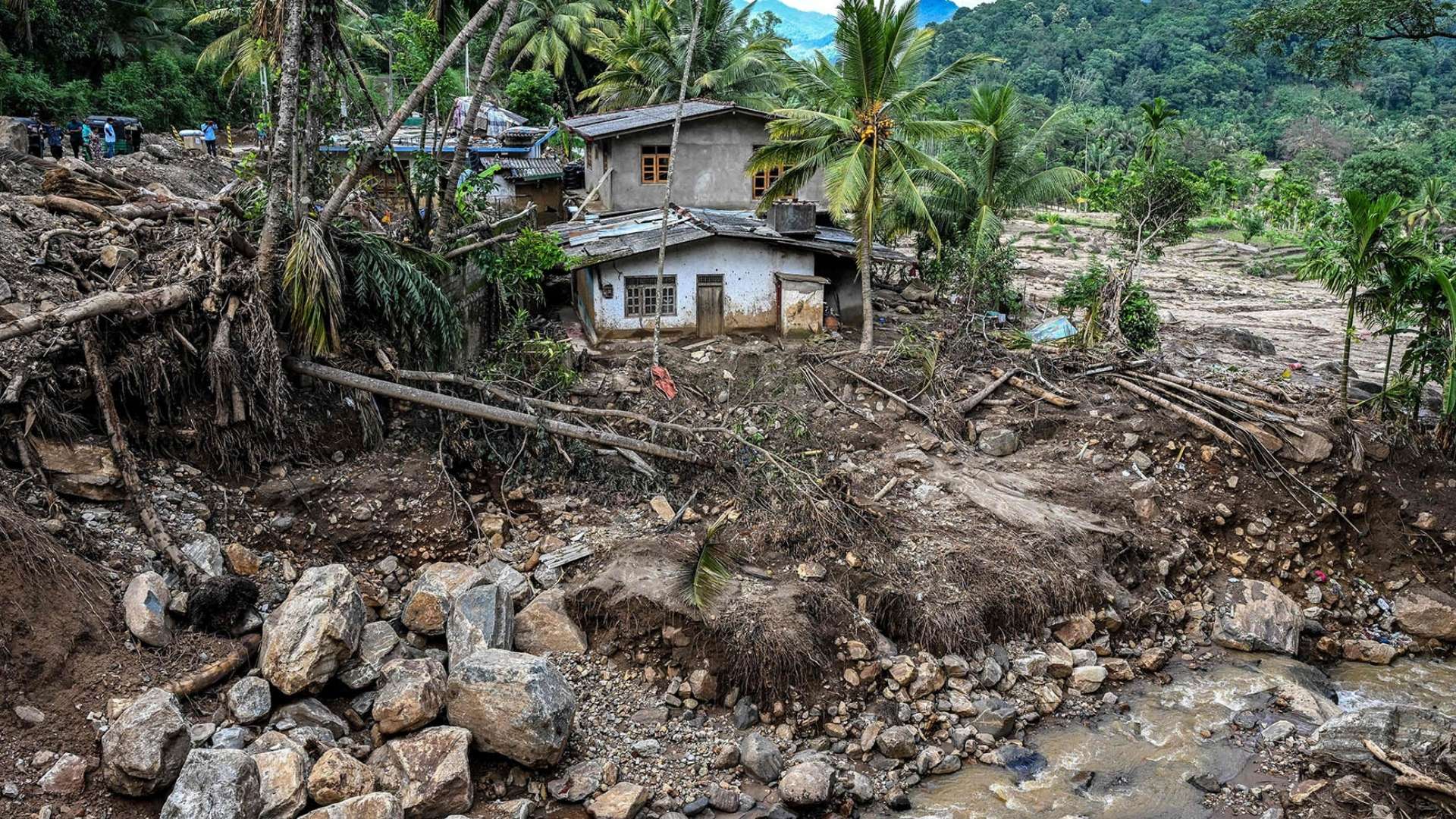
Human-induced global warming has significantly intensified extreme rainfall in South and Southeast Asia, making storms like Cyclone Ditwah in Sri Lanka and Cyclone Senyar over the Malacca Strait far more destructive than they would have been in a cooler climate, according to a study by World Weather Attribution (WWA).
World Weather Attribution (WWA) is an international network of climate scientists that rapidly analyses extreme weather events, using weather observations and computer modelling, to assess whether and how human-caused climate change influenced their intensity or likelihood.
In late November, Cyclonic Storm Ditwah triggered widespread flooding and landslides in Sri Lanka, claiming at least 643 lives. Across the Malacca Strait region, severe flooding affected parts of Indonesia, Malaysia, and Thailand.
In Indonesia’s several Sumatra provinces, 1,059 deaths have been reported. Southern Thailand experienced widespread flooding with hundreds of fatalities, and Malaysia reported significant displacement in multiple states.
Based on observational data, the WWA study finds that heavy five-day rainfall events are now about 28–160% more intense in Sri Lanka and 9–50% more intense in the Malacca Strait region than they would have been without the warming observed to date.
Malacca Strait A vital shipping corridor in Southeast Asia that links the Indian Ocean and the Pacific Ocean. It lies between the Malay Peninsula to the northeast and Indonesia’s Sumatra Island to the southwest.
The WWA analysis also estimates that the rainfall associated with Ditwah corresponds to roughly a 1-in-30-year event in Sri Lanka’s current climate, meaning such rainfall has about a 3% chance of occurring in any given year.
In the Malacca Strait region, the rainfall linked to Senyar is estimated to be a 1-in-70-year event, or about a 1–2% annual probability. The study notes that local return periods may be higher in some areas.
Sea surface temperatures (SSTs) in the North Indian Ocean were observed to be about 0.2 degrees Celsius higher than the 1991–2020 average, the study notes. This additional warming increased the energy available for tropical storm development and enhanced evaporation, contributing to the extreme rainfall associated with the cyclones.
According to the analysis, without the long-term warming linked to the roughly 1.3 degrees Celsius rise in global temperatures to date, SSTs would have been about 1 degrees Celsius cooler and below the 1991–2020 normal, reducing the moisture available to fuel such intense rainfall.
In addition to long-term warming, the study finds that natural climate variability played a secondary role.
In the Malacca Strait region, La Niña conditions and a negative Indian Ocean Dipole (IOD), both of which tend to enhance rainfall, are estimated to have contributed around 5–13% to the observed rainfall intensity.
However, WWA concludes that global warming is the primary driver of the increased severity of extreme rainfall.
La Niña: A climate phenomenon in the tropical Pacific Ocean characterised by unusually cool sea surface temperatures, which can alter global weather patterns. In Southeast Asia, La Niña often brings heavier-than-normal rainfall, increasing the risk of floods. Negative Indian Ocean Dipole (IOD): A climate pattern in the Indian Ocean where eastern Indian Ocean waters are warmer than the western side. A negative IOD enhances rainfall over Southeast Asia, contributing to extreme precipitation and flood events.
To assess the role of climate change, researchers examined trends in observed extreme rainfall alongside high-resolution climate models.
While observational datasets consistently show an increase in rainfall intensity in both regions, the study notes that climate models do not consistently reproduce these trends, particularly over small island and coastal regions.
As a result, scientists caution that it is difficult to precisely quantify the share of rainfall increase attributable to human-caused warming, even though the direction of change is clear.
Why were the impacts so severe?
The study highlights how geography and exposure amplified the impacts. In Sri Lanka, intense rainfall over the steep central highlands rapidly channelled runoff into low-lying, densely populated floodplains.
In the Malacca Strait region, a landscape shaped by volcanic islands, broad plains, deltas, deep valleys, and limited natural drainage made many areas highly vulnerable to flash floods and landslides during extreme rainfall. Rapid urbanisation, high concentrations of people and assets in flood-prone areas, and infrastructure built along river corridors further increased exposure.
The study notes that low-income and marginalised communities were disproportionately affected, as they are more likely to live in informal or substandard housing and lack financial buffers.
While early warnings were issued in both Sri Lanka and Indonesia, WWA finds that failures in communication infrastructure, language barriers, the timing of floods, and the remoteness of some communities limited their effectiveness, leaving many people unprepared for the scale of flooding.
The study concludes that, as global temperatures continue to rise, extreme rainfall events of this magnitude are expected to become more frequent, underscoring the urgent need for stronger climate resilience, improved land-use planning, and disaster-risk reduction in densely populated regions.
Read More Stories

NEPSE falls nearly 75 points as market sentiment wavers
The stock market was unable to maintain the gains seen on Tuesday, slipping...

India has begun its long-delayed population census. Here's why it matters
India has begun the worlds largest national population count, which could reshape welfare...

The United Nations has called on Israel to repeal a law passed by...


Business + Finance + Economy + Tech + Environment + Nepal & South Asia + In-depth Analysis + News + Investigation + Research + Expert Opinion + Anatomy of Complex Issues.