war | civilian death | school | children | oil crisis | regional tension
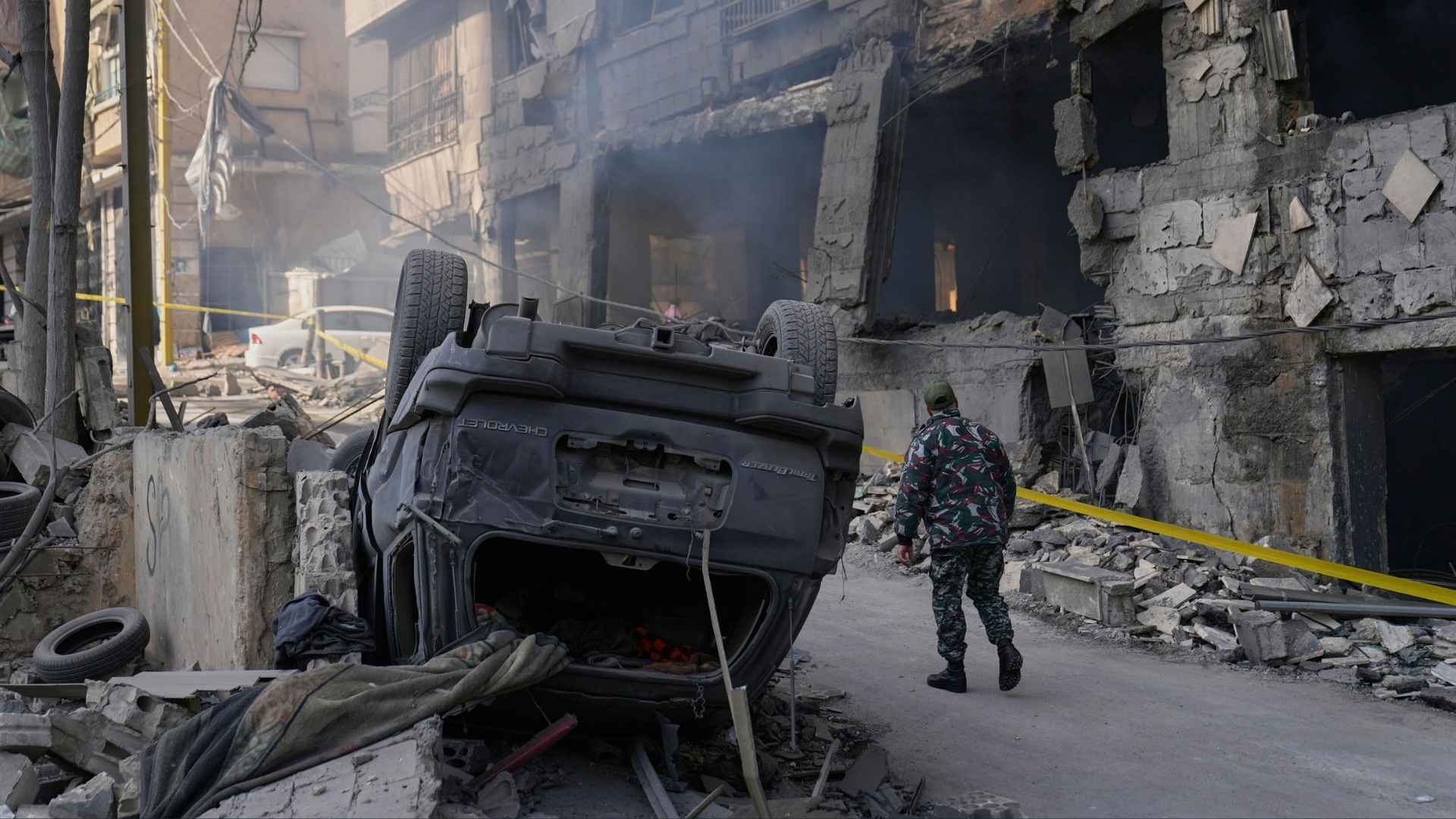
After over two decades since the United States launched the Iraq war in 2003, Washington launched another war last month, this time against Iran. The war, which the US is fighting alongside Israel, Iran’s deadliest regional rival, has now entered its third week leaving thousands dead, triggered global anxiety and continues to escalate with each passing day.
Iran and Israel have long maintained one of the most hostile relationships, with Iran vowing to eliminate Israel. There’s a complex history to the resentment, comprising elements of religion, ideology, geopolitics and Israel-Palestine conflict.
On the other hand, Israel has been warning for decades that Iran is close to developing nuclear bomb capabilities, and its attacks come in the wake of the existential threat such capabilities pose to Israel. Iran acknowledges it has a nuclear programme, which it claims is intended for civilian purposes. Israel itself is widely believed to possess nuclear capabilities, but has kept it under ambiguity, neither confirming or rejecting the claims.
The two countries were at war in June last year as well with Israel alleging that Iran is close to developing nuclear weapons. In the June attack, Israel targeted nuclear and missile facilities and military bases in various parts of Iran, including the capital city Tehran, on the first day of its attack, striking the Natanz area, the largest uranium enrichment site in Iran, killing three senior Iranian military officers, including the chief of staff of the Iranian armed forces, and six top nuclear scientists. The US joined in on the 10th day of the 12 day war, striking Fordow, Natanz, and Isfahan Iranian nuclear sites, using B2 bombers and Tomahawk missiles. US President Trump said then remarked the targeted facilities were “totally obliterated”.
West Asia (referred to as Middle East by the west) lies in the centre of this hostile relationship, with both countries, US-backed Israel and Iran, vying to expand their influence in the region. Iran backs militant groups such as Hezbollah in Lebanon, Houthis in Yemen and Hamas in Israel.
The US has strong security partnerships with several states in the region, the strongest being with Israel whom it provides extensive military aid, missile defence systems and political backing. The US also has security cooperation and military bases with different countries in the region such as Saudi Arabia, United Arab Emirates, Kuwait, Bahrain, Jordan. While the bases support air operations, naval patrols, intelligence, and logistics, its strategic goal is to protect American interests, maintain strong influence in the region, and protect allies and oil shipping routes, while deterring rivals like Iran.
Until February 28, Washington was in negotiations to limit Tehran’s nuclear programme, which it abandoned starting its joint attacks targeting Iranian military infrastructure under the operation “Epic Fury”.
Devastation in Iran
The latest military operation has devastated Iran. The civilian death toll from the US-Israeli attacks has reached at least 1,348 civilians as the war entered its 13th day on Thursday, said Amir Saeid Iravani, Iran’s representative to the United Nations. Iranian Supreme Leader Ayatollah Ali Khamenei was killed on day one of the attack, along with Iran’s Defense Minister and Chief of Staff of the Iranian Armed Forces, creating a leadership crisis in the country.
On March 8, Mojtaba Khamenei, the son of Iran’s late Supreme Leader Ali Khamenei, assumed the country’s highest office. On March 12, through a statement released by the IRGC, he vowed to avenge the attacks on Iran, continue pressuring Iran’s adversaries and keep the Strait of Hormuz closed.
Read also: The US-Israel bombing of an Iranian school that killed hundreds of children
A tragic incident occurred in the early hours of the first day of the attack, the bombing of a school in Minab, which demolished the school building, causing its roof to fall over the school children. The attack killed 165 children, mostly girls aged 7 to 12. While the US has said it is investigating the incident, a report by The New York Times stated that the missile used in the strike was American.
Lebanon has also seen a heavy death toll, with more than 750 people—including over 100 children, killed in Israel’s campaign since March 2. Israel’s attack on Lebanon began after Hezbollah, The offensive across Lebanon began after Hezbollah, the Iran-backed Lebanese militant group and political movement that operates from southern Lebanon, fired rockets into Israel earlier that day.
Washington's rationale and responses
The US so far has provided no tangible justification to the Americans why it attacked Iran in the first place. President Donald Trump and other US officials have offered various and shifting reasons for launching the war on Iran, including to contain an imminent threat, destroy missile and military capabilities, prevent Iran from ever having a nuclear weapon despite Trump claiming he had already “obliterated” their core sites with strikes last summer, and to achieve regime change by bringing the Iranian opposition to power.
In a recent press interaction, Marco Rubio, the US Secretary of State responded that the attack was a preemptive strike. According to Rubio, the US knew Israel was planning to attack Iran and that Iran would likely retaliate against American forces, a justification that drew significant criticism. Rubio later sought to distance himself from those remarks.
Read also: Iran has been attacked by US and Israel when peace was within reach
Iran rejected US claims that it was preparing an attack. The United Nations and several countries, including China and Russia, condemned the initial strikes for undermining the stability of the Middle East; others condemned Iran's retaliatory strikes on US allies in the region. Critics describe the operation as illegal under the US law itself. Many see it as an act of imperialism, and a violation of Iran's sovereignty under international law.
On March 3, during a press interaction, Pete Hegseth, elated by the success of the initial days of the attack and its display of its military prowess, said: “We are only four days into this, and the results have been incredible — historic, really. … Only the United States could lead this [mission]. … But, when you add the Israeli Defense Forces — a devastatingly capable force — the combination is sheer destruction for our radical Islamist Iranian adversaries.”
On March 4, a US submarine fired a torpedo and sank Iris Dena, an Iranian frigate, which was sailing in the Indian Ocean off the south coast of Sri Lanka. Sri Lanka’s navy said it had recovered at least 87 bodies and rescued 32 people. “An American submarine sank an Iranian warship that thought it was safe in international waters,” US Defense Secretary Pete Hegseth said, “Instead, it was sunk by a torpedo. Quiet death.”
The incident sparked debate over the legality of attacking a warship returning from a naval exercise in international waters. Analysts also warned that such actions could broaden the warzone, potentially compelling other countries to become reluctantly involved in the conflict.
Reportedly, it is estimated that the first six days of the war on Iran had cost the US at least $11.3 billion.
Meanwhile, the US says it is investigating the bombing of the school in Minab, while several reports citing preliminary findings suggest the strike is carried out by US forces.
Iran retaliation and the spread of war
Several countries in the region have repeatedly warned successive US administrations that bombing Iran would set the region ablaze. It is what is now unfolding.
Iran launched dozens of its drones and ballistic missiles throughout the Persian Gulf on the first day of the war at targets in Israel and US military bases in Kuwait, Bahrain, Qatar, Saudi Arabia, and the United Arab Emirates (UAE), later expanding to Iraq and Jordan.
Iran has attacked Dubai's airport causing massive flight disruptions throughout the world.
Iranian drones targeted major cloud infrastructure, including Amazon Web Services (AWS) data centers. Two facilities in the UAE and one in Bahrain were damaged.
In Saudi Arabia, it targeted Saudi Aramco’s Ras Tanura refinery, the largest oil refinery in the kingdom. Massive ballistic missiles and drone attacks were launched toward Kuwait as well. A drone hit Kuwait International Airport and Ali Al Salem Air Base. Six American soldiers have been killed in the Kuwait attack.
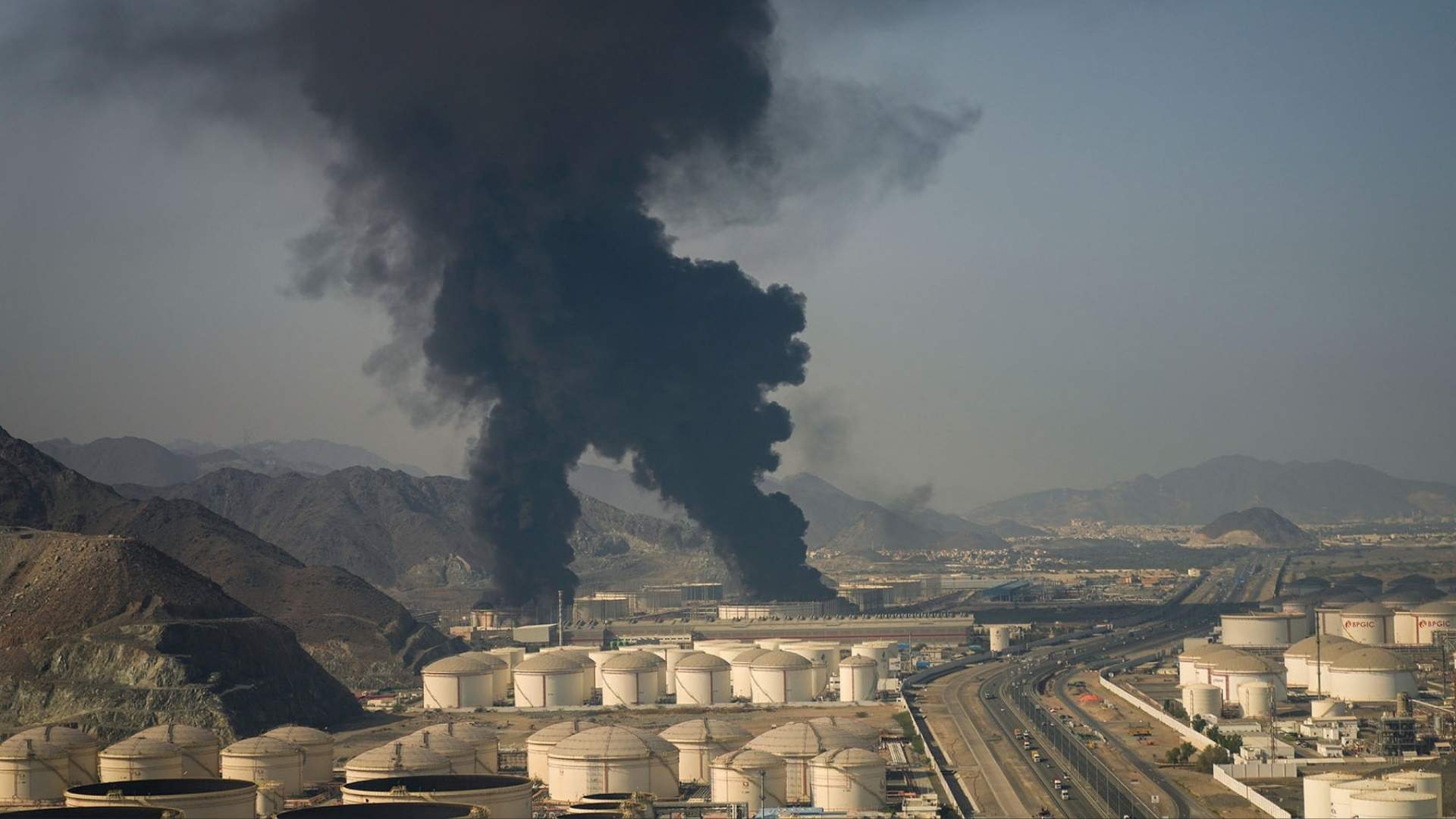
The Gulf states continue to report new attacks on a daily basis. As a result, Kuwait’s national oil company announced a “precautionary” cut to its crude production, as the country’s military said Sunday it had responded “to a wave of hostile drones that penetrated the country’s airspace”.
In its latest remarks, Iran has said it will continue attacks on Gulf states for hosting American bases and protecting their interests, targeting US bases, facilities and installations. Ali Larijani, the secretary of the Supreme National Security Council of Iran, said: “When the enemy attacks us from bases in the region, we respond – and we will continue to respond. This is our right and a standing policy. Regional countries must either prevent the US from using their territory against Iran, or we will have no choice but to do it ourselves.”
On March 2, the IRGC declared the Strait of Hormuz closed, after Iranian threats to target vessels, which effectively halted most maritime traffic in the area. The strait is a passage to 20% of the world’s oil and gas passes, and IRGC has vowed not to allow even “one litre of oil” to leave the region if US-Israeli attacks continued.
As a result, the global prices of oil have surged drastically, and send countries into jitters.
The latest US attack has come into Kharg Island, an Iranian oil hub, where the US claims it has hit 90 military targets while “preserving the oil infrastructure”. Trump has warned the area’s critical oil facilities could be next if Iran continues to block the Strait of Hormuz.
Iran, in turn, threatened on Saturday to reduce US-linked oil facilities to “a pile of ashes” if such attacks happen.
International response
UN Secretary‑General António Guterres condemned the attacks by the US and Israel on Iran, calling the use of force a serious escalation that “undermines international peace and security” and urging immediate cessation of hostilities.
Spain has refused to join the war, with Prime Minister Pedro Sánchez calling it unilateral and outside international law. Spain refused to allow U.S. use of Spanish military bases for offensive operations against Iran. President Trump in response has threatened to cut off all trade with Spain, while also threatening that the US can use Spain’s bases anytime it likes whether Spain allows it or not.
As soon as the attack unfolded, France, Germany and UK issued a joint statement where it only condemned Iranian retaliation but made no mention of unilateral US-Israel attacks. “We condemn Iranian attacks on countries in the region in the strongest terms. Iran must refrain from indiscriminate military strikes. We urge the Iranian leadership to seek a negotiated solution. Ultimately, the Iranian people must be allowed to determine their future,” the statement said. “We did not participate in these strikes, but are in close contact with our international partners, including the United States, Israel and partners in the region.”
While the UK has not joined the war, it has allowed the US forces to use British bases. Similarly, the German Chancellor recently remarked: “Iran is the centre of international terrorism, and this centre must be shut down. And the Americans and the Israelis are doing it in their own way.”
Read More Stories

NEPSE falls nearly 75 points as market sentiment wavers
The stock market was unable to maintain the gains seen on Tuesday, slipping...

India has begun its long-delayed population census. Here's why it matters
India has begun the worlds largest national population count, which could reshape welfare...
The United Nations has called on Israel to repeal a law passed by...


Business + Finance + Economy + Tech + Environment + Nepal & South Asia + In-depth Analysis + News + Investigation + Research + Expert Opinion + Anatomy of Complex Issues.