Trade | Trade imbalance | Trade deficit | trading partners | import duty
Nepal’s foreign trade expanded markedly in the first five months of the current fiscal year 2025/26, with a sharp rebound in exports alongside rising imports. The total foreign trade reached NRs 882.69 billion by mid-December, shows data from the Department of Customs, an increase of 20.1% compared to the review period.
Imports totaled NRs 766.18 billion, growing by 15.8% y-o-y while exports stood at NRs 116.5 billion. Although exports rose by a robust 58.2% y-o-y, they accounted for just 13.2% of total trade, leaving imports more than six times higher than exports.
Despite the strong growth in exports, the trade deficit widened to NRs 649.7 billion over the five-month period, representing a 10.5% y-o-y growth. Nepal continues to face pronounced trade deficits with its top two trading partners, India and China.
With India, Nepal recorded a deficit of NRs 339.02 billion, as imports reached NRs 434.1 billion compared to exports of NRs 95.04 billion. Trade imbalance with China is more acute.
Top five import partners (In NRs billion)
| Imports_Value | Exports_Value | Trade_Balance | |
| India | 434.06 | 95.04 | -339.02 |
| China | 163.73 | 0.47 | -163.27 |
| Argentina | 44.56 | 0.00 | -44.56 |
| UAE | 23.46 | 0.85 | -22.61 |
| United States | 10.35 | 7.43 | -2.92 |
Top five export partners (In NRs billion)
| Imports_Value | Exports_Value | Trade_Balance | |
| India | 434.06 | 95.04 | -339.02 |
| US | 10.35 | 7.43 | -2.92 |
| Germany | 2.18 | 2.13 | -0.06 |
| UK | 1.71 | 1.45 | -0.27 |
| France | 3.31 | 0.97 | -2.34 |
Argentina emerged as Nepal’s third-largest source of imports, with imports totaling NRs 44.46 billion. The South American country has become one of the largest import partners of the country due to its crude soybean, which Nepal reexports to India. It has also emerged as Nepal’s top exports in recent years with an astronomical surge.
In 2023/24, imports from Argentina amounted to NRs 12.4 billion, which jumped to nearly 100 billion (99.3 billion) the next fiscal year. 89.5% of those imports accounted for soybean oil, and most of the rest for crude sunflower oil.
On the other hand, Nepal posted trade surpluses with only 34 countries out of the 148 countries it trades with. The trade surplus was led by Denmark at NRs 383.6 million, followed by Romania, Sweden, Niger and Iraq, countries with which Nepal shares a modest trade relationship.
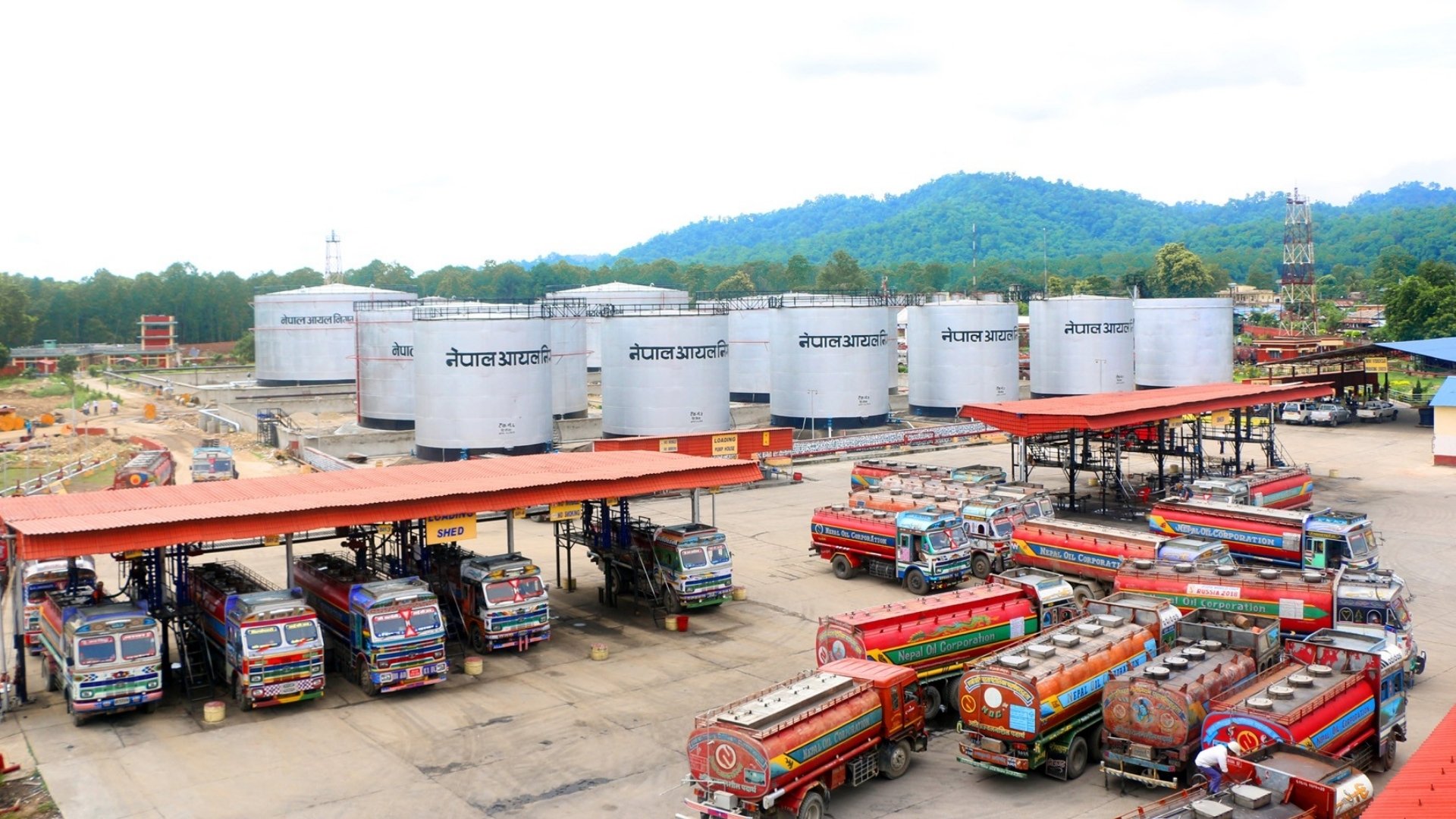
During the review period, fuel imports amounted to NRs 121 billion, surpassing export receipts of NRs 116.5 billion. Petroleum products continued to dominate the import bill with diesel imports at NRs 45.6 billion, petrol at NRs 27.3 billion, Liquified Petroleum Gas (LPG) at NRs 22.4 billion, and aviation turbine fuel at NRs 8.34 billion, among others.
On the export front, soybean oil, the largest export item, generated NRs 46.55 billion, accounting for 40.12% of total exports. Sunflower oil exports added NRs 3.73 billion during the same period. The surge in these two items has been driven largely by Nepal’s duty-free access to the Indian market under the South Asian Free Trade Area, which allows Nepali refined vegetable oils to enter India at zero tariff while imports while India levies a high tariff on refined oil imported from third countries.
Large cardamom ranked second, with exports valued at NRs 5.53 billion. Carpet exports amounted to NRs 4.13 billion, followed by sunflower oil at NRs 3.73 billion and jute at NRs 2.73 billion.
On the import side, the automobile sector showed notable shifts. Electric vehicle imports declined sharply, falling by 23.55% to 3,800 units from 4,695 units a year earlier. The value of EV imports stood at NRs 8.95 billion, generating NRs 5.64 billion in government revenue. During the end of the last fiscal year, expectations of tax changes in the upcoming budget prompted importers to buy EVs in bulk, but the anticipated adjustments did not occur. Similarly, in February, the NRB tightened EV financing, reducing the loan-to-value ratio for electric vehicles (EVs) from 80% to 60%.
In contrast, imports of petrol vehicles surged, rising by 50.68% to 2,801 units from 1,799 units a year earlier.
Similarly, during the five-month period, the country collected NRs 74 billion in import duty, compared to NRs 68.1 billion in the same period last year, representing an 8.7% increase.
Read More Stories

NEPSE falls nearly 75 points as market sentiment wavers
The stock market was unable to maintain the gains seen on Tuesday, slipping...

India has begun its long-delayed population census. Here's why it matters
India has begun the worlds largest national population count, which could reshape welfare...

The United Nations has called on Israel to repeal a law passed by...


Business + Finance + Economy + Tech + Environment + Nepal & South Asia + In-depth Analysis + News + Investigation + Research + Expert Opinion + Anatomy of Complex Issues.