Kali Gandaki River | Illegal sand extraction | Local governance | Political nexus
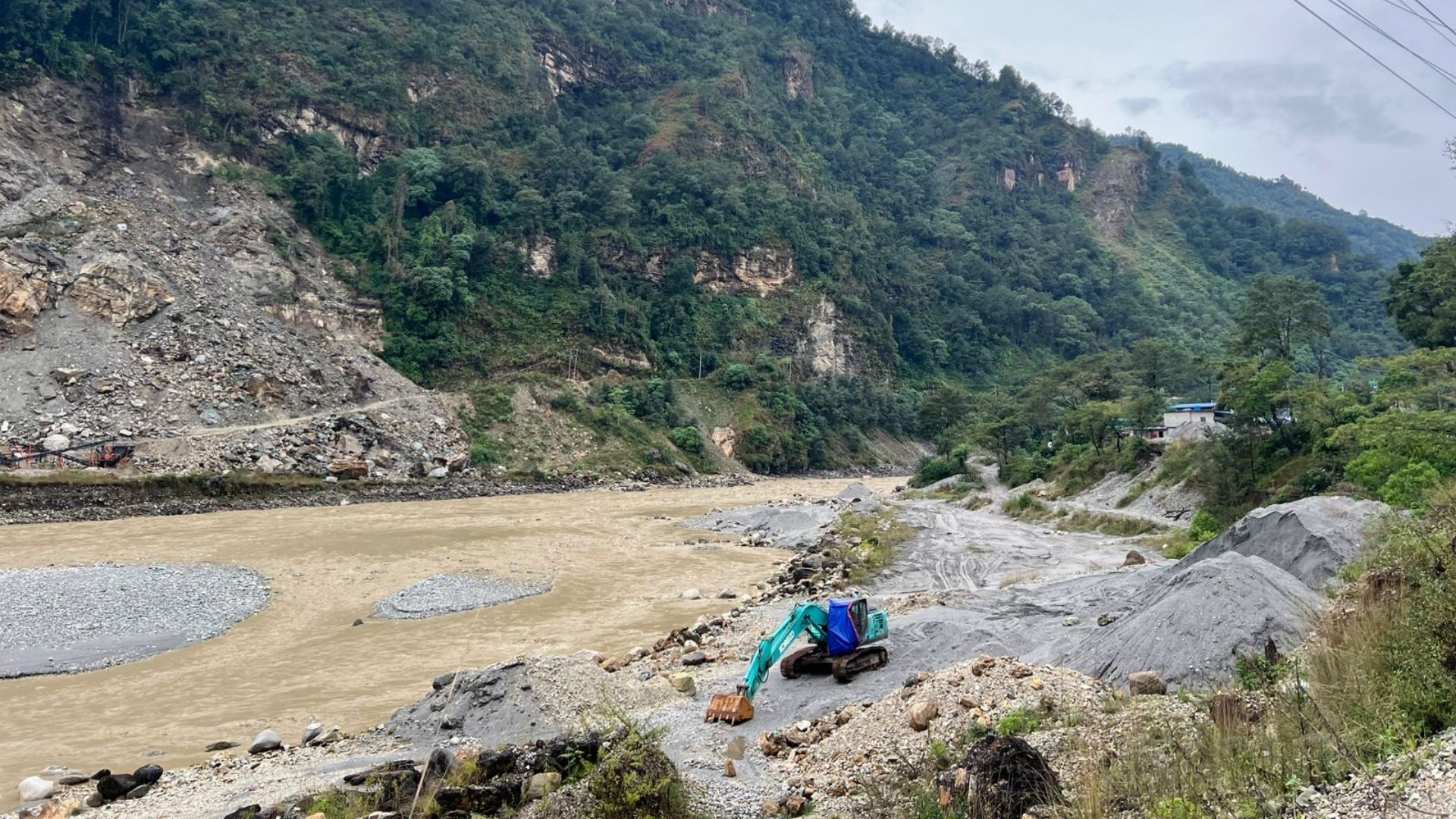
Pokhara: Along the riverbanks of Kali Gandaki, numerous crusher industries operate in violation of legally prescribed standards. In some places, crushers operate at less than a hundred metres from the river. From Kushma Municipality of Parbat to Beni, district headquarter of Myagdi, piles of materials from these crushers can be seen along the roadside.
Despite seeing sand piles and crushers by the river in several locations, the administration has remained silent. There appears to be a strong nexus among smugglers, crusher industry operators, the administration, and political leadership in the exploitation of the sacred Kali Gandaki River.
Ramkumar Niranjan, who has been raising concerns about the exploitation of the Kali Gandaki, says the river’s condition is deteriorating day by day.
“The situation in Kali Gandaki is urgent. In several areas, especially around Jaljala, you’ll see multiple crushers operating at a distance of about only 150 metres. These operations clearly violate existing regulations. Several of them don’t even have licences. Many of these crushers are run under the influence and protection of political leaders,” he said.
Along the Bhupi Sherchan Highway, sand piles are visible in several locations, which according to him, are in violation of law. He claims there is a nexus behind this exploitation in Parbat district.
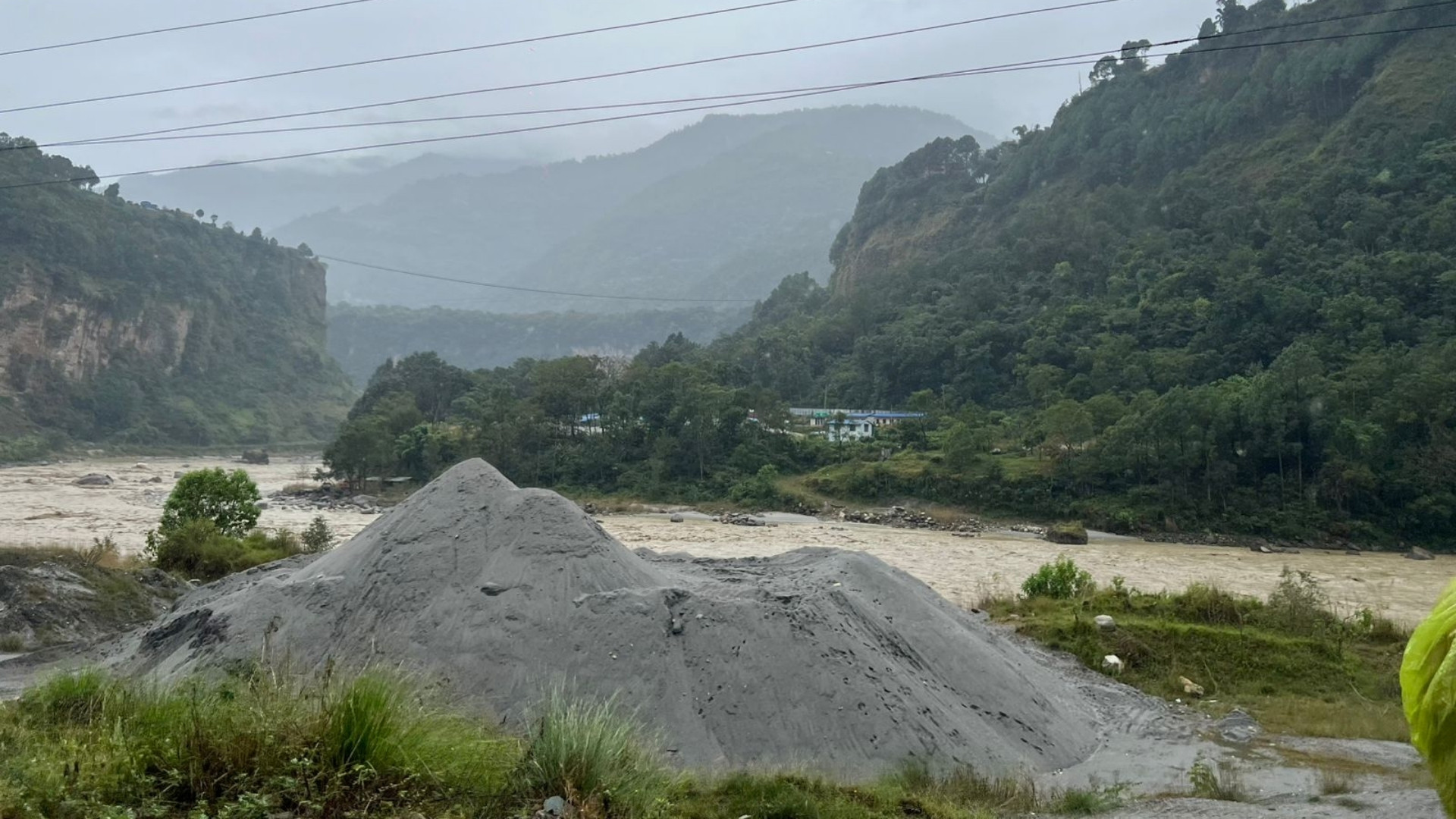
According to government standards issued in July 2020, these crushers should operate at least 500 metres away from rivers, bridges, highways, and historical ponds.
“Stockpiled sands along the roadsides clearly violate the regulations. There is a nexus behind all this in Parbat. The crusher owner’s political connections at central and local level influence local governance,” he explained.
The Kali Gandaki extraction has become complex. The river is starting to change its course. The Google Earth imagery shows that crusher industries have increased in certain locations compared to previous years.
Drag the center line left and right for the comparison
For this reason, some youths in Parbat drew the attention of the District Administration Office (DAO). Youths raised their voices regarding river exploitation, particularly after the September protests. A committee representing all seven local levels of the district was formed to prioritise environmental concerns and Kali Gandaki-related issues. Ramkumar is one of those activists.
Local resident Yagya Bahadur Thapa, another activist, says stakeholders have done nothing in response to the exploitation. According to him, goods are moved even at night.
Another activist associated with the Kali Gandaki Shaligram Conservation Campaign who doesn't want to disclose their name, says that people who speak against the extraction in Kali Gandaki are threatened.
“Development and construction work must happen. Resources must be used, but sustainably. But here, sand is being excavated left, right, and centre, taxes are evaded, and nothing is done. People are enriching themselves through exploiting others, employing intimidation,” the activist lamented.
The issue of Kali Gandaki exploitation has persisted for decades. After the matter reached the Supreme Court, it temporarily protected the river from extraction for four years.
A writ petition challenging the extraction of river materials, including the diversion and excavation of Kali Gandaki, was filed in the court against the federal government, Lumbini and Gandaki provincial governments, and all the 11 district coordination committees of Gandaki. The petition highlighted the river’s connection to civilisation and the threat to the existence of Shaligrams found in the river.
The government’s regulations for managing the excavation, collection, transport, and sale of stone, gravel, and sand, as well as the establishment and operation of crusher industries, require that crushers be located at least 500 metres away from highways and settlements. The writ pointed out that many crushers have been constructed within the river itself, and most fail in meeting those standards.
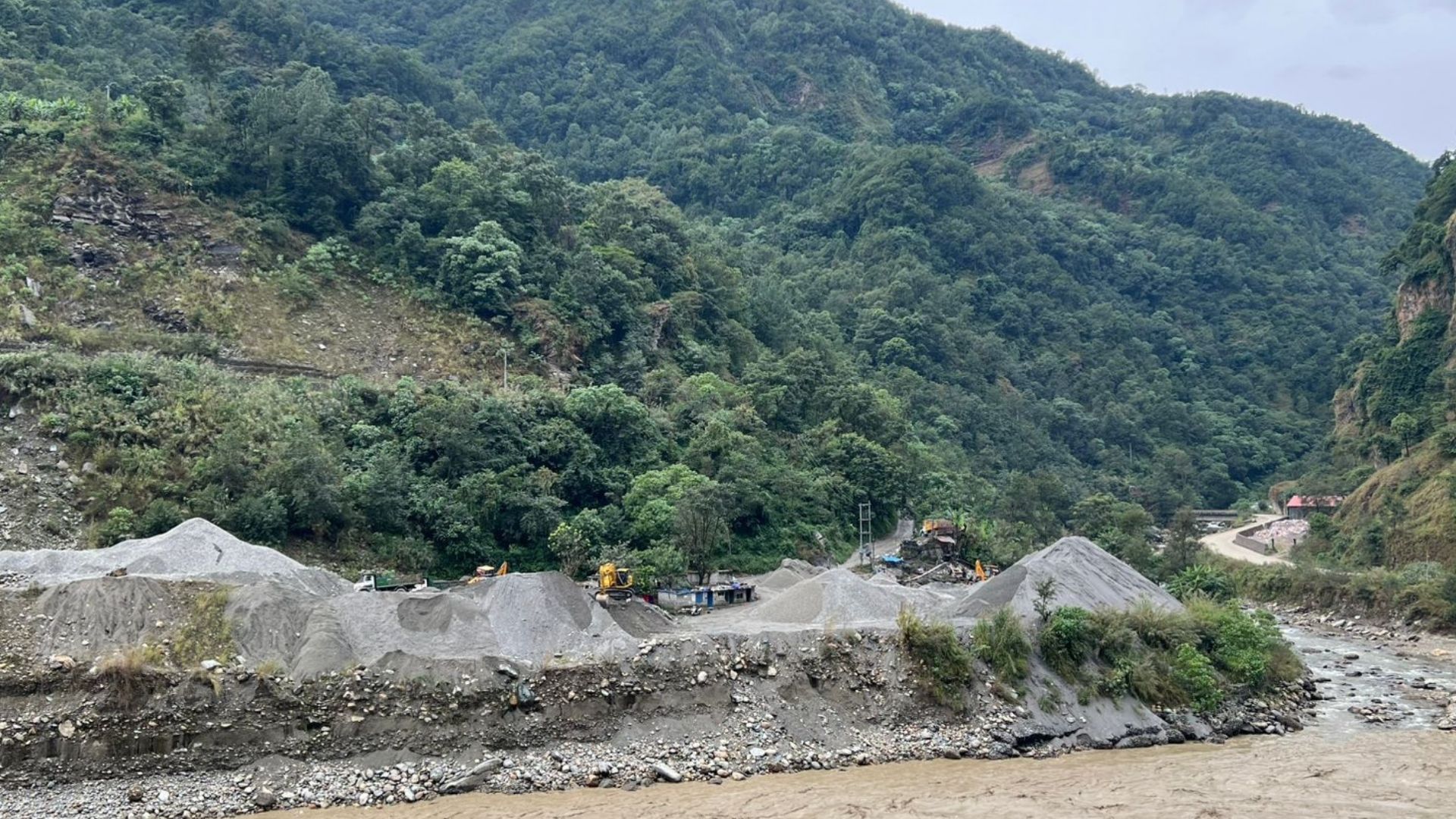
Even though various municipalities along the Kali Gandaki contracted crusher operators to extract river materials, lack of effective monitoring led to ongoing problems, the petitioners further highlighted.
Following the petition, on July 13, 2021, the court issued an interim order halting all river extraction. On October 27, 2024, the Supreme Court bench comprising Justices Dr Kumar Chundal and Binod Sharma annulled the writ. The bench issued a directive to regulate the use of the Kali Gandaki River’s water and the excavation, consumption and sale of stone, gravel, and sand, aiming for better organisation, predictability, and effective monitoring, while ensuring that violators are punished. Since the court allowed the extraction of river materials, conflicts have reportedly intensified.
Government monitoring has not been entirely absent following the court’s order, and river excavation has officially begun. Prior to that, illegal excavation continued unchecked. After the Supreme Court dismissed the writ, several municipalities in Parbat awarded contracts for river ghats.
Under the Local Governance Operation Act, municipalities can lease riverbanks, but must bear responsibility for monitoring and conservation. Yet, municipalities earning revenue from leasing riverbanks have largely turned a blind eye as the Kali Gandaki continues to be exploited in violation of regulations.
According to Parbat’s District Coordination Committee (DCC), this fiscal year they confiscated illegally extracted river materials of around NRs 10 million— Phalebas Municipality seized 42 cubic metres of river extracted materials, Kushma Municipality seized about 6,985.46 cubic metres and Jaljala Rural Municipality seized 13431.54 cubic metres of materials. Last fiscal year, Kushma and Jaljale seized 13,049 and 5,444.61 cubic metres of river extracted materials respectively.
Although monitored by the district administration, the responsibility to impose fines to illegal miners lies with the respective municipalities. Bishnu Ram Bk, head of the Parbat DCC, says they have been urging municipalities to recover revenue from illegal materials.
When asked about municipal intervention from Phalebas Municipality, Mayor Gangadhar Tiwari gave a short response: “We haven’t done anything.”
According to BK, incidents of illegal mining have decreased compared to before. He also stated they are actively monitoring the situation. He however added that revenue collection has been hampered because some cases are linked to local representatives.
"In certain local units, relatives of elected representatives are also involved, which likely made things difficult for them," Bk said.
However, in recent times, a more cooperative environment has developed with local representatives, he mentioned. “People linked to relatives of local officials can be difficult to manage, but now, representatives cooperate for enforcement.”
Following the Supreme Court’s annulment of the writ, Jaljala was the first municipality to lease river extraction sites. In the current fiscal year, the municipality invited bids in September. Deputy Chair Dipak Acharya shared that ghats are being leased in ways that don't cause harm to the environment or the river.
“It's not that we should prohibit extracting stone, gravel, or sand. Our focus is on long-term projects, which would require these materials extensively. Ghats are leased only in areas with no settlements or farmland, only after conducting environmental impact assessments” Acharya explained. The situation has improved compared to when exploitation was uncontrolled, he says. “We have avoided leasing areas around farmland. We’ve deployed municipal police to monitor activities, and we coordinate with the DAO and DCC.”
Despite Jaljala’s monitoring efforts, it also remains the most exploited area in the district. Local reports that goods are often transported at night. Activist Ramkumar says municipal police remain mute observers to exploitation. “Jaljala is the best monitored area across Parbat’s seven local levels, yet it is also the most exploited with three or four crushers along the riverbank.”
Deputy Chair Acharya says those trying to evade the rules are being held accountable, while systematic leasing has reduced the severity of the exploitation.
“During the monsoon, extracting sand is penalised. “All sand lifted by businesses during the season has been measured, and fines have been imposed. Some have paid the fines, others are in the process,” he said.
Since 2021, another activist RK Adipti has been raising his voice against Kali Gandaki exploitation. He says he first became aware of the environmental and river sensitivities in 2010, and that the exploitation has increased over time.
“From Kushma to Beni, there are more than two dozen crushers, and even more smaller setups. Many are registered but inherently illegal,” he said. Adipti argues that the state mechanism is equally responsible in allowing crushers to operate directly on the riverbank.
Drag the center line left and right for the comparison
“Some miners are literally one metre away. Others are less than 50 metres. Operators have deployed their own security with personnel guarding the vicinity,” he shared. "Being a Himalayan river, Kali Gandaki’s protection is everyone’s responsibility. The state’s perspective must change.''
Geologist Subodh Dhakal echoed the point, noting that while the area is sensitive but not entirely off-limits for extraction. Standards, detailed studies, and monitoring are necessary. Irresponsible exploitation has already shown adverse effects. Geologically, Kali Gandaki varies: strong structures in one area may overlie weaker zones below, making uniform extraction impossible.
“Extraction is necessary for development, but we have irreplaceable fossils whose reserves could run out. Previously, geology students could study them in the field, but that’s no longer possible. Uncontrolled extraction also raises the risk of floods, even in areas that never used to flood,” he said.
Dhakal says that while an environmental impact study is mandatory before extracting river materials to determine safe quantities, such EIAs are inadequate considering the sensitivity of the Kali Gandaki region.
“Technical EIAs are required for long-term planning. Detailed studies must guide extraction to meet development needs without destruction. In my view, continuation is necessary, but under strict responsibility.”
Violations by crushers
According to the DCC, there are four registered crushers in Parbat: one in Jaljala, two in Kushma, and one in Modi Rural Municipality. In addition, several temporary crushers are in operation linked to various projects. Crusher industries in Parbat operate along riverbanks, sometimes less than 100 metres apart. In fact, most of Nepal’s crushers also operate contrary to legal standards.
Under the government guidelines for extracting, selling, and managing stone, gravel, and sand, crushers are permitted to operate only at least 500 metres away from rivers, riverbanks, paved bridges, highway rights of way, and historic ponds, lakes, or reservoirs. None of the industries in Parbat follow these rules. Crusher operator Biplav Hamal says the standards are impractical.
“Crusher standards are problematic nationwide. Practical regulations are needed. Many operate illegally, taking advantage of opportunities, and local authorities must distinguish between legal and illegal operations,” Biplav said.
Hamal admits some illegal operations exist and that the crusher industry has gained a bad reputation due to the exploitation of the Kali Gandaki. He added that it is necessary to monitor those who receive the tenders more closely than the crushers themselves.
“Illegal extraction harms legitimate crushers. Outsiders exploit opportunities, renting dumpers (tipper vehicles) for illegal extraction. If controlled, there’s no major issue, but some people on social media oppose it simply to create controversy, making the situation seem worse than it is,” he said.
He said that preventing people from renting tippers for illegal extraction would stop the theft of river materials. While acknowledging that some crushers operate illegally, he stressed that the government should monitor these cases and enforce a complete ban where needed. Aside from a few exceptions, he noted, most sand extraction in the Kali Gandaki follows the rules."
Read More Stories

NEPSE falls nearly 75 points as market sentiment wavers
The stock market was unable to maintain the gains seen on Tuesday, slipping...
India has begun its long-delayed population census. Here's why it matters
India has begun the worlds largest national population count, which could reshape welfare...
The United Nations has called on Israel to repeal a law passed by...


Business + Finance + Economy + Tech + Environment + Nepal & South Asia + In-depth Analysis + News + Investigation + Research + Expert Opinion + Anatomy of Complex Issues.