public library | reading | librarian
“Who wouldn’t like a job where one gets to work with books?” asks Ritesh Shrestha, a librarian of Kathmandu Valley Public Library (KVPL).
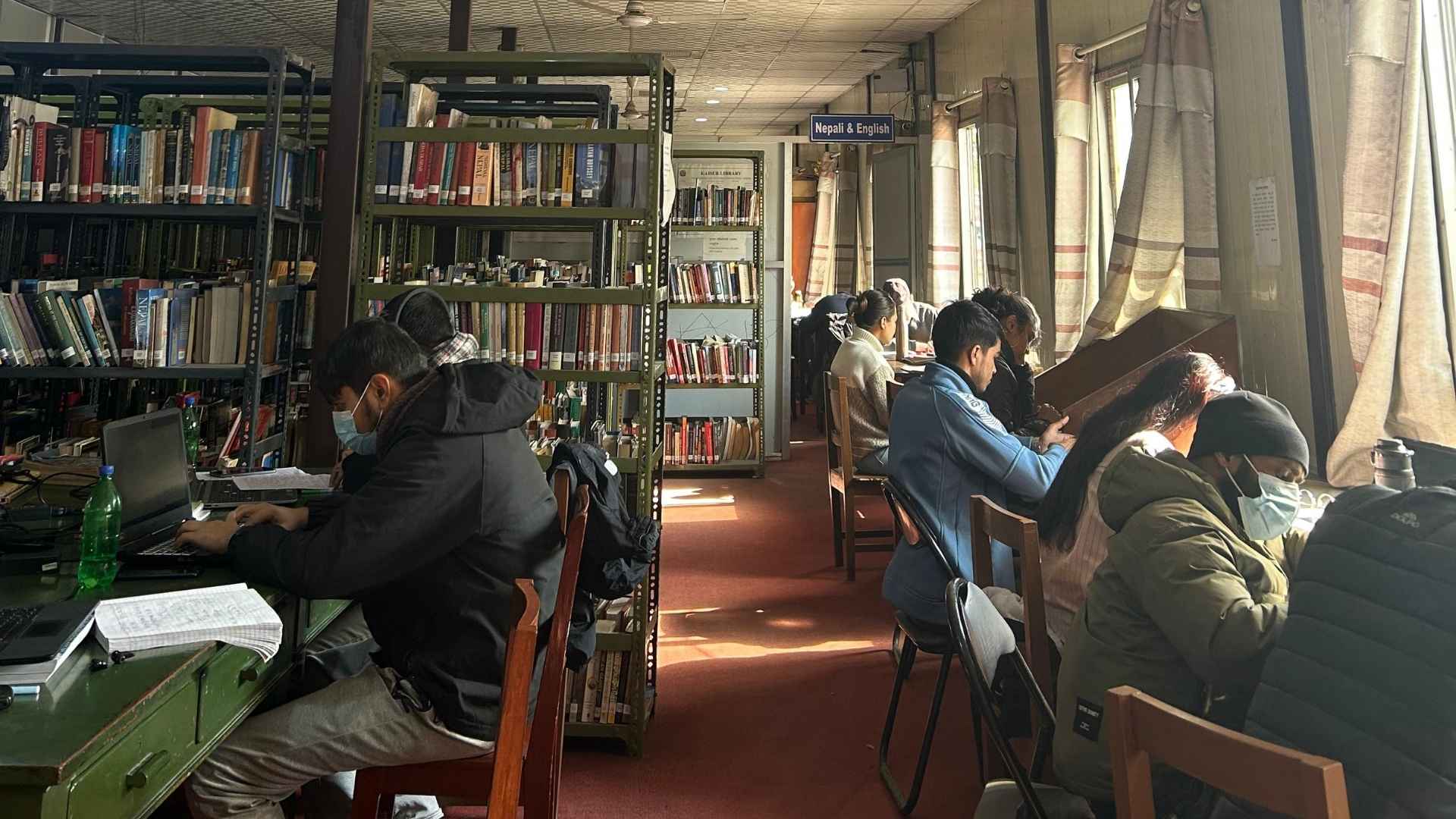
Tucked into a corner of Bhrikutimandap, surrounded by cafes and shops, is a small one storey building. Inside the block, hundreds of books are stacked in shelves and the seats for readers are almost fully occupied.
On most visits, an empty seat is hard to find. In 2024/25, some 22,000 people visited the library, with an estimated daily visitors of roughly 100. Many are Lok Sewa aspirants, looking to join the country’s civil service, along with students and researchers.
Established in 2003 by scholars and politicians, KVPL was inspired by the vision of the American “Library of Congress,” the largest library in the world in terms of collection size, serving as a research library for US Congress as well as the national library of America.
Though the library is far from its vision, with limited books, and rare visits from lawmakers, it still serves many.
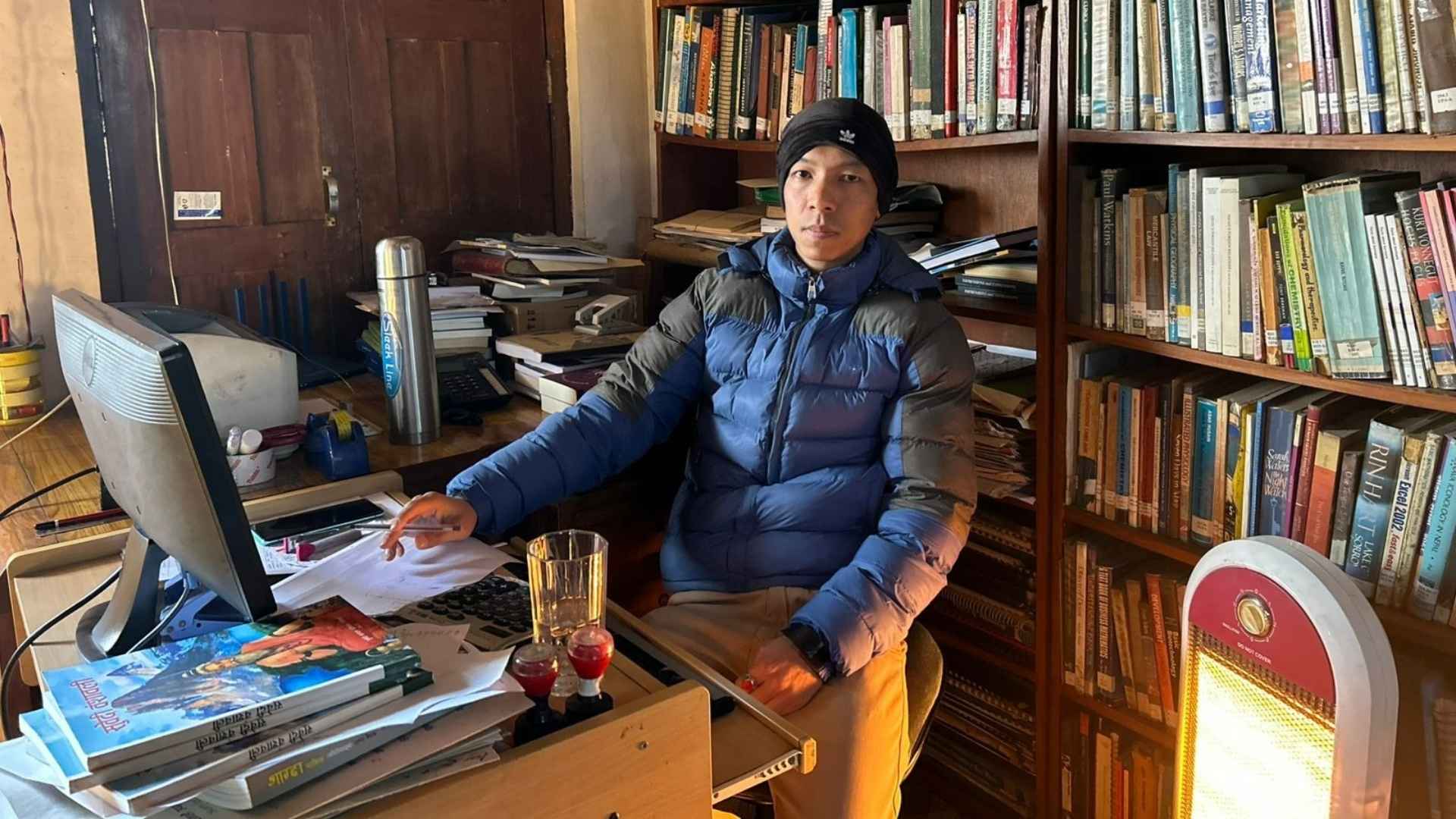
Among those serving readers and working in the library is Ritesh who has worked at KVPL for nearly 15 years. Ritesh never planned to become a librarian. With a background in business studies, he once aspired to start a business. He joined the library as a volunteer in 2012, unfamiliar with the inner workings of libraries. “Ever since I've been with books, I’ve never gone anywhere else,” he shares.
“The first days felt new and strange,” he recalls. Today he sees books differently. “For a normal person, a fiction is just fiction, for us, it is also an 823,” referring to the classification system.
For Ritesh, a library should be more than a place to keep books. “Libraries should be places for children as well.”
Before the 2015 earthquake, KVPL hosted weekly children’s programmes like storytime, documentaries, games, etc. initiated by Kathalaya, a children and young adult book publisher. These activities stopped after Covid.
“During the earthquake, a children’s session was going on. Fortunately, no one was hurt,” he recalls.
When asked about whether the library's condition has improved over time, he shares, “Nothing has changed. In fact, compared to the past, the condition has declined.” He informed us that earlier libraries received funds directly from the Ministry of Education. Later, responsibility shifted to the local government. “Funding has reduced,” he laments.
Another pressing challenge, according to Shrestha, is space. “Even though there are two small buildings, they are not enough,” pointing toward the crowded room without any empty seats. Like many in the profession, Shrestha feels the librarian profession is misunderstood. “People think a librarian’s job is just to sit. In reality, we handle transcription, cataloguing, record keeping, collection development, and management. It is encouraging that Nepal Open University has also included librarian courses.”
Having spent many years in the library, Ritesh wishes to continue working there in future as well if the government prioritises libraries and librarians, which he thinks hasn’t been the case.
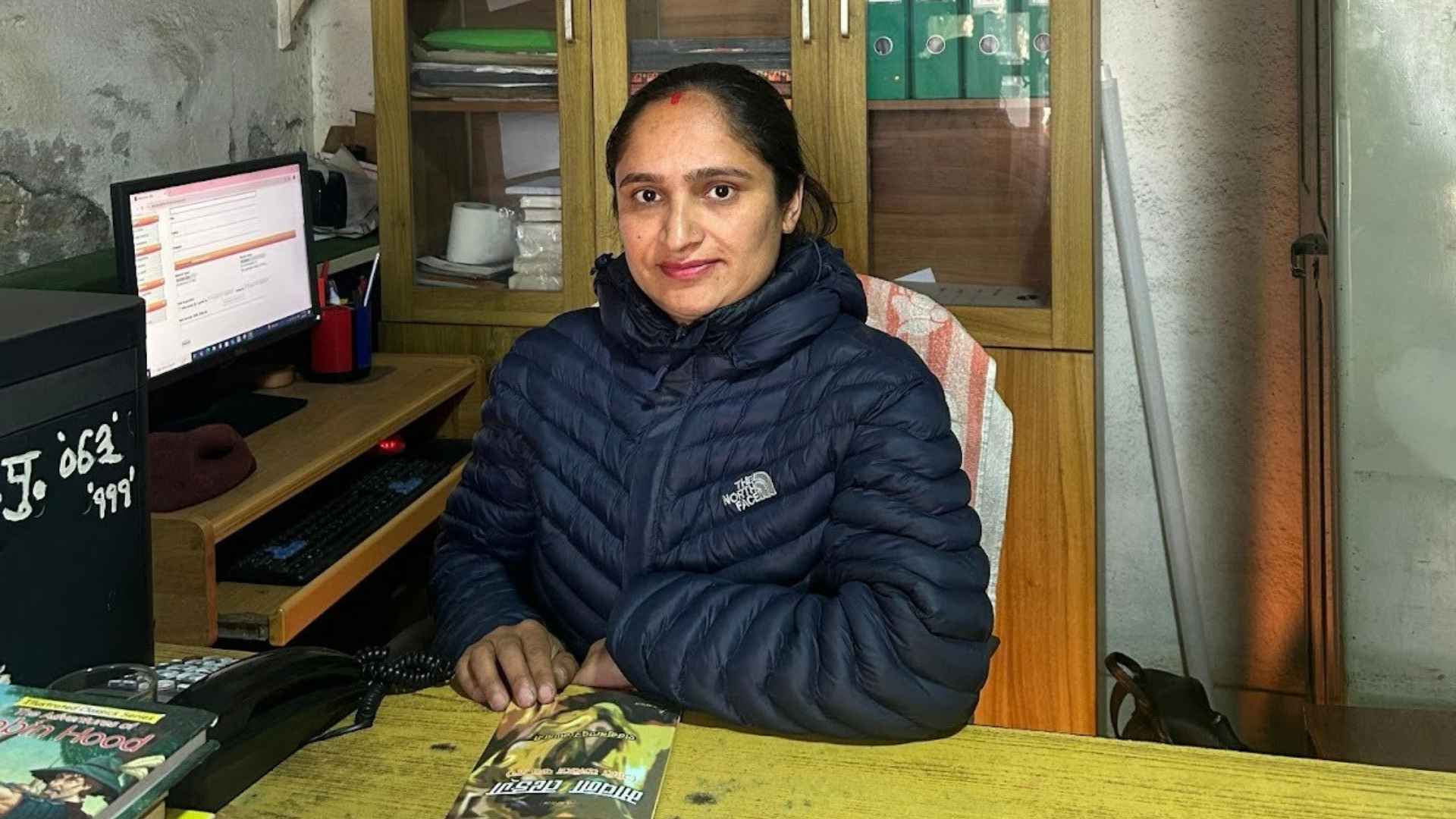
Ritesh isn’t the only one to have spent years in a library. Pujan Dahal, an assistant librarian at Dilli Raman Regmi Memorial Library has been working there for over 11 years, starting as a receptionist and now serving as an assistant librarian for the past two years. Dahal comes from the humanities background and had received three months of librarian training.
Reflecting on the difference between her earlier role and current one, she says, “One of the best things about my job now is I get to work with books. Before, I did very limited tasks like data entry. Now I handle multiple tasks and there is so much to learn.”
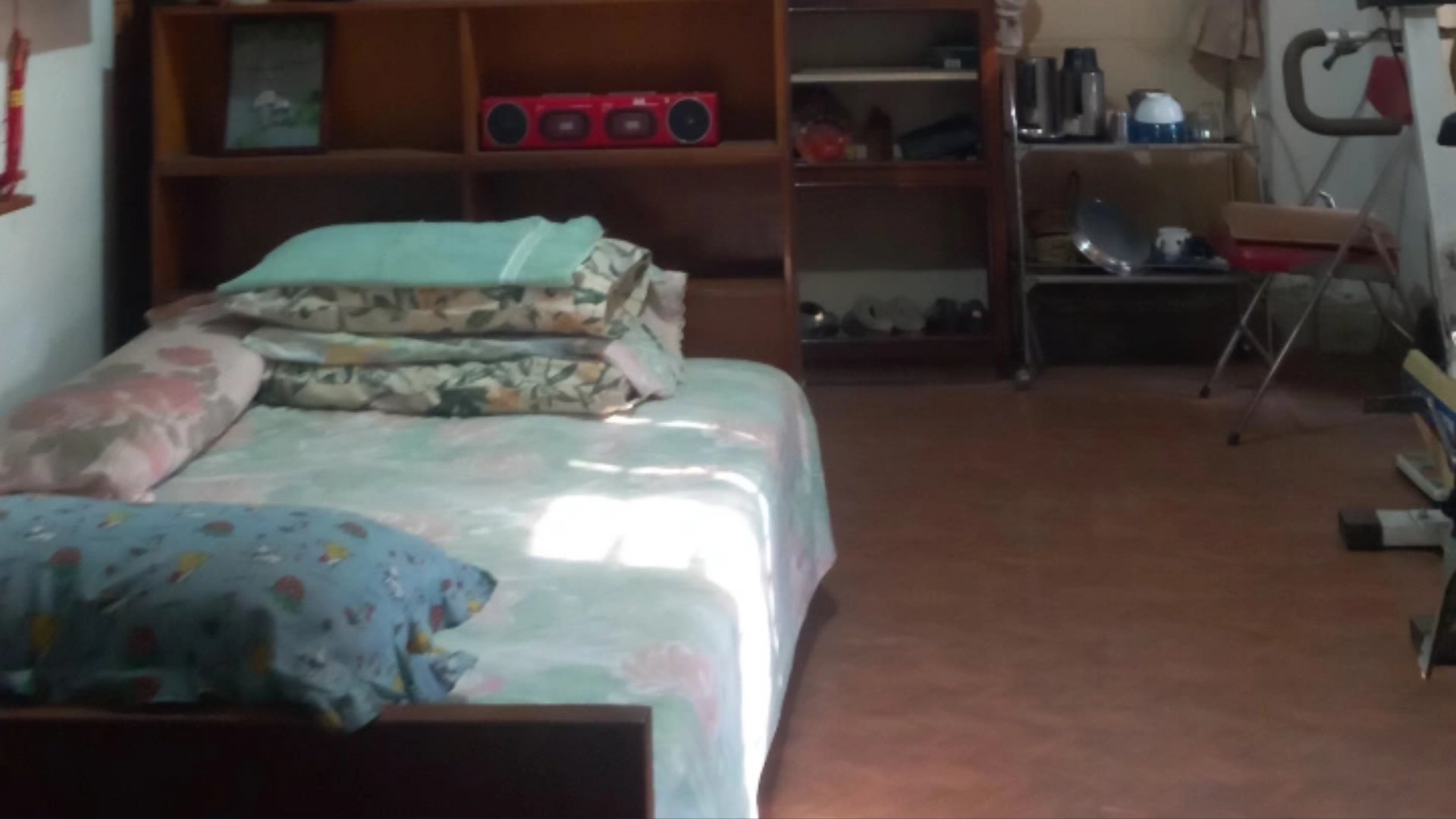
A government-run library, Dilli Raman Regmi Memorial Library holds over 43,000 books and functions largely as a preservation space. Without membership services, it also operates as a museum housing Regmi’s personal collection of books, paintings, photographs and even his room.
Behind the rich history of the building and room full of books and Raman’s legacy, lies crumbling walls desperate for a recovery. The building remains fragile with no renovation done since its establishment, even after the 2015 earthquake. “Although the library had received funds for the renovation and a Detailed Project Report (DPR) for the building has already been prepared, no work has been carried out due to an ongoing legal case filed by Regmi’s granddaughter who has opposed renovation work,” shares Dahal.
“Libraries abroad are community spaces,” Prem Raj Adhikari, the chief librarian, said. “They host activities beyond books, like pottery, painting, even plumbing. They are cultural hubs. We want to do so much but many things hold us back.”
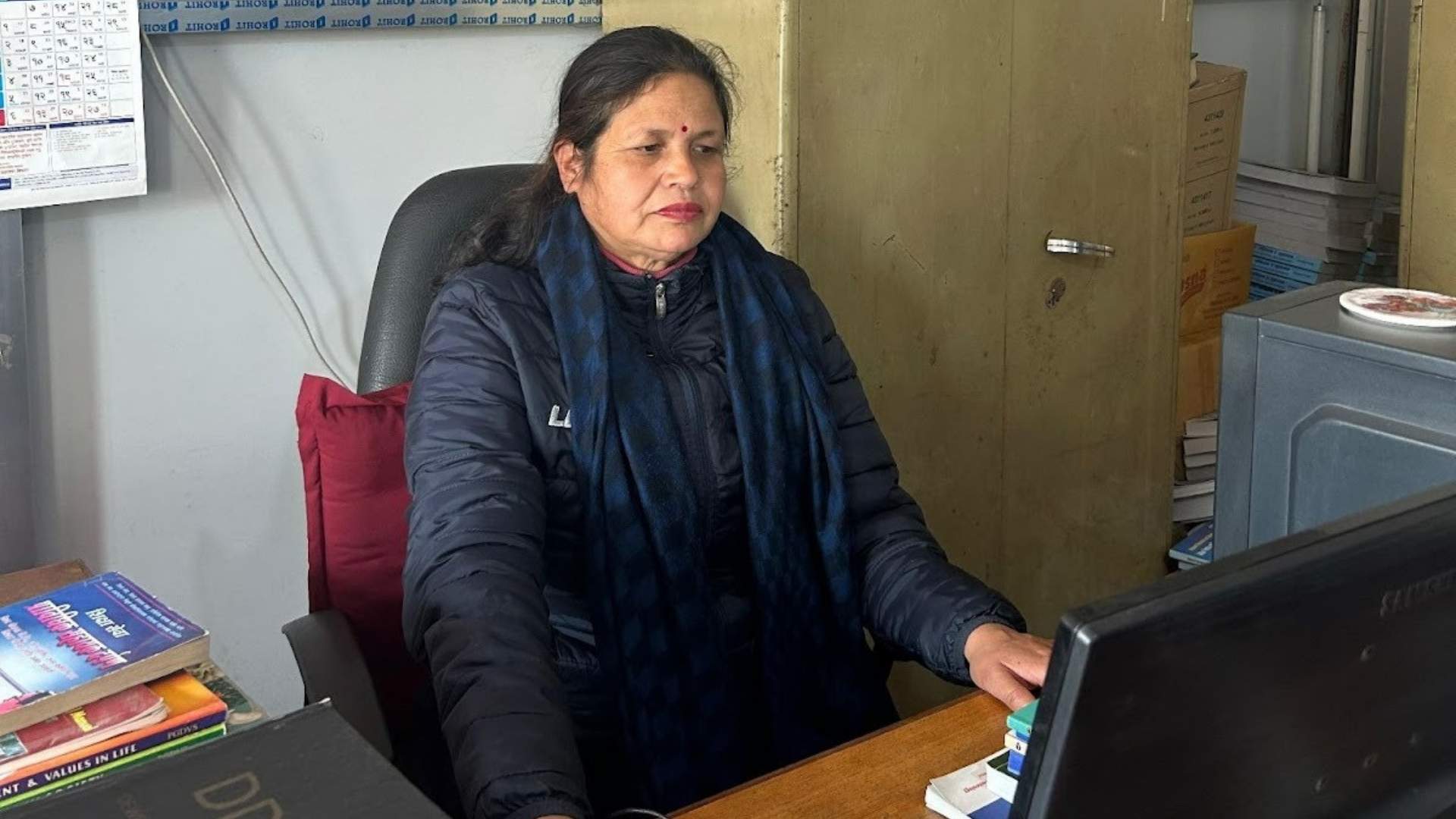
At Kaiser Library, Sobhita Dhital, another assistant librarian, barely finishes her sentences without interruptions. Readers constantly approach her for help locating and inquiring about books. Unlike Ritesh, working in a library was always her dream.
After completing training from Tribhuvan University Library Science Student’s Alumni Association (TULSSAA), an organisation providing training on Library and Information Science, she attempted the civil service exam for four years until she finally passed. “Working with books felt like a dream job,” she says but one that remains overlooked.
“The position is equivalent to Nayab Subba,” she explains. “People often wonder what librarians do. The role involves numerous tasks and is essential to the functioning of a library, but that importance is seldom recognised.”
Sobhita joined the National Library in 2016 and worked there for about five years before moving to the Kaiser library.
She thinks unlike earlier when people weren’t aware of this role, many people now apply for this position out of interest. However, the government opens very few seats despite the need for more librarians while libraries operate understaffed.
Throughout her work related visits to libraries outside the valley, she learned that libraries are truly a reflection of a nation. “If the library of the capital itself is in critical condition, one cannot elaborate on the ones outside the valley,” she says.
“There is a slow improvement but so much inadequacy,” she adds, recalling her visits in Chitwan, Nepalgunj, Gulmi, and Myagdi.
Expressing her vision for a good library, she adds, “A library should be relevant to its time. We are still far behind. It should be accessible across geographies and to all sections of a society. Sadly, many places still lack libraries.”
Nepal has 928 registered public libraries, according to a 2022 survey. 253 of them are based in Bagmati Province. Kathmandu valley with cities carrying millions of dreams has the highest number of libraries in the country.
Beyond access to books, these libraries serve as spaces where people can stay as long as they want without feeling the need to buy tea or coffee like in cafes. But the survey highlights these libraries face key challenges such as inadequate government support, low public awareness about their significance and lack of ICT (Information and Communication technology).
Sobhita ends on a slightly hopeful note: “I see a good future and potential for our libraries. It will probably take time but I am hopeful.”
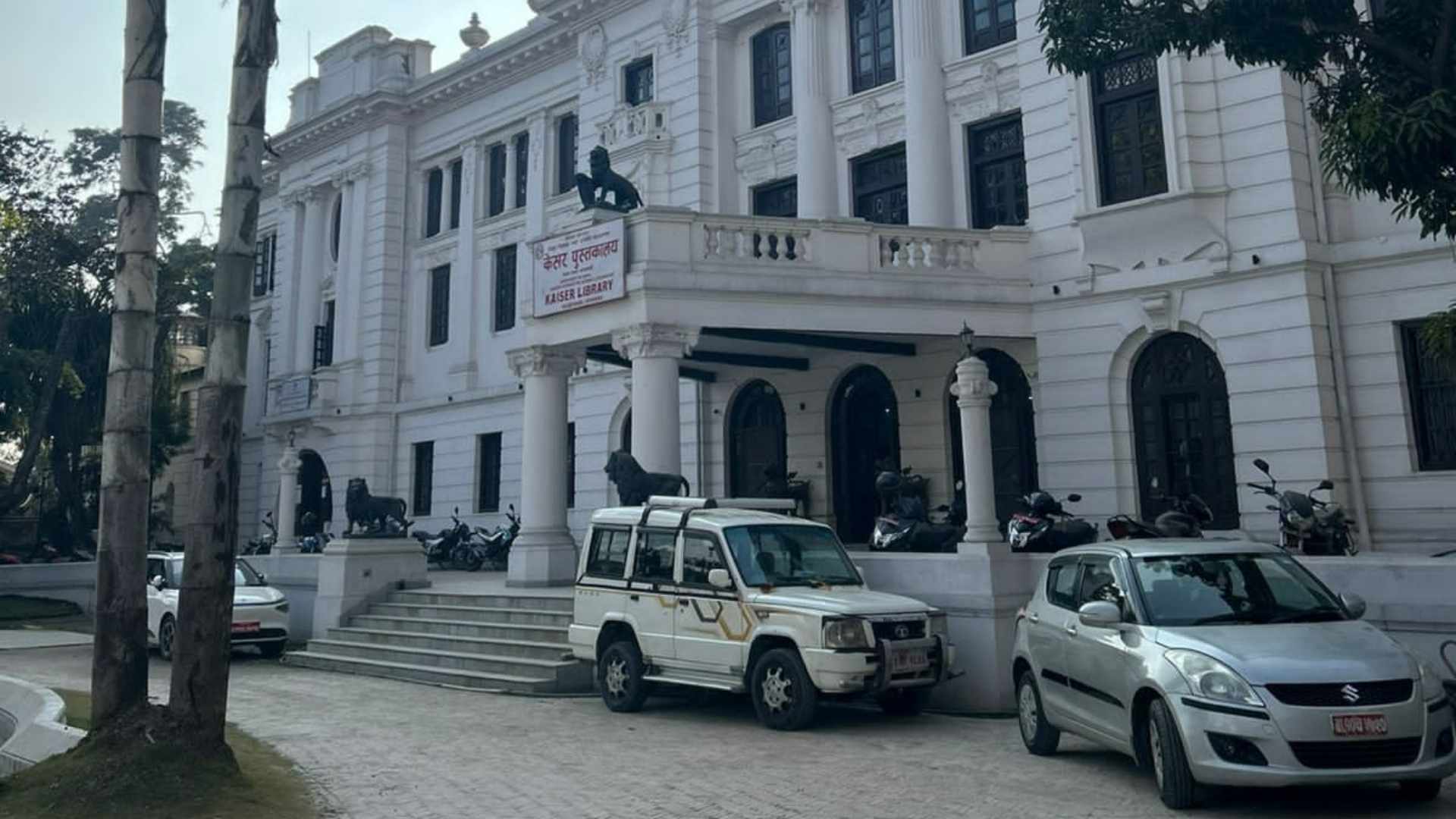
Unlike many libraries in Kathmandu, Kaiser Library has a renovated building after the 2015 earthquake and a capacity to accommodate 500 readers. On average, more than 300 people visit daily. The library holds 70,000 books including rare texts such as Sushruta Samhita, one of the oldest works known on surgery and medical practice.
Although it receives public funds, it isn’t enough. The library still struggles with insufficient furniture, incomplete renovation work and slow digitisation and only 15 people to handle its extensive collection and the daily influx of readers.
Libraries do not choose their readers. Nor do they choose who opens their doors. Alongside government and public libraries funded by scholars or politicians, some are borne from private initiative. Sanu ko Pustakalaya in Manbhawan of Kumaripati is one such space, established in the memory of a family member and run through private funding. It sees 25-30 visitors daily, mostly students preparing for CA, medical entrance and Lok Sewa.
Tara Sunuwar, a 27 year old librarian, has stayed in the library for more than three years and found solace in the role.
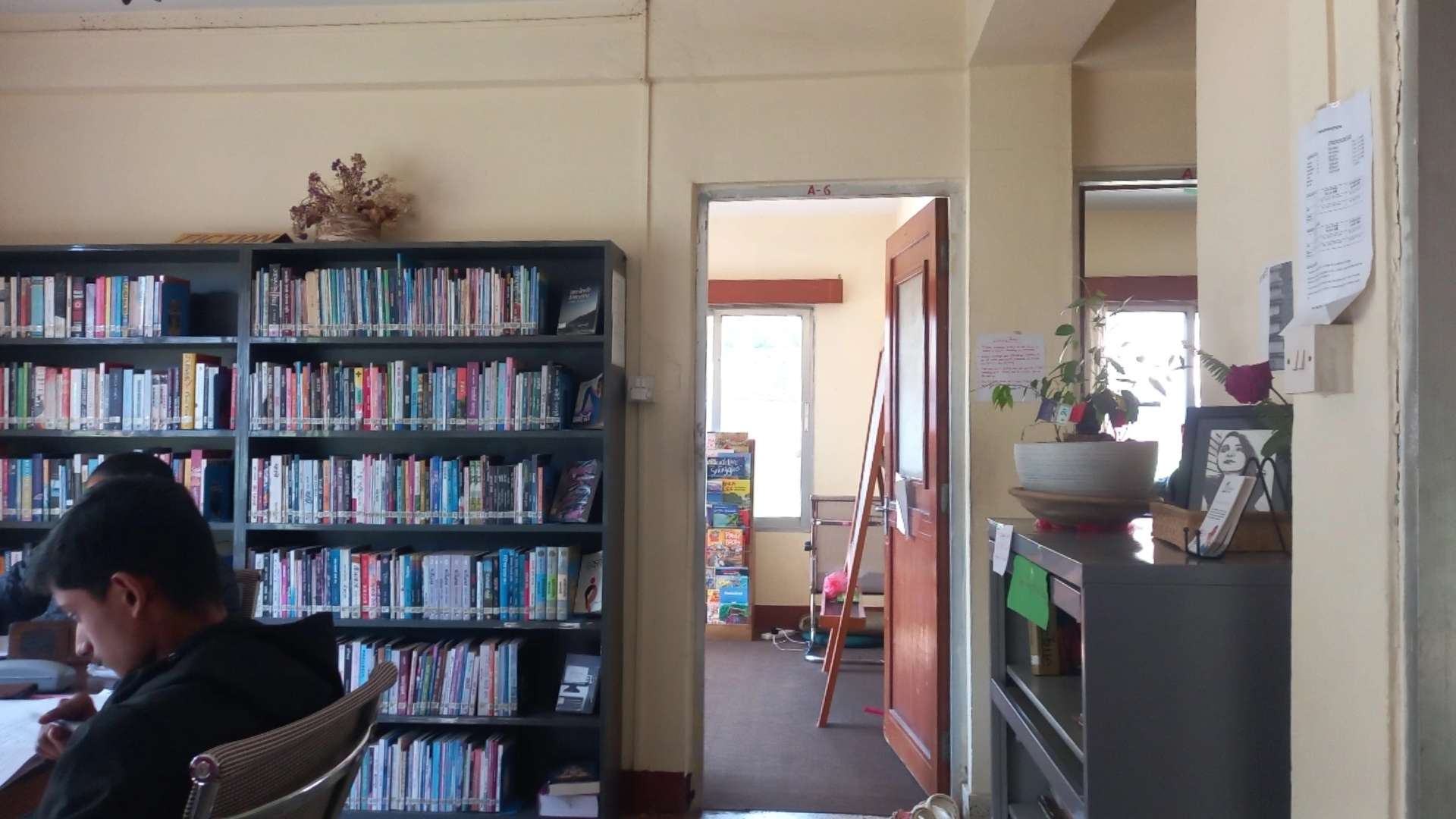
Sunuwar has been in the library since the beginning. With no background and no plans to pursue this, Sunuwar joined this profession thinking it would be easier for her to juggle both work and study. Her own reading journey began once she started as a librarian.
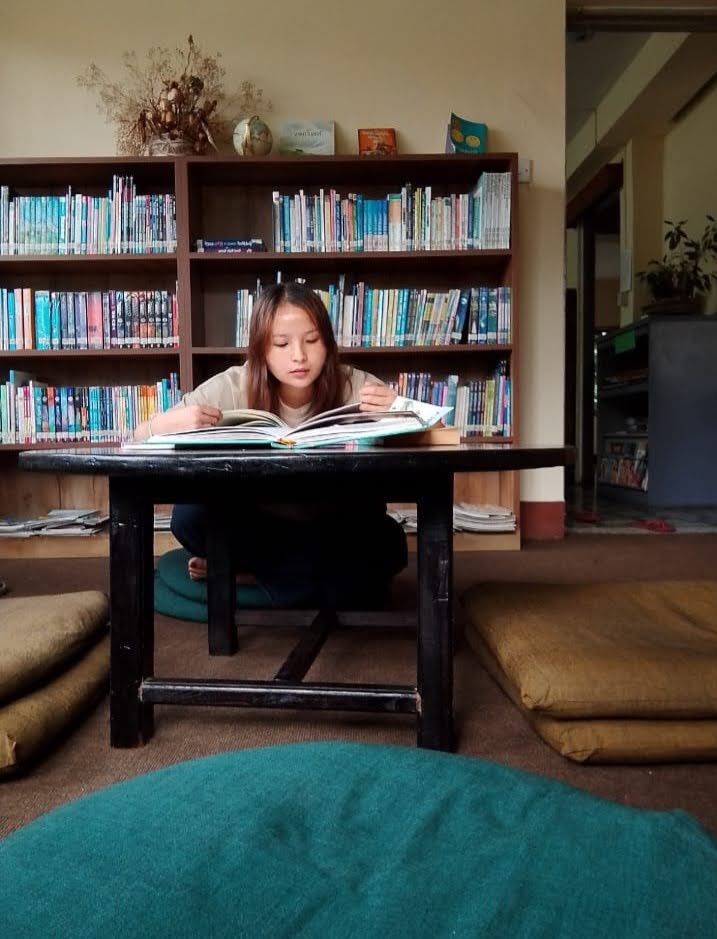
“A library is never without readers. It is undoubtedly the best place to concentrate,” she says. “I think people get inspired by watching others study in libraries. Because I’ve felt this way. Before joining here, I would stay idle and lazy at home. I am more disciplined now.”
She notes that readers come from places like Bhaktapur and Kathmandu, despite Kathmandu’s traffic problems, to the library. “Sanu ko Pustakalaya operates only during afternoon hours. Many visitors have requested that it open in the mornings and evenings as well.”
Tara loves her work but also carries a concern of her own, particularly about the lack of long term-prospects. “I will miss my bond with some of the members here,” she says if she ever leaves the profession.
While Tara doubts the prospects of the role, Buddha Kumar Shrestha of Martin Chautari Library is firm in his decision to stay.
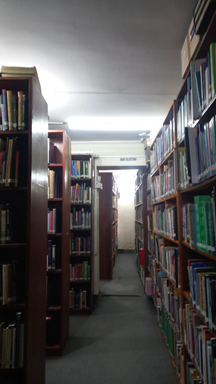
Martin Chautari is another institution running without government support, functions primarily as a research centre and public reference library. With a focus on non-fiction, media, social science and archives, it has archived more than 50 years of Kantipur newspapers, records that the Kantipur publication itself no longer possesses. Mostly visitors come for research and thesis purposes.
“There are only four staff, two librarians and two interns,” said Buddha Kumar Shrestha who has been working in the organisation for 15 years and as a librarian for the last three years. “The space is rented and funding for the organisation as a whole has been difficult after Covid.”
Shrestha studied up to the intermediate background, and received a three month training that KVPL offers annually. He moved to the valley in pursuit of education and later, learned about the organisation through a mutual connection.
“I did not study Library Science,” he says, clarifying his entry into the profession. “The profession chose me.”
“The journey somehow brought me here,” he reflects, expressing his desire to continue what has chosen him.
Reflecting on his role, he shares, “I am guiding my juniors and learning from them. A librarian has to constantly be aware of new books and knowledge, both national and international.”
As Yadav Chandra, chief librarian of Kaiser Library observed, many Loksewa aspirants who once studied in these libraries have gone on to pass exams and earn titles. Countless lives have been quietly transformed within these walls. Among them are librarians who are both witness and part of these journeys of subtle transformation. Yet one cannot help but wonder how many more could change if librarians and libraries were not burdened by fundamental shortages.
Despite feeling overlooked in their profession, librarians continue to serve readers. They are sticking within fragile systems and deteriorating structures holding on to the hope that change will come. Whether they chose the profession or the profession chose them, if libraries in Kathmandu are still breathing, librarians have much to do with it.
Read More Stories

NEPSE falls nearly 75 points as market sentiment wavers
The stock market was unable to maintain the gains seen on Tuesday, slipping...
India has begun its long-delayed population census. Here's why it matters
India has begun the worlds largest national population count, which could reshape welfare...

The United Nations has called on Israel to repeal a law passed by...


Business + Finance + Economy + Tech + Environment + Nepal & South Asia + In-depth Analysis + News + Investigation + Research + Expert Opinion + Anatomy of Complex Issues.