Bharatanatyam | Natya Shastra | Spiritual embodiment | Ananda
I have always loved dancing!
It all began when I was younger, dancing instinctively to old Nepali songs, then to Hindi film music, imitating the actors/actresses I watched on the TV screen. Even then, I loved fading into the rhythm of music and feeling that sense of oneness between my body and soul. When my foot taps to the ground aligning perfectly with the sound of music, I feel like I’m in the air.
In recent years, I’ve been fortunate to have the time and opportunity to return to this old passion that I grew up cherishing. Now in my third year of my undergrad study, I am studying dance as an elective subject, exploring multiple forms of dance. Among them, Bharatnatyam has seized my heart, a form I've been trying to understand and embrace for about a year, fully aware that this is a lifelong journey.
Almost everything about Bharatnatyam fascinates me, its depth, discipline and timelessness. Perhaps this fascination is true for almost everyone who is genuinely devoted to or simply loves their craft. But its origin intrigues me the most.
According to Hindu belief, during the Treta Yuga (the second age or yuga of the four Hindu world ages), when greed and cruelty dominated humanity, the Devas (gods) became worried that humans had lost their way, although there were Vedas as a guide for how humanity should lead life. The problem was it was accessible to and understood by Brahmins only.
The Devas thought the Vedas should be simplified so the divine beings requested Lord Brahma to create a Fifth Veda which had the essence and compilation of four Vedas. Brahma decided that performing arts would be a perfect medium to do this and entrusted Sage Bharata Muni with this divine task.
Brahma presented Natya (that includes Bharatnatyam) to Sage Bharata, who later codified in the sacred text known as Natya Shastra, an ancient book on dramaturgy encompassing not just dance but theatre and all the performing arts together.
Scholars believe the shastra was written between 500 BCE and 500 CE. Yet its relevance is timeless. Even today performing arts shape how we see the world much like they were meant to ages ago.
Historically, Bharatnatyam was known as Sadhirattam and several other names. It flourished in Tamil Nadu of South India, where it was performed by temple dancers known as Devdasis, as an act of devotion. Over time, the art form evolved and moved beyond temple spaces; it came to be known around the 1930s by its modern nomenclature Bharatanatyam, which in itself is quite revealing.
Although Bharatanatyam is not specifically mentioned in the Natya Shastra, it derived from syllables mentioned in the shastra: Bha which means Bhawam, meaning feelings, emotions. Ra for Ragam stands for melody, framework for musical notes, Ta for Taalam or Rhythm and Natyam means dance and drama in Sanskrit. Nataraja, also known as Lord Shiva is considered as the god and creator of Natya in all classical dance forms.
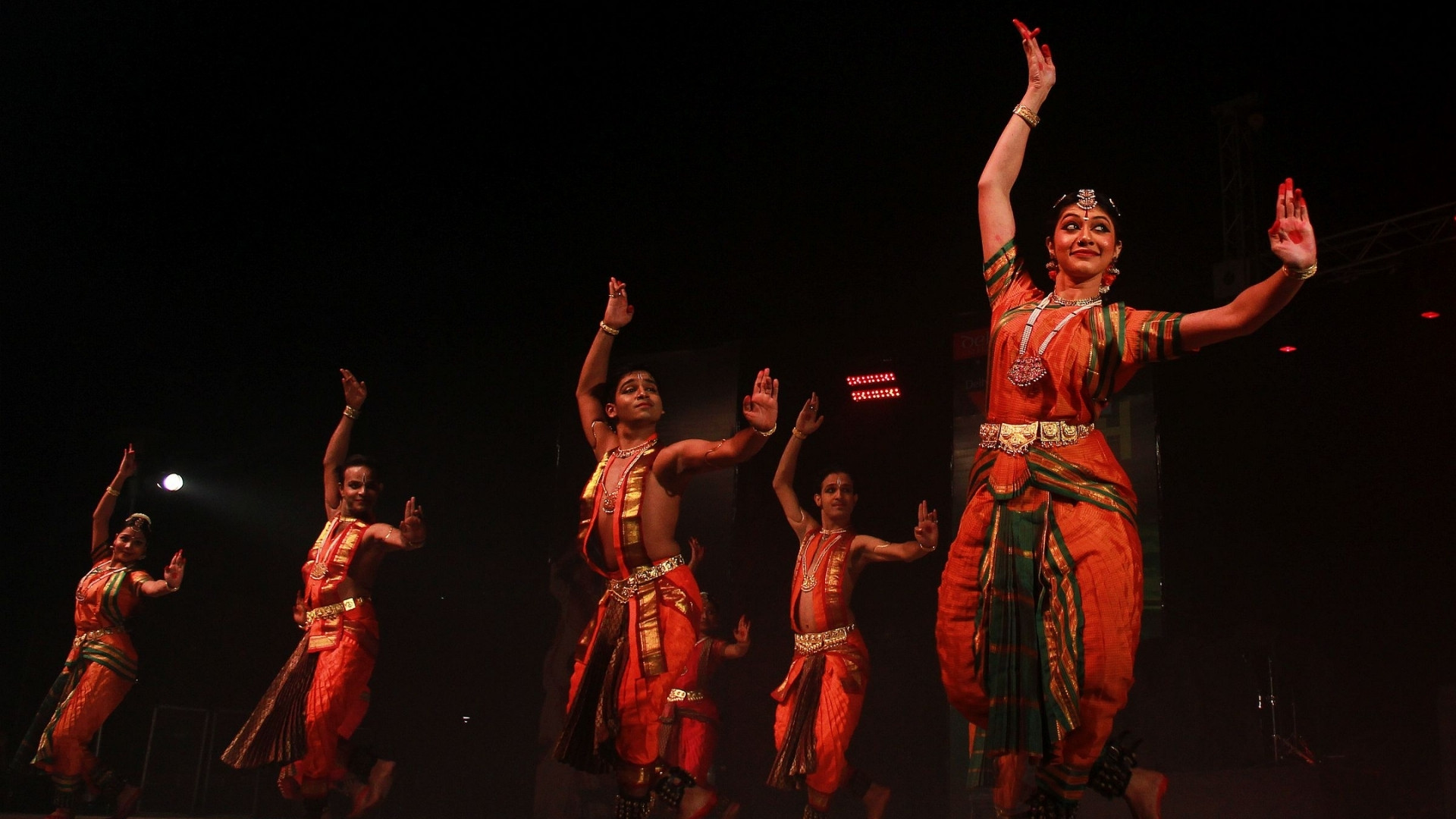
There are several reasons why this dance form is revered: its sharp posture, Aramandi (half sitting posture), expressive Mudras (hand gestures) and footworks, the core components of Bharatnatyam like all Indian Classical forms are Nritta, Nritya and Natya.
Nritta (known as pure dance) is rhythmic, geometric, abstract movements which are more techniques centric without expression. Nritya (known as expressive dance) combines Nritta’s rhythm with mudras (hand gestures) and abhinaya (facial expression).
Lastly, Natya (dance) is a dramatic aspect that brings mythological stories to life. It is performed to Carnatic music accompanied by mridanga, vocal and other instruments.
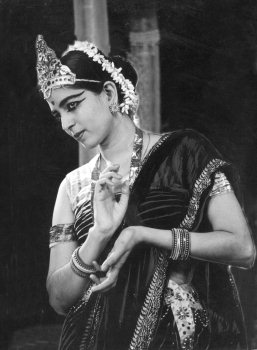
Alongside these different postures, the dance is a visual language with performers wearing elaborate make up, stunning costumes and beautiful jewelry. Beneath the splendor, lies a deeply philosophical art. It was never designed as just a mere ‘performance’ but sacred practice to communicate with the divine. But why was it that a dancer’s body was considered a vessel of this communication, a medium to a prayer?
According to Rukmini Devi Arundale, a pioneering Bharatnatyam dancer, cultural reformer, and theosophist, who played a crucial role in the revival of the dance form in the 20th century, a dancer’s body acts as a vehicle to salvation. She emphasised that this doesn’t occur instinctively for dancers, they must acquire it through training, which bestows dancers with the right technique. An artist, she believed, must forget oneself and in that forgetfulness, they achieve Ananda, a divine bliss.
Rukmini’s contribution to Bharatnatyam is notable for a particular reason. In the early 1920s, the dance form was considered a vulgar form of art. During British colonial rule, Devadasis, women dedicated to temple service who practiced classical dance forms such as Sadhirattam were increasingly associated with prostitution by the British, who judged the tradition through their own Victorian moral framework. In 1892, they launched an Anti-Nautch Movement, which led to banning temple dance in 1910, imposing their colonial ideas of modernity and morality while restricting Indian cultural expressions.
Practitioners nearly disappeared from the art form. Classical art revivalists like Rukmini and E Krishna Iyer reformed the dance form, introducing it beyond temples establishing it as a respectable art form, as they transformed Sadhirattam into Bharatanatyam.
“When you read the life of a composer, you will see, they actually had a vision of Krishna and they saw everything in the divine form and they put that into the music, into poetry. What we have to do is interpret the same spirit in our movement,” said Rukmini in one of her old interviews. “It is not by movement, you express your feeling, it is by your feeling you express movement.”
Through Abhinaya, dancers evoke Rasa (aesthetic emotion) that transports both the dancer and audience in a shared spiritual journey. The journey requires a dancer to move beyond the self, entering a higher consciousness and become one with that spirit.
This spiritual journey matters deeply to me and many other aspiring dancers who want to tell stories, connect with people in ways that require no language. I see it as something magical because something intangible yet powerful unfolds on stage, in that space between a dancer and an audience.
This “magic”, I believe, is a huge reinforcement for an artist. What makes an artist truly devoted to their craft is surely commitment, discipline but also faith that their art has a purpose and a power to transform and transport. Faith that their movement carries meaning, their expression transforms and transports. It is through live connection, this shared magic, the faith grows strongest.
“It is the dancer who takes a viewer on a journey with them through Nritta and Nritya,” says Guru S.P Vijay Kumar, India’s “Natya Siromani” who has been practicing Bharatnatyam for over 40 years.
In my earlier days when I had just started, my entire body was in pain after a few days of practicing Aramandi (Half Squatting position). Strangely, I loved it. That once-gratifying pain has now become more like a remedy. A therapy. This healing effect lies in the connection between dance and the brain, as learning and performing activates different regions of the brain responsible for movement, emotion, memory and coordination. Several studies also show this therapeutic potential. Additionally, several modern yoga asanas trace their origins to the dance.
Beyond therapy, Bharatnatyam has taught me resilience. I recall my first few classes, confused, lost and struggling to coordinate my limbs. Yet from the basic Adavus to the complex steps of Alarippu, time flew. Reflecting back, I realise how it instilled patience, discipline and devotion in such a short span of time.
More importantly, Bharatnatyam changed my entire perception of dance itself. It is not merely an art form or a recreation, it’s spiritual, it’s transformative. Once this understanding takes root, you begin to view every dance form with greater respect, especially in society that often undervalues dance.
This personal reflection also holds a larger truth that beyond its aesthetic and technical dimensions, Bharatnatyam holds continued relevance in the contemporary world.
To truly master this art, it may take years, perhaps a lifetime. However, its life lies in the act of its pursuit, in practicing it and in embracing the magic that unfolds on the stage, in the space between the “I”, whose art is never entirely their own, and the “eye” of the audience seeking a journey, spiritual or otherwise. The dance exists beyond the stage, but it is in that shared gaze, it also finds its dialogue and resonance.
Read More Stories

NEPSE falls nearly 75 points as market sentiment wavers
The stock market was unable to maintain the gains seen on Tuesday, slipping...
India has begun its long-delayed population census. Here's why it matters
India has begun the worlds largest national population count, which could reshape welfare...

The United Nations has called on Israel to repeal a law passed by...


Business + Finance + Economy + Tech + Environment + Nepal & South Asia + In-depth Analysis + News + Investigation + Research + Expert Opinion + Anatomy of Complex Issues.