DROUGHT | MADHESH PROVINCE | WATER CRISIS | RICE | PADDY | AGRICULTURE LOSS | FOOD INSECURITY
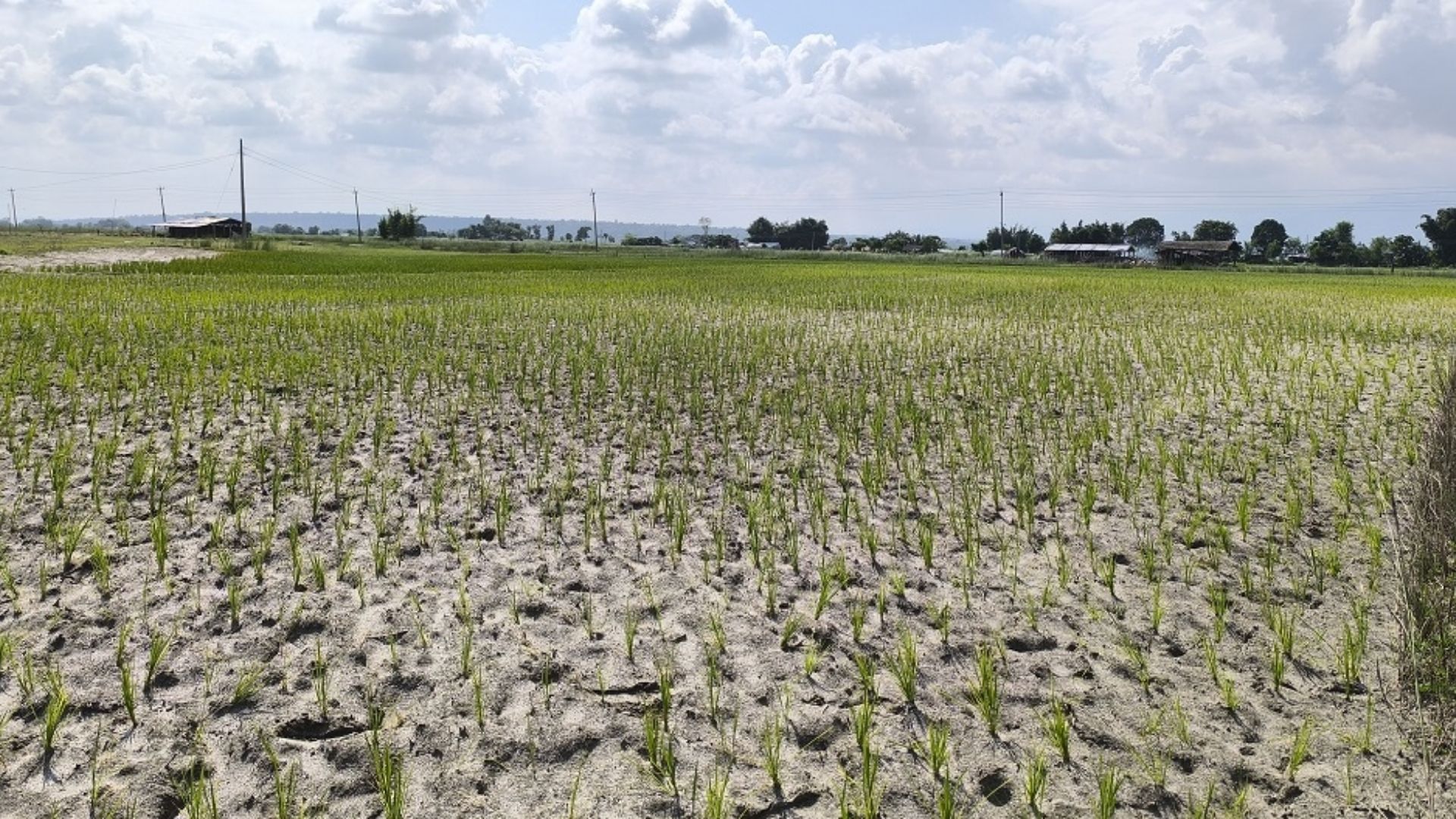
On May 29, monsoon arrived in the country two weeks before its usual time. Yet, six weeks after its official onset, the majority of places in the Madhesh Province are still rain-deprived.
On July 10, the Madhesh government officially declared the province a drought-hit zone, with all 136 municipalities, including the worst-hit Birgunj, facing acute water scarcity. Meanwhile, the Hilly region is facing some serious monsoon-led disasters, killing over a dozen people.
In the last week of May, the federal Department of Hydrology and Meteorology (DHM) had forecasted above-average monsoon rainfall with warmer temperatures across the country this year. The department’s assessment, which was based on global and regional climate information centres, specified a 35-45% likelihood of above-normal precipitation in western and southern regions of Madhesh Province.
However, midway towards the monsoon, which generally lasts for four months (June to September), the central plains have seen just 12% of the expected rainfall so far.
DHM has also revised its monsoon outlook for July to September, with below-average rainfall expected in the southern belt of Madhesh Province. With average rainfall predicted for the plain belts of Koshi province, the rest of the country, however, is expected to receive above-average rainfall.
Lack of rainfall has also led to a water crisis. In his LinkedIn post, Climate and Environment expert Ujjwal Upadhyay pointed out that over 30% of tube wells in Central Terai, which are the main drinking water source, have dried up.
Often referred to as the rice capital, owing to its production of paddy—the country’s prominent staple crop, dry monsoon with persistent drought conditions in the prime planting season is a predicament for Madhesh’s agricultural activities.
Like anywhere across the country, farmers in the province rely heavily on monsoon rains for paddy transplantation. Last fiscal year (2023/24), 5.7 million metric tonnes of paddy were produced in the country. Out of which, 1.3 million (22.8%) metric tonnes were produced in Madhesh.
Paddy transplantation in the province has seen a dramatic slowdown this monsoon. As of July 13, only one-third of the province’s 372,465 hectares of arable land have been planted. The figure marks a sharp fall from the same period last year, when reportedly 66.7% of transplantations had already been completed.
District-level data shows a wide disparity: Parsa leads with over 73% of its rice fields transplanted, while Saptari lags at just 16%. The sluggish pace reflects a troubling trend for a region heavily reliant on agriculture, with the season’s critical window slipping away. The deficient rainfall condition in the province is broadly concerning, considering that paddy is a major contributor to the agricultural Gross Domestic Product (GDP). In 2023/24, paddy accounted for 12.82% of the country’s agricultural GDP.
For 2025/26, the government has set aside almost NRs 57.5 billion for the country’s agriculture and livestock sector, with 330 million rupees set aside for irrigation facilities for spring paddy—setting a specific target to increase this year’s paddy production by around 1.2 million tonnes and to become self-reliant in rice in next two years. As of mid-June, paddy imports amounted to 521,269.17 tonnes worth nearly NRs 20 billion to meet the domestic demand.
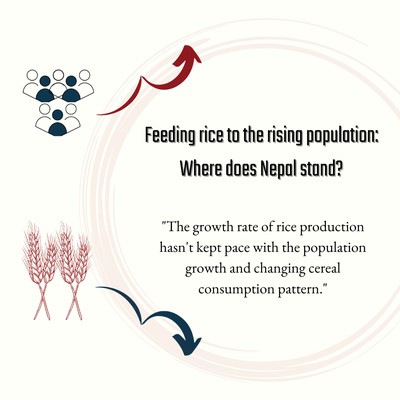
According to a study, annual rice production has grown merely by 1.5% in the last 54 years in contrast to population growing by 2.3% while Nepalis annually consume about 137.5 kg of rice.
With its population of 6.12 million, Madhesh Province alone would need approximately 841,500 metric tonnes of rice annually. Several studies show around 60% is recoverable as rice after milling losses—which means out of the province’s total paddy production, 802,603 metric tonnes make it as rice. In such a scenario, the actual rice output will significantly fall short of the country’s annual rice consumption needs if other provinces fail to show significant surpluses.
This further raises concerns regarding the impending food insecurity in the country, with a possible escalated import trend and price rise. The provincial government, in view of this, has started seeking help from the federal government and donor agencies to address the situation.
Lack of rainfall has also led to a water crisis. In his LinkedIn post, Climate and Environment expert Ujjwal Upadhyay pointed out that over 30% of tube wells in Central Terai, which are the main drinking water source, have dried up.
In light of the escalating crisis, the provincial government has now launched an emergency operation to supply drinking water to affected communities.
On Wednesday, Chief Minister Satish Kumar Singh deployed eight fire engines, each with a 5,000 liters water capacity—from Janakpur to distribute water across hard-hit districts such as Bara and Parsa, along with seven tankers from the Nepal Army and three from the Forest Office.
Read More Stories

NEPSE falls nearly 75 points as market sentiment wavers
The stock market was unable to maintain the gains seen on Tuesday, slipping...
India has begun its long-delayed population census. Here's why it matters
India has begun the worlds largest national population count, which could reshape welfare...

The United Nations has called on Israel to repeal a law passed by...


Business + Finance + Economy + Tech + Environment + Nepal & South Asia + In-depth Analysis + News + Investigation + Research + Expert Opinion + Anatomy of Complex Issues.