Liberal Democratic Party (LDP) | Japan Innovation Party | Japanese politics
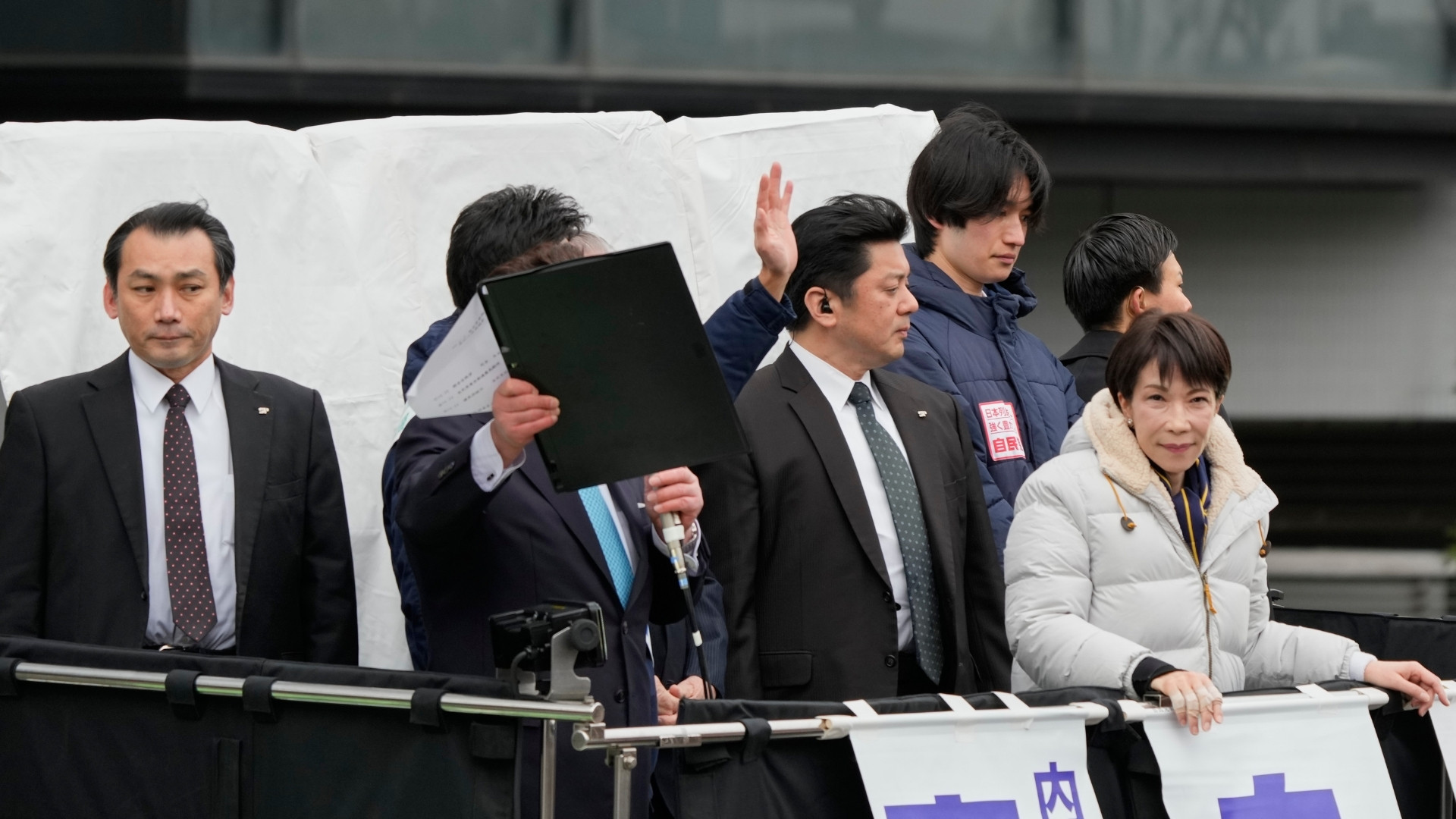
Japan’s ruling party has secured an overwhelming victory in Sunday’s snap general election, cementing Prime Minister Sanae Takaichi’s grip on power.
The coalition led by Takaichi’s Liberal Democratic Party (LDP) captured 352 of the 465 seats in the House of Representatives, with LDP itself winning 316 seats, enough to govern alone.
Takaichi, who became Japan’s first woman to serve as prime minister, called the early election just four months after taking over the party leadership, seeking a decisive endorsement from voters.
The scale of the win stands in sharp contrast to the fortunes of her immediate predecessors, whose administrations saw the LDP lose its majority amid corruption allegations and mounting pressure from rising living costs.
Who is Sanae Takaichi?
A senior Japanese politician, Takaichi has served in the House of Representatives for much of her career since 1993, becoming lawmaker for nine times, and held a number of cabinet roles under former prime ministers Shinzo Abe and Fumio Kishida.
She assumed office as Japan’s prime minister and president of the LDP in October 2025, making history as the first woman to lead the country or the party. Her cabinet saw the appointment of Satsuki Katayama as Japan's first female finance minister, and Kimi Onoda as economic security minister, which she argues are appointments based on merits, not gender. Her election as prime minister made her Japan’s fifth premier in five years.
Pre-snap poll context
Sunday’s result marks a sharp turnaround from the 2024 election, when the LDP lost the absolute majority it had enjoyed since regaining power in 2012.
Prior to the snap vote, the LDP held 198 seats, and together with its coalition partner Nippon Ishin’s 34 seats, commanded a slim total of 232 in the chamber.
Japan’s long-dominant LDP saw its support erode following a series of election defeats in 2024 and 2025, costing it a clear majority in the Diet and plunging national politics into uncertainty. Shigeru Ishiba, who took office as prime minister in late 2024, stepped down in October 2025 as both prime minister and LDP president after pressure mounted in the wake of those losses.
Diet is Japan’s supreme, bicameral law-making body, established under the post-war constitution as the highest organ of state power. It consists of an elected House of Representatives (465 members) and a House of Councillors (248 members).
The same month Sanae Takaichi won the leadership of the party, a victory that positioned her to become the prime minister. However, LDP’s long-standing coalition with Komeito broke down over ideological differences and internal disagreements after Takaichi’s rise, casting doubt on her ability to secure a stable majority in the Diet.
In response, Takaichi swiftly negotiated a new coalition with the right-leaning Japan Innovation Party, finalising the agreement just before a critical parliamentary vote. On 21 October 2025, she was elected prime minister by the Diet, becoming Japan’s first female leader. She secured enough support from her coalition and several smaller parties to assume office, despite the alliance initially lacking a full majority in both houses.
In January, Takaichi called for the dissolution of the lower house and called for an early election while public support for her government was high. Although observers saw that the move could backfire, the outcome has instead handed the prime minister a strong and secure platform for governing.
Policy priorities
During her first press conference in October, Takaichi pledged to tackle rising inflation and implement a temporary suspension of the gasoline tax. She also outlined plans to establish a backup capital region, reform the social security system, pursue constitutional revisions, and secure a stable majority government.
In November, her government announced a stimulus package totaling 21.3 trillion yen ($135.5 billion) that sought to boost the country’s slowing economy and offer support to inflation-hit consumers.
At the same time, Takaichi emphasised her administration’s commitment to consulting opposition parties on key national policies. The latest election success however now gives Takaichi needed leverage to push through her agenda.
Takaichi, a hardline conservative, is recognised for her big spending promises and security-focused approach, carrying forward key aspects of the “Abe era” policies, while advocating for a more assertive regional foreign policy and economic reforms.
She has called for tougher immigration measures, stricter oversight of foreign land ownership, and stronger enforcement to ensure foreign residents pay their taxes and health insurance. Takaichi promotes a tougher security strategy for Japan in East Asia, emphasising increased defense funding, a decisive stance on Taiwan, and stronger intelligence and espionage countermeasures.
Under Takaichi, Japan aims to create a 10-year fund to strengthen its shipbuilding industry and implement measures to increase defense spending to 2% of GDP by fiscal year 2027.
In November 2025, Takaichi’s remarks suggesting Japan might respond militarily to a Chinese attack on Taiwan sparked a diplomatic row, with Beijing condemning the comments as interference and demanding a retraction, which she refused.
Read More Stories

NEPSE falls nearly 75 points as market sentiment wavers
The stock market was unable to maintain the gains seen on Tuesday, slipping...

India has begun its long-delayed population census. Here's why it matters
India has begun the worlds largest national population count, which could reshape welfare...

The United Nations has called on Israel to repeal a law passed by...


Business + Finance + Economy + Tech + Environment + Nepal & South Asia + In-depth Analysis + News + Investigation + Research + Expert Opinion + Anatomy of Complex Issues.