Campaign Watch | Election Governance | Rhetoric vs Written Commitment
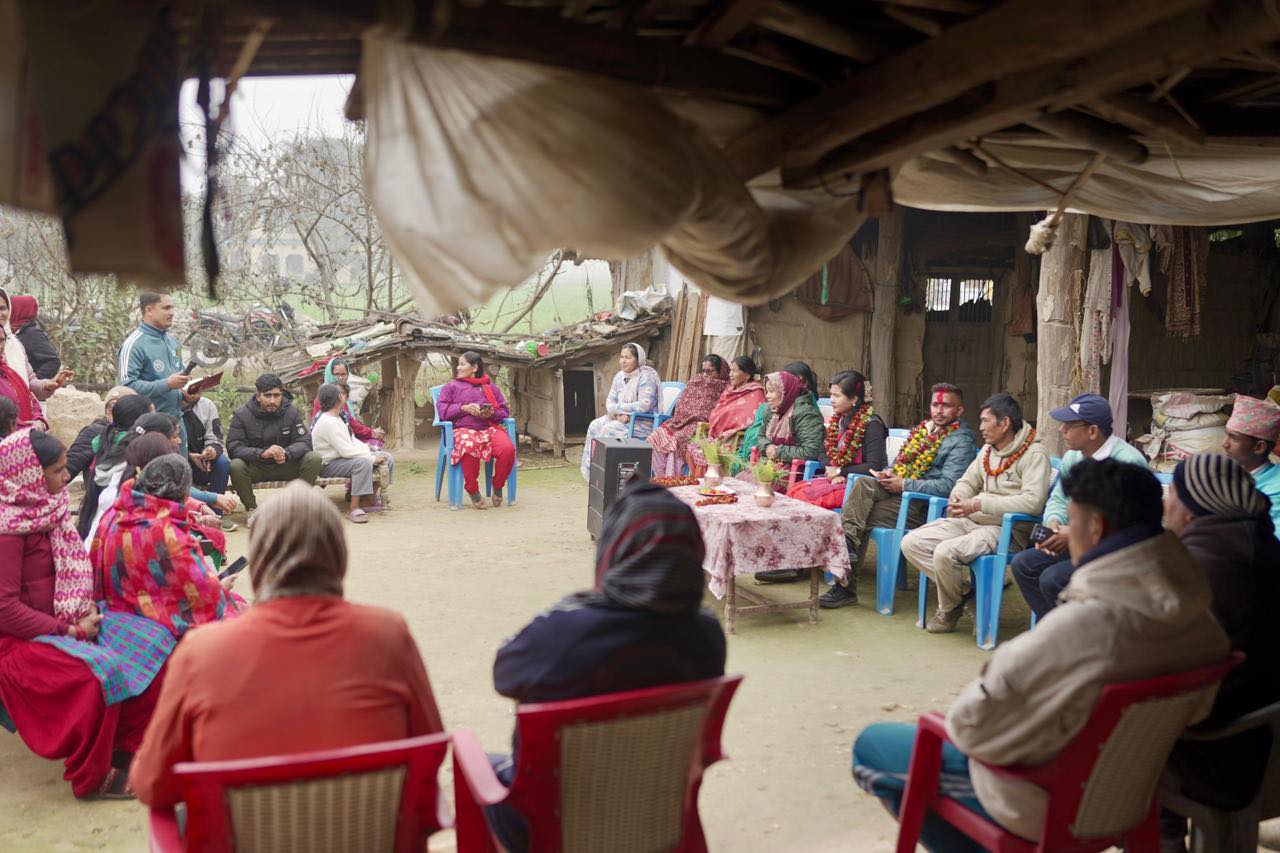
In his address to voters, KP Khanal, a Rastriya Swatantra Party (RSP) candidate from Kailali-2, is heard urging people to vote for him and his party this year, without outlining what he plans to do if elected. Repeatedly asking voters to put a stamp on the ‘ghanti’ symbol, Khanal says he would not make “big promises,” but insists that he and his party deserve a chance this time around.
In another video circulating online, Rima Bishwokarma, an RSP proportional representation candidate under the Dalit cluster, tells voters that if the party wins both constituencies in Syangja by a majority, she will ensure visits by party president Rabi Lamichhane and “Prime Minister” Balendra Shah. The appeal, again, rests less on policy commitments and more on personalities and perceived political proximity.
A similar pattern emerges elsewhere. Addressing voters in Jhapa-5, RSP senior leader Balendra Shah spoke forcefully about the issue of landless settlers, framing it as a matter of justice and state failure. However, the remarks stopped short of clarifying what policy instruments, legal pathways, or institutional coordination would be pursued to resolve a problem that spans decades and multiple governments.
Meanwhile, Shree Gurung, a Ujyalo Nepal Party (UNP) candidate from Kathmandu-5, has repeatedly emphasised national economic prosperity largely driven by tourism and the energy market in his public messaging. Except for scaling up the traditional Tokha Bazaar and its local produce, particularly chaku, in one of his online publicity materials, he appears less concerned about the constituency-specific issues.
While political parties are yet to release their commitments through election manifestos, candidates from major political parties are already reaching out to voters to woo them, despite having nothing concrete in hand. Several videos on social media show different candidates, including cadres, desperately engaging with the public as part of their election campaigns, but without clear goals and plans.
This runs counter to the Election Code of Conduct, 2026, which requires political parties and candidates to make their election manifestos public before commencing campaign activities and to submit them to the Election Commission (EC).
Clause 37 of the Code explicitly mandates that parties or candidates must release their manifestos and carry out campaign activities on the basis of those documents. The EC has scheduled the official campaign period from February 15 to March 2, 2026 (Falgun 3 to 18), barring door-to-door outreach outside this window.
Yet, despite these provisions, informal campaigning has already begun. Observers raise a fundamental question: should elections be contested based on manifestos and policy direction, or on candidates’ faces, personalities, and broad rhetoric on development and governance, among other broader claims?
An election manifesto is an official document through which a political party communicates its ideology, goals, policies, programmes, and commitments to voters.
Then, voters should carefully assess whether the document genuinely represents the interests of voters and citizens at large; whether the commitments are fair and realistically achievable; and what effects they may have on national, international, social, economic, political, legal, and other multidimensional aspects of society.
While parties must present a clear political agenda and policy direction, detailing how they intend to govern the state and channelise public resources for maximum benefit, candidates themselves must also articulate individual manifestos. These should translate the party’s broader vision into constituency-specific priorities, outlining how national policies would address local problems.
In the absence of such individual manifestos, voters are left with vague assurances, symbolic gestures, or promises of access to powerful leaders instead of a clear understanding of what their elected representative will actually do for their constituency.
Among the few parties that have moved earlier, Upendra Yadav-led Janata Samajbadi Party Nepal released a 27-point manifesto on January 25, while the newly formed Gatisheel Loktantrik Party has unveiled a draft manifesto and sought public feedback.
Major parties, on the other hand, are claiming they are actively engaged in preparing manifestos. However, despite the election announced some four months ago and with less than four weeks until polling day, they are yet to finalise their plans, leaving little time for voters, media and analysts to scrutinise commitments. “This says a lot about our political parties' competence,” notes a Kathmandu-based voter, waiting to assess what they have to offer.
The Nepali Congress has stated it will soon release its manifesto, incorporating a ‘Vision-10’ document outlining 10 major visions, focusing on good governance, development, and realistic action plans.
Party spokesperson Devraj Chalise has said that the party is collecting suggestions from districts nationwide and will align local inputs with national priorities to produce a practical, inclusive, and achievable manifesto.
Meanwhile, party chair Gagan Thapa released his 17-point party resolution during the party’s recently held special convention, where he presented ambitious plans such as a two‑term limit for prime ministers, with the Congress taking the lead in pursuing the necessary constitutional amendments, and forming a high-level commission to investigate the assets of all public officials since 2006, including former judges and military officials.
The resolutions are expected to be incorporated into the upcoming manifesto.
Similarly, RSP has announced to release its manifesto soon, reportedly outlining 100 works to be completed in the first 100 days. A committee led by party vice chair Swarnim Wagle is drafting the document, which the party plans to unveil in the second or third week of February.
The trend of broader rhetoric without written commitment raises concerns about the quality of democratic choice being offered to voters.
At the same time, candidates across party lines, including the Nepali Congress, CPN-UML, Nepali Communist Party, RSP, UNP, Rastriya Prajatantra Party, and JSP-N, have already begun door-to-door outreach and pamphlet distribution.
The election code of conduct prohibits such activities beyond the official 15-day campaign window, pointing to persistent gaps in monitoring.
Read More Stories

NEPSE falls nearly 75 points as market sentiment wavers
The stock market was unable to maintain the gains seen on Tuesday, slipping...

India has begun its long-delayed population census. Here's why it matters
India has begun the worlds largest national population count, which could reshape welfare...
The United Nations has called on Israel to repeal a law passed by...


Business + Finance + Economy + Tech + Environment + Nepal & South Asia + In-depth Analysis + News + Investigation + Research + Expert Opinion + Anatomy of Complex Issues.