Madhesh Province | Chief Minister Appointment | Vote of Confidence | Coalition Politics
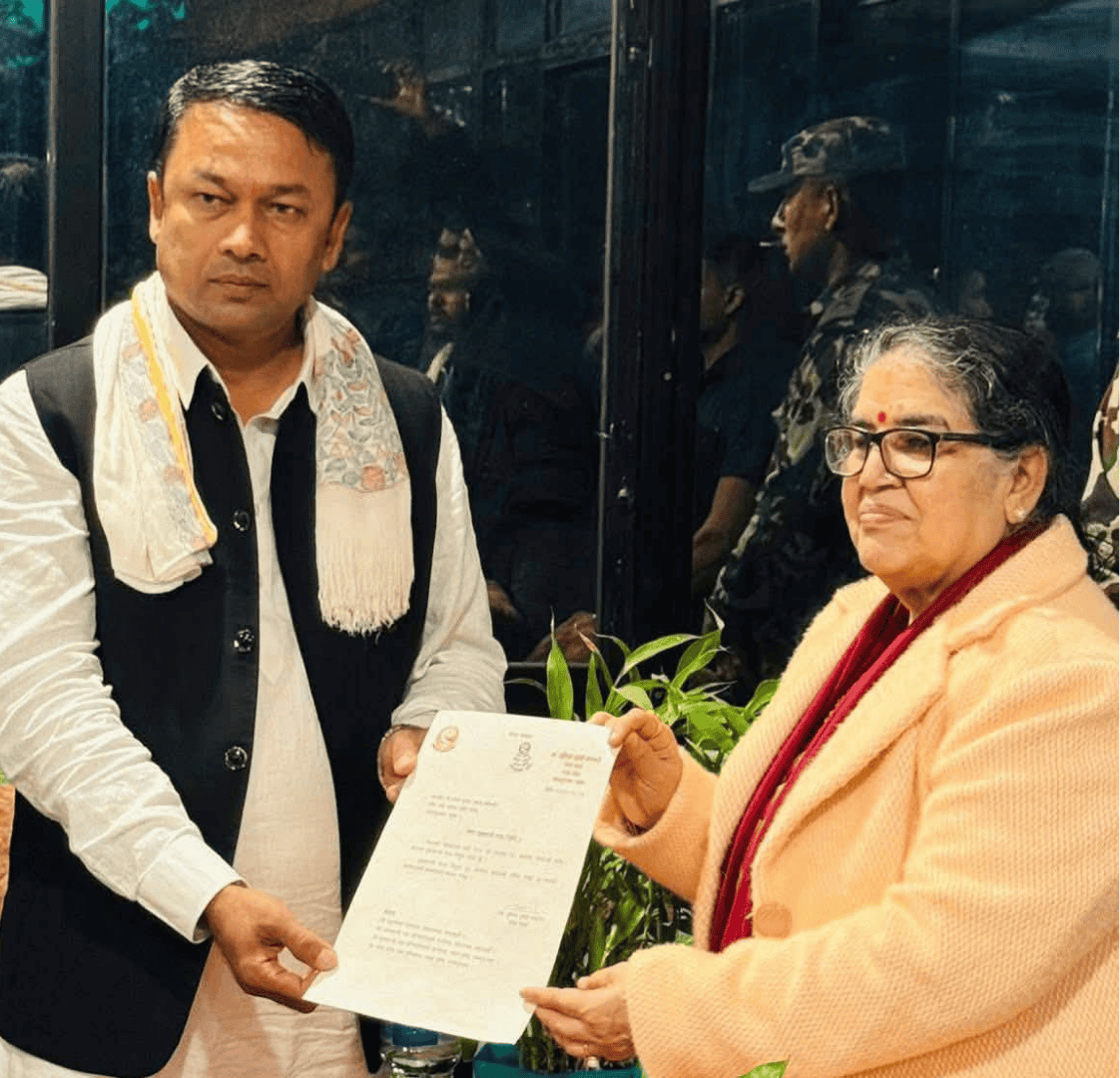
A political storm engulfed Madhesh Province after Saroj Kumar Yadav, the CPN‑UML parliamentary party leader in the provincial assembly, was appointed Chief Minister in early hours of November 10 by Province Head Sumitra Subedi Bhandari under Article 168(3) of the Constitution. The appointment sparked protests outside Madhesh Bhawan, the provincial secretariat, in Janakpur, with demonstrators burning tyres and raising slogans against what they termed an “undemocratic imposition.”
Opposition leaders from seven political parties, including Nepali Congress, CPN (Maoist Centre), CPN (Unified Socialist), Loktantrik Samajbadi Party Nepal (LSP-N), Janamat Party, Janata Samajbadi Party (JSP), and Nagarik Unmukti Party, have jointly rejected the appointment. They argued that the process violated the constitutional provision for forming a coalition government under Article 168(2), which requires a candidate to secure the support of two or more parties before being appointed Chief Minister.
The opposition is reportedly preparing to file a writ petition in the Supreme Court challenging the appointment, with signatures from 74 provincial assembly members.
The sudden appointment came following the resignation of Chief Minister Jitendra Sonal of the Loktantrik Samajbadi Party on November 8. Sonal had been appointed on October 15 with the support of 56 assembly members from five parties, including the JSP, Janamat Party, Maoist Centre, LSP-N, and Unified Socialist.
He stepped down when it became clear that coalition partners would not back him in a vote of confidence. Two lawmakers from the Maoist Centre, Rahbar Ansari and Mala Karn, announced at the rostrum of the assembly their absence from the voting, while former Chief Minister Satish Kumar Singh and Janamat Party lawmaker Tribhuwan Sah, both initially supporters of Sonal, chose not to attend the assembly meeting.
Madhesh Province has now witnessed three chief ministers in two months.
On October 14, Satish Kumar Singh (Janamat Party), then Chief Minister, resigned without facing a vote of confidence after the Nepali Congress withdrew from the coalition, prompting calls for a new government. Following Singh’s resignation, Jitendra Sonal was appointed under Article 168(2) as a coalition candidate. The rapid succession of governments underscores the persistent instability in the province’s politics and raises concerns about the continuity of governance.
Criticism has also focused on the manner of Yadav’s appointment.
Province Head Bhandari, a CPN‑UML affiliate and known associate of former Prime Minister KP Sharma Oli, reportedly left Janakpur for Kathmandu, citing medical treatment, and subsequently travelled to a hotel in Bardibas where she administered the oath of office to Yadav in the early hours of the morning. She was previously recommended by the Oli‑led government as Nepal’s ambassador to Denmark in June 2021—a nomination that collapsed when his government fell.
Opposition parties have called this move “highly irregular” and said it appears designed to circumvent democratic deliberation at the provincial secretariat. Observers say Madhesh Province’s revolving-door leadership exposes the vulnerability of coalition politics, a reflection of broader instability at the federal level.
Under Article 168(3), the province head is empowered to appoint the leader of the largest party in the assembly when no coalition can be formed under Article 168(2). While Bhandari exercised this authority, the opposition argues that a coalition capable of commanding a majority existed and that the process should have followed the coalition‑based procedure.
The new Chief Minister now faces a mandatory vote of confidence in the provincial assembly within 30 days, failing which the process could revert to Article 168(5), allowing any assembly member capable of securing majority support to be appointed.
Read More Stories

NEPSE falls nearly 75 points as market sentiment wavers
The stock market was unable to maintain the gains seen on Tuesday, slipping...

India has begun its long-delayed population census. Here's why it matters
India has begun the worlds largest national population count, which could reshape welfare...

The United Nations has called on Israel to repeal a law passed by...


Business + Finance + Economy + Tech + Environment + Nepal & South Asia + In-depth Analysis + News + Investigation + Research + Expert Opinion + Anatomy of Complex Issues.