multipolar world | US-China | trade war | ai risks | semi-conductor | mutlilateralism
Across historical periods, the international system has been marked by instability, upheaval, unpredictability, and unprecedented changes. Such conditions limit our ability to understand it through a single theoretical lens. Nevertheless, realism has remained the cornerstone of state’s foreign policies, often at the expense of multilateral engagement.
This reality is underscored by the The Global Risks Report 2026 released by the World Economic Forum, which identifies key risks likely to shape the world in the near future.
Based on key informant interviews with 1,300 experts across relevant fields, the report highlights geoeconomic confrontation as the top global risk, cited by 18% of respondents, followed by state-based armed conflict (14%) and extreme weather events (8%). In contrast, only 4% of respondents mentioned adverse outcomes of AI technologies as a major risk.
Theoretical lens to application
Viewed through a theoretical lens, geoeconomic confrontation refers to the use of economic instruments as tools of power and conflict, either as alternatives for or complements to military force. This phenomenon falls under realist theory, in which states pursue power and survival in an anarchic international system by using economic measures such as sanctions, trade restrictions, and resource control to weaken rivals. A prominent example is the US-China trade war, in which each party seeks to weaken the other economically through tariffs and retaliatory measures.
The geoeconomic competition is concentrated in strategic sectors such as energy, semiconductors, and food. This is because disruptions in the supply of any of these strategic sectors directly hampers the public welfare, the economic stability, and national security. As experts point out, geopolitics and economics increasingly operate in a hybrid framework, where markets are strategically weaponised through control over supply chains, finance, and technological standards.
Recent initiatives such as the US-Japan agreement on managing semiconductor supply chains and the US-led Pax Silica alliance aimed at controlling semiconductor and other strategic supply chains under a US-led global order illustrate efforts to consolidate control over critical industries.
Information as a non-kinetic weapon
Among the short-term (two-year) risks identified by the report is the proliferation of misinformation and disinformation. In today’s social media-driven world, large amounts of information circulate with minimal verification and any form of gatekeeping. It is now up to the individual users to filter information and grasp its validity. Concerns have intensified over the use of deepfakes and AI-generated contents to manipulate public opinion and target political opponents during election campaigns.
In this gig- and knowledge-based economy, information itself has become a source of power. Actors capable of weaponising and monetising them effectively can wield extensive influence. This strategy echoes the concept of aktivnyye meropriyatiya (active measures), which included disinformation, front organisations, forgeries, planting of news, and psychological operations designed to discredit Western institutions.
Although Soviet propaganda was primarily government led, contemporary information warfare is distinguished from scale to speed (digital), precision, and direct mass participation. It is non-kinetic, cheaper than war, difficult to identify or attribute, and effectively capable of weakening rivals from within.
Multipolarity without multilateralism
Another major concern the report highlights is the emergence of multipolarity without multilateralism. The United States, historically a key proponent and driver of multilateralism, has withdrawn from 66 global organisations, including UN agencies, as well as conventions and treaties, signalling a broader erosion of multilateral commitment. China, while rhetorically supporting a rules-based order, has also contributed to global uncertainty, by developing counter strategies to US influence. In this case, in response to Trump’s Monroe doctrine policy, China formulated its own policy framework for Latin America and the Caribbean.
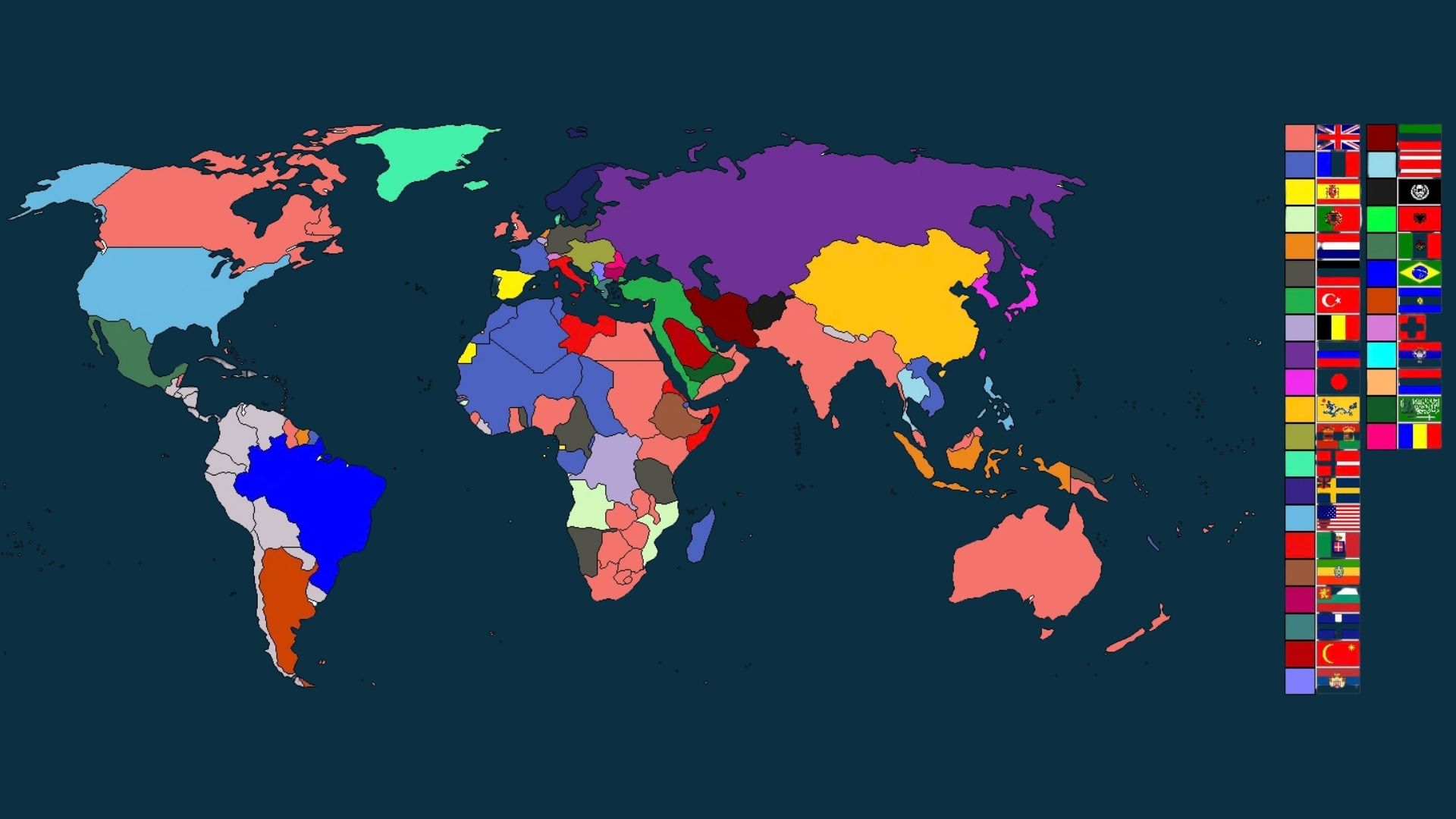
With the rise of China and India, and the growing significance of Turkey, Saudi Arabia, Qatar, multiple actors now shape the global system alongside Russia and US. However, the mechanisms for collaboration among them are weakening. Rising powers increasingly seek to orchestrate their own rules than reinforce shared ones.
The G7 shows growing internal fractures, while the G20 brings together rivals such as China and India alongside Western powers. The 2023 G20 conference in India reflected India’s growing ambitions to lead the Global South, a role China also claims.
Another example of the erosion of multilateralism can be seen in UN conferences, especially COP meetings, where emerging economies like India and China advocate for step-by-step reductions in carbon emissions, while Western countries push for immediate reductions. The dramatic political negotiations at COP 26 in Glasgow, where India successfully made the world agree to revise the phrase to “phasing down” from “phasing out” coal use, illustrates how major powers shape outcomes to protect national interests.
In contrast, concerns of Least Developed Countries (LDCs), Small Island Developing States (SIDS), and Landlocked Developing Countries (LLDCs) with their agendas of green climate funds, climate justice, and loss and damage mechanisms, are generally neglected because of major power politics.
Climate risks matter significantly. The Global Risks Report has also recognised the extreme weather events as key threats in both the short and long-term future. While Milankovitch cycles, natural variations in Earth’s orbit affecting solar radiation, have historically influenced long-term climate patterns, it is important to note that human civilisation has existed for only about 10,000 years. If civilisation endures, climate change will profoundly shape future generations. Moreover, human-induced activities accelerating global warming may alter or intensify these natural cycles.
AI frontier
The report also notes that although AI global market size was valued at $280 billion in 2024 and is projected to grow to $3.5 trillion by 2033, developments in AI may create new forms of inequality. States with the capacity to develop in AI and develop new and advanced models through sustained investment will gain disproportionate advantages, and those forced to purchase such services will experience widening disparities.
Historically, power rested with those who could produce and supply in the manufacturing age, and with those who could consume in the service age. In the AI age, power will belong to those who can invest, reinvest, and capture value through AI innovations.
Taken together, these trends suggest that there is no alternative to collaboration and healthy competition among world powers for pursuing their interests. Without it, geoeconomic conflict to climate change will only intensify disproportionately harming LDCs, LLDCs, and SIDS. A fragmented multipolar world without effective multilateralism threatens not only global stability but also the collective capacity to protect the planet from systemic and environmental risks.
Read More Stories
NEPSE falls nearly 75 points as market sentiment wavers
The stock market was unable to maintain the gains seen on Tuesday, slipping...
India has begun its long-delayed population census. Here's why it matters
India has begun the worlds largest national population count, which could reshape welfare...

The United Nations has called on Israel to repeal a law passed by...


Business + Finance + Economy + Tech + Environment + Nepal & South Asia + In-depth Analysis + News + Investigation + Research + Expert Opinion + Anatomy of Complex Issues.