SCO Summit 2025 | Sino-India relations | Nepal-India-China relations | Lipulekh row
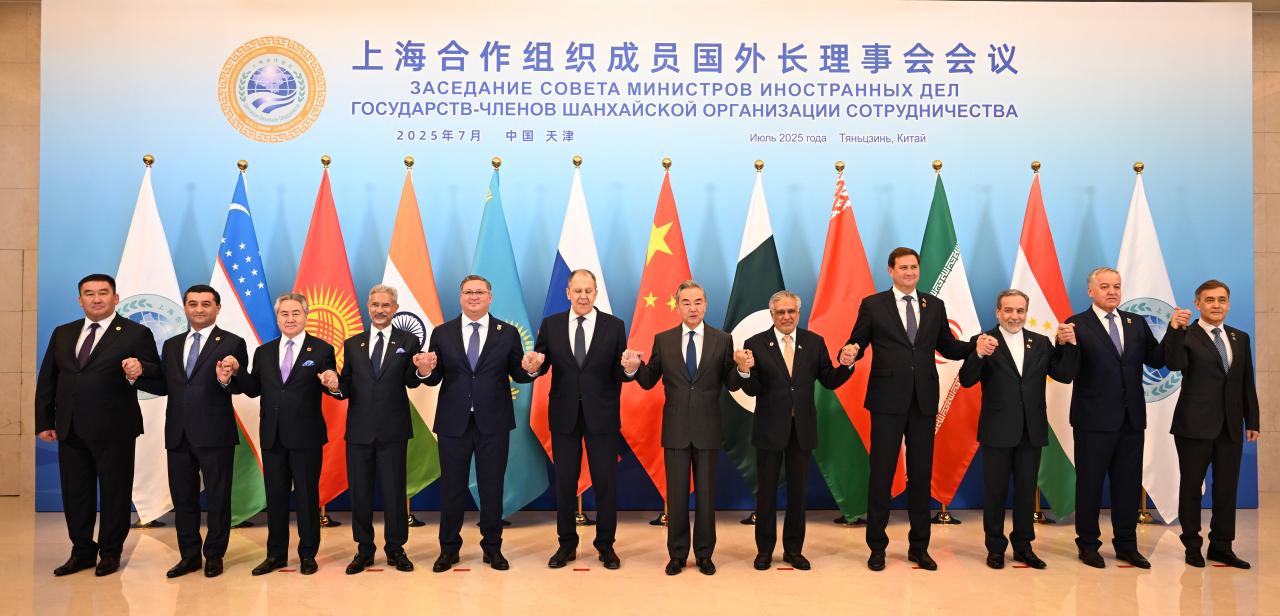
Prime Minister KP Sharma Oli is scheduled to visit China to attend the 25th Shanghai Cooperation Organisation (SCO) Summit in Tianjin, which will take place from August 31 to September 1, 2025.
The SCO is a significant Eurasian political, economic, and security organisation with 10 member states—Belarus, China, India, Iran, Kazakhstan, Kyrgyzstan, Pakistan, Russia, Tajikistan, and Uzbekistan.
The four-day visit, set to commence on August 30, marks a significant diplomatic engagement for Nepal, as it will be the first time a Nepali head of government attends the summit. The summit will be chaired by Chinese President Xi Jinping.
The visit takes place against a backdrop of renewed row over the Lipulekh Pass—a disputed territory between Nepal and India, which surfaced after India and China announced the reopening of trade through the area. Nepal contends that the Lipulekh region is an integral part of its territory and has formally protested the agreement.
PM Oli will be present at the meeting of the Heads of States Council, the highest decision-making body of the SCO. This council is tasked with determining the organisation’s priorities, long-term strategies, and key decisions, including the admission of new members.
Alongside Oli, leaders from more than 20 countries, including Indian PM Narendra Modi, Russian President Vladimir Putin, Pakistani PM Shahbaz Sharif, Maldivian President Mohamed Muizzu, and Malaysian PM Anwar Ibrahim, among others, are expected to attend the summit.
Additionally, heads of 10 international organisations and multilateral institutions, including UN Secretary-General António Guterres, Secretary General of the Commonwealth of Independent States Sergey Lebedev, ASEAN Secretary-General Kao Kim Hourn, and President of the Asian Infrastructure Investment Bank Jin Liqun, among others, have been invited to the summit.
High-stakes diplomacy: India’s attendance amidst trade wars
Indian PM Modi’s attendance at the summit is considered a highly significant diplomatic event, marking his first visit to China in seven years. The visit is seen as a potential turning point in Sino-Indian relations, which have been strained since the 2020 border clashes. His presence is particularly striking given his decision to skip the SCO summit in Kazakhstan in July 2024, a move that surprised many observers.
Crucially, the summit occurs in a global landscape shaped by geopolitical turbulence and trade policies enacted by US President Donald Trump.
The United States has imposed sweeping tariffs on imports from both India and China, with some Indian goods facing tariffs as high as 50%. This has pushed the two old economic rivals to mend ties and strengthen economic cooperation within blocs like the SCO.
Analysts suggest the summit offers a platform for a potential ‘critical realignment’ where nations can collaborate to address the new geopolitical reality of US tariffs and a shifting world order.
PM Oli’s bilateral engagements
This visit builds upon PM Oli’s previous official visit to China in December 2024, where he held talks with President Xi Jinping and signed several agreements under the Belt and Road Initiative. On the sidelines of the upcoming summit, Oli is expected to again engage in several high-level bilateral meetings. According to media reports, he is likely to meet with Chinese President Xi Jinping on September 3, before his return to Kathmandu.
Furthermore, officials have indicated that Oli is expected to meet with his Indian counterpart Modi, Russian President Vladimir Putin, and other leaders attending the summit, although the specific details of these engagements are still being finalised.
Nepal’s role as an SCO dialogue partner
Nepal’s participation in the summit will be in a consultative capacity, as it is a dialogue partner of the SCO, not a full member nor an observer. Nepal officially became a dialogue partner on March 22, 2016, following the signing of a memorandum of understanding (MoU) with the SCO Secretariat in Beijing.
As a dialogue partner, Nepal can be invited to summits and certain ministerial meetings, allowing for engagement in economic, cultural, and educational initiatives.
However, dialogue partners do not possess voting rights in the SCO’s decision-making processes, which limits their influence on the organisation’s core policies. According to the Ministry of Foreign Affairs, the 2016 MoU outlines areas of potential cooperation, including trade, transit, investment, energy, transport, and tourism.
The SCO is considered a strategic value for direct access to global leaders. The visit can mark direct face-time with leaders from India and China to ensure Nepal’s interests—on trade, transit, and territory—are not overlooked as the two giants recalibrate their own relationship.
Read More Stories

NEPSE falls nearly 75 points as market sentiment wavers
The stock market was unable to maintain the gains seen on Tuesday, slipping...

India has begun its long-delayed population census. Here's why it matters
India has begun the worlds largest national population count, which could reshape welfare...
The United Nations has called on Israel to repeal a law passed by...


Business + Finance + Economy + Tech + Environment + Nepal & South Asia + In-depth Analysis + News + Investigation + Research + Expert Opinion + Anatomy of Complex Issues.