Interim Council of Ministers | Property Details | Public Office | Transparency
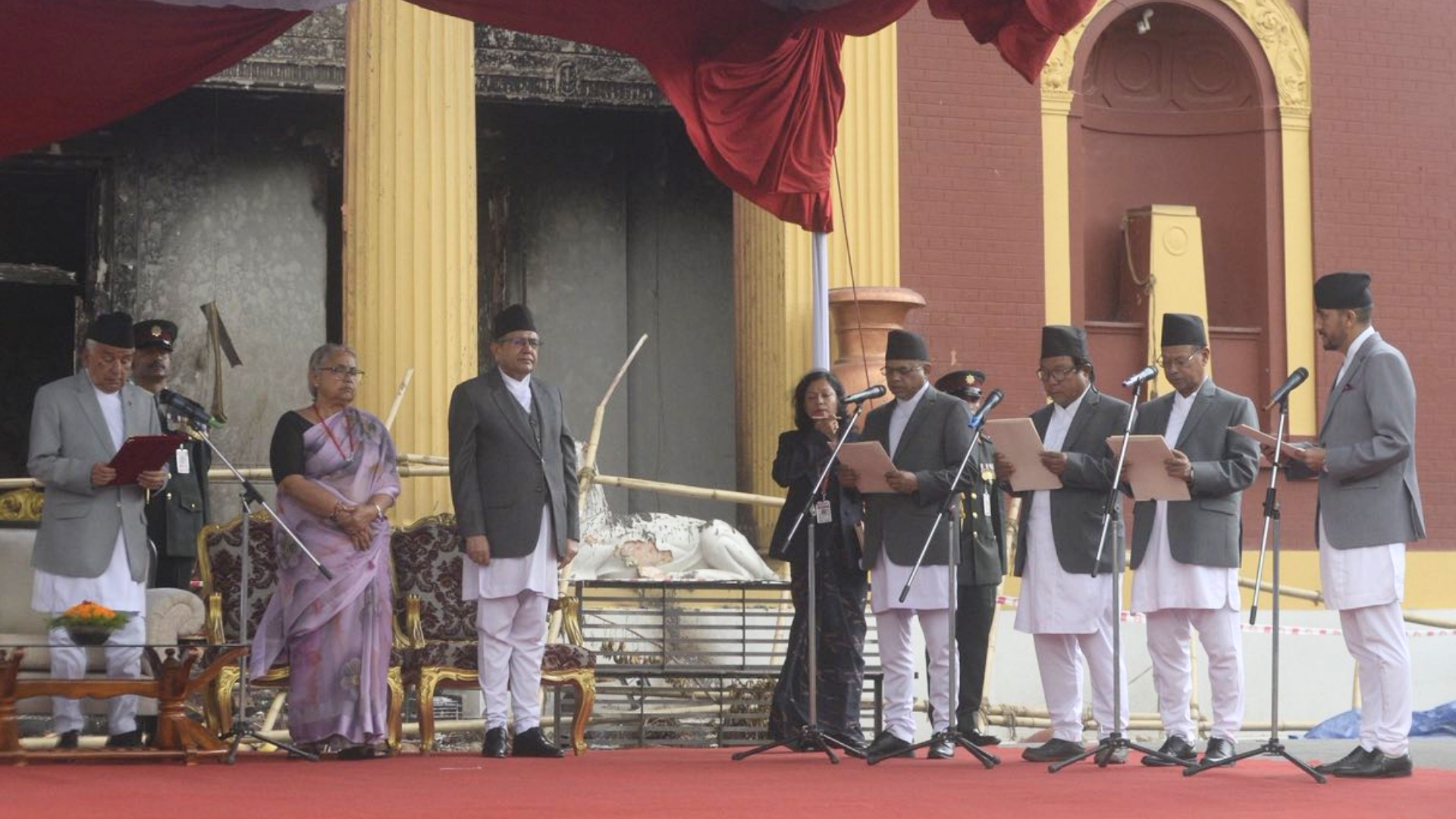
As of November 11, six members of the interim council of ministers, including Prime Minister Sushila Karki, have submitted their property details, according to the Office of the Prime Minister and Council of Ministers (OPMCM).
Those who have complied are Prime Minister Sushila Karki, Finance Minister Rameshore Khanal, Energy and Physical Infrastructure Minister Kulman Ghising, Home Affairs Minister Om Prakash Aryal, Industry and Law Minister Anil Kumar Sinha, and Education Minister Mahabir Pun.
Four ministers have yet to submit their details: Dr Madan Kumar Pariyar (agriculture), Jagdish Kharel (information), Dr Sudha Sharma Gautam (health), and Bablu Gupta (youth).
Under Section 50 of the Prevention of Corruption Act, 2059 (2002) and Section 31(a) of the Commission for the Investigation of Abuse of Authority (CIAA) Act, 2048 (1991), all public office holders must submit a detailed statement of assets within 60 days of taking office, and annually thereafter.
The cabinet has been expanded thrice since the government was formed on September 12, meaning ministers appointed on different dates face separate deadlines. Karki, who assumed office on the evening of September 12, had until midnight, November 11, to file her details.
Ministers Rameshore Khanal, Kulman Ghising, and Om Prakash Aryal, appointed on September 15, had three days left until November 14, but have already submitted theirs.
Ministers Anil Kumar Sinha and Mahabir Pun, appointed on September 23, had 11 days left until November 22, and have also declared their assets ahead of the deadline. The remaining ministers, Dr Madan Kumar Pariyar and Jagdish Kharel, who share the same November 22 deadline, are yet to file their details.
Dr Sudha Sharma Gautam and Bablu Gupta, inducted on October 26, have 44 days remaining, with their deadline falling on December 25.
The Office of the Prime Minister and Council of Ministers coordinates administrative collection for the cabinet, while the CIAA ensures compliance and enforces penalties. The statements must include properties held in the minister’s name or in the names of family members, along with evidence of the sources of acquisition.
Failure to comply carries a fine of NRs 5,000. The CIAA can impose the fine and order submission within 30 days if the deadline is missed. If the 30-day grace period lapses, the declared property may be presumed illegal and subject to investigation.
While submission is mandatory, the absence of a legal requirement to make these statements public continues to limit external scrutiny and accountability.
Existing law treats submitted statements as confidential under Section 50(4) of the Prevention of Corruption Act, which allows disclosure only in connection with investigations. Furthermore, Article 28 of the Constitution of Nepal guarantees the right to privacy, protecting property and personal documents from disclosure except as provided by law.
This combination of statutory confidentiality and constitutional privacy has been used by former prime ministers and cabinet members to keep their declarations from the public, exposing a gap between legal compliance and moral expectations of transparency.
Although the interim ministers tick on separate 60-day deadlines, and one more member is yet to join, since PM Karki had announced limiting the cabinet to 11 members, the government’s key mandate is to ensure transparency, which should not wait for a deadline.
Read More Stories

NEPSE falls nearly 75 points as market sentiment wavers
The stock market was unable to maintain the gains seen on Tuesday, slipping...

India has begun its long-delayed population census. Here's why it matters
India has begun the worlds largest national population count, which could reshape welfare...

The United Nations has called on Israel to repeal a law passed by...


Business + Finance + Economy + Tech + Environment + Nepal & South Asia + In-depth Analysis + News + Investigation + Research + Expert Opinion + Anatomy of Complex Issues.