Known by many names in different communities, Maghi, Maghe Sankranti, Makar Sankranti or Tila Sakranti, and even Khichadi, the festival marking seasonal transition has arrived. As the Sun moves into the Capricorn zodiac region (Makkar Rashi), signifying the beginning of longer and warmer days following the cold winter, the first day of the month of Magh is celebrated as Maghi or Makar Sankranti.
People from different traditions and communities, including Magars, Tharus, Kiratis, Brahmins and Chhetris, the Newa and the Madhesi communities celebrate this day with distinct rituals.
For the Tharu community, the festival is particularly special as Maghi marks their New Year. Before the day of Maghi, the festival begins with animal sacrifice known as ‘chita marne’. They celebrate with feasts of traditional dishes like dhikri, fish, dhongri and traditional dances like Sakhiya and Latthi, as the day marks their new year.
In Brahmin and Chhetri communities, the day begins with a morning bath followed by temple visits and soaking in the light and warmth of sun while enjoying dishes like ghee, chaku, laddu, boiled yams, taro (tarul) and more.
The festival is celebrated with food and family gatherings and a special emphasis on welcoming married daughters back home as a gesture of love and respect in the Magar community. Similar traditions are also observed in other communities.
Known as Ghyo Chaku Sanlu in the Newa community, the day is observed with eating ghee, chaku and by performing prayers to honour the deceased souls. Similarly, the Kirat community also celebrates the day (Yele Dong or Yele Tangwe), also marking their new year with the beginning of their Yele Sambat calendar.
In many places across the country, people from various communities organise various festivals and programs, come out in their traditional attires and perform their cultural songs and dances and celebrate the festival. This, however, is only a brief overview, as the festival holds much deeper cultural and spiritual significance with traditions and practices that go far beyond this summary.
Chaku, the sweet of Magh
Food plays a central part in many of the country’s festivals and Maghe Sankranti is no exception. Among the festival’s special foods from several communities, chaku stands out, not only as a sweet treat on its own, but also as an ingredient in other sweets. Festival observers devour them with other foods like sweet potato, tarul, and ghee, among others. It is believed these items help keep the body warm during winter days.
Chaku is a cuisine that translates as “sweet” in Nepal Bhasha (Newa language). Tokha produces the largest amount of chaku, its name itself derived from the word tukhya, where ‘tu’ means sugarcane and ‘khya’ means field. This is interesting, because the cuisine is made after heating jaggery, which is made out of sugarcane.
Chaku also stands as a generational occupation in Tokha carrying rich cultural heritage and a specialised skill. Currently, there are around 20 chaku factories in the region, most of them run by the families of the same descendents.
Among these factories, Kashilal Chaku Factory is one of the oldest managed by 22-year old Royal Shrestha.
Royal is the son of the owner of the factory and nephew of the owner of another factory. He said he learnt the skill through observation at a young age, and has been working in the factory ever since.
“I am the fifth generation in this chaku factory.” Currently, the factory employs 20-25 staff.
Chaku production is a seasonal occupation in Tokha, with the highest demand arising from the beginning of Poush to the end of Magh. However, recently, demands also soar during the summer months.
During the summer, factories are usually closed but as demand rises, family members and relatives assist with the production.
“Since it is seasonal, I work in the factory during winters only. During summers, I work as a photographer,” adds Royal.
The making of chaku is a time-intensive process, requiring much labour and process.
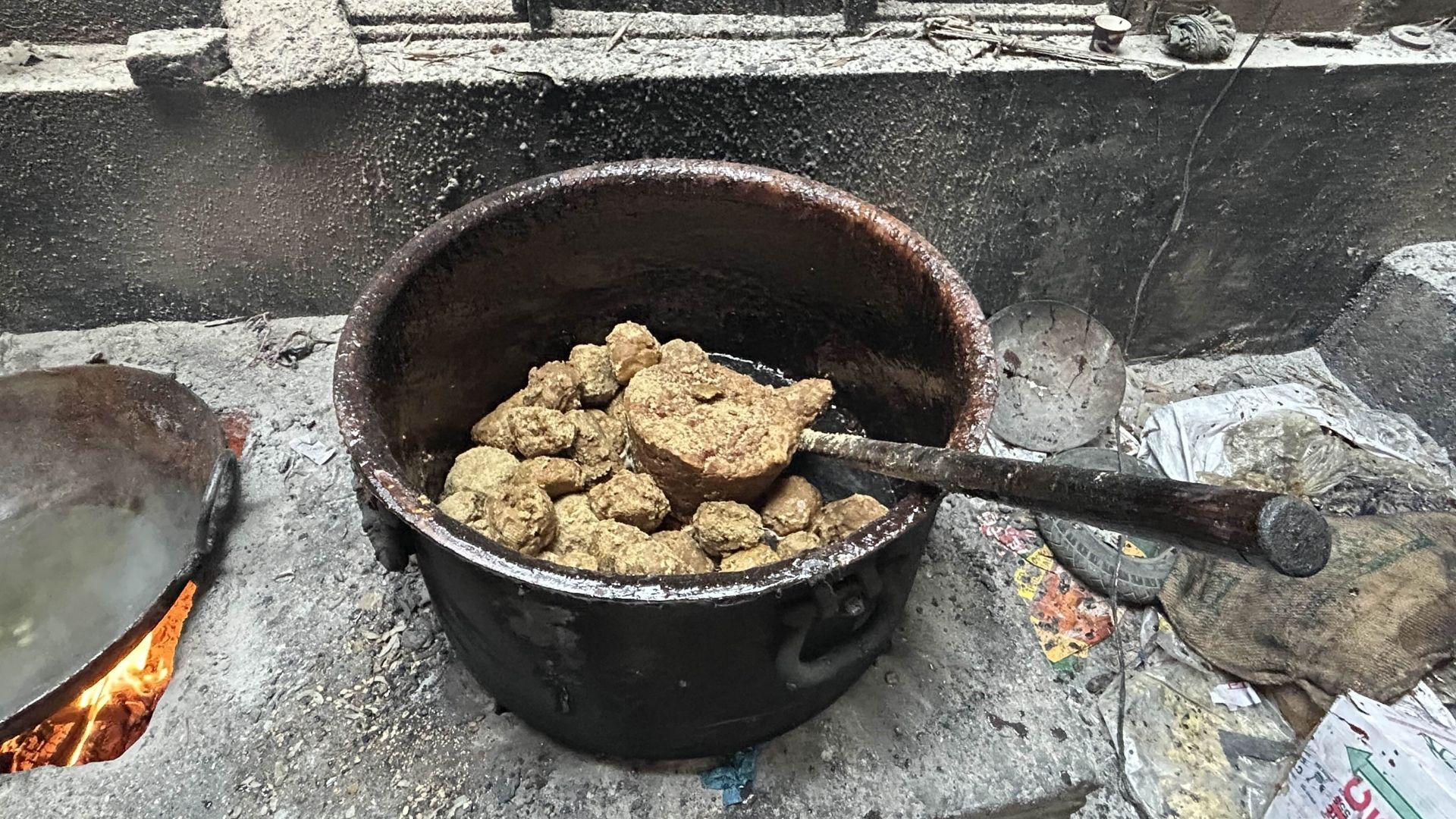
In the Kashilal Chaku Factory, the initial step involves heating jaggery, which the factory procures from Gulmi. Jaggery is a natural sweetener derived from crushing sugarcane, which is boiled for hours and then let to cool until it becomes a golden solid mass.
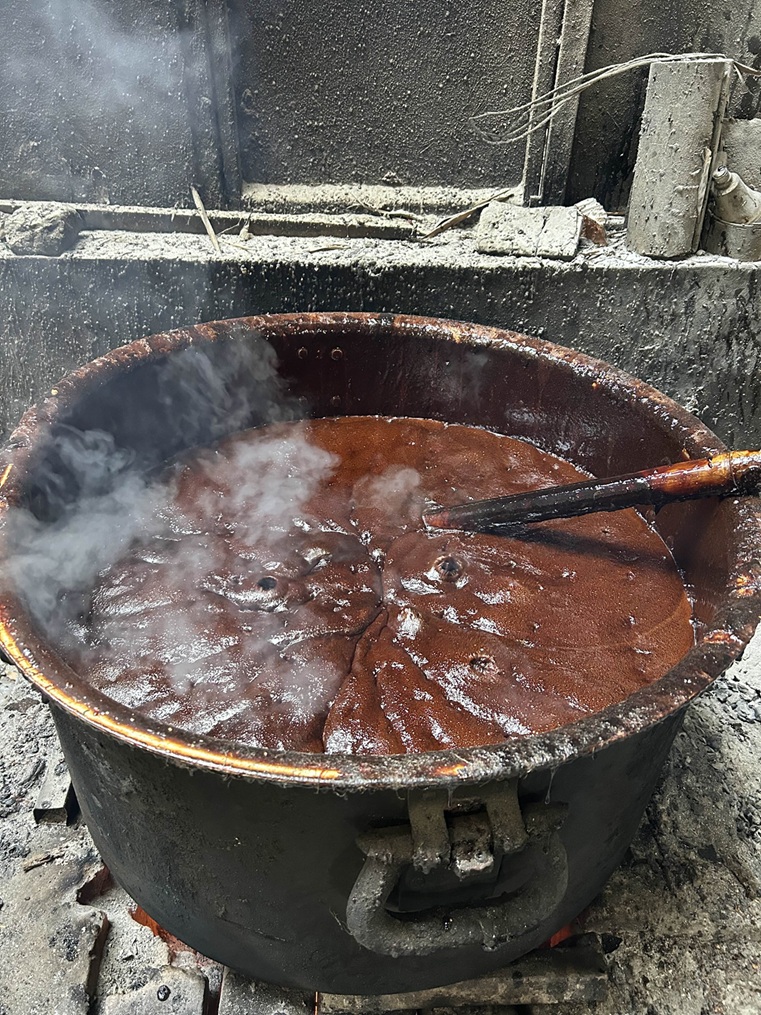
After boiling jaggery for more than an hour, it takes a dark form.
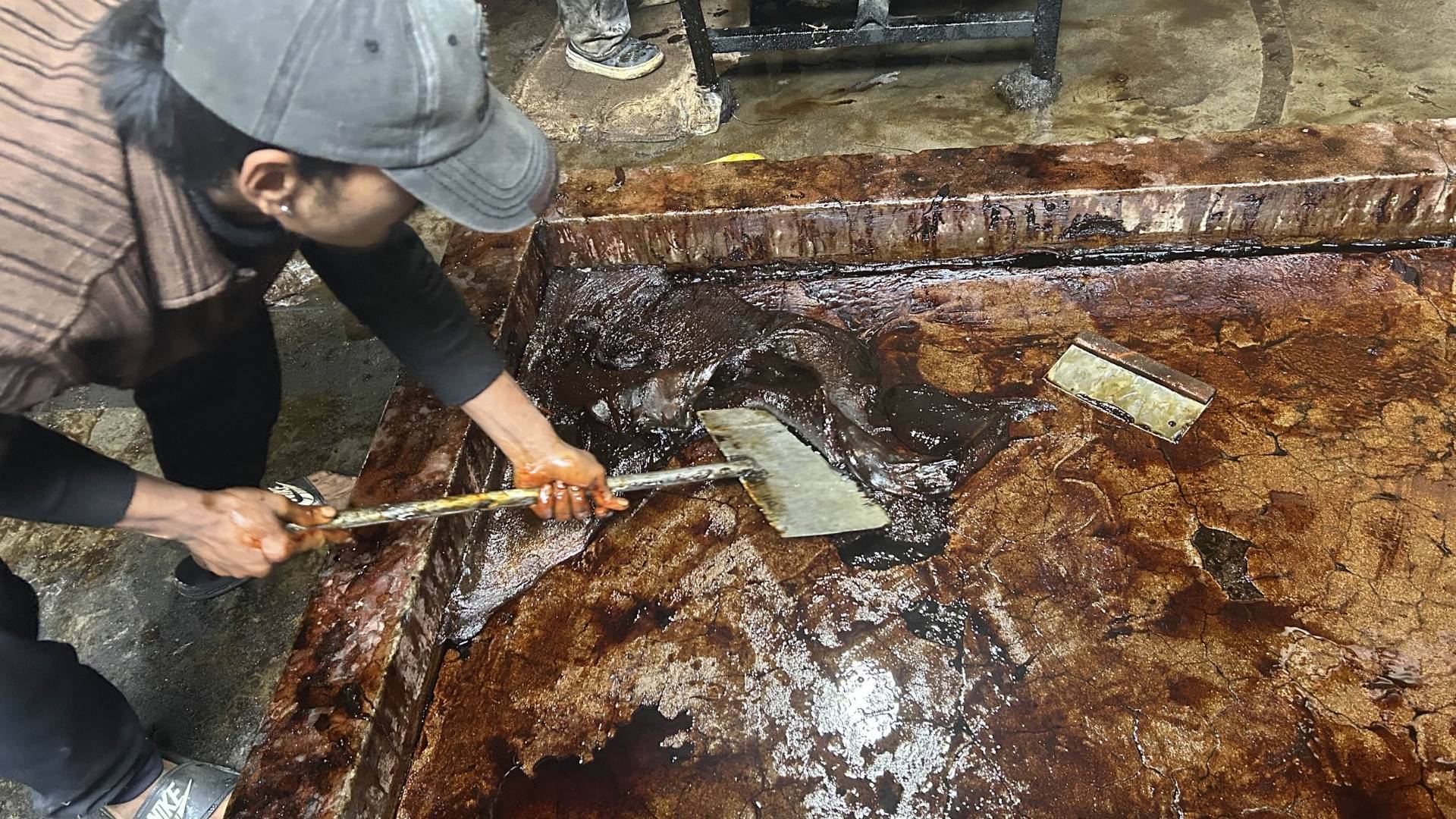
The heated chaku are kept in the cemetery flat container to let it cool down.
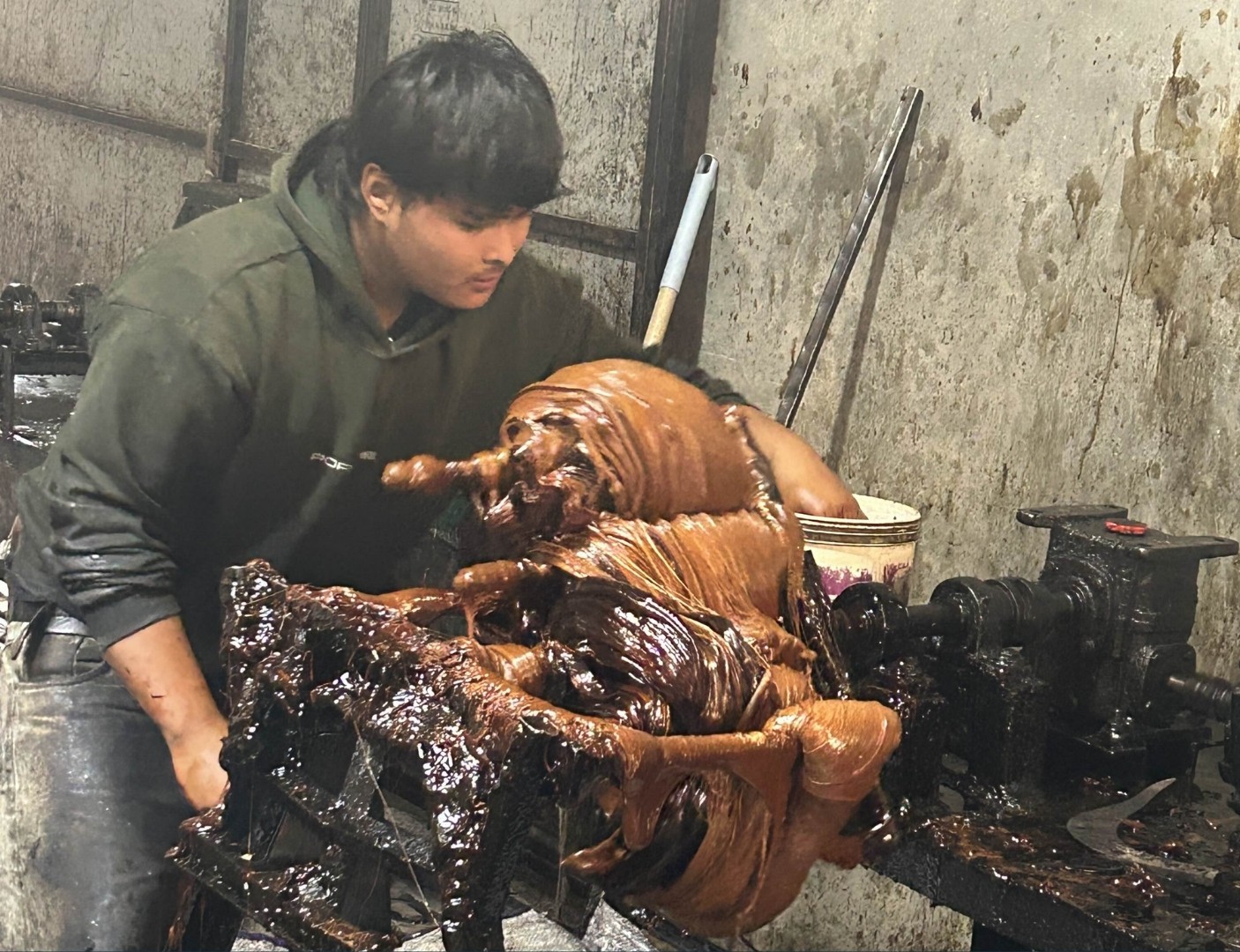
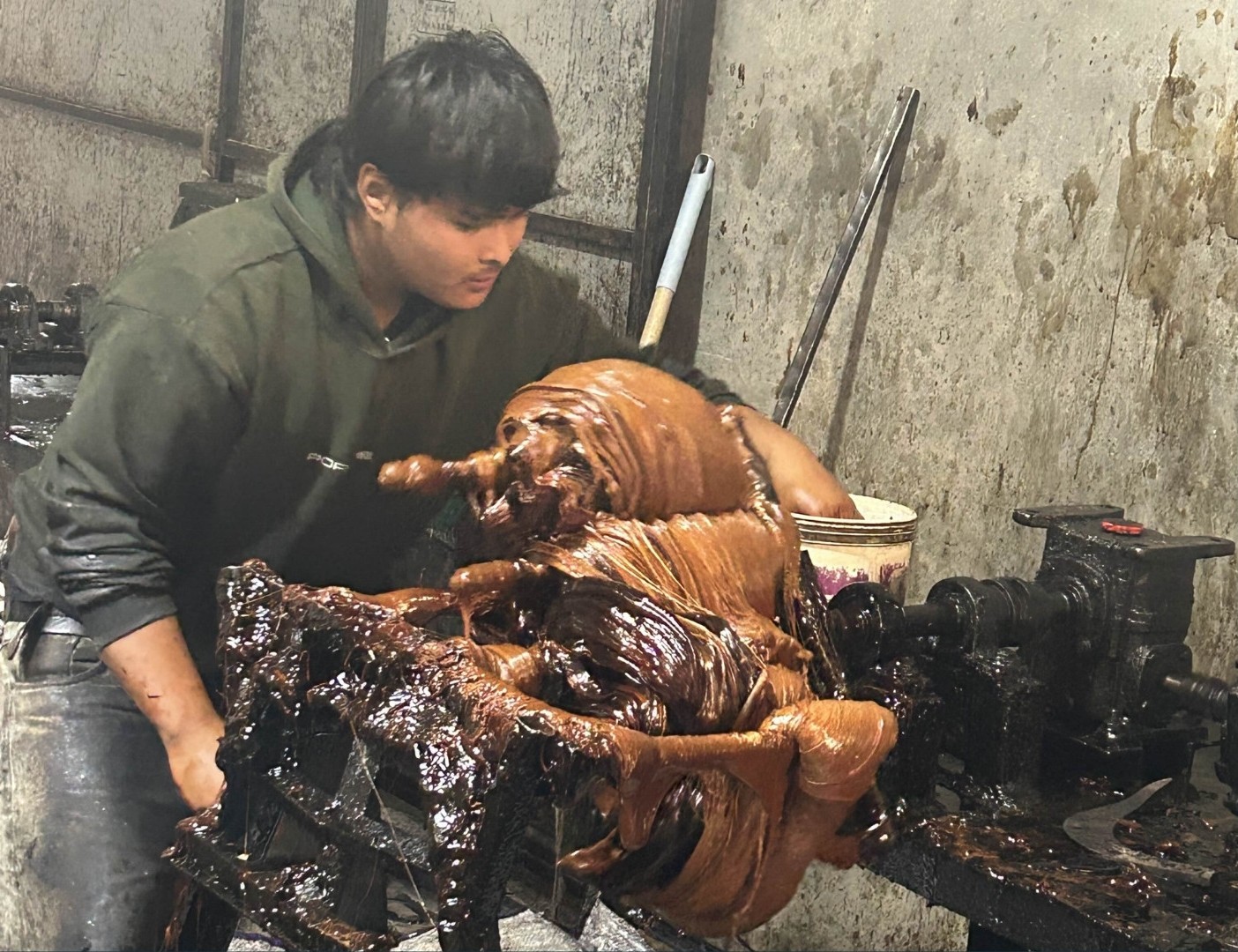
After its temperature has cooled, it is stretched into folds using a machine.
Royal explains that before the machine came, they required six to seven people to do the particular task. This technique gives a colour to chaku. If a chaku turns out too dark, it is more likely to have a bitter taste. Proper stretching prevents this.
“Sometimes, the colour and taste depends on the quality of sugarcane. When this happens, we try to prevent the bitter taste of Chaku by adding good quality jaggery and chaku,” adds Royal.
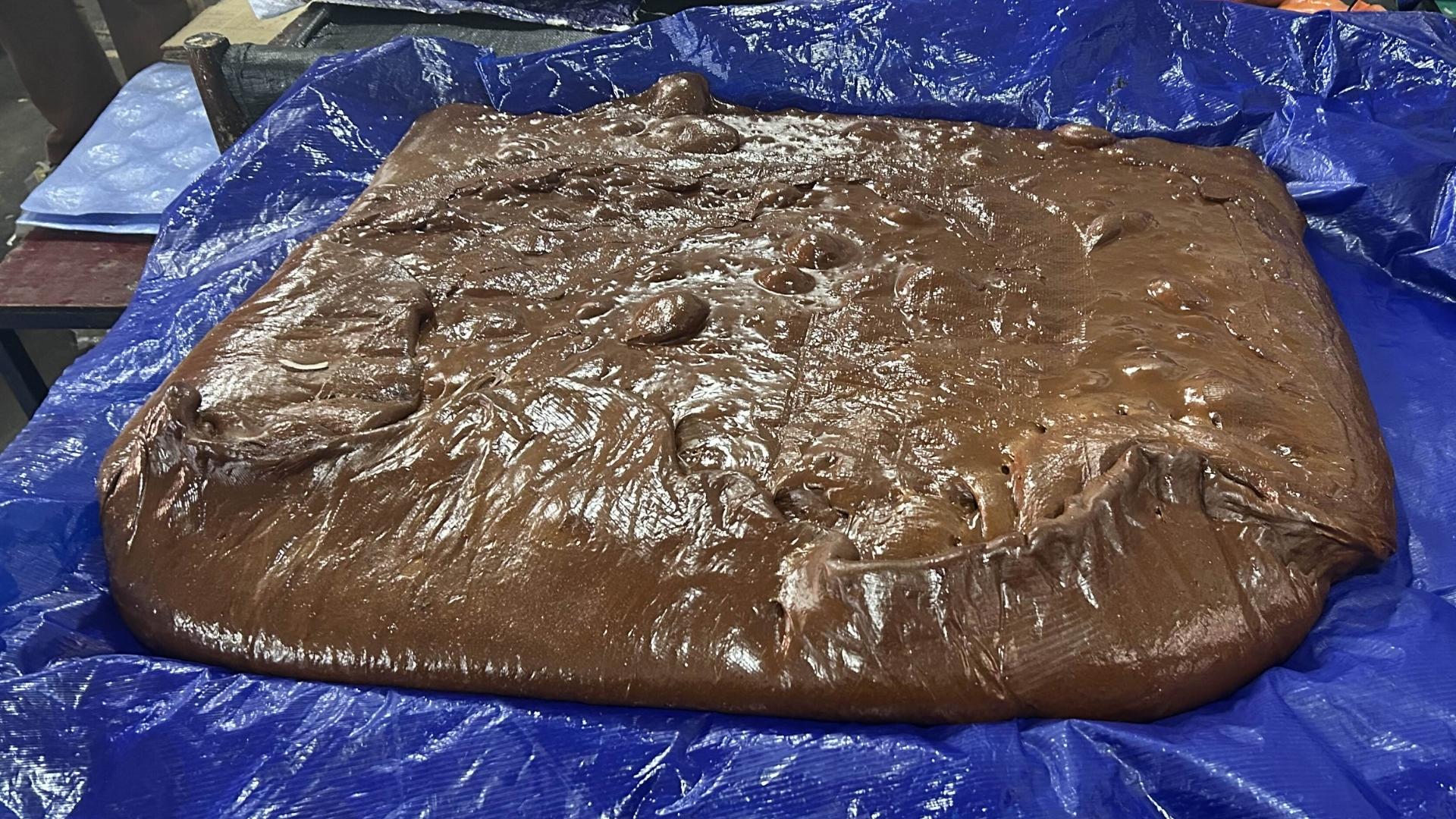
It is then placed in a separate place covered in a thick plastic.
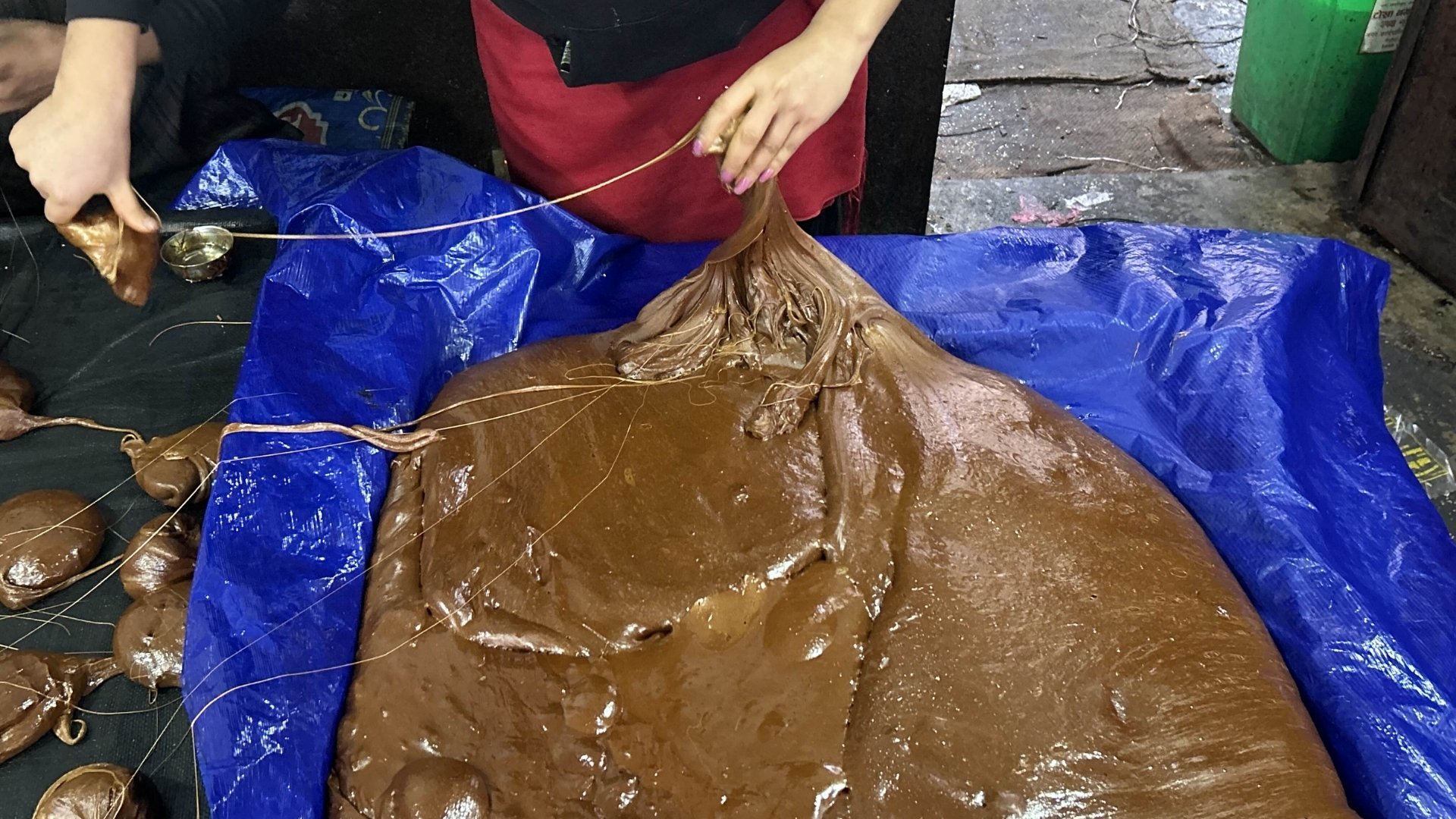
The worker pulls out the required amount of proportion to give the shape to chaku ready for packaging.
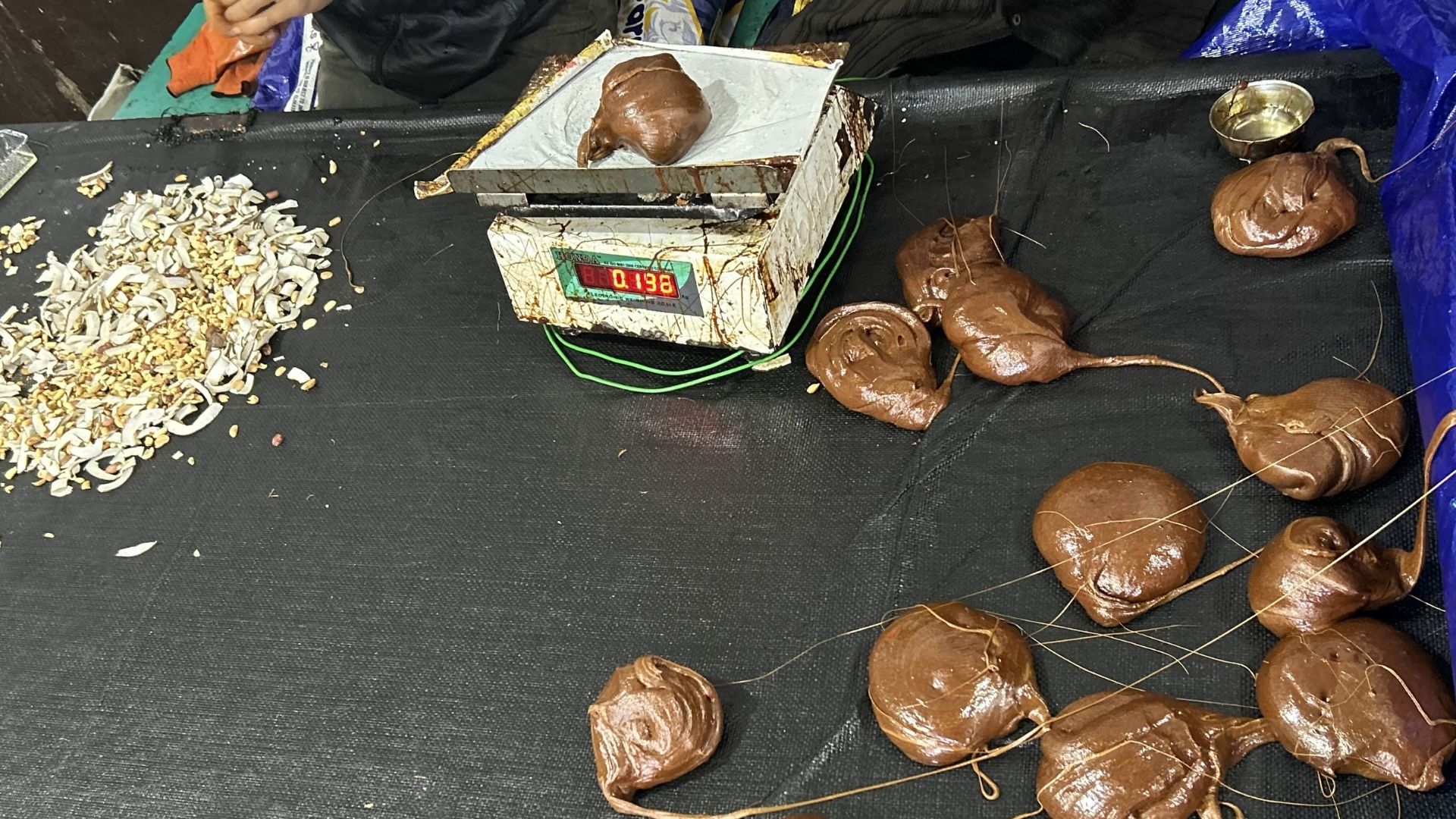
The pulled out proportions are weighed. For sale, the weight has been set to 200 grams per packet of chaku. Coconuts, cashew nuts and almonds are kept prepared beside them to be added in chaku later.
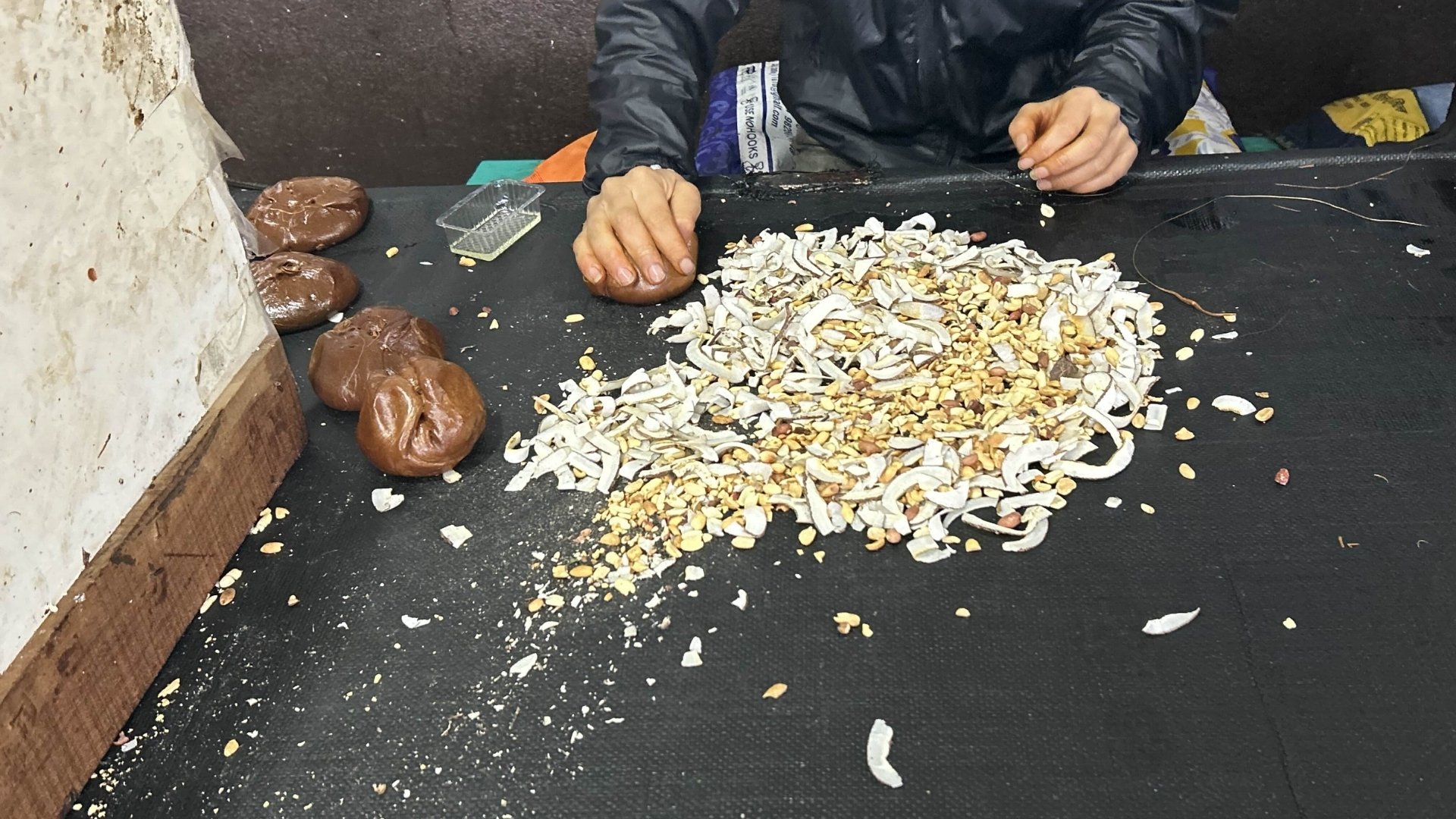
Coconuts, cashew nuts and almonds are pasted in chaku, as the final touch.
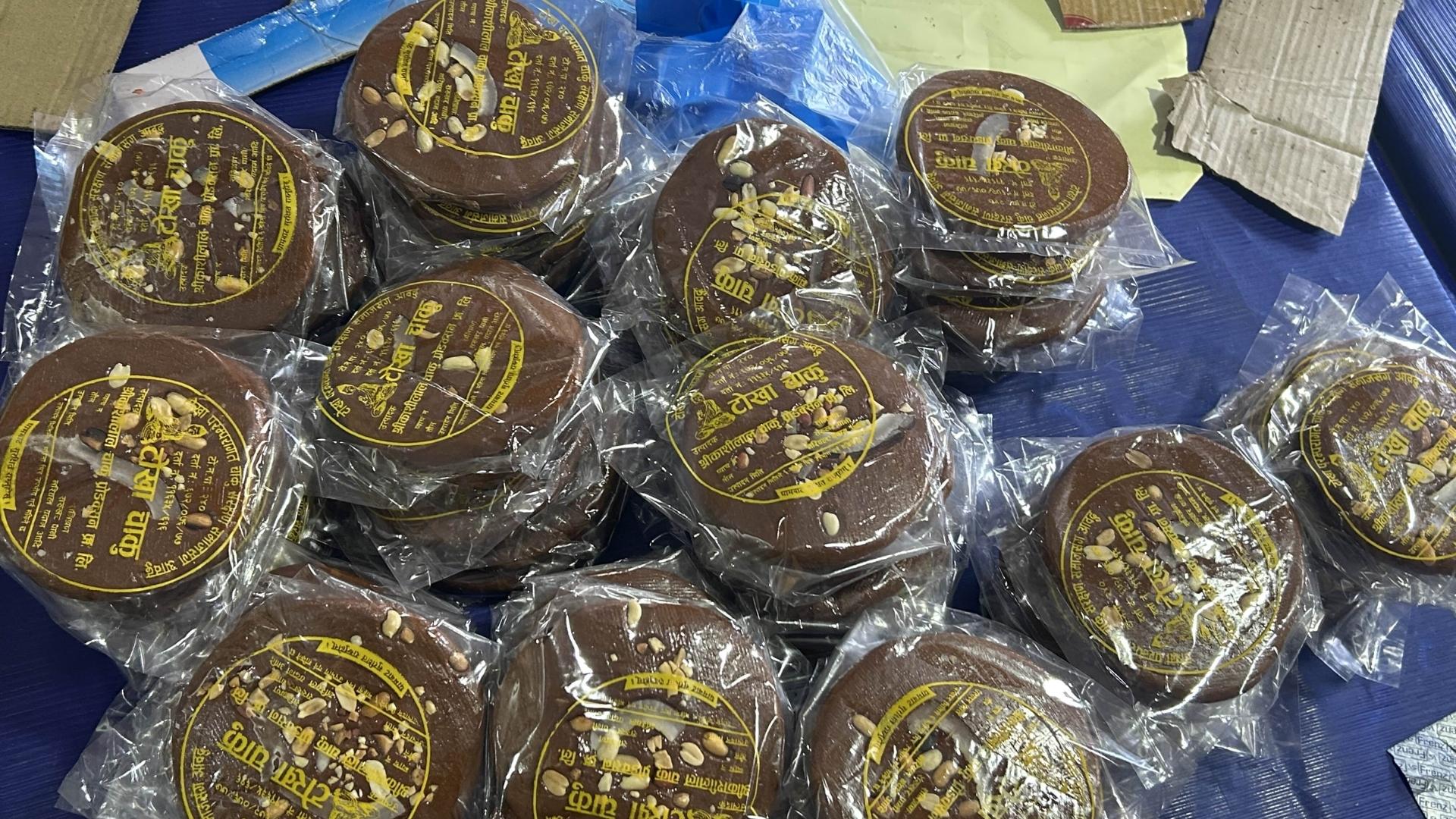
They are then wrapped in a transparent plastic as packaging and ready for sale.
While chaku is a treat on its own, many other items are made out of it such as yomari and til ko laddu. Laddu or tilauri is another popular sweet that many people enjoy during Maghe Sankranti.
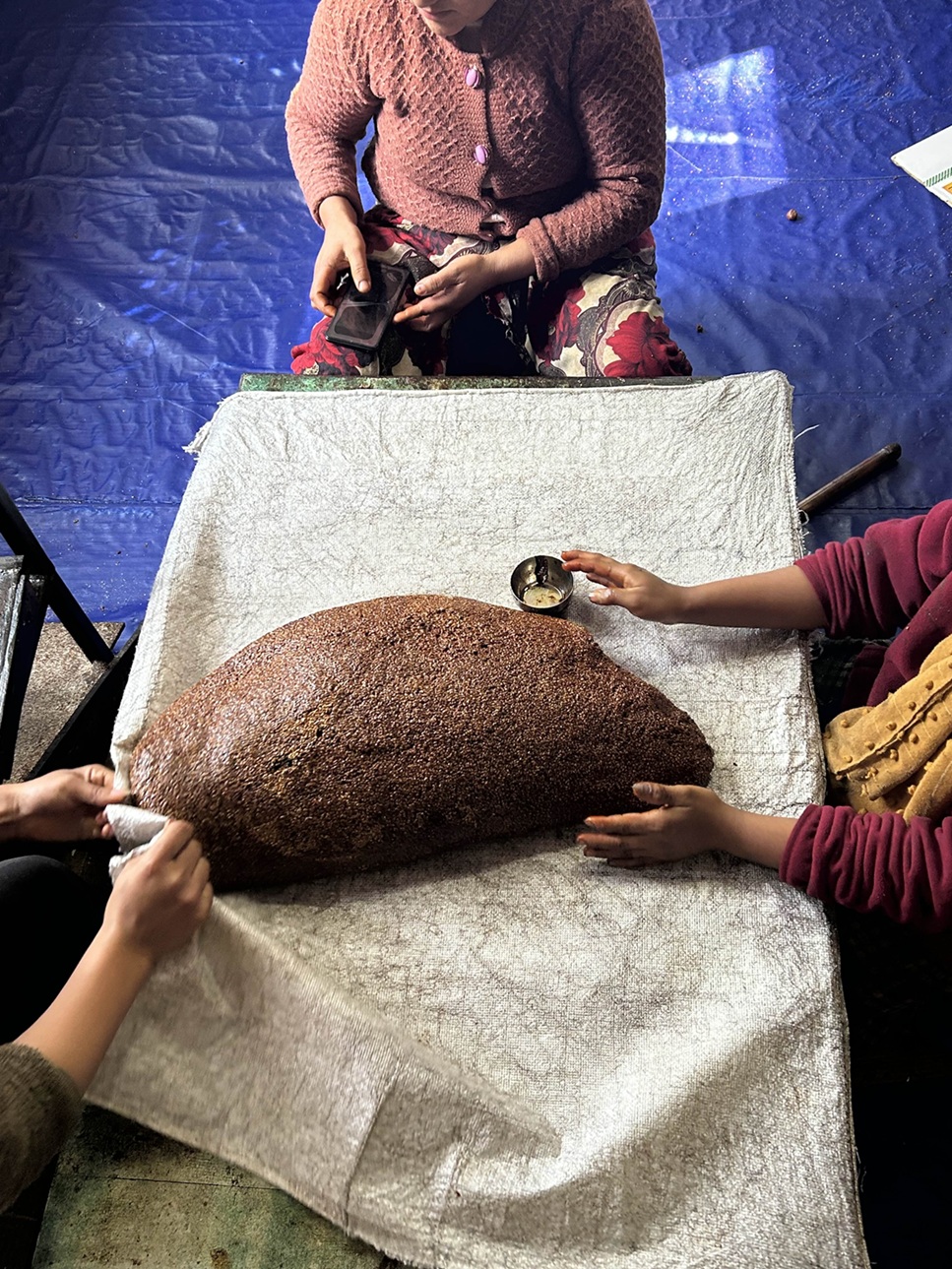
During the process of making til ko laddu, chaku and sesame are mixed and they are made into a dough.
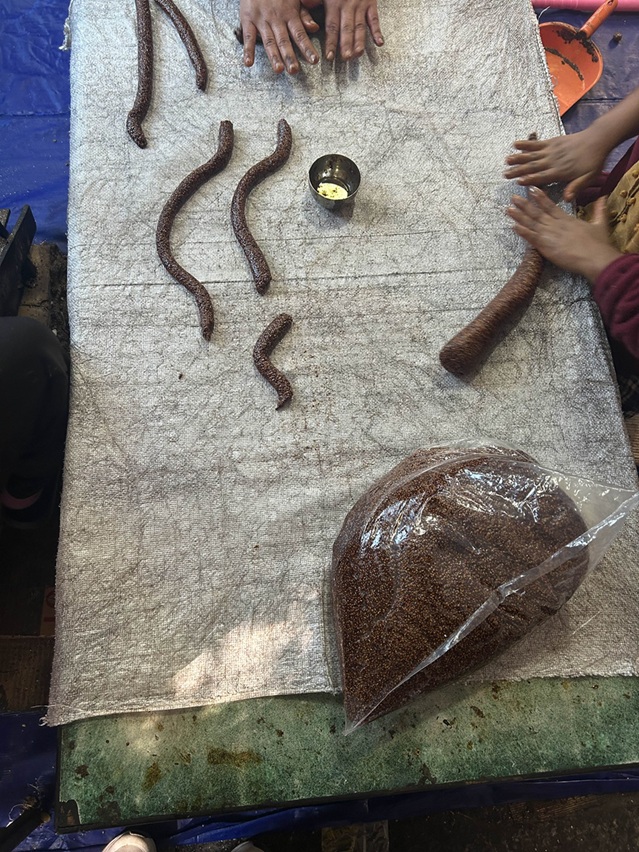
They are rolled into these long shapes so that it’s easy to break them.
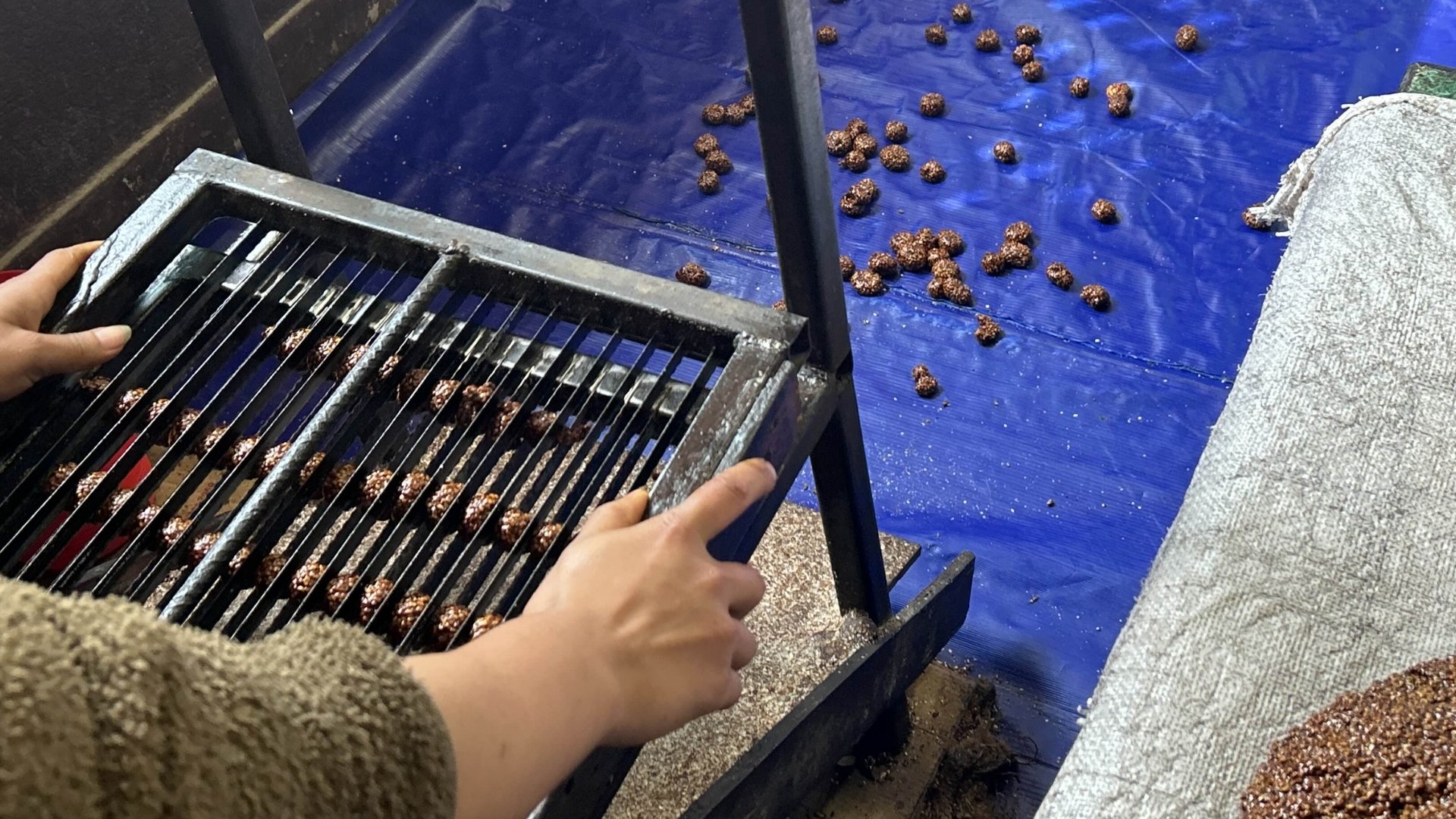
Long shapes of the dough are placed into a machine and by pressing them, tilauri is prepared. While chaku is widely consumed during festivals like Yomari Purnima and Maghe Sankranti, its consumption is not only limited to these occasions.
“Apart from festivals, chaku is also consumed during the funeral when people are not allowed to eat salt for a certain number of days. It is believed to help boost immunity.” says Royal. Similarly, it is considered as a crucial food item during the postpartum period for women.
The chaku produced in the Kashilal’s factory is not only distributed across Kathmandu valley, but supplied across the country.
Images captured by Prabina Khadka
Read More Stories

NEPSE falls nearly 75 points as market sentiment wavers
The stock market was unable to maintain the gains seen on Tuesday, slipping...

India has begun its long-delayed population census. Here's why it matters
India has begun the worlds largest national population count, which could reshape welfare...

The United Nations has called on Israel to repeal a law passed by...


Business + Finance + Economy + Tech + Environment + Nepal & South Asia + In-depth Analysis + News + Investigation + Research + Expert Opinion + Anatomy of Complex Issues.