Electoral Reform in Nepal | Electoral Governance | AI in Elections | Democratic Choice
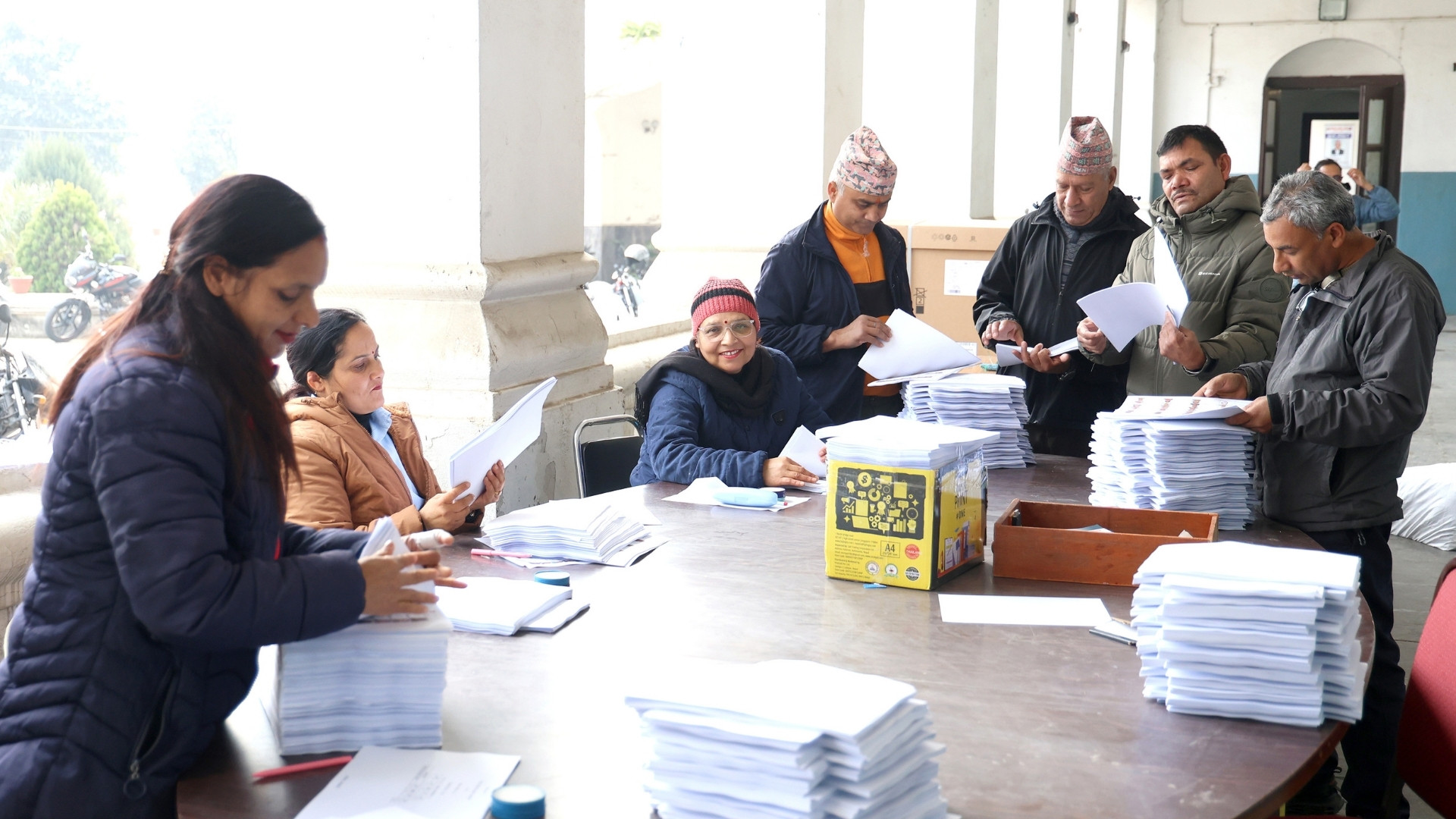
Over time, political practices and institutional gaps in the electoral process have contributed to concentration of power, weakening the constitutional promise of representation. The lack of meaningful electoral reforms has reduced public participation, while past mobilisations for reform were often dismissed as efforts to curb democratic competition in favour of dominant parties. Electoral governance has remained a low priority, largely because reforms carry political consequences and can disrupt existing power structures.
In this context, reflection on Nepal’s electoral process, coupled with multi-stakeholder dialogues to create a level playing field for all willing and eligible individuals/parties to contest the elections, is imperative. Unless electoral reforms take place, the political status quo will persist.
What is Electoral Reform
Electoral reform is a broad concept encompassing efforts to improve electoral processes so that democracy is fair, inclusive, and representative of people’s will. It strengthens transparency, impartiality, integrity, and public trust within the existing electoral system, leading to better democratic governance and political culture.
The idea of electoral reform is not the same as electoral system reform, in that it does not aim to change the structure of the electoral system itself. These reforms can either be at the policy level/legislative, procedural, or political.
Discourse around electoral reforms should be built on a strong foundation of political consensus, be transparent and inclusive, clearly communicated, and ideally be designed with a long view and beyond the immediate election cycle.
Enable automatic voter registration
The voter enrollment process in Nepal is regulated by a separate act, the Voter Roll Act 2073, stacked with cumbersome procedures. Article 11 introduces additional documentation barriers, while Article 12 frames voter registration as a citizen’s duty, effectively shifting responsibility away from the state. There’s no automatic, continuous, or data-linked system to update or add eligible voters unless they apply themselves.
Moreover, the process for removing names from the voter list is also procedure-heavy. Under Article 18, the removal of deceased individuals or those who have relinquished citizenship depends on information being provided by relatives or others to the authorities. Similarly, updating names or personal details requires a formal application process, adding further administrative barriers to maintaining an accurate and inclusive voter list.
Automatic voter registration enrols eligible citizens to vote when they interact with government agencies, unless they opt out. By linking registration to routine processes like ID or licence renewals, it lowers barriers to participation, helping increase voter turnout.
For instance, the recent government decision to integrate biometric data collected for the National Identity Card (NID) into the voter registration process was a spectacular success, as an additional 492,180 registered online using their NID data in a short time, circumventing red tape which required citizens to make physical appearances at Election Commission offices. Amending the act to enable automatic voter registration would increase voter turnout and foster broader civic participation.
Furthermore, necessary amendments or by-laws should create a concrete framework for the commission's collaboration with the Integrated Data Management Centre under the Ministry of Communication and Information Technology. The centre aims to centralise and share digital data across ministries and local governments for better e-governance.
Fix election dates
The authority to set election dates is vested with the government of Nepal. Section 3 of the Election Commission Act 2073 and Section 6 of the House of Representatives Election Act 2074 both stipulate that “the government will set the election date, in consultation with the Election Commission Nepal (ECN).” The consultative role of the commission has been largely theoretical, as governments and political parties alike have resorted to declaring elections without rational or principled considerations. In 2022, the Federal and Provincial elections were declared with a mere window of 107 days, which was even shorter, 97 in 2017.
Such ad-hoc declaration of elections means a tight timeframe for execution, followed by delayed public/policy discourse on electoral issues and little time for judicial decisions on the same if challenged. In 2017, there was a late adoption of necessary legislation, resulting in issues with the design and printing of ballot papers, which caused severe confusion amongst stakeholders and impacted the number of invalid votes.
For the same election, voter education was reported to be severely inadequate, and in some areas non-existent. The General Election Observation Committee (GEOC) further noted that election officials and representatives of candidates did not receive adequate training on the legal framework and electoral processes, resulting in conflicts during counting. A tight window also meant inadequate time and resources on the Commission’s part to engage with citizens at all levels, as observed in the 2022 elections.
A fixed date will enable institutions and stakeholders to be proactive as they can make political and policy decisions with adequate time on hand. Necessary amendments to the Election Commission Act should be made to legally define election dates. In case of extreme circumstances, the authority to move dates should solely lie with the commission, not political actors.
Revamp ballot papers for clarity and fair competition
For First-Past-the-Post (FPTP), a distinct ballot paper is printed for each of the constituencies, consisting of symbols of the parties and independent candidates choosing to run from the constituency. Whereas for Proportional Representation (PR), a single ballot paper consisting of symbols of all parties competing under the system is distributed across the whole country.
The House of Representatives Election Act, 2074, under Article 31 (7), provides for the prescribed order of symbols on the ballot paper. First, those of parties previously represented in the legislature, ordered by their proportional representation vote totals; second, those of unrepresented parties, ordered by their order of registration with the Election Commission; and finally, those of independent candidates, arranged alphabetically by name.
The order of contestants on the ballot is not insignificant. Studies show that being listed first can give a candidate an electoral advantage. One pragmatic way to reduce this unfair benefit, often favouring the ruling establishment, would be to decide ballot positions through a random draw. Additionally, a rotating arrangement can be made to ensure that all candidates appear at the top of the ballot an equal number of times.
In Nepal, the ballots do not contain the name of candidates, only the party affiliation, the party logo or a personal symbol assigned to independent candidates by the ECN. The use of such a system, traditional in South Asia, was adopted with literacy levels in mind as simplicity would allow all citizens to exercise their constitutional rights.
As literacy rates have improved over the decades, which was 77.4% in 2022/23, ballot papers in Nepal can be revamped to include party and/or candidate names in addition to party symbols.
Necessary amendments to the House of Representatives Election Act 2074 can pave way for changes in ballot papers for better efficiency, increased clarity and fairer competition. Moreover, use of tech in voting can also resolve existing inefficiencies within traditional ballot papers.
Use Electronic Voting Machines (EVMs)
Nepal first piloted EVMs in the 2008 Constituent Assembly elections in Kathmandu, followed by a broader trial in six other constituencies during the 2009 by-elections. The pilot was well received, but the machines couldn't accommodate Nepal’s large number of political parties and were subsequently discontinued.
Efforts to design domestic EVMs followed, but major parties, Nepali Congress, UML, and CPN (Maoist Centre), rejected their use ahead of the 2017 federal and provincial elections. Nonetheless, CPN-UML and Rastriya Prajatantra Party (RPP) used voting machines in their latest general conventions to elect party leadership. While the Nepali Congress party made its members cast their ballot papers into a water tank.
Various countries have adopted EVMs to address election fraud and inefficiency. India introduced EVMs in the 1990s to reduce vote rigging. The machines limited fraudulent mass voting by slowing vote input to five per minute. Meanwhile, the Philippines saw voter turnout hit 81% after adopting EVMs in 2016, with results published almost immediately.
An estimated 40 million ballot papers were required for the federal and provincial elections in 2022, incurring high costs for the commission. By contrast, experts note that electronic EVMs represent a one-time investment that can enhance transparency, reduce invalid votes, mitigate the risk of booth capture, and improve the efficiency of vote counting.
In India, an EVM used in the 2024 Lok Sabha Election cost about NRs 53,120 per setup. These machines have an estimated lifespan of 15 years (three election cycles) and can cater up to 384 candidates. Comparable domestically developed models such as Samayak 100, were reported by their creators in 2017 to be producible at a cost of under NRs 100,000. Although ECN has conducted multiple feasibility studies and explored procurement options, the adoption has repeatedly been deferred.
The legal mandate for ECN to use technology in elections is provided by the Election Commission Act 2073. Article 34 of the act provides the ECN with rights to innovate and modernize the electoral process with the use of Technology. Similarly, Article 30 of the House of Representatives Member Election Rules, 2074, authorises the commission to use electronic voting machines. Moreover, the Act defines a “ballot paper” to include a ballot paper used in an electronic device, or a digital ballot embedded in such a device, where voting is conducted through electronic means. The legal base is there, implementation remains nonexistent.
Ensure pre-election alliances comply with candidate quotas
Political parties form pre-electoral alliances by publicly committing to govern together if they secure sufficient votes. To maximise seat gains, coalition partners coordinate campaigns, align policy platforms, or even urge supporters to vote tactically for allied parties to ensure collective parliamentary representation.
This happened ahead of the 2022 elections, where parties with conflicting ideologies, the Nepali Congress, then CPN (Maoist Centre), and the Unified Socialist Party, formed an electoral alliance. Similarly, an alliance was formed between the CPN-UML, the Janata Samajbadi Party, and the RPP.
Pre-election alliance formation has had a severe impact on women representation at the local level. Despite constitutional provisions, their representation in municipal positions declined by around 20% between 2017 and 2022. Some local assemblies, such as the Birgunj Municipal Assembly currently have no female representation.
Parties subverted quotas by forming coalitions, as existing quotas mandated protections only in the case that a party fielded two candidates, i.e. both for the Mayor and Deputy Mayor position. Across multiple local levels, parties formed coalitions and fielded a single candidate for either Mayor or Deputy Mayor, thereby avoiding the requirement to nominate a female candidate. Only 28.7% of coalitions complied with the required provision while the rest nominated men in both positions.
Section 49 of the Political Parties Act 2073 allows more than two parties to contest elections under a single symbol, but it does mandate pre-electoral alliances to comply with constitutional provisions on quotas. Additionally, Article 17 of the Local Level Election Act, 2017 mandates that when a party nominates candidates for both chief executive and deputy chief executive, at least one nominee must be a woman. This requirement should be extended through a legal amendment to pre-election alliances, ensuring that allied parties jointly comply with the same minimum representation of at least one female candidate.
Create framework to regulate use of AI in elections
Artificial Intelligence is shaping electoral processes worldwide, often outpacing the electoral bodies ability to regulate it. In 2024, generative AI was reported in about 80% of competitive national elections, primarily to influence voters and shape political narratives. In Latin American elections, observers documented AI-generated posts and manipulated images systematically used to discredit candidates.
Nepal ranks 150th out of 193 countries in the Government AI Readiness Index, indicating weak institutional capacity to govern AI ethically and securely. The period leading up to March 2026 elections has seen a surge in the use of AI in political messaging. AI-generated content is being used by campaigns to attack opponents or overstate support. As local fact-checkers struggle to keep up and the government remains largely ineffective at addressing these issues, AI enabled hyper-targeted messaging and outreach are rapidly expanding.
Use of AI poses clear risks: it accelerates the spread of misinformation, threatens voter privacy through data-driven targeting, enables manipulative personalised messaging without adequate consent or regulation, and gives well-resourced parties an unfair electoral advantage.
Nepal’s current legal framework provides minimal guidance in terms of AI in general. Under Section 9 of the National AI Policy 2025 (कार्यनीति), Rule 9.5 mandates standards to manage risks from misinformation and data integrity violations, while Rule 9.6 ensures protection of personal and institutional data. Although not election-specific, these rules could be applied to regulate AI use in campaigns.
Ahead of the 2026 polls, balancing AI innovation with electoral integrity is critical to protect Nepal’s democracy. While EC’s updated election code of conduct bans AI-driven or other fake social media accounts, websites aimed at influencing elections, deepfakes and misleading or hateful content; these measures remain generic and inadequate. Election laws must be updated to explicitly address synthetic media, require labelling of AI-generated content, and establish rapid complaint mechanisms.
Similar to the Policy on Use of Social Media on Electoral Management 2077, the EC should consult stakeholders to create a dedicated policy for use of AI in Electoral Management.
Additionally, parties should pledge against deepfakes, platforms must collaborate with fact-checkers, and citizens should verify viral content before sharing.
Add provision for ‘None of the Above (NOTA)’ option
Including a ‘None of the Above’ option allows voters to reject all candidates if none are acceptable, enabling voters to formally express dissatisfaction.
In 2013, the Supreme Court issued a directive instructing to provide a “No Vote” option in local and parliamentary elections. Despite repeated proposals from the commission, parties have rejected the provision, arguing that dissatisfied voters should contest elections themselves and that NOTA conflicts with the party-based system.
NOTA is widely used internationally. India introduced it in 2013 following a Supreme Court ruling. First implemented during the 2014 Lok Sabha elections, around six million voters, approximately 1.8 % of the electorate, chose the option. As it does not carry a legal mandate to overturn election results, it remains largely symbolic.
Elsewhere, countries like Ukraine, Spain, Colombia, Bangladesh and others also have NOTA options while Sweden and Finland have a 'Recall' system, which gives NOTA a legal mandate for implementation.
Nepal could adopt a practice in which an election is annulled if 50% of voters favor the NOTA, barring the same candidates from re-contesting. This would create pressure on political parties to field more credible candidates. This provision will definitely have additional logistical and financial implications. The election commission has already proposed it under a consolidated election law, which has been in hold for over two years.
Enable absentee voting
As elections approach, absentee voting for internal migrants and eligible Nepalis abroad has once again entered public debate. Unfortunately, millions will again be structurally excluded, as the Election Commission has been unable to integrate these voters this time, raising serious questions about the legitimacy of the democratic process.
Read The time is now: Operationalise absentee voting for more on potential points of departure to progressively implement absentee voting in Nepal’s elections.
Read More Stories

NEPSE falls nearly 75 points as market sentiment wavers
The stock market was unable to maintain the gains seen on Tuesday, slipping...

India has begun its long-delayed population census. Here's why it matters
India has begun the worlds largest national population count, which could reshape welfare...
The United Nations has called on Israel to repeal a law passed by...


Business + Finance + Economy + Tech + Environment + Nepal & South Asia + In-depth Analysis + News + Investigation + Research + Expert Opinion + Anatomy of Complex Issues.