Startup enterprises | Agriculture and forestry | Tourism sector | Limited capital
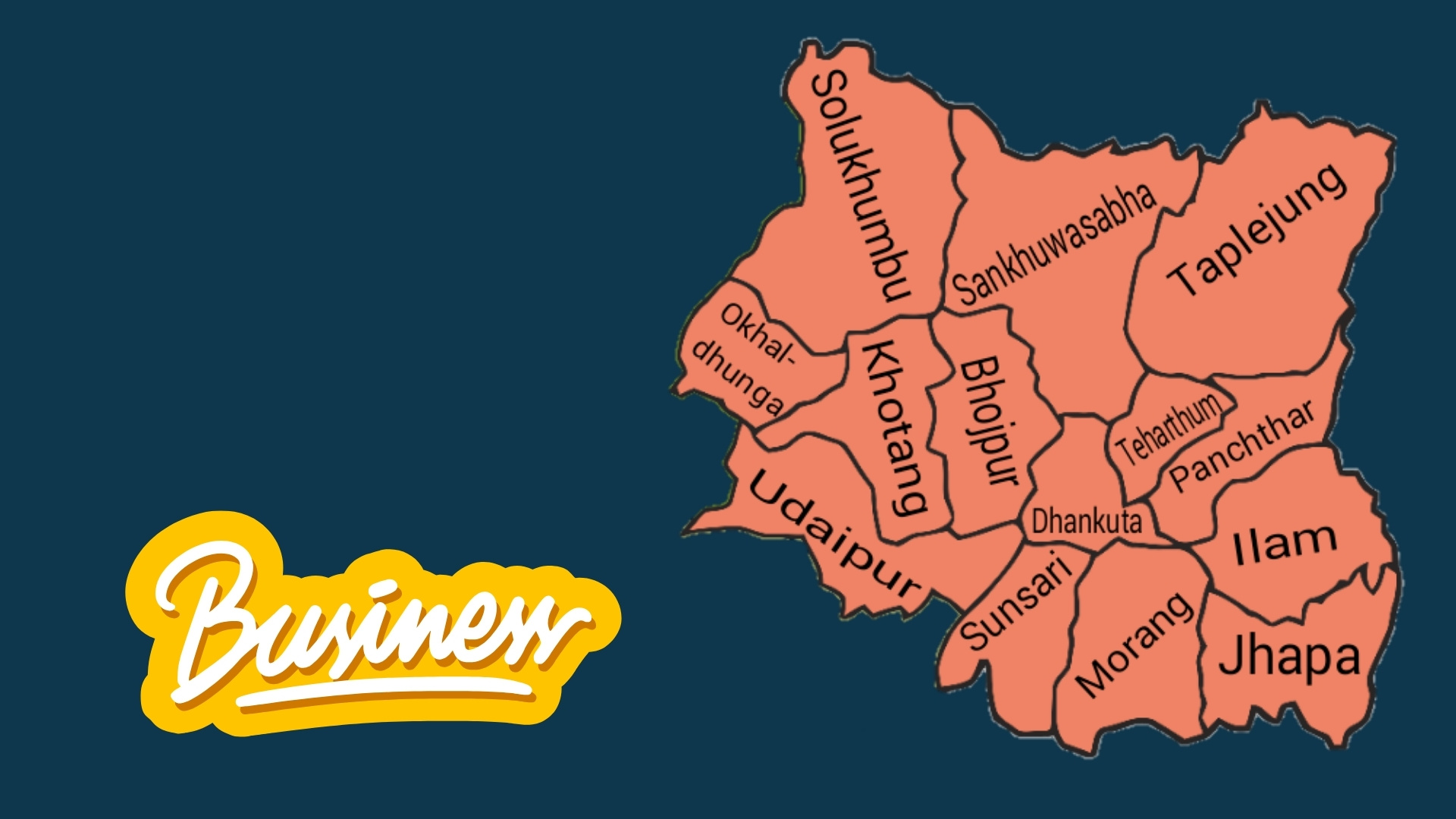
A recent study by Nepal Rastra Bank (NRB) reveals that 80% of startup enterprises enterprises in Koshi Province are profitable, despite facing challenges such as limited capital, lack of skilled workforce, restricted market access, and inadequate government support.
Titled “Special Study on startup enterprises Trends in Koshi Province 2024/25”, the report analysed 160 startup enterprises that had applied for loans through the Industrial Enterprise Development Institute and were shortlisted for financing. However, the report presents a scenario based on 2023/24.
These enterprises operate across five main sectors: agriculture and forestry (41.3%), manufacturing (18.1%), services (17.5%), tourism (13.8%), and information technology (9.4%). Entrepreneurs identified agriculture and forestry (43.1%) and tourism (21.3%) as the most promising sectors for growth.
The study found that 54% of startup enterprises have introduced innovation in goods and services, 41% in production processes, and 5% in distribution. In terms of technology adoption, 27.5% use advanced technology, 65% use standard technology, and 7.5% do not use technology. Marketing channels rely mainly on friends and relatives (33.9%), social media (28.3%), websites (8.5%), online ads and fairs (7.2%), traditional media (6.1%), door-to-door promotion (4.5%), and other methods (4.3%).
The total investment in these 160 startup enterprises reached NRs 2.56 billion, with 61.3% from promoters’ equity and 38.7% from loans. Only 40.6% of startup enterprises received government grants or benefits.
In fiscal year 2023/24, the startup enterprises employed 1,436 people, nearly equally split between women (48.4%) and men (51.6%). Average capacity utilisation stood at 71.4%, total sales revenue reached NPR 926.4 million, total profits NPR 129.2 million, with an average profit margin of 13.9% and return on investment of 5.7%.
Market access remains a challenge: 45% of startup enterprises primarily serve local markets, 46.9% the national market, and only 8.1% international markets. Initial-stage challenges included lack of capital (32.7%), shortage of skilled manpower (20.4%), and inadequate knowledge and skills (14.5%), while operational challenges included limited access to investors, market competition, and technological constraints.
Geographically, most startup enterprises are concentrated in the Terai region (66.9%), followed by the hills (22.5%) and the Himalayan region (10.6%). Entrepreneurs are predominantly aged 21–50 years, with 44.4% in the 36–50 age group and 39.3% in the 21–35 group.
Male entrepreneurs constitute 74.4%, while women represent 25.6%. Motivations for starting a business include self-reliance (37.1%), social contribution (25.8%), exploring new opportunities (25.1%), unemployment (7.9%), and other reasons (4.1%).
The NRB report recommends measures to strengthen startup enterprises growth, including seed funding, co-investment models, venture capital, tax incentives, simplified legal procedures, and easier access to loans. It also calls for expanding incubation centres, targeted incentive programs, skill development, research support, and public–private collaboration at federal, provincial, and local levels.
Read More Stories

NEPSE falls nearly 75 points as market sentiment wavers
The stock market was unable to maintain the gains seen on Tuesday, slipping...

India has begun its long-delayed population census. Here's why it matters
India has begun the worlds largest national population count, which could reshape welfare...

The United Nations has called on Israel to repeal a law passed by...


Business + Finance + Economy + Tech + Environment + Nepal & South Asia + In-depth Analysis + News + Investigation + Research + Expert Opinion + Anatomy of Complex Issues.