Interest Rate Corridor (IRC) | Banks and Financial Institutions | Foreign exchange reserves
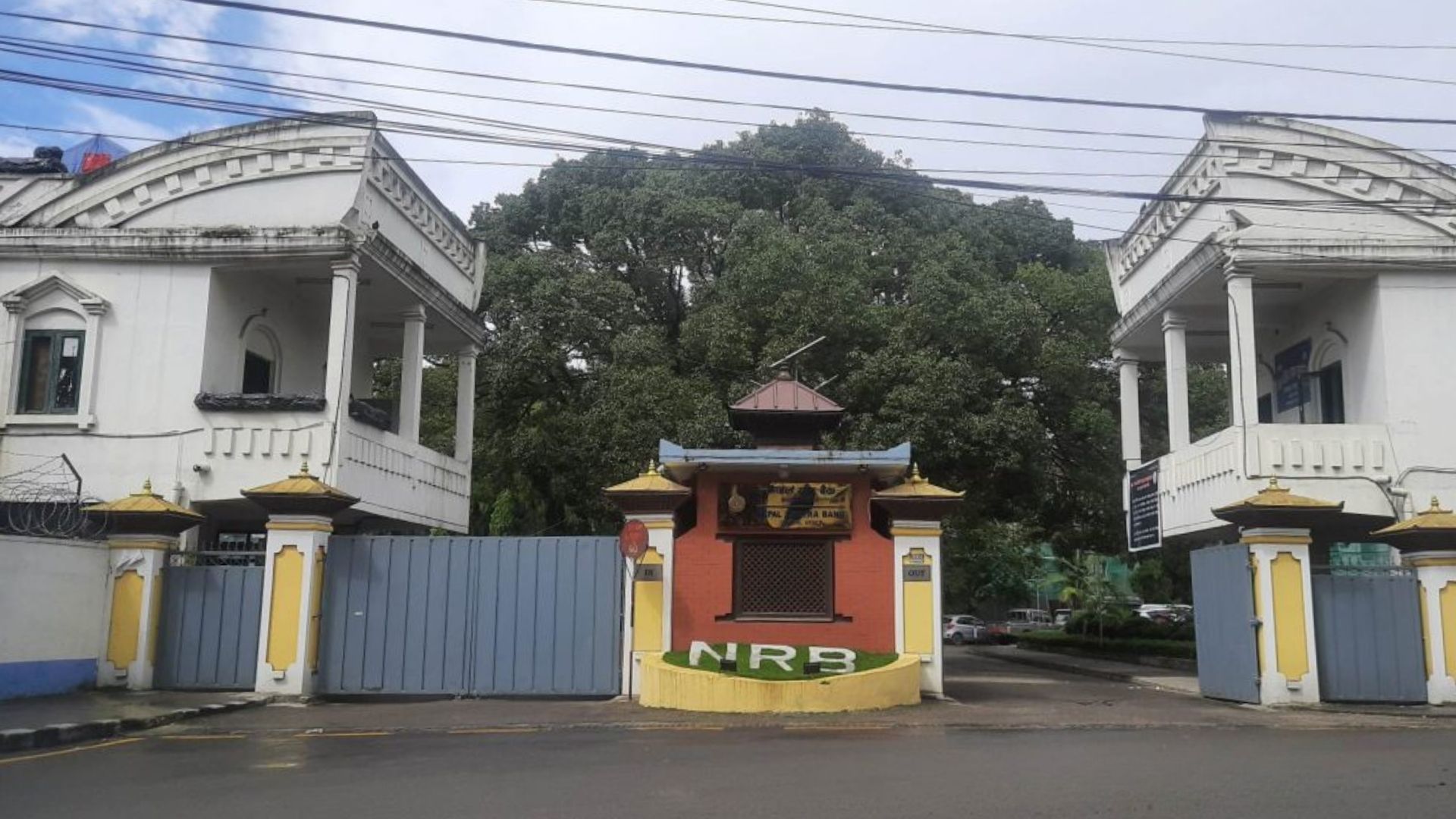
Amid a surplus liquidity in the banking system, amounting to roughly 900 billion rupees, but sluggish credit expansion and weak economic activity, Nepal Rastra Bank (NRB) on Monday has trimmed the policy rate further from 4.5% to 4.25% in the first-quarter review of its monetary policy. This year’s monetary policy announced on July 11 had lowered the policy rate to 4.5% from the existing 5%.
By slashing the policy rate further, the central bank is making money cheaper expecting to boost borrowing and investment. The policy rate guides the rate at which banks borrow from and deposit with the central bank, which in turn influences the interest rates on overall loans and savings accounts.
With a two-decade low inflation (currently at 1.47%), record foreign exchange reserves at its coffer enough to cover imports for 16.4 months, and stable macroeconomic conditions, the NRB on Monday said it would continue its cautious, monetary easing stance adopted for the current fiscal year. Now, the first-quarter review, assessing development up to mid-October, introduces several regulatory adjustments apart from policy rate cuts, primarily aimed at easing liquidity pressures and stimulating credit expansion.
One of them is reduction in the upper bound of the interest rate corridor (IRC) from 6% to 5.75% while keeping the lower bound, the Standing Deposit Facility (SDF), unchanged at 2.75% to prevent further fall in deposit rates. The central bank says the adjustment is a part of its effort to gradually narrow the width of the IRC and keep the IRC symmetric with the policy rate at its midpoint. It has kept the mandatory Cash Reserve Ratio (CRR) and Statutory Liquidity Ratio (SLR) unchanged.
Other key adjustments are in its credit policies, which include raising the ceiling on personal overdraft loans doubling from NRs 5 million to NRs 10 million. Similarly, microfinance institutions will now be allowed to provide collateral-backed loans of up to NRs 1.5 million, raised from the previous NRs 700,000.
In the recent past, the two ceilings were tightened to contain credit growth in unproductive sectors and risks rising from low-income borrowers. NRB has now relaxed them as well along with easing repayment pressures on microfinance borrowers by permit rescheduling of their loans.
For businesses and enterprises in flood and landslide-affected districts, including Ilam, struggling to service their loans, BFIs will be allowed to restructure or reschedule loans once, with a minimum collection of 10% outstanding interest.
The central bank has also removed the rule requiring banks and financial institutions (BFIs) to set institutional fixed deposit rates at least one percentage point lower than those for individual fixed depositors.
In the first quarter of 2025/26, exports grew by 89.6% to NRs 72.78 billion. Imports rose 19.8% to NRs 468.08 billion. The merchandise trade deficit widened by 12.2% to NRs 395.30 billion. The current account recorded a substantial surplus of NRs 237.59 billion, while the balance of payments posted a surplus of NRs 264.03 billion, which were NRs 115.36 billion and NRs 184.99 billion respectively during the same period last fiscal year. While the foreign exchange reserve has expanded to cover 16.4 months of imports, double the monetary policy requirement to cover 7 months of imports. Remittance inflows grew by 35.4% to NRs 553.31 billion, compared with 11.9% growth and NRs 408.77 billion in the same period last year.
There are also plans to introduce an Anti-Bribery and Corruption Policy drawing from international best practices and existing internal procedures to ensure transparency, accountability and governance in the banking sector.
The monetary review highlights recent developments to support the gradual strengthening of the economy—Nepal’s unchanged sovereign rating and steady tourist arrivals which have reached 944,000 in total by October despite the September protests, an addition of 309 MW to the national grid in the first quarter along with the government’s adjustment in its spending. The interim government has adopted a framework to optimise its spending, basically curbing its recurrent spending and halting low-priority, fragmented, or politically driven projects that lack proper planning and feasibility.
However, the review predicts economic growth to be slightly below than predicted due to delayed monsoon during the period of paddy plantation, followed by heavy rainfall, floods and landslides, which hit agriculture and other sectors. It also notes lower paddy output and election-related spending may slightly raise inflation, which is projected to be around 4% in the ongoing fiscal year.
Read More Stories

NEPSE falls nearly 75 points as market sentiment wavers
The stock market was unable to maintain the gains seen on Tuesday, slipping...
India has begun its long-delayed population census. Here's why it matters
India has begun the worlds largest national population count, which could reshape welfare...
The United Nations has called on Israel to repeal a law passed by...


Business + Finance + Economy + Tech + Environment + Nepal & South Asia + In-depth Analysis + News + Investigation + Research + Expert Opinion + Anatomy of Complex Issues.