Forensic Science | DNA Evidence | Criminal Justice System | NFSL Bill 2025
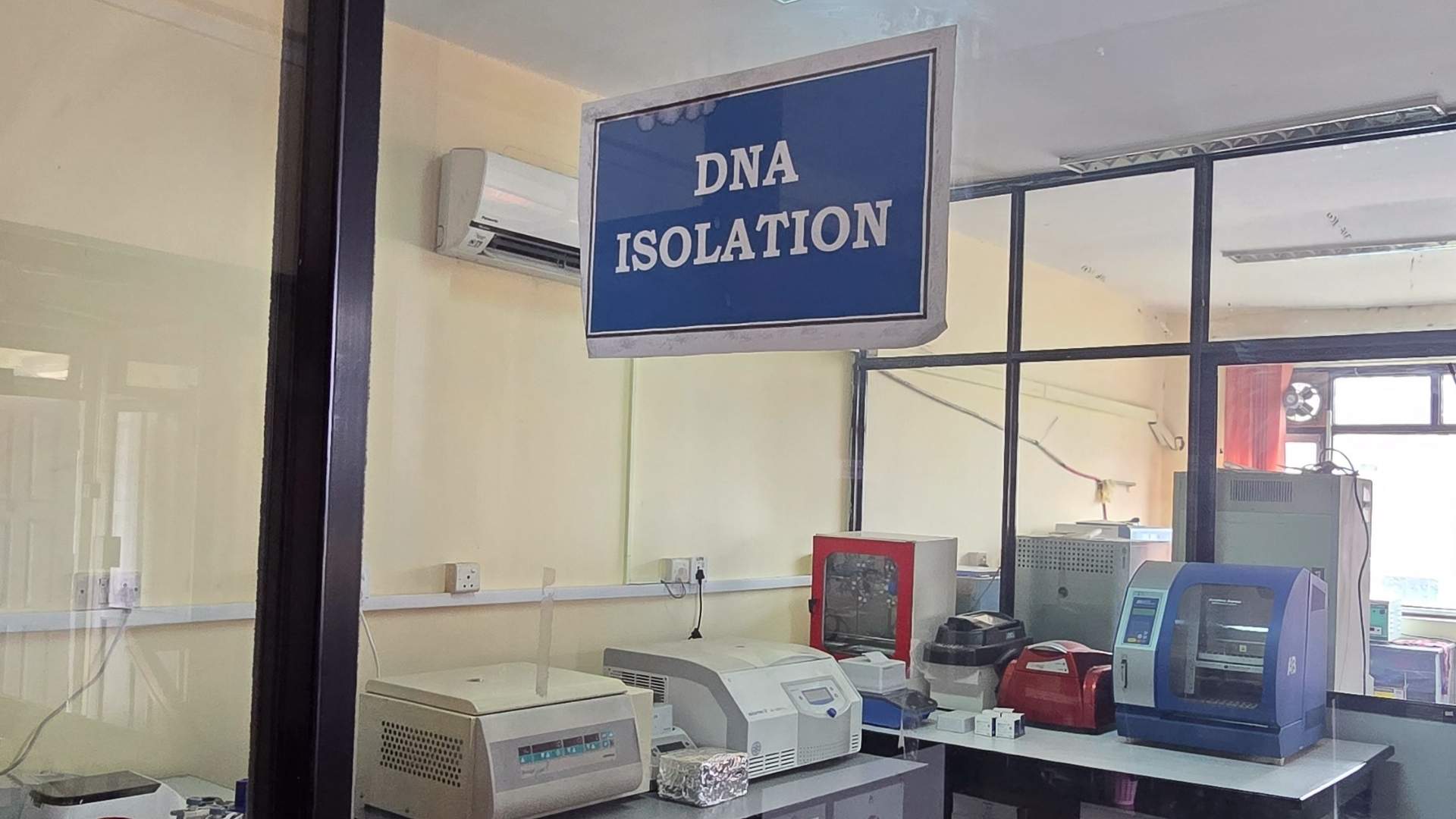
In a 2010 Supreme Court verdict on a case involving dispute over paternity and inheritance,the court highlighted a major gap in the country’s criminal justice system: the absence of a proper legal framework governing the collection, storage, and testing of DNA samples. Without clear procedures, the court noted the reliability of such evidence can be compromised.
During the case, the court had ordered a DNA test, but it noted procedural irregularities, such as the presence of unauthorised persons during sample collection. The judgment stressed that DNA evidence is only reliable when collected, tested, and stored securely, independently, and systematically. It also underscored the need for a legal framework to establish a DNA database in the country for future reference.
More than a decade later, Nepal is taking steps to address the gap. In an effort towards modernising criminal justice systems, the National Assembly recently passed the National Forensic Science Laboratory (Establishment and Operation) Bill, 2025, registered by the former education minister Bidya Bhattarai in February last year.
In modern justice systems, forensic science often determines the difference between suspicion and proof. In Nepal, the institutional structure governing forensic services has long operated under an administrative framework rather than a dedicated statutory regime. The new bill seeks to formalise and strengthen this institutional structure, while also laying the groundwork for legislation related to DNA evidence.
National Forensic Science Laboratory, the main forensic testing service provider of Nepal, came into existence after recommendation by the Judicial Reform Commission in 1983 to create a modern and independent forensic facility. The laboratory first operated under the then Royal Nepal Academy of Science and Technology (1986-1995), later functioned as an autonomous body under the Ministry of Law, Justice and Parliamentary Affairs (1995-2000), and currently operates as an autonomous organisation under the Ministry of Education, Science and Technology.
It currently provides DNA tests, paternity and sequencing facilities. Apart from that, Nepal Police Central Forensic Science Laboratory also conducts forensic testing, operating under the Crime Investigation Department (CID) of Nepal Police, while functioning under an administrative arrangement.
Nepal currently does not have a dedicated Act on “Forensic Science” that governs forensic laboratories. Policy discussions and institutional recommendations have suggested enacting a specific act or regulation to integrate and regulate forensic laboratories.
The current bill seeks to support the administration of justice through scientific collection, analysis and testing of evidence. This includes biological and non-living objects, documents, physical goods, and electronic materials submitted for forensic examination.
It allows the laboratory to conduct forensic testing on materials received through court orders or authorised institutions, including DNA (Deoxyribonucleic Acid) analysis.
DNA Data Bank
A significant provision of the bill is the establishment of a National DNA Data Bank to serve as a secure repository that collects, extracts, and preserves biological samples (DNA) or digital DNA profiles for future use.
The primary purpose of this is to store physical samples for medical/genetic research and manage forensic databases to match profiles from crime scenes to known offenders.
At present, DNA samples collected during investigations are used only for that specific case. There is no national database where DNA profiles are systematically stored. The bill proposes a centralised system where DNA samples collected during investigations can be securely stored and recorded.
Procedure of forensic testing
Samples submitted through courts or other authorised institutions must meet the laboratory’s prescribed standards. If a sample is found unsuitable, they must be returned within seven days with written clarification.
Testing must follow approved scientific methods and reports must clearly state the scientific basis of the findings while maintaining confidentiality unless disclosure is required by law.
The bill permits DNA testing upon written request by the court, including re-testing, and mandates the laboratory to securely preserve forensic evidence until testing is complete and properly dispose of it after the required storage period.
Comply with international standards
The laboratory is required to adopt the ISO 17025 Laboratory Management System to ensure that the testing methods follow recognised scientific standards, laboratory results maintain consistency and accuracy, and Nepal’s forensic testing processes align with internationally accepted practices.
No-cost forensic testing for public cases
The bill allows the laboratory to collect fees for forensic testing services. However, it also allows an exception.
In cases where the Government of Nepal is the plaintiff, the laboratory must conduct testing without charging fees. Since many criminal prosecutions fall under this category, the provision aims to ensure that forensic testing can be carried out when required during investigations and court proceedings.
Institutional framework
The bill proposes establishing the lab as an autonomous institution body with its own legal identity and authority to operate under the prevailing law. It will be overseen by a nine-member Board of Directors consisting of representatives from government institutions, the judiciary, and academic experts.
The bill also proposes the formation of a professional and independent leadership for the laboratory. Instead of a bureaucratic appointment, the lab will be led by an Executive Director selected through open competition by a recommendation committee chaired by the Public Service Commission Nepal. Candidates must hold a Master’s degree in forensic science or core sciences such as chemistry, biology, physics, or medical science, and possess at least 10 years of experience in forensic science. The Executive Director will serve a four-year term, which will be renewable once.
The laboratory’s central office will be located in the Kathmandu Valley, and may establish provincial branch offices as needed.
Read More Stories

NEPSE falls nearly 75 points as market sentiment wavers
The stock market was unable to maintain the gains seen on Tuesday, slipping...

India has begun its long-delayed population census. Here's why it matters
India has begun the worlds largest national population count, which could reshape welfare...

The United Nations has called on Israel to repeal a law passed by...


Business + Finance + Economy + Tech + Environment + Nepal & South Asia + In-depth Analysis + News + Investigation + Research + Expert Opinion + Anatomy of Complex Issues.