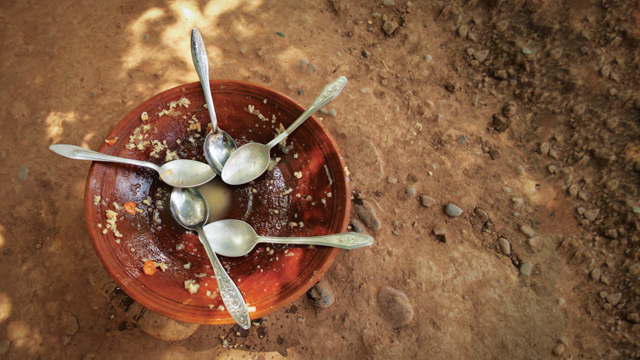
Nepal ranked 81st out of 121 countries in the Global Hunger Index (GHI) 2022 making substantial progress over the decades in reducing hunger problems. But there is no reason to celebrate as the problem is still severe.
5.5% of Nepal’s population is still undernourished. 31.5% and 12% of children under five years are stunted and suffer from wasting respectively while 2.8% of children die before reaching the age of five.

Central Bureau of Statistics (CBS) data shows that the stunting rate is 47.8% in the Karnali region compared to 22.6% and 22.9% in Gandaki and Bagmati provinces respectively.
Similarly, a National Planning Commission study in 2021 shows that Karnali, along with Sudurpashchim, Lumbini, and Madhesh provinces face a high rate of stunting with one-third or more of children suffering from it.
These provinces also face a high rate of 'Multidimensional Poverty.'
Explanations for the high levels of child undernutrition in these provinces include difficult geographical terrain, poor infrastructure and transportation facilities, food insecurity, low overall socioeconomic development, and lack of access to healthcare services.
Overall, variations in geography and agro-climatic zones, caste/ethnicities, climate-related crises leading to agriculture challenges and pronounced disasters and pandemic-related food crises, and gender relations have impacted Nepal's food security status.
The severity of each country’s GHI score ranges from low to extremely alarming. Nepal has a moderate level of hunger, with a score of 19.1
Read More Stories

NEPSE falls nearly 75 points as market sentiment wavers
The stock market was unable to maintain the gains seen on Tuesday, slipping...

India has begun its long-delayed population census. Here's why it matters
India has begun the worlds largest national population count, which could reshape welfare...

The United Nations has called on Israel to repeal a law passed by...


Business + Finance + Economy + Tech + Environment + Nepal & South Asia + In-depth Analysis + News + Investigation + Research + Expert Opinion + Anatomy of Complex Issues.