Election Commission | March 5 Election | house of representatives | budget | security
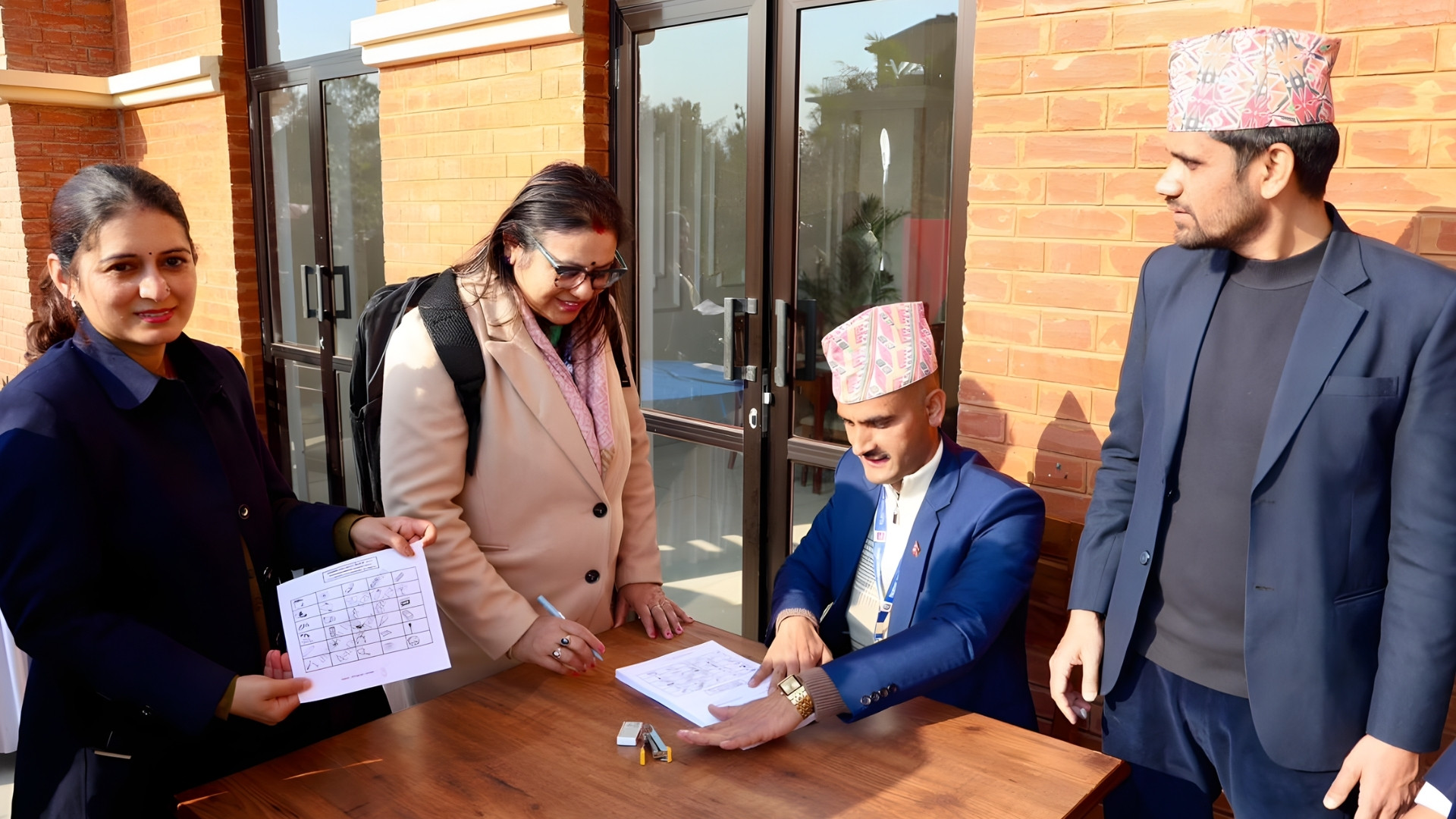
The election code of conduct for the upcoming House of Representatives election comes into effect from tomorrow. Alongside this, the Ministry of Home Affairs (MoHA) has announced today plans to deploy a cybercrime control team to prevent the misuse of social media and digital platforms during the elections.
In the meanwhile, former Nepali Congress party president Sher Bahadur Deuba and his faction has pleaded with Election Commission Nepal (ECN) to postpone the nomination registration date for the election, set for January 20, until the Supreme Court resolves the matter, where it has sought to overturn the legal recognition ECN has awarded to the Gagan Thapa led-central committee. Some observers warned that the intra-party dispute could potentially disrupt the election schedule if the power struggle doesn’t reach an amicable resolution promptly.
Beyond these developments, as Nepal moves closer to the election, the government says it has put into place a range of legal, administrative and security measures to ensure the elections are held on the announced date.
The commission’s preparations
Soon after the election announcement, President Ram Chandra Poudel issued an ordinance to allow updating the voter list even, which existing law didn’t allow after the elections date was announced. The ordinance was introduced to include young voters yet to register in the list.
An additional 915,119 subscribed to the list. It now includes 18,903,389 individuals. Among them 51.12% are male and 48.88% are female while a total of 200 belong to other gender categories.
Similarly, ECN has designated 23,112 polling centers in 10,967 polling areas. Compared to the last election, the polling areas have increased by 75 and polling centers by 887.
ECN earlier published its official election schedule, setting key dates such as registration of political parties, deadlines for direct candidacy and PR nominations, the commencement of the election campaign, the polling day, and the announcement of results.
So far, the deadline for filing the closed list of Proportional Representation candidacy has passed successfully, while the deadline for registering direct candidacy, which is scheduled to open on January 20, now appears to extend by a week due to the Nepali Congress dispute.
To support ECN’s operations, the Ministry of Finance (MoF) has allocated a budget of NRs 6.73 billion.
Security plans and concerns
On November 16, the Home Ministry’s Central Security Committee approved an “Integrated Security Plan–2025,” authorising deployment of security forces, including temporary election police. Army deployment required a National Security Council recommendation to the Cabinet and presidential approval, which was obtained on November 27.
Under the plan, a total of 300,000 security personnel is planned to be deployed, including 80,000 Nepal Army personnel in three phases, starting one month ahead of the election.
The army will provide security to ballot paper printing and also coordinate with Nepal Police and Armed Police Force (APF) to secure vital structures, including airports and prisons during the pre-election time.
At the polling, army personnel will remain in the third line of security, and provide security to political parties, candidates, voters and electoral officers. Post-voting, it will secure the transportation of ballot boxes and safety of the vote counting stations.
The APF will also be mobilised in all constituencies, deployed in the second line. Additionally, a total of 149,090 temporary police personnel will be recruited, including 133,980 under the Nepal Police and 15,110 under APF.
The temporary police will be deployed for 40 days including 10 days of training. Reportedly, 196,470 individuals have so far applied for the position. Recruits will get salary and benefits equivalent to the constable of Nepal Police and APF.
The MoF has allocated a budget of NRs 10.39 billion for the home ministry and NRs 1.99 billion for defence to carry out election‑related security work.
One of the primary concerns relating to the election has been looted firearms and a high number of prison breaks during the September protest. 1,276 firearms, including INSAS and SLR rifles, were looted from police stations during the protests and a total of 14,548 prisoners had escaped. As of the first week of November, 566 weapons are yet to be returned back while 5,105 prisoners are still out in the open.
While Home Minister Om Prakash Aryal has refrained from disclosing the number of looted weapons for security reasons, the police headquarter had earlier reported looting of over 1,100 firearms. Political parties have frequently raised these as serious security threats to the upcoming election.
Another biggest concern is the spread of misinformation.
The ministry on Sunday, announced plans to deploy a cybercrime control team to prevent the misuse of social media and digital platforms during the elections. The aim is to curb the spread of false information, rumors, misleading propaganda, hacking, fake accounts, and digital fraud, while ensuring voter privacy, digital security, and a peaceful election process.
Cyber police personnel from the Cyber Bureau will be stationed at the Valley Police Office to coordinate with the Central Command Post, the Election Commission, and the Central Election Cell. Similar teams will also be deployed in provincial and district police offices to monitor and investigate election-related cyber activities.
Additionally, a special Cyber Bureau team will be stationed at the commission to analyse and investigate misleading content on digital platforms.
Absentee voting rights
With the election announcement, extension of absentee voting rights to migrants, whether residing within the country or overseas, gained strong momentum. Several reports and studies had been recommending the ECN to implement the rights through embassy-based voting, internet voting and postal voting.
Earlier, the interim government said it is preparing amendments to four election-related laws to allow overseas voting, inter-district voting and include a ‘no-vote’ option as well. But with less than 50 days to election, and the required legislation still pending, implementation now seems nearly impossible, potentially limiting voter participation and affecting electoral inclusivity.
The government had also held a meeting with the political parties to seek suggestions on these provisions, but it was advised not to change the legal framework midway, which could lead to conflict. ECN itself has expressed inability to implement all these provisions, due to lack of time, heavy workload and the current special circumstances.
The government has however made the situation more favorable for the upcoming election than before by taking political parties into confidence. By engaging and consulting them on different political and election-related matters, the government has sought to ensure broader consensus and minimise potential disputes. One prime example is onboarding NCP (UML), which has been the most vocal regarding the viability of holding elections amid security concerns and questions over government legitimacy.
While UML has released nearly its entire set of direct candidates, other parties, including emerging forces, are also rapidly entering the fray, finalising their own nominations and negotiating strategic alliances ahead of the polls. Kathmandu Mayor Balen Shah and Dharan Mayor Harka Sampang both resigned on Sunday to contest the election and focus on their party activities.
On the other hand, one of the country’s oldest and largest parties, Nepali Congress is facing turmoil due to recent intra-party disputes, leading to its split, which some observers see may disrupt the elections schedule.
Read More Stories

NEPSE falls nearly 75 points as market sentiment wavers
The stock market was unable to maintain the gains seen on Tuesday, slipping...

India has begun its long-delayed population census. Here's why it matters
India has begun the worlds largest national population count, which could reshape welfare...
The United Nations has called on Israel to repeal a law passed by...


Business + Finance + Economy + Tech + Environment + Nepal & South Asia + In-depth Analysis + News + Investigation + Research + Expert Opinion + Anatomy of Complex Issues.