Nepal Economic Crisis | Gen-Z Protests 2025 | Instability | Institutional Collapse
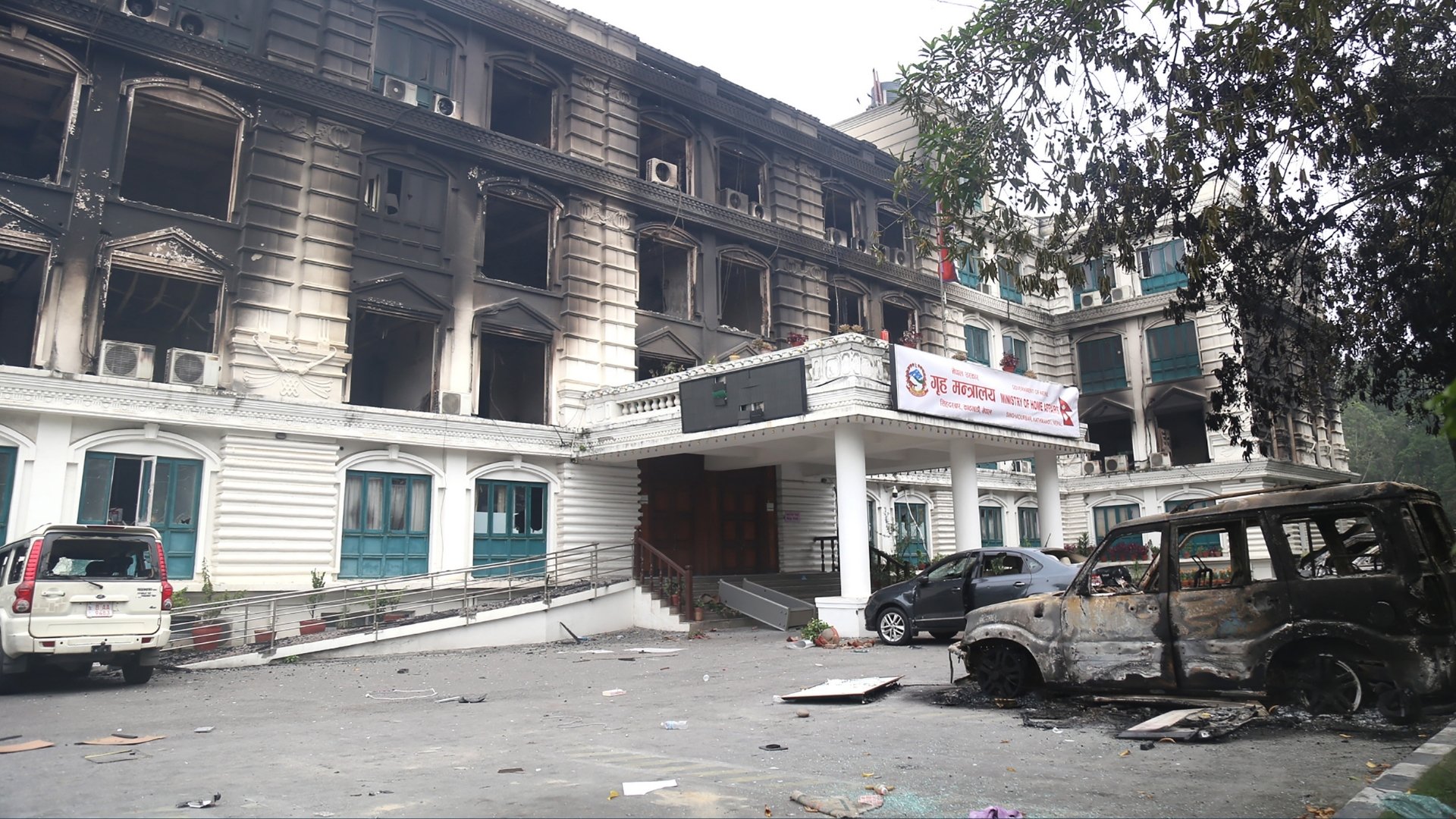
With a devastating mob violence that swept the country’s institutions, infrastructures and private and public properties, and the country currently in search of leadership and governance, another bigger, more haunting question also looms over Nepal: how will the country survive with an economy in ruins?
For governance to function, there must be money in the treasury—and but those funds have been running dry, prompting the state for answers to expand its economic base. While present political conversations revolve around forming a new government and holding elections, the uncomfortable truth is this: where will the funds come from? There are three tiers of elections on the horizon while the current damages could well go up to trillions of rupees. In the current climate with its far reaching consequences, managing the economy is far easier said than done.
First, the only solution to ensure elections, the state will likely divert money from already weak sectors such as health and education. Apart from elections, the other sector that remains the top priority is the country's fragile state of security—one that will also demand additional funding.
But then what?
With festival season approaching, inflation will hit hard—prices will rise, and households will struggle. To make matters worse, one of Nepal’s key trade lifelines with China—Rasuwagdhi customs, a critical route for commerce—remains closed after the recent Bhotekoshi flood swept away the bridge that facilitated trade between the two countries.
Foreign Direct Investment (FDI) in Nepal has been already facing significant challenges, but some recent groundworks meant Nepal could yield better results soon. Nepal recorded a record-high FDI pledge of NRs 64.96 billion last fiscal year, although it struggled to materialise even a fifth of that amount.
Now, with visuals of arson and unrest circulating across international media, the damage runs deeper than numbers. Despite a favourable recent sovereign credit rating, the message to the world is clear: investments in Nepal are no longer safe.
Additionally, thousands of jobs are on the line. One doesn't need complex economic models to understand the situation—the wreckage of Bhatbhateni, once a symbol of retail growth, is enough.
Investor confidence has plummeted to historic lows. A local businessman told the_farsight, “I don’t want to stay in the country anymore.” Another, visibly shaken, is already preparing to lay off staff: “I have to start from scratch,” he said, staring into an uncertain future.
The violence and economic instability are likely to intensify outmigration, particularly of skilled youth, creating long-term human capital loss.
Additionally, the violence that erupted, including death toll now reaching 34, has shaken the very foundation of the country’s tourism industry, pushing it back into yet another crisis mode.
Even as Nepal was beginning to show early signs of recovery—with record foreign exchange reserves, excess liquidity in banks, and a flicker of credit demand—especially the latter, now risks stalling in the immediate aftermath.
While the banking system was already under pressure, with non-performing loans (NPLs) rising steadily over recent times, the business climate is likely to worsen further. As revenues decline, job cuts increase, and payment cycles face disruption, they threaten to push those numbers even higher and threaten the financial condition of the country.
Even the one pillar still holding up the economy so far, which is remittances, is not enough to offset the structural damage being done at home.
More than just empty coffers, the country faces a crisis of leadership. In this policy vacuum, chaos is governing by default. And the larger question looms: In the long run, how will Nepal finance the rebuilding of institutions that are in ashes, slid to the lowest morale in the history of the country?
Things are likely to worsen as the country faces recurring disasters like those driven by climate change, which will only further strain resources and accelerate national decline.
Right now, it appears the country has been dragged back into the dark ages.
Read More Stories

NEPSE falls nearly 75 points as market sentiment wavers
The stock market was unable to maintain the gains seen on Tuesday, slipping...
India has begun its long-delayed population census. Here's why it matters
India has begun the worlds largest national population count, which could reshape welfare...
The United Nations has called on Israel to repeal a law passed by...


Business + Finance + Economy + Tech + Environment + Nepal & South Asia + In-depth Analysis + News + Investigation + Research + Expert Opinion + Anatomy of Complex Issues.