Air pollution
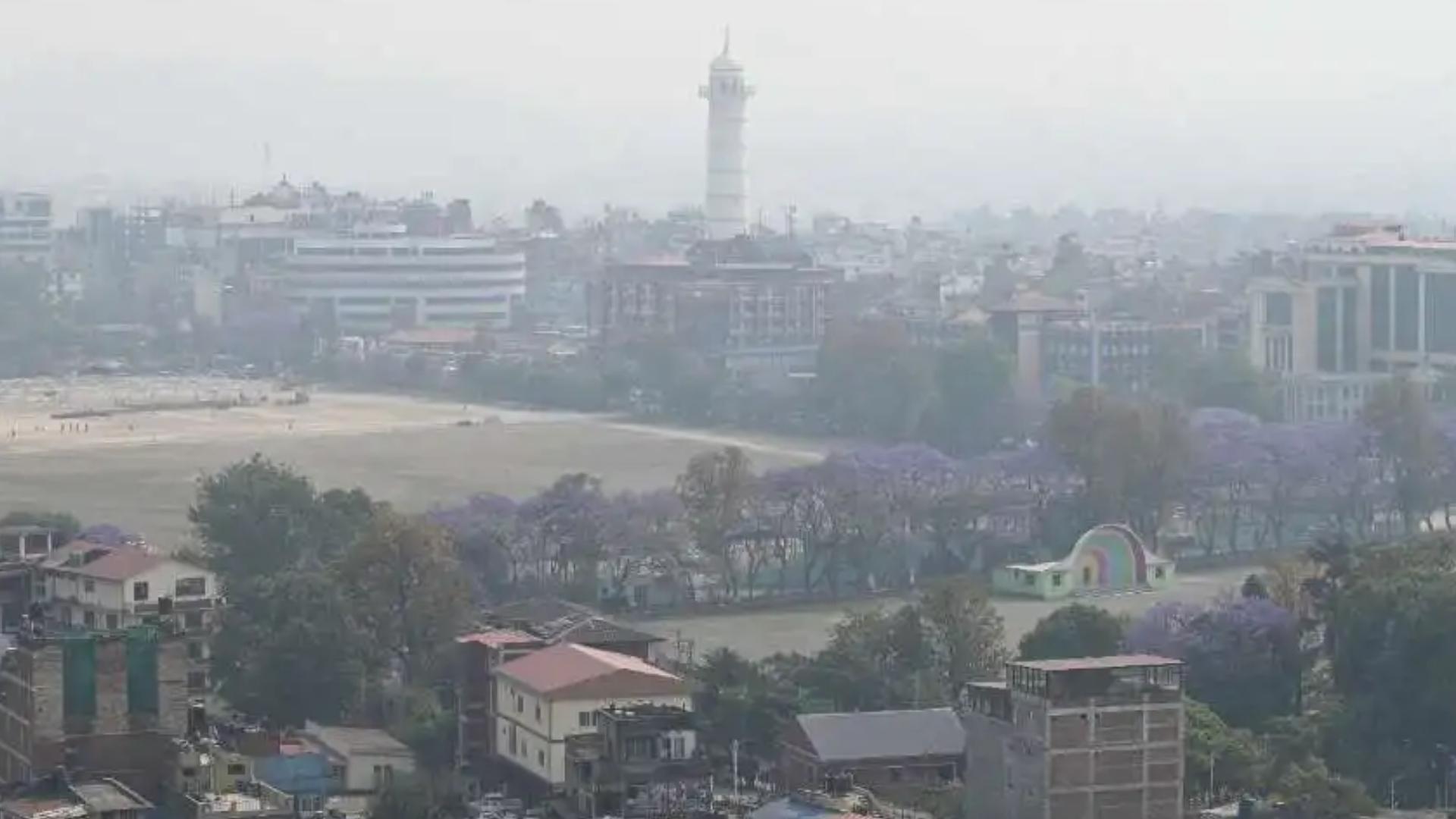
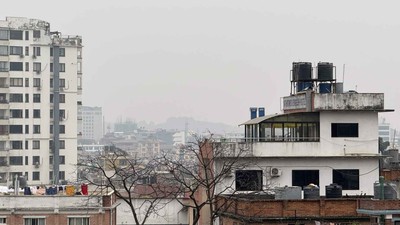
Over the past week, Kathmandu Valley woke up to mornings shrouded in haze, with air quality consistently above the “unhealthy for all” category throughout the day.
The worsening smog is far more than a seasonal nuisance. It reflects a deepening environmental and public-health crisis affecting millions of Nepalis and increasingly shaping life in the country’s fast-growing urban centres.
Each year, especially during the dry pre-monsoon months, Kathmandu consistently ranks among the world’s most polluted cities. Emissions from vehicles, construction dust, brick kilns, industries, and open burning of waste accumulate in the Valley, turning the sky grey and hazy and triggering frequent health warnings.
The crisis extends well beyond the capital.
Across Nepal, urban municipalities are grappling with deteriorating air quality. Metropolitan cities such as Biratnagar, Birgunj, Bharatpur, and Pokhara have frequently recorded periods of unhealthy pollution levels in recent years. Sub-metropolitan cities, including Butwal, Nepalgunj, Janakpur, and Dhangadhi, also experience similar episodes during dry winter and pre-monsoon months.
Unplanned urbanisation, rising vehicular emission, expanding construction activity, and weak enforcement of environmental regulations have driven emissions across these cities. In several Terai urban centres, pollution is further worsened by smoke and industrial emissions drifting across the border from northern India.
The pattern mirrors a broader South Asian air-pollution crisis. Cities including New Delhi, Dhaka, and Lahore frequently dominate global rankings for the worst air quality during winter and early spring. Pollution from agricultural burning, industrial emissions, and vehicle exhaust in the Indo-Gangetic plains often travels long distances, affecting neighbouring regions, including Nepal.
Kathmandu’s geography, however, makes the situation particularly acute.
The Valley sits inside a bowl-shaped basin surrounded by hills, which restricts air circulation. During winter and dry months, temperature inversions trap cooler air near the ground beneath a layer of warmer air, preventing pollutants from dispersing. Smog accumulates over the Valley until wind or rain clears it.
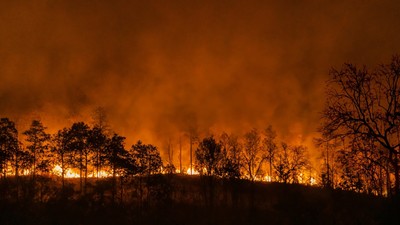
Seasonal forest fires exacerbate the crisis. Wildfires across Nepal typically intensify between April and May, when dry forests in the mid-hills and plains ignite. Smoke from these fires drifts over large parts of the country, combining with local emissions to push air quality to hazardous levels.
The consequences are profound, particularly for public health.
It can aggravate lung and heart conditions, increase the risk of asthma, chronic respiratory diseases, strokes, and affect pregnant women and children. Common symptoms include chest discomfort, coughing, sore throat, fatigue, and eye irritation. Children under five, senior citizens, people with chronic illnesses, pregnant women, and outdoor workers are particularly vulnerable. Several reports point out that children are growing with a high likelihood of respiratory problems.
In response, health authorities usually recommend limiting outdoor activities when air quality is poor, including shutting schools.
Studies estimate that polluted air reduces the average Nepali’s life expectancy by about 3.4 years and contributes to roughly 26,000 premature deaths annually.
The economic consequences aren’t small either. A study shows that poor air quality costs the country over six percent of its annual GDP by degrading human capital—the sum of people’s productivity, incurring significant financial costs for medical expenses, and impacts on the tourism industry and aviation sector.
Despite the scale of the crisis, air pollution has rarely become a central political issue.
The incoming government, led by the Rastriya Swatantra Party (RSP), comes to power with a strong electoral mandate following recent elections. While the party’s manifesto acknowledges the issue, it occupies a relatively small section of the document. Under Point 93, the party pledges to ensure every citizen’s right to clean air while safeguarding Nepal’s tourism sector from the negative effects of pollution.
The manifesto proposes a multi-pronged strategy to bring air quality within World Health Organisation standards. Measures include stricter emission standards for vehicles, brick kilns, and factories, stronger enforcement of existing regulations, a ban on open burning of waste and agricultural residue, and expanded access to clean cooking fuels, critical for reducing indoor and outdoor air pollution.
Another commitment is the recognition of transboundary pollution. It proposes measuring emissions entering Nepal from across the border and pursuing negotiations with neighbouring countries to address the issue.
The document also explicitly links air pollution with tourism, warning that deteriorating air quality is undermining Nepal’s attractiveness as a destination.
While these commitments are ambitious, the manifesto offers limited details on implementation timelines, financing mechanisms, or institutional reforms required to translate pledges into concrete policy.
Meanwhile, Kathmandu Valley’s air pollution sits at the intersection of three layers of government under the federal system. The federal government regulates vehicle standards, industrial emissions, and national environmental policy. Provincial authorities oversee transport management, while municipalities handle urban issues such as waste management, road dust, and construction regulation. The Valley itself comprises 18 local governments, including Kathmandu and Lalitpur metropolises, which must coordinate efforts to tackle pollution.
Recognising the need for a coordinated response, the government introduced the Kathmandu Valley Air Quality Management Action Plan in 2020, a five-year strategy targeting emissions from transport, industries, construction dust, and waste burning. Local governments are responsible for enforcing bans on open burning, regulating construction sites, improving waste management, and controlling road dust.
Progress, however, has been uneven. Municipalities often face limited technical capacity, fragmented responsibilities, and weak enforcement powers, while major pollution sources, including vehicles and industrial standards, remain under federal authority.
There is also a lesson from past experiences on how leadership translates into actions, or fails to. In mid‑2024, when RSP chair Rabi Lamichhane led emergency preparedness and response efforts through agencies under his authority as Home Minister, much of the political focus was elsewhere, as he grappled with controversies surrounding himself. Meanwhile, the lower house in Kathmandu was mired in a stalemate, with the ruling party and opposition exchanging political allegations rather than addressing the growing crisis. This dysfunction further undermined the government’s ability to prioritise and respond effectively to escalating emergencies.
At the same time, political parties seemed absorbed in other matters: preparations for by‑elections, deadlocks in provincial governments, and organising an investment summit, diverting attention from the pressing wildfire and pollution crises.
These episodes demonstrate that air pollution and wildfires are not just environmental challenges, they are deeply political issues that demand sustained, consistent, and accountable attention from leadership.
Additionally, international institutions have stepped in to support Nepal’s efforts. The World Bank recently approved a concessional credit of roughly $52 million for the Nepal Clean Air and Prosperity Project, aimed at helping industries transition to cleaner technologies and strengthening air-quality management. The project plans to reduce industrial pollution by funding commercial entities by taking public debts.
Such financing modality however warrants scrutiny. The project passes the costs to the public, while the government stays largely idle and unaccountable for the pollution taxes it raises.
Other efforts through development programmes are also ongoing. The USAID Clean Air programme, launched in 2021 and running through 2026, works with municipalities in Kathmandu Valley to strengthen air-quality monitoring and management systems. Around 30 low-cost air-quality sensors have been installed across the Valley, giving local governments more precise pollution data.
The programme also supports ten startups selected for the Business Accelerator for Clean Air, helping them scale solutions in electric mobility, waste recycling, alternative fuels, and biodegradable materials. Municipalities including Kathmandu, Lalitpur, Changunarayan, Chandragiri, and Shankharapur have implemented elements of the Valley’s air-quality action plan with programme support.
Yet pilot programmes and international funding alone will not resolve the crisis, and in cases just be an additional burden or waste of resources. Effective improvement will ultimately depend on whether governments at all levels can coordinate policies to reduce emissions from transport, industries, waste burning, and construction dust across cities, prevent disasters such as wildfires, and engage effectively with regional partners.
For Kathmandu and other city residents, the stakes are immediate and highly consequential. The new government must translate policy promises into action so that citizens get to breathe cleaner air.
Read More Stories

NEPSE falls nearly 75 points as market sentiment wavers
The stock market was unable to maintain the gains seen on Tuesday, slipping...
India has begun its long-delayed population census. Here's why it matters
India has begun the worlds largest national population count, which could reshape welfare...
The United Nations has called on Israel to repeal a law passed by...


Business + Finance + Economy + Tech + Environment + Nepal & South Asia + In-depth Analysis + News + Investigation + Research + Expert Opinion + Anatomy of Complex Issues.