Dry & Warm Winter Season | Rainfall Deficit | Pollution | Wildfire Risk
Nepal is experiencing a drier and slightly warmer winter, with official forecasts indicating that below-average rainfall is likely to persist across large parts of the country through the remainder of the season.
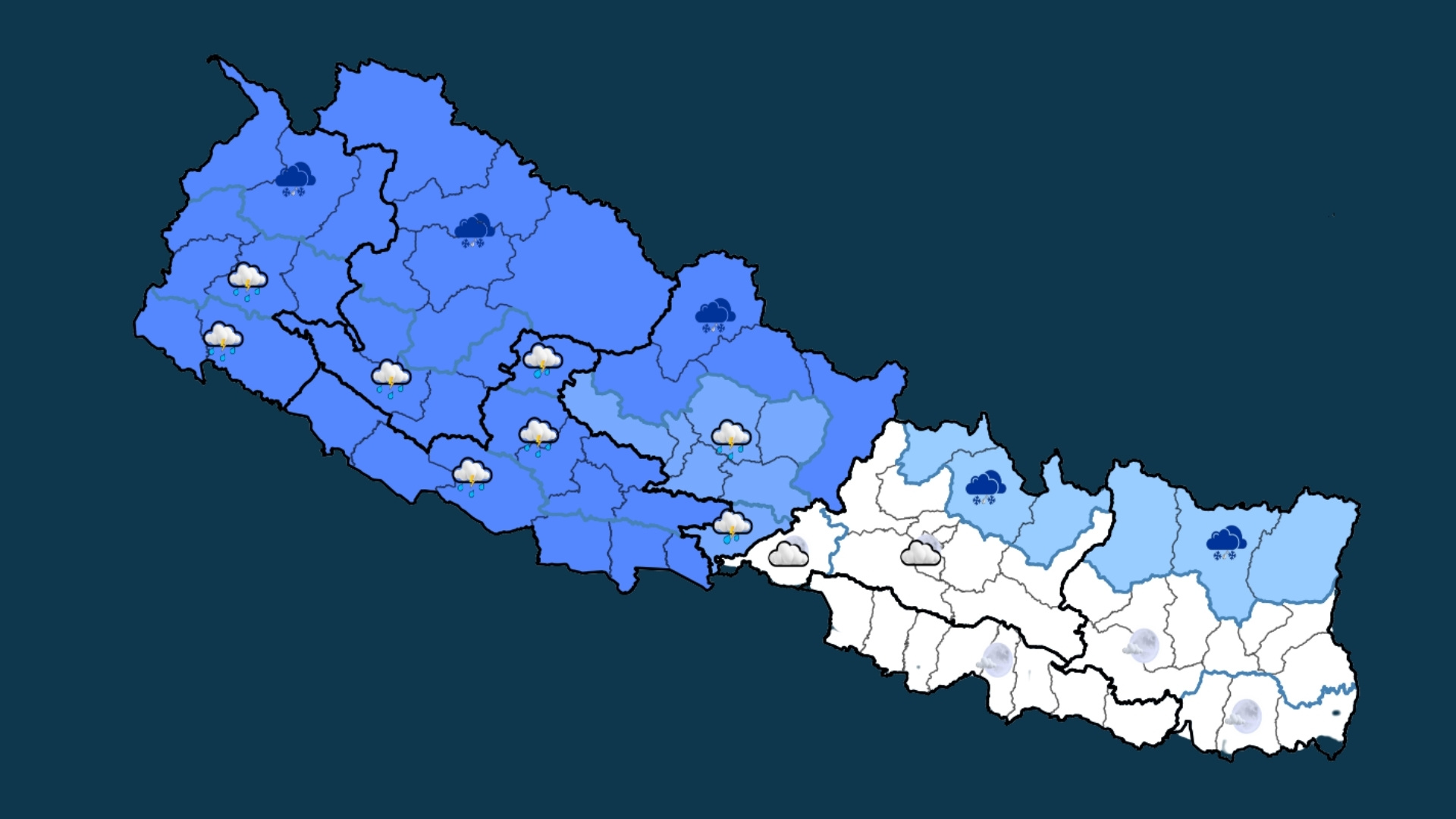
According to the Department of Hydrology and Meteorology (DHM), the probability of below-normal winter rainfall remains high in several provinces. DHM’s seasonal outlook for January 1 to February 28 indicates a 55–65% likelihood of below-average precipitation in central Sudurpaschim, southern Karnali, Lumbini, Gandaki, most of Bagmati, central Madhesh and western Koshi.
Similarly, the forecasts for the southwestern part of Sudurpaschim, the central parts of Karnali, Gandaki, Bagmati; the northern part of Lumbini, the eastern and western parts of Madhesh, and the central and southern parts of Koshi are at 45-55%. The forecasts for the rest of the country are 35-45%.
While light rain is possible in parts of western and central Nepal from January 23, meteorologists say such events are expected to be isolated and limited, unlikely to significantly alter the broader dry pattern.
Winter rainfall typically contributes about 60.1 millimetres, roughly 3.5% of Nepal’s annual precipitation, according to long-term climatological data. Although modest in volume, winter rain plays a critical role in recharging local water sources, supporting winter crops and helping reduce air pollution, particularly in urban areas.
The prolonged absence of rainfall has already begun to affect air quality in the Kathmandu Valley, where dust, vehicle emissions and pollution from construction activities have accumulated in stagnant winter air. Forecasts suggest little to no rainfall in the Valley in the near term, limiting the natural cleansing of pollutants.
While most central and eastern regions are expected to remain dry, snowfall is likely in higher mountainous areas, particularly in parts of Karnali and adjoining provinces. Meteorologists say snowfall will be largely confined to elevated terrain and may offer limited relief to snow-fed water sources, though overall winter precipitation is still expected to remain below normal.
DHM has also indicated that both minimum and maximum temperatures are likely to remain slightly above average nationwide during the winter months. In the Kathmandu Valley, freezing temperatures have become increasingly rare in recent years, a trend that meteorologists associate with persistent dry conditions and broader climatic shifts.
Nepal’s current winter continues a multi-year pattern of drier and warmer winter seasons observed since the early 2020s. Climate experts note that this season coincides with a transition from La Niña toward neutral conditions, which can influence the strength and frequency of westerly weather systems that typically bring winter precipitation to Nepal.
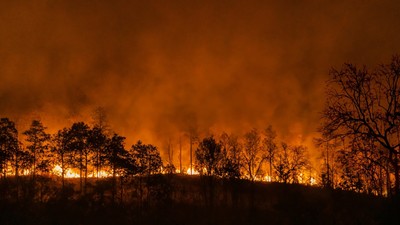
Reduced winter rainfall and snowfall have raised concerns for winter crops such as wheat and vegetables, which depend on timely moisture. Prolonged dry conditions also increase the risk of wildfires, as dry forest floors become more susceptible to ignition.
Beyond agriculture and forests, the dry winter has compounded air-quality challenges in urban centres, especially the Kathmandu Valley, where the lack of rain allows pollutants to remain suspended for longer periods.
Meteorologists warn that unless stronger weather systems develop later in the season, below-average rainfall and warmer conditions are likely to persist, underscoring growing climate-related pressures on the country’s water security, agriculture and public health.
Read More Stories

NEPSE falls nearly 75 points as market sentiment wavers
The stock market was unable to maintain the gains seen on Tuesday, slipping...
India has begun its long-delayed population census. Here's why it matters
India has begun the worlds largest national population count, which could reshape welfare...

The United Nations has called on Israel to repeal a law passed by...


Business + Finance + Economy + Tech + Environment + Nepal & South Asia + In-depth Analysis + News + Investigation + Research + Expert Opinion + Anatomy of Complex Issues.