Middle-East| US-Israel Strike| Iran| Elementary School
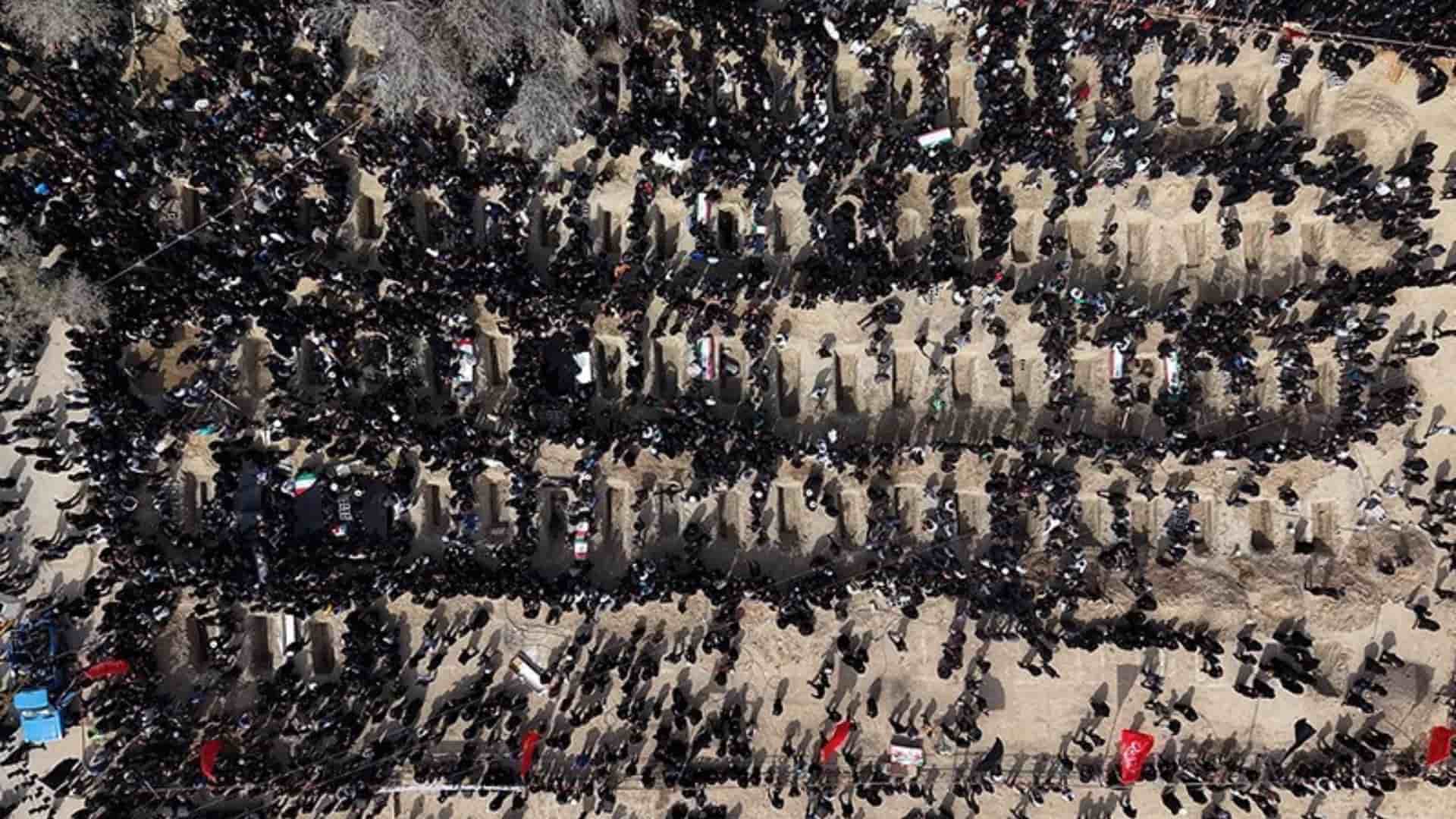
A preliminary US military inquiry into the deadly February 28 strike on the Shajareh Tayyebeh school in Minab has concluded that the school was hit by US missiles, which stemmed from outdated coordinates provided by the Defense Intelligence Agency (DIA).
A Tomahawk missile, intended to hit a nearby facility believed to be linked to Iran’s Islamic Revolutionary Guard Corps (IRGC), instead struck the school after data on target was insufficiently verified, despite the site no longer serving any confirmed military function, several international media outlets have reported on the inquiry.

The attack on school marks one of the deadliest civilian incidents in the ongoing US/Israel-Iran war, where over 1,400 Iranians and 850 Lebanese have already lost their lives. In Lebanon, over 100 children have been reported killed in the intense Israeli strikes.
The Minab strike, which occurred in the early hours of the first day of the coordinated US-Israeli strikes on Iran, destroyed the school building, killing over 165 children, mostly young girls.
According to a report, eyewitnesses comprising Red Crescent medics and a parent of the victim described the attack as what appeared to be a “double-tap” strike pattern, in which a second missile hit a prayer room where students had sought shelter after the initial explosion. The roof reportedly collapsed on dozens of children, trapping them under debris. Iranian officials stated that many victims were still being identified days after the attack, with search efforts complicated by the scale of destruction.
Independent reports by several media outlets which analysed satellite imagery, video evidence, analysis of debris, and the used missile namely Tomahawk, which neither the Iranians or the Israelis possess, had already pointed out that it was a US strike.
While Iranian casualty claims broadly align with US findings acknowledging error, no formal apology has been issued.
Further examination has focused on the roles of the US Central Command and the National Geospatial-Intelligence Agency (NGA), particularly their reliance on satellite intelligence and their failure to confirm the site’s civilian status. The building has been reported to have once been associated with an IRGC facility, later used as an elementary girls' school.
The US has formally upgraded the inquiry to a more senior-level review, underscoring the gravity of the incident and the intense scrutiny it has drawn domestically and internationally. On March 13, US Secretary of Defense Pete Hegseth announced a formal command investigation led by a general outside the command, stating that the probe would “take as long as necessary” and reaffirming that US forces do not deliberately target civilians.
The US President Donald Trump initially blamed Iran for the incident, describing Iranian munitions as “very inaccurate” and stating “It was done by Iran.” But Trump has also said that he would accept the findings of the ongoing investigation.
Meanwhile, Israel's armed forces distanced themselves from the incident alongside initial US statements, claiming no knowledge of school impacts during the early joint strikes on Iranian targets.
The Minab strike has become a focal point of global criticism against the broader military campaign launched by the US and Israel. Protests have erupted in multiple countries, with demonstrators condemning what they describe as disproportionate use of force.
The conflict has spilled beyond Iran’s borders, with Iranian strikes targeting Gulf states and Israeli attacks reaching Lebanon, where heavy casualties have already been reported. According to Lebanon’s Ministry of Health, at least 850 people have been killed in the first two weeks of fighting, including women, children, and health workers, with more than 2,100 injured and over 800,000 civilians reportedly displaced.
Responding to the widening crisis, Antonio Guterres has warned that Lebanese civilians are being dragged into a broader war and called for an immediate de-escalation. International agencies have echoed these concerns, highlighting the growing humanitarian toll across multiple fronts.
Read More Stories

NEPSE falls nearly 75 points as market sentiment wavers
The stock market was unable to maintain the gains seen on Tuesday, slipping...

India has begun its long-delayed population census. Here's why it matters
India has begun the worlds largest national population count, which could reshape welfare...
The United Nations has called on Israel to repeal a law passed by...


Business + Finance + Economy + Tech + Environment + Nepal & South Asia + In-depth Analysis + News + Investigation + Research + Expert Opinion + Anatomy of Complex Issues.