Cryosphere Report 2025 | Global Ice Melt | Glacial Lakes | Himalayas
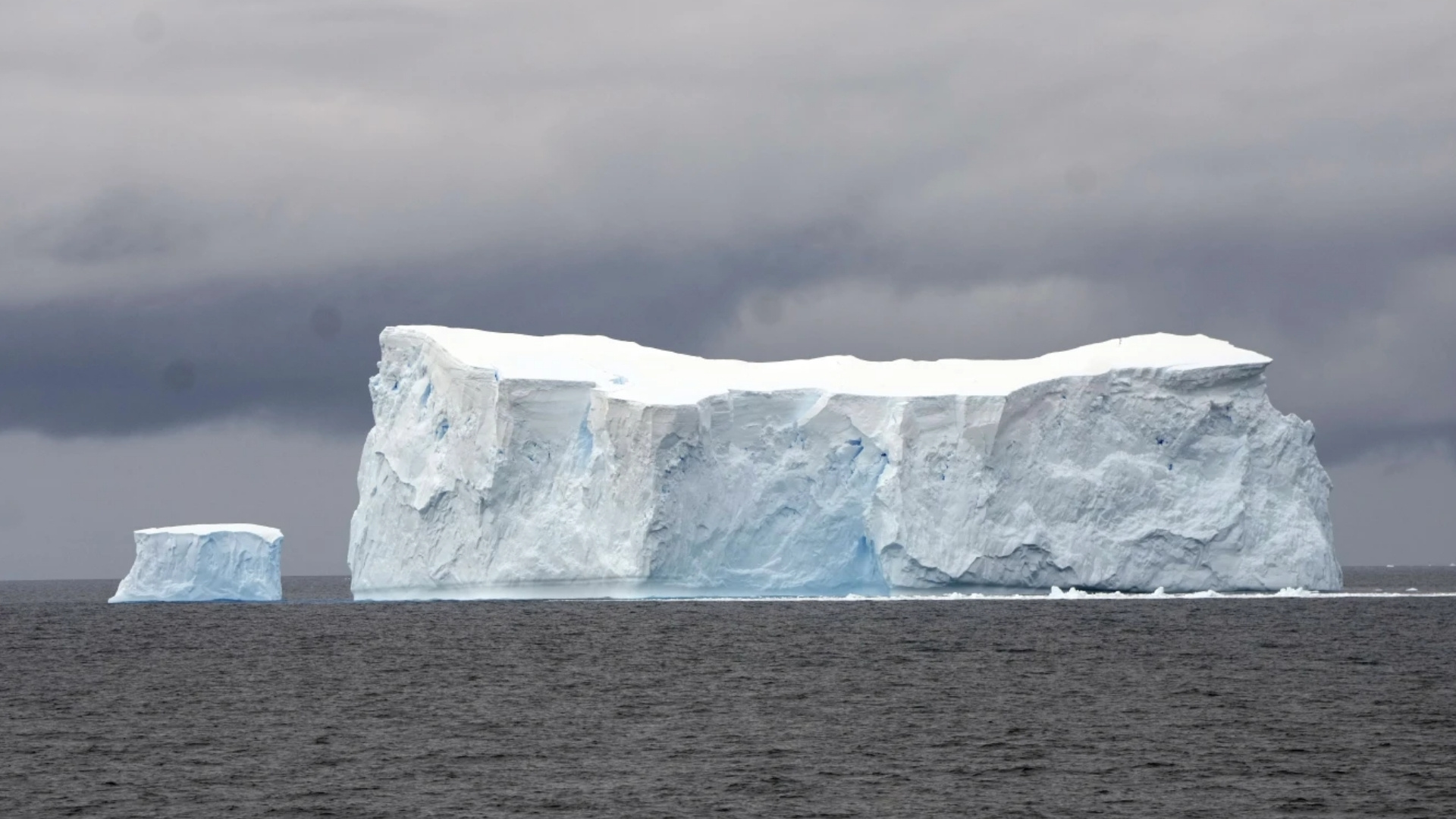
An assessment on the state of the cryosphere released in early November warns that the planet’s ice is melting at a pace that is faster than scientists previously understood. The report, released by the International Cryosphere Climate Initiative, concludes that rapid melt across ice sheets, glaciers and permafrost is pushing the world toward severe water insecurity and escalating disaster risks.
While the report covers global systems from Antarctica to the Arctic, its message is more urgent for one of the most climate vulnerable countries like Nepal that relies directly on the cryosphere for water, energy and food safety.
The Himalayas, of which Nepal holds roughly one-third of the total land area, is a frontline zone where climate signals show up earlier and more severely. The implications for Nepal’s rivers, mountains and people are enormous and long-lasting.
The cryosphere is the name given to Earth’s snow and ice regions and ranges from ice sheets, glaciers, snow and permafrost to sea ice and the polar oceans, which are acidifying far more rapidly than warmer waters.
Key findings from the Global Cryosphere
Sea-level rise for centuries. According to the report, slowing sea-level rise to a manageable level requires a long-term temperature goal at or even below 1°C. Staying even at current warming levels of 1.2°C will likely lead to several meters of sea-level rise over the coming centuries, potentially exceeding coastal adaptation limits.
Accelerating mountain glacier loss. The European Alps, Scandinavia, North American Rockies and Iceland would lose at least half their ice at or below sustained global temperatures of 1°C, and nearly all ice at 2°C. Sea ice at both poles has declined year-round, and combined Arctic and Antarctica sea ice extent hit its lowest area ever in February 2025.
Ocean acidification reaches critical thresholds, crossing critical levels in the Arctic and parts of the Southern Ocean, with some regions reaching non-survivable levels for shelled life.
Permafrost turns into a carbon source. Permafrost is now confirmed as a net source of carbon emissions, releasing more carbon into the atmosphere than these ecosystems can absorb.
A global crisis with direct Himalayan impacts
The report notes that global glaciers lost an average of 273 gigatons of ice every year between 2000 and 2023. Ice loss accelerated by 36% in the latter part of that period. Although the report does not present country-level numbers for Nepal, it offers clear regional projections for High Mountain Asia.
These glaciers form the headwaters of Nepal’s major river basins, including Koshi, Gandaki, Karnali and Mahakali. The trajectories are stark. Even if the world limits warming close to 1.5 degrees Celsius, the central and eastern Himalayas could lose about 60% of its current glacier volume by the end of this century. In a world that warms by three degrees Celsius, only about 15% of existing ice is expected to remain.
For Nepal, which depends heavily on snow and glacier melt to sustain dry season river flows, this signals a future marked by erratic water availability. The current phase of increased meltwater may give way to a multi-decade period of declining flows.
Hydropower, which Nepal views as a pathway to economic growth and energy security, is especially vulnerable to these shifts.
Unstable glacial lakes and rising disaster risks
Fast retreating glaciers are driving the expansion of glacial lakes across the Himalayas. Nepal already monitors more than 400 potentially dangerous glacial lakes. The report points to accelerating meltwater ponding and earlier seasonal snowmelt, which can weaken the stability of tv.
Although not specific to Nepal, these trends directly map onto local concerns. The rate of Himalayan glacier loss suggests that the probability of large glacial lake outburst floods is rising. These events can destabilise river valleys, damage hydropower infrastructure and threaten downstream settlements.
Snowpack decline and its implications for farmers and rivers
The report highlights a global decline in snowpack thickness and duration, especially in mid-latitude mountains similar to Nepal. Snowmelt historically works as a natural reservoir that sustains river discharge during the dry months. This pattern is weakening.
Farmers in mid-hill regions who depend on snow-fed streams for irrigation are already experiencing seasonal shortages. Reduced snow cover also increases spring water scarcity, which affects both rural livelihoods and urban water supply systems.
Permafrost thaw and the growing instability of the high Himalaya
Although often associated with the Arctic, permafrost exists in the coldest parts of Nepal’s high Himalaya. The report documents a rapid thaw in mountain permafrost zones.
Thawing permafrost reduces slope stability and increases the likelihood of rockfalls, avalanches and landslides. This is highly relevant for Nepal’s expanding high altitude road networks, trekking routes and infrastructure sites. A future with more frequent rock and ice collapses is likely.
A warming limit that is too high for the Himalayas
One of the most consequential messages of the report is that even 1.5 degrees Celsius of global warming is not safe for the cryosphere. Ice sheets and mountain glaciers show signs of irreversible decline at the current global temperature of about 1.2 degrees Celsius.
For Nepal, which already ranks among the world’s most climate-vulnerable countries, this means the following risks will intensify even without significant additional warming.
A narrowing window for meaningful action
The report outlines a global pathway that can reduce long-term damage. The sequence includes rapid fossil fuel phaseout, major methane cuts, reversal of deforestation and a large-scale transition to renewable energy.
Even with strong action beginning in 2025, the world will overshoot 1.5 degrees temporarily. However, temperatures could fall back below that threshold by 2100 and even return close to 1 degree by 2150. This would help slow glacier loss and eventually stabilise the Himalayan water towers.
For Nepal, the policy implications are twofold. First, the country needs far stronger climate diplomacy anchored around the right to adaptation and loss and damage financing.
Second, domestic planning must shift toward long-term water security, resilient infrastructure and disaster preparedness. Hydropower design, agricultural systems and mountain development must now incorporate scientific projections of shrinking ice and snow.
Why this matters now
The cryosphere is changing on a timeline that is much faster than political processes and infrastructure cycles. Nepal’s development trajectory rests on rivers, mountains and glacial ecosystems that are becoming increasingly unstable.
The 2025 report reaffirms that the future of the Himalaya will be decided not only by emissions elsewhere but also by how quickly Nepal adapts to a new climate reality.
Read More Stories

NEPSE falls nearly 75 points as market sentiment wavers
The stock market was unable to maintain the gains seen on Tuesday, slipping...

India has begun its long-delayed population census. Here's why it matters
India has begun the worlds largest national population count, which could reshape welfare...

The United Nations has called on Israel to repeal a law passed by...


Business + Finance + Economy + Tech + Environment + Nepal & South Asia + In-depth Analysis + News + Investigation + Research + Expert Opinion + Anatomy of Complex Issues.