11th CPN-UML Convention | Intraparty Democracy | KP Sharma Oli vs Ishwar Pokhrel
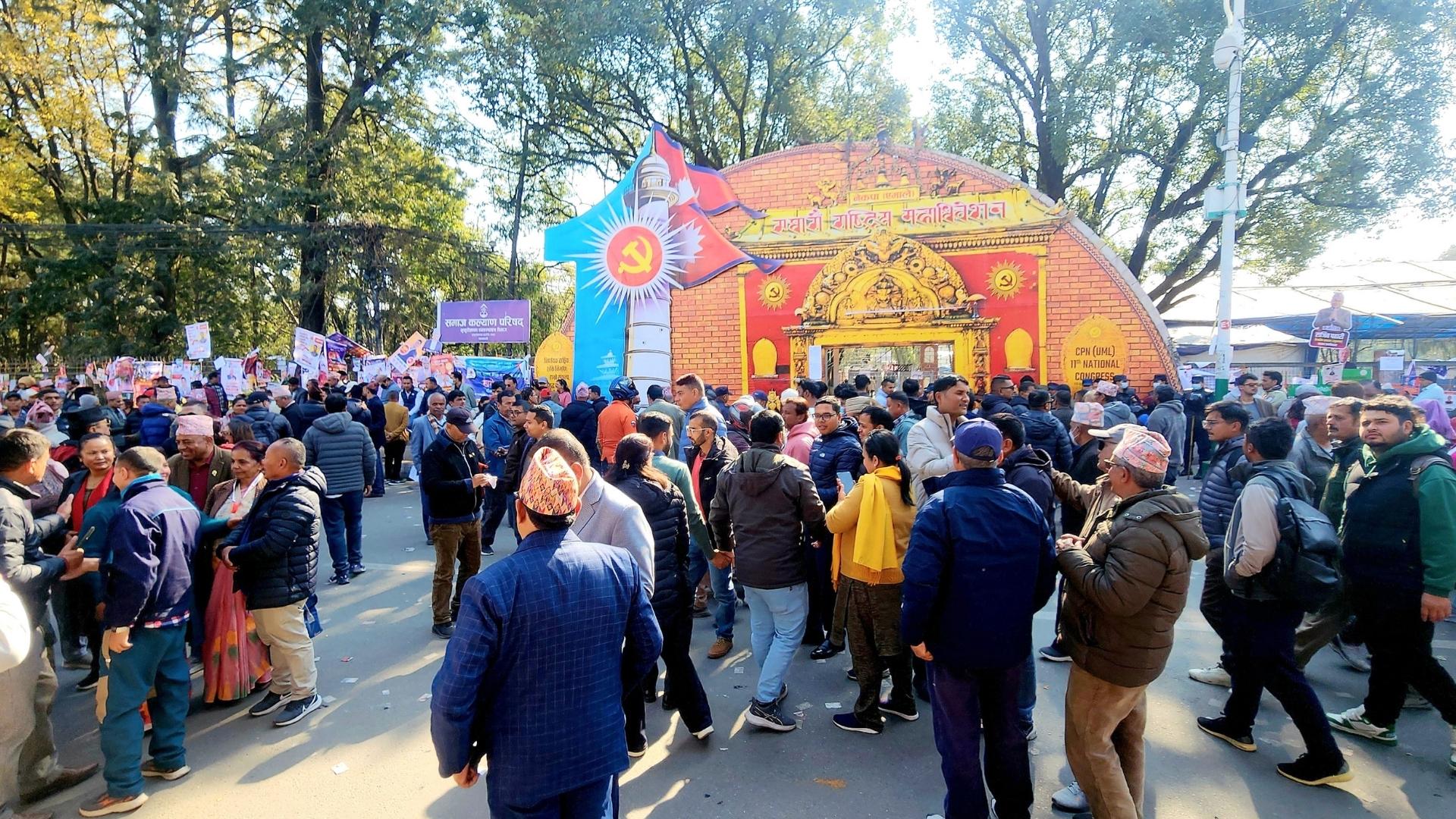
KP Sharma Oli has been re-elected as chairperson of the CPN-UML, marking his third consecutive term in the top post. Oli received 1,663 votes, or 75% of the total valid votes, decisively defeating his closest rival, Ishwar Pokhrel, who garnered 564 votes.
Oli’s panel consolidated power across key positions. Shankar Pokhrel was re-elected general secretary with 1,228 votes, while Oli-aligned candidates dominated the vice-presidential, deputy general secretary, and secretary races, underlining the chair’s firm grip over the party organisation.
Despite the sweeping victory, the election exposed limited gender and ethnic representation within the party’s leadership contest.
Of the 41 candidates vying for 19 posts, only four were women. Among them, Padma Kumari Aryal, the sole woman from the Oli panel, was elected, securing a secretary position.
Other female contenders, including Binda Pandey, who ran for vice president, and Rachana Khadka, a secretary candidate, both from the Pokhrel camp, failed to secure seats. Pemba Lama, who contested for secretary as an independent, was also defeated.
Similarly, the party has drawn criticism for little to no representation from marginalised clusters, including Adivasi Janajati, Dalit, Madhesi, Muslim and Tharu, among others.
Eleven candidates, including two independents, had filed nominations for the five vice presidential posts.
Of them, Prithvi Subba Gurung, Bishnu Prasad Paudel, Ram Bahadur Thapa ‘Badal’ and Raghuji Pant from the Oli panel and Gokarna Raj Bista from the Pokhrel panel emerged victorious.
For the three deputy general secretary posts, six candidates from each panel had filed nominations.
Oli panel’s Lekhraj Bhatta and Raghubir Mahaseth secured the office while Yogesh Bhattarai from the Pokhrel panel beat Bishnu Prasad Rimal, who also lost the central committee membership election.
Twenty candidates, including three independents, vied for nine secretary posts, all of which were swept by the Oli panel. Mahesh Basnet, who has grown closer to Oli post September protests, stood first with 1,544 votes.
Among the notable losers in the secretary race were Gokul Prasad Baskota, Lalbabu Pandit and Agni Prasad Kharel—all once close allies of Oli.
Baskota turned critical of Oli following the September protests and defected to the Pokhrel camp, which promised reforms. Pandit and Kharel ran for the office as independent candidates.
The results signal a significant advantage for Oli ahead of the House of Representatives elections scheduled for March 5, 2026.
The leadership elections were accompanied by large public rallies, one of the biggest since the September anti-corruption protests, reinforcing the UML’s renewed mobilisation and organisational strength.
Read More Stories

NEPSE falls nearly 75 points as market sentiment wavers
The stock market was unable to maintain the gains seen on Tuesday, slipping...
India has begun its long-delayed population census. Here's why it matters
India has begun the worlds largest national population count, which could reshape welfare...
The United Nations has called on Israel to repeal a law passed by...


Business + Finance + Economy + Tech + Environment + Nepal & South Asia + In-depth Analysis + News + Investigation + Research + Expert Opinion + Anatomy of Complex Issues.