Communal Clashes | Hindu-Muslim Tensions | Terai-Madhes | Kapilvastu
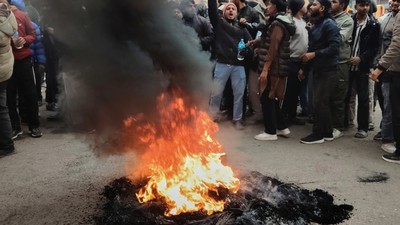
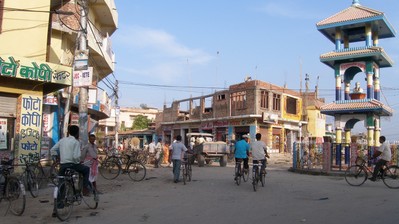
Authorities in Kapilvastu District have imposed prohibitory orders across parts of Maharajgunj Municipality following a clash between Hindu and Muslim communities that erupted on Eid morning on Saturday, an incident that residents say had been building for months beneath the surface of everyday coexistence.
In an order issued Sunday, Chief District Officer Janardan Gautam said restrictions came into effect from 1:00 PM Sunday and will remain in place until further notice, based on a decision of the District Security Committee.
The order bans all gatherings, rallies, processions, and demonstrations within a defined perimeter: east at Labani Chowk, west at Bargadighat Bridge, north at Pacherha Chowk, and south at Dharmabhakta Secondary School in Babhani. Authorities have warned that violators will be detained and prosecuted according to the law.
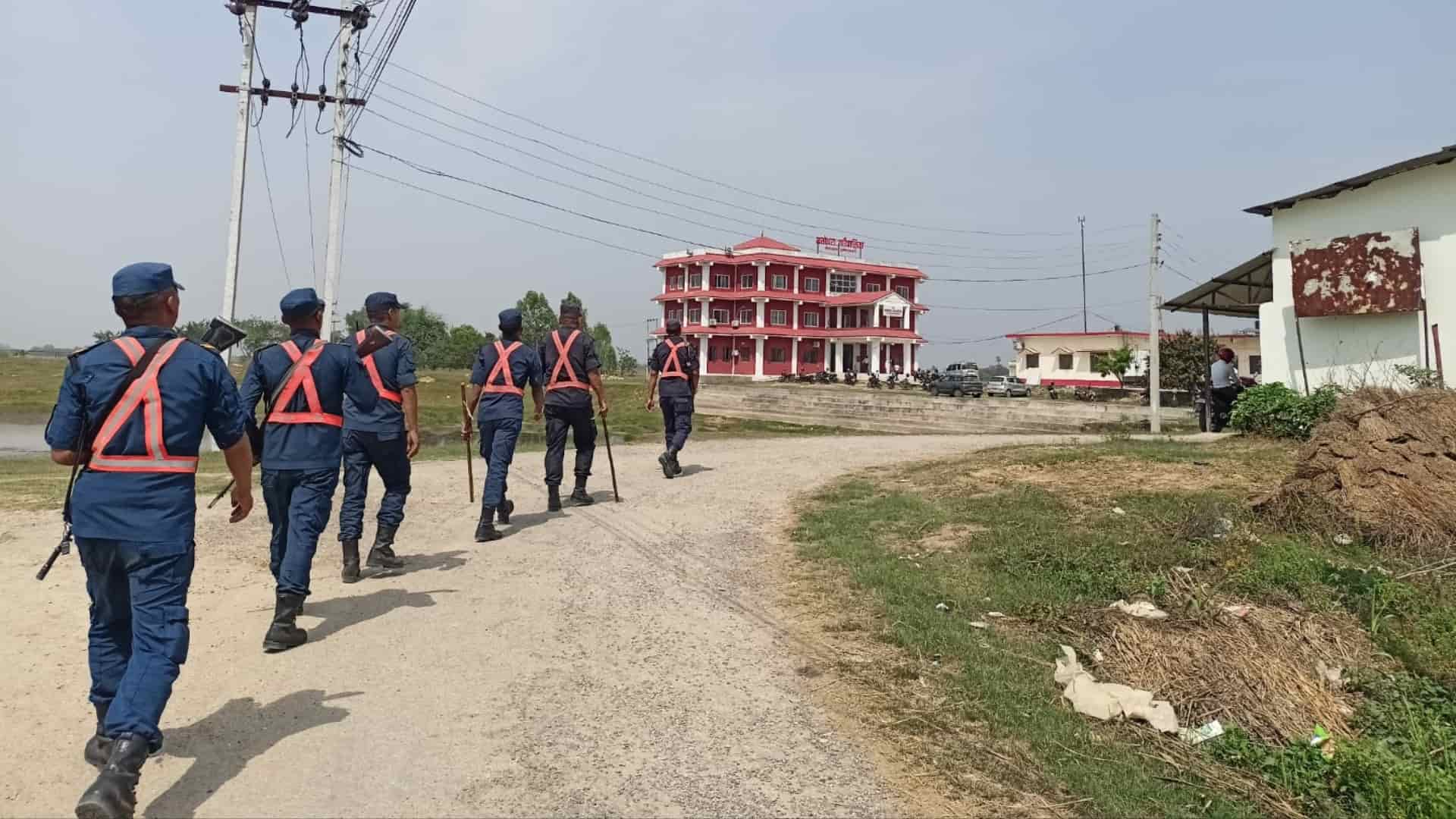
Security forces have since been reinforced, with Nepal Police and Armed Police Force personnel deployed across sensitive areas. Police used tear gas, baton charges, and fired in the air to disperse crowds at the height of the confrontation. Officials say the situation remains tense but is under control.
Reportedly, 25 people were injured during the clash with police. Of them, four sustained bullet injuries and are receiving treatment in hospitals in Kapilvastu and Rupandehi.
While authorities have attributed the immediate trigger to a dispute over loudly playing religious hymns during overlapping observances of Ramadan/Eid al-Fitr and Chaiti Navaratri, accounts from the ground suggest a deeper and more gradual buildup.
A resident from the affected area described a year-long cycle in which a personal dispute among youths evolved into communal suspicion. At that time, elders from both communities resolved the personal dispute through discussion.
However, Hindu youths, who felt numerically vulnerable, in soft retaliation, began playing bhajans during Muslim prayer times. Muslim youths, despite growing frustration over disruptions to Sehri, Azaan, and Namaz, largely avoided confrontation in an effort to prevent escalation.
On the eve of Eid, competing sound systems and failed attempts at mediation brought tensions close to breaking point despite reaching an understanding to lower the volume under police intervention. By early morning on Eid, when hymns reportedly continued despite an understanding to pause during prayer time, a group of Muslim youths damaged a loudspeaker at a temple.
Soon after, claims began circulating that a temple idol had been desecrated. Muslim groups strongly deny this and maintain that only the loudspeaker was damaged. Within hours, crowds gathered from nearby settlements, and stone-pelting broke out from both sides at a local crossroads.
Individuals from both communities were injured, and one Muslim youth was allegedly assaulted inside a house, according to the resident’s account. Authorities have not confirmed claims of idol desecration, leaving one of the most sensitive elements of the incident contested.
Reporting by the_farsight on previous incidents in the Tarai-Madhes shows that such clashes are rarely spontaneous. They tend to follow a recognisable pattern in which a local grievance evolves into symbolic provocation, often involving sound, procession routes, or religious timing.
Rumours, particularly those involving religious symbols such as temples or mosques, spread rapidly and harden perceptions before verification. Crowds then mobilise across nearby localities, mediation efforts struggle to keep pace, and the state eventually intervenes through restrictions and force.
Kapilvastu marks the fifth reported escalation between the two religious communities in less than three months since January 2026 across the Terai-Madhes plains. Earlier, tensions had flared up in Dhanusha, Birgunj and Rautahat.
In Kapilvastu, similar tensions have surfaced periodically, from disputes over festival practices to incidents of stone-pelting between groups in proximity to religious sites. the_farsight has also documented how misinformation and provocative messaging, especially through informal networks and social media, can amplify local disputes into wider communal confrontations.
Earlier in February, a parking dispute in Birgunj’s Shreepur had already begun taking a communal turn in the news media as well as on social media. Authorities imposed a curfew order after receiving reports that groups of youths from both religious communities were preparing for protests, which could have led to an escalation and a possible confrontation.
Though each incident carries its own trigger, whether festival processions, social media provocations, or local disputes, the administrative response has followed a familiar script of curfews, security deployment, and appeals for calm.
Critics say what remains missing is strict legal accountability. While dozens are detained, long-term prosecutions and transparent investigations have been limited. Observers argue that reactive containment, without consistent enforcement against instigators, risks creating a perception of impunity. Streets quieten temporarily, but mistrust lingers.
The events in Maharajgunj appear to have followed this trajectory in compressed form, unfolding over less than a day. What began as a dispute over sound and timing escalated into competing narratives over religious respect and victimhood, drawing in people beyond the immediate locality.
For now, calm rests on the enforcement of prohibitory orders, visible security presence, and renewed efforts at dialogue between community leaders. Yet the underlying challenge remains. The southern plains are not defined by constant communal conflict, but by recurring flashpoints where unresolved grievances, perceptions of insecurity, and the speed of rumour combine to outpace mechanisms of trust.
Read More Stories

NEPSE falls nearly 75 points as market sentiment wavers
The stock market was unable to maintain the gains seen on Tuesday, slipping...
India has begun its long-delayed population census. Here's why it matters
India has begun the worlds largest national population count, which could reshape welfare...
The United Nations has called on Israel to repeal a law passed by...


Business + Finance + Economy + Tech + Environment + Nepal & South Asia + In-depth Analysis + News + Investigation + Research + Expert Opinion + Anatomy of Complex Issues.