Artificial Intelligence | Just AI Fellowship | Policy Draft | Governance & Regulation
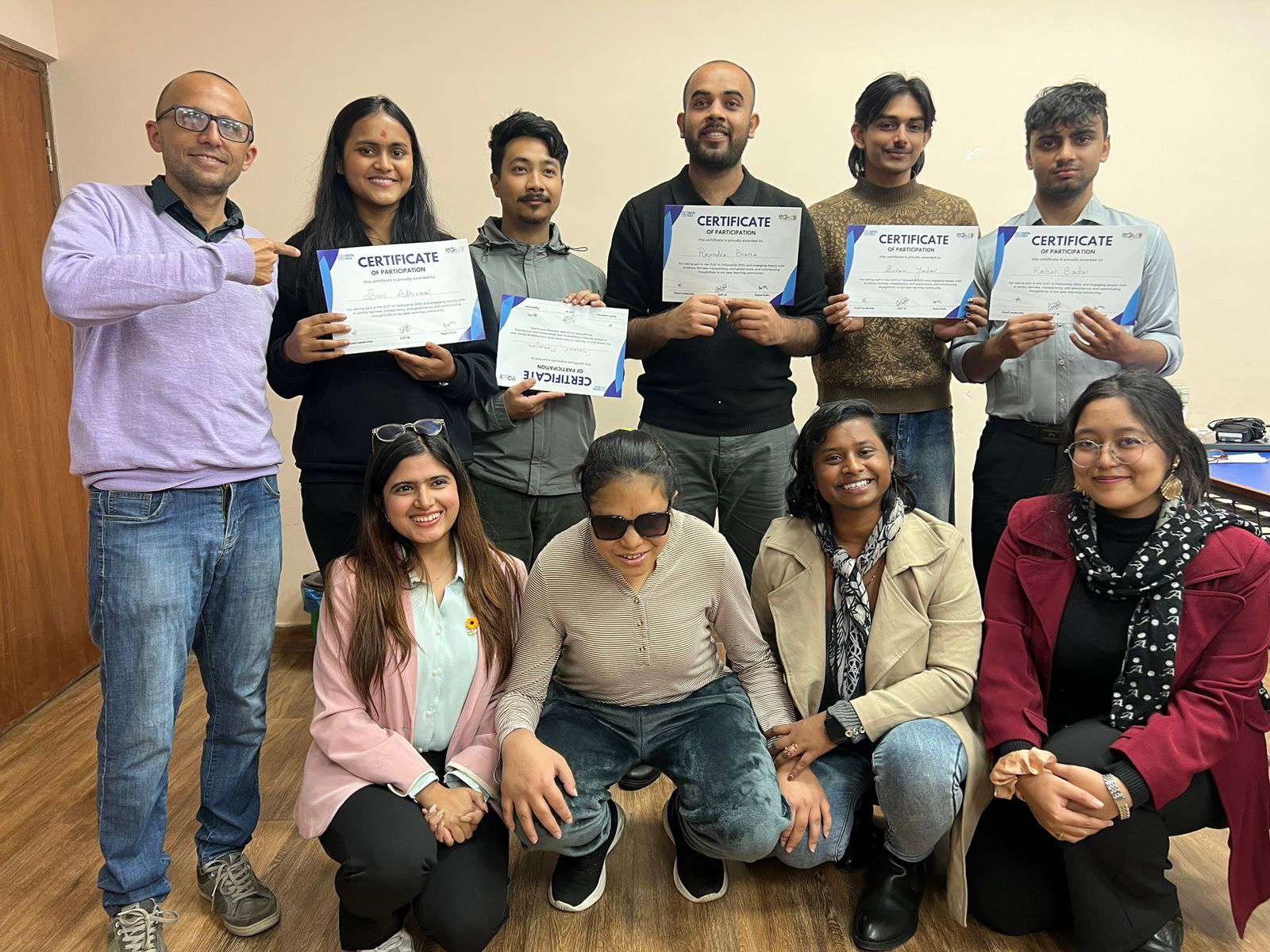
The Just AI fellowship, an artificial intelligence literacy and civic-tech programme developed by The Good Leadership and co-organised by Good Stuff Coaching in partnership with Digital Kala and the Madhesh Library and Research Center, concluded its graduation ceremony on Saturday at the Model Institute of Technology (MIT) in Bagbazar, Kathmandu.
The event marked the culmination of a multi-week training, held from late August to September, aimed at equipping young practitioners with a grounded understanding of both the opportunities and risks arising from rapid advances in AI.
The session opened with discussions on Nepal’s evolving AI policy needs and included thematic segments on governance, mental health, and regulatory approaches. Organisers said the fellowship was designed to build capacity on pressing issues such as autonomous weapons, labour displacement, digital governance, and AI’s growing climate footprint.
Eight fellows completed the programme. During the “What social problem can AI solve?” presentation round, five fellows pitched prototypes targeting gaps in Nepal’s public services and social systems.
The graduation ceremony was marked by the presence of The Good Leadership co-founder Simone Galimberti, project managers Anjali Sah and Sunena Tamrakar, and Aastha Acharya from Digital Kala.
Organisers emphasised that the fellowship aims to create a working community capable of contributing meaningfully to national policy debates. They, in collaboration with the fellows, also plan to draft an AI Bill.
Read More Stories

NEPSE falls nearly 75 points as market sentiment wavers
The stock market was unable to maintain the gains seen on Tuesday, slipping...

India has begun its long-delayed population census. Here's why it matters
India has begun the worlds largest national population count, which could reshape welfare...

The United Nations has called on Israel to repeal a law passed by...


Business + Finance + Economy + Tech + Environment + Nepal & South Asia + In-depth Analysis + News + Investigation + Research + Expert Opinion + Anatomy of Complex Issues.