Karki Commission Report | Kangaroo Trial | RSP Government | Accountability Test
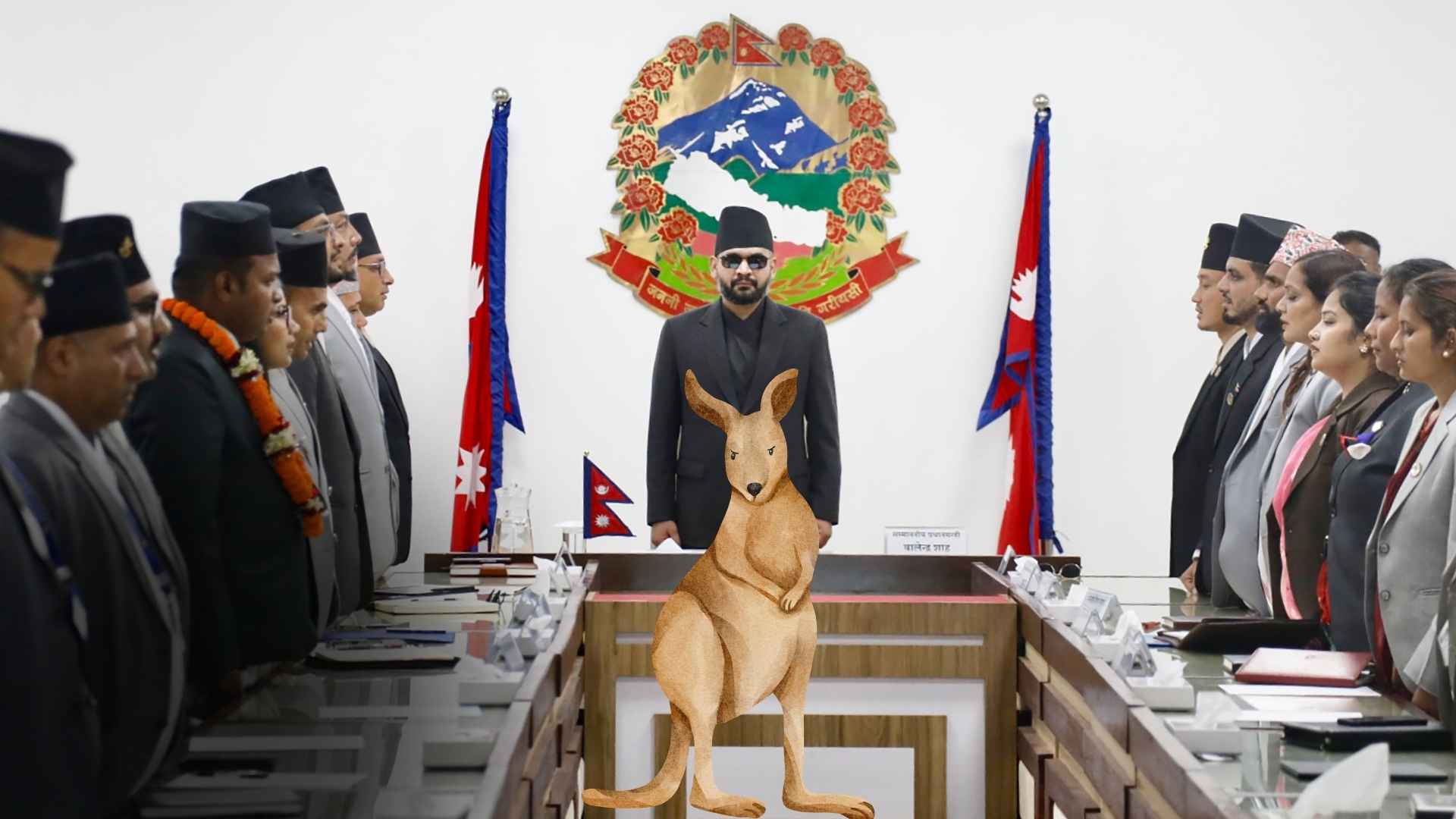
On the morning of March 28, police arrived before dawn at the Gundu residence of KP Sharma Oli, former prime minister, CPN-UML chair, and one of the country’s most enduring political figures, and took him into custody. Minutes later, former home minister Ramesh Lekhak was detained in Katunje.
The stated basis was a judicial commission’s report recommending their prosecution over the state’s response to the anti-corruption protests of September 8, 2025. The complication was that the 900-page report was supposed to remain confidential until the new government took office, then review it and determine the necessary course of action. However, the report was not formally published when the arrests were made, which occurred less than 12 hours after the new government took the reins, giving it the same hour to review it.
What followed is not only a story about accountability. It is a story about how accountability is constructed, and whether the process used to deliver it can withstand constitutional scrutiny.
To assess this, it’s crucial we revisit the timeline of the events that unfolded:
Key timeline
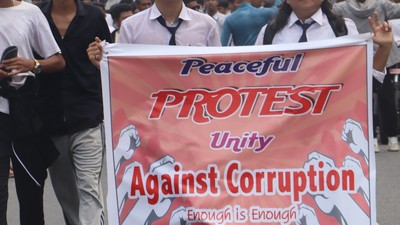
September 8–9, 2025: Youth-led anti-corruption protests leave 76 dead, NRs 85 billion in damage.
Of the total 76 dead, 42 were protesters who died of police bullets, three were police officers beaten to death, and eight were identified as having died in the arson, while 12 remain unidentified. Ten juveniles and inmates also died across the country while attempting to break out. One tourist, an Indian national, also lost their life during the September 9 unrest.
September 9-12: Political vacuum emerges with no clear leadership guiding the protests, but multiple stakeholders pushing their agendas.
September 12: Former Chief Justice Sushila Karki was sworn in as interim prime minister, the country’s first woman PM, mandated to hold elections and investigate the state killings and damages by mob violence through a high-level judicial commission.
September 21: Cabinet forms the Gauri Bahadur Karki Commission with a three-month mandate to submit its final report.
September 28: Commission requests travel ban on Oli, Lekhak, erstwhile Nepal Police IGP Chandra Kuber Khapung, and others. The Home Ministry disputes authority.
November 4: Advocate Bipin Dhakal files a writ in the Supreme Court challenging the Commission’s impartiality.
November 30: An agreement reached between ‘Gen Z’ groups and the government expands the commission’s mandate to include accountability for deaths and destruction.
December 19: The government extends the deadline of the commission due on December 21 by one month.
December 26: Supreme Court dismisses the writ, but notes observations, questioning Karki’s ethical fitness as chair.
December 28: Balendra Shah reaches a seven-point agreement with Rastriya Swatantra Party chair Rabi Lamichhane. The agreement positions Shah as the PM candidate and the party’s senior leader.
December 29: Erstwhile Ujyaalo Nepal Party (UNP) patron Kulman Ghising signed a unity agreement with Lamichhane and Shah. However, the unity broke away over seat-sharing disputes on January 10, with Ghising returning to UNP as chairperson.
January 18, 2026: Shah formally joins the RSP
January 19: Jagdish Kharel and Bablu Gupta, members of the Sushila Karki administration, resign from the interim government, only a day before the filing of the election candidate nomination. Both Kharel and Gupta join RSP and obtain tickets from the party to contest elections from Lalitpur-2 and Siraha-1, respectively.
January 22: For the second time, the government extends the deadline for the commission by 20 days.
February 9: In the third extension of the deadline, the cabinet provides the commission an additional 25 days to submit its report, effectively pushing the submission beyond the March 5 election.
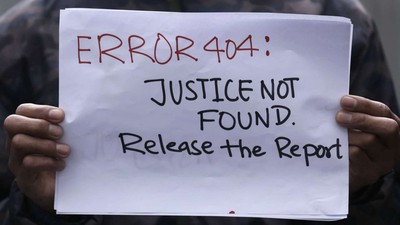
March 8: Commission chair Karki hands 907-page report to PM Sushila Karki. While the government promised public release, the PM continues to defer it.
March 8-25: The government withholds the report for three weeks. RSP wins a near supermajority, and Shah is poised to become the next prime minister.
March 25: The report leaks to the news media. Coverage indicates that the ‘report’ is inconsistent, biased, exceeds its mandate, and contains dubious statements. The leaked report recommends Oli and Lekhak for their criminal negligence in handling the protest.
Example:
March 26: Newly elected parliamentarians take the oath of office and secrecy, giving formal shape to the lower house.
March 27: Shah sworn in as PM alongside 14 other RSP lawmakers as ministers. This happens at 12:34 PM, followed by the swearing-in of other ministers by 1:10 PM. The newly elected prime minister assumes office at Singhadurbar at 2:15 PM. At around 5 PM, his first cabinet meeting decides to implement the report, but only partially, forming a separate committee to study the report recommendations about security officials. The report however is not made public.
The timeline suggests that the cabinet decides to implement the report’s recommendation without having sufficient time to review it.
Security forces are put on alert.
March 28: Pre-dawn arrests of Oli and Lekhak. UML launches street protests and submits letters of memorandum to the government through all 77 district administration offices across the country. Later in the same day, the government unveils a 100-point governance reform roadmap, where it pledges to form a separate high-level inquiry to probe the September 9 events.
March 29: Congress charges “selective implementation.” Legal challenges mount.
A commission born under strain
The Gauri Bahadur Karki Commission was established as a fact-finding mission in the immediate aftermath of the deadliest violence Nepal had seen in years. Its mandate was to investigate events that were still raw, contested, and politically charged.
Its chair, Gauri Bahadur Karki, however, had already entered the public debate.
On September 9, while protests were ongoing, Karki posted on social media calling for senior political leaders, including former prime ministers Oli, Sher Bahadur Deuba and Pushpa Kamal Dahal, to be detained and prevented from leaving the country. The posts named individuals and urged immediate custodial measures.
These statements, made before any formal investigation began, later became central to questions about perceived bias on Karki’s part during the inquiry.
When the issue reached the Supreme Court, the bench declined to dissolve the commission. But it noted, in substance, that individuals entrusted with such responsibilities are expected to reflect on whether previously expressed views on the same subject could affect the appearance of impartiality. The Court’s observation stopped short of invalidating the commission, but it signalled ethical discomfort with the stated position of its leadership.
The commission nevertheless continued its work and submitted its report on March 8.
The silence before action
The period between March 8 and March 27 is as important as what followed.
Despite receiving the report, the Sushila Karki government did not formally publish it. Calls for transparency came from political leaders, civil society, and legal observers, but Karki signed off without releasing it.
At the same time, the political landscape was shifting. RSP emerged from the elections with a commanding position, and its leadership was preparing to assume office. Several dynamics intersect here.
Nearly all key figures in the Karki administration were connected to RSP and Balen Shah. Members of the interim cabinet who later resigned joined the RSP. They had served in a government that oversaw the commission’s work. Their positions would have placed them within the flow of high-level discussions related to the inquiry’s progress.
As noted in the timeline, Jagdish Kharel and Bablu Gupta, members of the Karki administration, resigned from the interim government, only a day before the filing of the election candidate nomination. Both Kharel and Gupta joined RSP and obtained election tickets from the party, and successfully contested the election. Another minister, Mahabir Pun, chose to enter the race on election day. The RSP did not field any candidate in the constituency where he ran.
Similarly, Shah and Lamichhane were in negotiations with Kulman Ghising, another interim minister who resigned to contest the election, for party unity.
Other figures, including then interim Home Minister Om Prakash Aryal and the Prime Minister’s close aide Adarsha Man Shrestha, were subsequently appointed to lucrative positions, with the new government showing no intention of reversing these appointments despite scrutiny.
Questions arise, though remain formally unanswered, about whether, and to what extent, knowledge of the report’s contents may have circulated informally before the transition of power.
If such access to information occurred outside formal channels, it would raise concerns not only of political propriety but also of compliance with the obligations of confidentiality under the office of oath and secrecy that bind members of a sitting government even after their tenure.
There is, at present, no public, verifiable record establishing the extent of such access. But the overlap between cabinet participation and subsequent political alignment creates a perception problem that courts and the public should not easily dismiss.
Those doubts intensify when placed against what came next.
An ambiguous report handled ambiguously
A central tension remains: the status of the report that underpins these arrests is murky and ill-defined.
It was submitted to the government, but not immediately released. Later parts were released with several media reports on them, mainly the part recommending the arrests of Oli and Lekhak. The full report leaked a while after, becoming publicly available through media circulation, but it remains unknown if it is the actual version.
The report recommends Oli and Lekhak for their criminal negligence in handling the protest, considering that the police shootings continued for four hours on September 8. However, media coverage of the report and our own analysis indicate that the ‘report’ is inconsistent, biased, inadequate in actual mandate, yet overreaches in coverage, contains dubious and incomprehensible statements, and is unprofessionally prepared.
Yet the Shah-led administration brings the report into implementation in a questionable fashion. It remains officially unreleased, while the government acts on it in a selective manner, targeting former PM Oli and minister Lekhak for their executive roles in the government.
This selectivity is striking. The commission’s recommendations did not apply only to political figures; they also extended to senior security officials under similar legal provisions relating to negligence and failure to act. Yet the government’s response has diverged sharply.
Political leaders were arrested immediately. In contrast, a separate mechanism, a study committee, has been proposed to examine accountability within the security forces.
The distinction may be to prevent resistance within the security apparatus, but in its present form, it has opened the administration to allegations of selective implementation.
Crucially, the report stops short of clarifying leadership accountability for the mobilisation of students and the September 9 violence, leaving a gap in understanding who directed, failed to prevent, or mismanaged the events. The government’s decision to implement the report despite this omission raises pressing questions, given that the protests served as a political springboard for figures such as Shah and, more recently, Home Minister Sudan Gurung, whose rise from that turmoil continues to shape the current political landscape.
Interestingly, the government has decided to form another separate high-level inquiry to probe the September 9 events, where the PM himself, his Home Minister and his party have questionable involvement.
Conflicting accounts in the report
Though the report falls short of providing clarity on chain of events, it highlights significant contradictions. It raises questions surrounding Shah in his capacity as Kathmandu's mayor, over his provocative posts and delays in deploying fire engines to respond to the burning state institutions.
On the night of September 8, Mayor Shah accused Oli of failing to understand the grief of parents who lost their children in the protests. “You only became the father of hired loyalists. If you had ever truly become a father, you would understand the pain of losing sons and daughters,” Shah wrote in an apparent reference to Oli having no children. Shah described the incident as: “The world has never witnessed such terrorism,” accusing Oli of acting as a terrorist.
In his statement, Shah distances himself operationally from the protests while assigning causality to the state’s prior use of force. His role, he suggests, was not as an actor in the unrest but as a stabilising voice calling for restraint. The latter doesn’t seem to be true based on his rage-baiting posts on the night before September 9. Shah has further denied having earlier written a social media post threatening to burn down Singha Durbar, the country’s administrative centre.
The unrest escalated the next day. Meanwhile, footage from the September 9 violence shows Shah’s close aide, now Home Minister, Gurung, marching with a group of protesters chanting “off to Baluwataar” on the day the Prime Minister’s official residence was attacked and set on fire. Other clips also appear to show several of his party’s parliamentarians involved in questionable conduct during the unrest.
Two separate accounts emerged around the controversial release of Rabi Lamichhane from Nakkhu prison. Each is internally consistent, but collectively difficult to reconcile.
Lamichhane’s own statement is structured as a legal defence. He describes refusing to leave custody without a court order, only to be pushed out by a crowd after repeated requests from prison officials to address protesters. He acknowledges that a release letter was being prepared, but denies any role in its drafting or authorisation. His account rests on a central claim that he was compelled out of the system, not released by it.
The position of Leela Prasad Sharma, director general of the Department of Prison Management, is more categorical. There was, he states, no instruction, formal or informal, from the department or ministry to release Lamichhane. The information received on the morning of September 9 concerned only the risk posed by protesters. The prison breach, he says, led to Lamichhane being taken out by the crowd. The release letter that later surfaced, according to the department, was signed under duress and carries no procedural or legal validity.
Implementation without clarity
Against this backdrop of uncertainty, the government acted with striking urgency. Within hours of taking office, Prime Minister Shah’s Cabinet moved quickly, deciding to act on the commission’s report, which is a 900-page-long report.
The government’s position, as its spokesperson Sasmit Pokharel claims, is that the implementation is based on the commitment it made in its election manifesto.
Multiple questions arise here?
The selectivity invites a more troubling possibility: that the conclusion was reached first, and the report was used afterwards to justify it.
More fundamentally, it raises a deeper concern: the government is justifying its actions based on its election pledge rather than meeting basic standards of justice.
Under the country’s criminal procedure framework, a commission report is not, by itself, prosecutable evidence. It is a basis for further action, typically requiring the filing of a First Information Report (FIR), followed by investigation, and only then the establishment of grounds for arrest.
Legal experts have pointed out that compressing this sequence into a single executive decision risks undermining due process safeguards. At stake are not procedural technicalities or election commitments, but foundational rights of the accused and the political precedents the whole chain of events, including the September unrest, can set.
Read More Stories

NEPSE inches up but turnover falls to single digit billions
The NEPSE indeed ended Thursday with a modest rise, as the index gained...

NEPSE falls nearly 75 points as market sentiment wavers
The stock market was unable to maintain the gains seen on Tuesday, slipping...
India has begun its long-delayed population census. Here's why it matters
India has begun the worlds largest national population count, which could reshape welfare...


Business + Finance + Economy + Tech + Environment + Nepal & South Asia + In-depth Analysis + News + Investigation + Research + Expert Opinion + Anatomy of Complex Issues.