Women with Disability | Stigma | Menstruation | Dignity | Hygiene | Policy & Infrastructure Needs
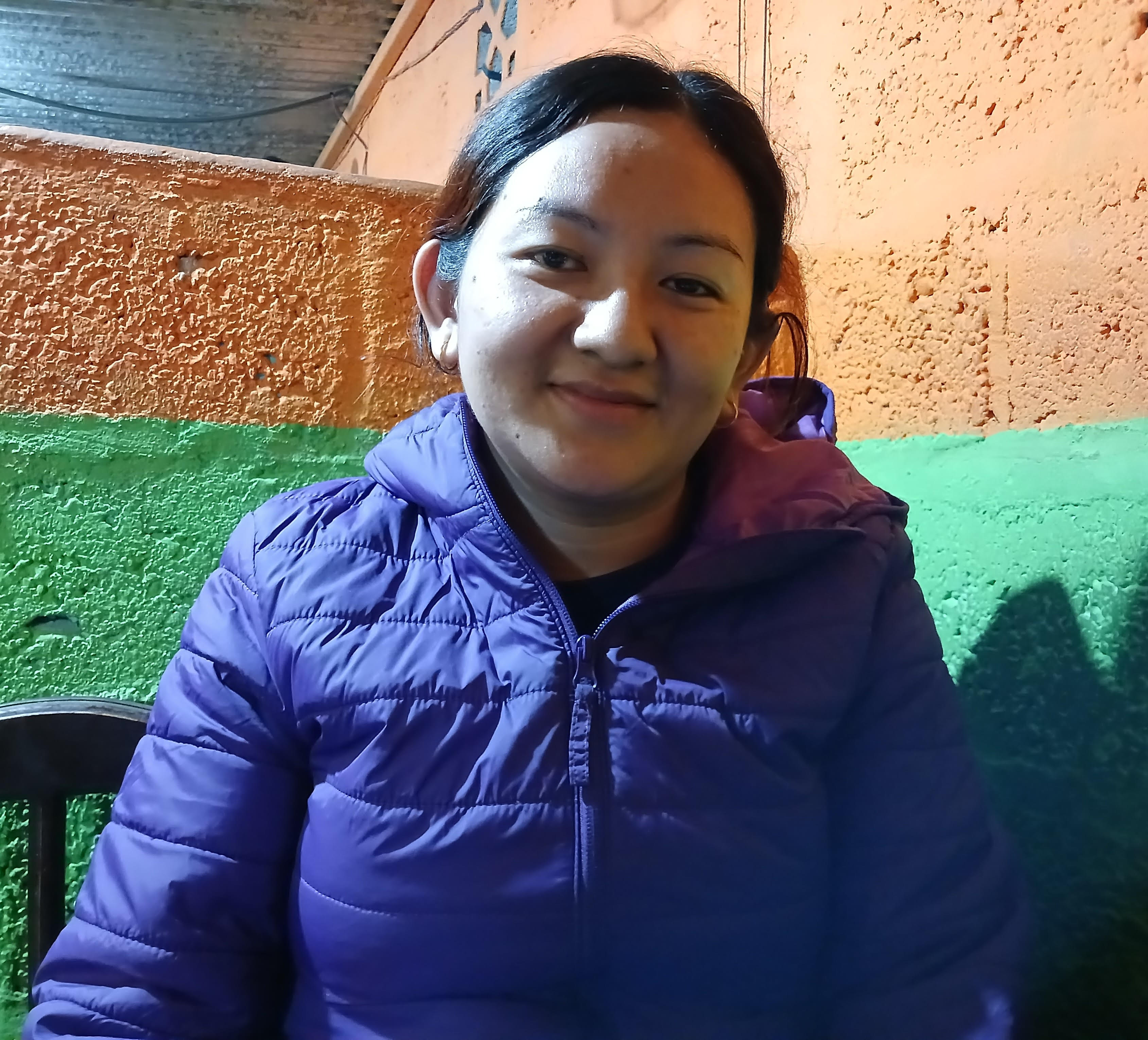
Even when she isn’t bleeding, Sajana Gurung wears a pad—just in case. The heat, itching and rashes have become routine. For Sajana, a visually impaired woman from Pokhara, menstruation is not a natural cycle but a monthly struggle, driven by inaccessible infrastructure and stigma.
Public washrooms are difficult to use, especially in unfamiliar places she cannot navigate on her own. Most facilities lack disability-friendly design, turning even basic tasks into logistical and emotional challenges.
As her period approaches, Sajana becomes hyper-alert whenever she leaves home. “My body goes into a fight mode,” she says. The fear of leaking follows her everywhere. Because accessible toilets are rare, she often keeps pads on for long hours, which causes allergies and discomfort. “For long trips, I wear two pads at once. Even inside Pokhara, if there are signs my period is coming, I walk with pads on,” she says.
For Sajana, the burden is both emotional and physical. Keeping the same pad on for extended periods, something she often has no choice but to do, can trigger rashes, fungal infections and UTIs. A 2021 medical research confirms this.
“If I weren’t visually impaired, managing periods would be far less stressful,” Sajana says. She got her first period at 12 and remembers praying she wouldn’t menstruate at school, fearing she wouldn’t notice stains due to her blurred vision.
In the early years, she relied on her mother to put pads on and often wore them for more than eight hours, unaware when she leaked. “I would only know when someone told me. It smelled. I got rashes and itching,” she says.
Now in her 30s and financially independent, the stigma has softened but not disappeared. Relatives still question her worth. “Your younger sister is already married. If you weren’t like this, you would have been married too,” they tell her.
She recalls enjoying makeup and polish as a teenager, only to be told, “No one will look at you, why are you putting that on?”
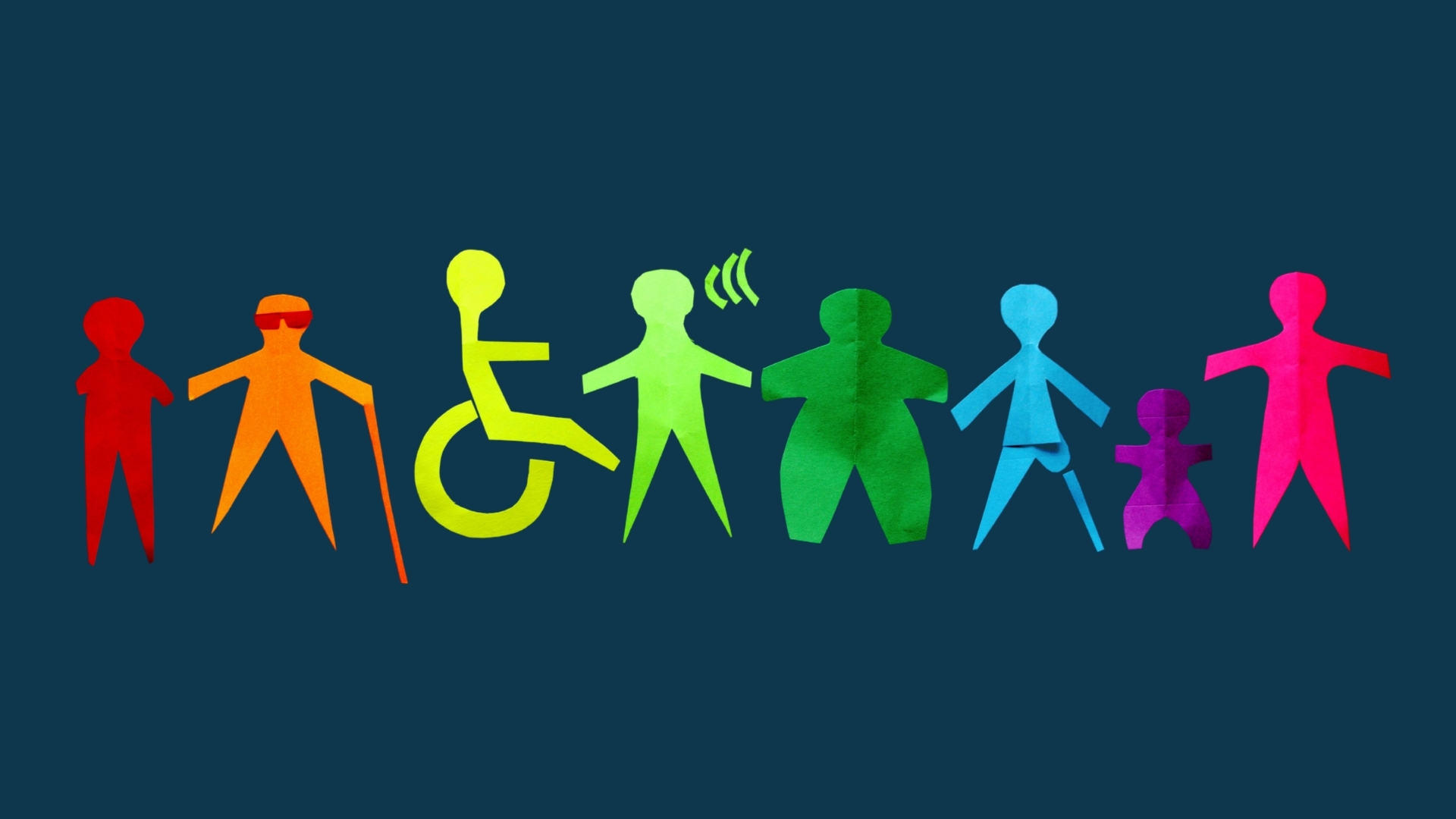
About 2% of women in Nepal have a disability, shows the 2021 census. Among them, 33.5% have physical disabilities, 5.8% are blind, and 1.7% have intellectual disabilities. While thousands of women with disabilities across Nepal face similar challenges as Sajana, some experiences are distinct. Their struggles begin with managing menstruation but extend to how society perceives and treats them. For many, the fight is not only about hygiene or access, but also about identity and dignity.
A 23-year-old woman from Bhaktapur, who asked to be identified only as Shrestha and who has dwarfism, faces invasive questions such as “Can you people give birth?” These questions undermine her dignity.
“People ask things like, ‘Do disabled women also menstruate? Can you give birth? Do you have relationships?’ This kind of language affects me a lot. It makes me uncomfortable,” she says.
Stigma around women with disabilities is widespread. Their ability to have relationships or families is often questioned. A 2021 study by Prayatna Nepal found that many people perceive disabled women as “asexual.”
The study notes, “Stigmas against disability and sexuality, along with stereotypical views, are significant barriers to accessing sexual and reproductive health services. Girls and women with disabilities are often seen as ‘asexual beings,’ not capable of motherhood and therefore not seen as having sexual and reproductive health rights (SRHR) needs.”
Shrestha got her first period in class nine. There were only a few girls in her class, and while they openly discussed menstruation, she was excluded due to her disability. When she bled for the first time, she was terrified and thought she might have cancer. Even then, people asked her, “Oh, does this happen to you too?”
The Constitution guarantees non-discriminatory access to basic healthcare, including SRHR. But women with disabilities are still asked, “Do you even get periods?” when they buy pads. These attitudes deeply affect women who are already fighting stigma.
Nepal has ratified the Convention on the Rights of Persons with Disabilities and has committed to disability inclusion. Yet implementation remains weak, leaving women with disabilities with barriers in health services, infrastructure and community attitudes. The government, with support from UNFPA, is running a project on SRHR that includes women with disabilities, but there are gaps.
Shrestha says she initially felt uneasy discussing SRHR. After attending a few programs, she learned about her rights and became more comfortable speaking up.
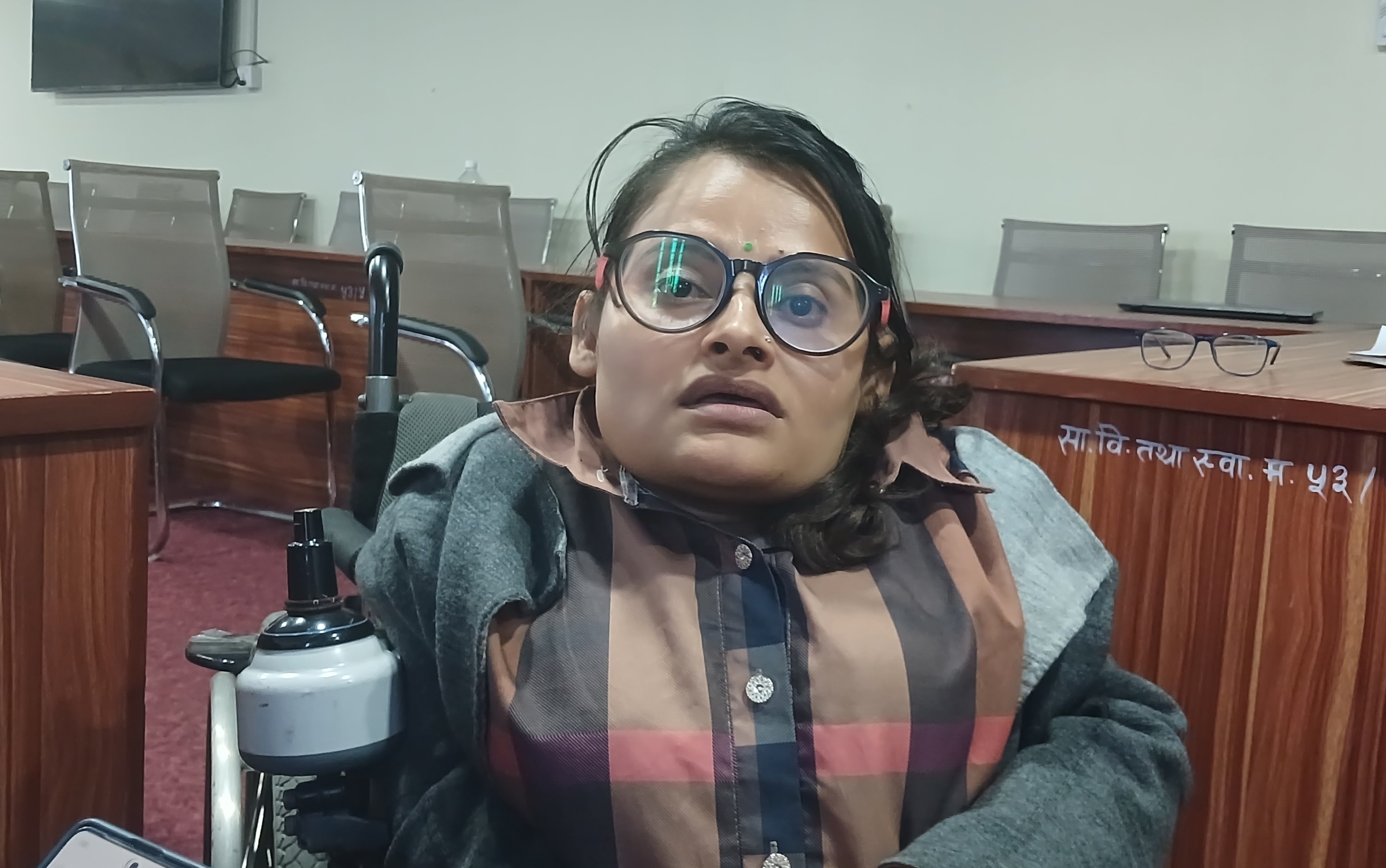
Anju Baral from Madi Rural Municipality in Kaski sustained a spinal cord injury 18 years ago after falling down while cutting grass from a tree. Since then, she has used a wheelchair. People with spinal cord injuries often cannot feel or control urination or defecation. Anju must use diapers and notices her period only when she sees blood stains. During menstruation, it is difficult for her to stay outside for long hours.
“For a person with a disability, it’s even harder. Toilets are not friendly. I had to go through difficult times. Sometimes I had both urination and menstruation at the same time, which caused fever,” she says.
Anju, who founded the Spinal Cord Injury Network in Kaski, advocates strongly for disability rights. She emphasises that public spaces and infrastructures are truly accessible for everyone. in Kaski, advocates strongly for disability rights. She emphasises that public spaces and infrastructures are truly accessible for everyone.
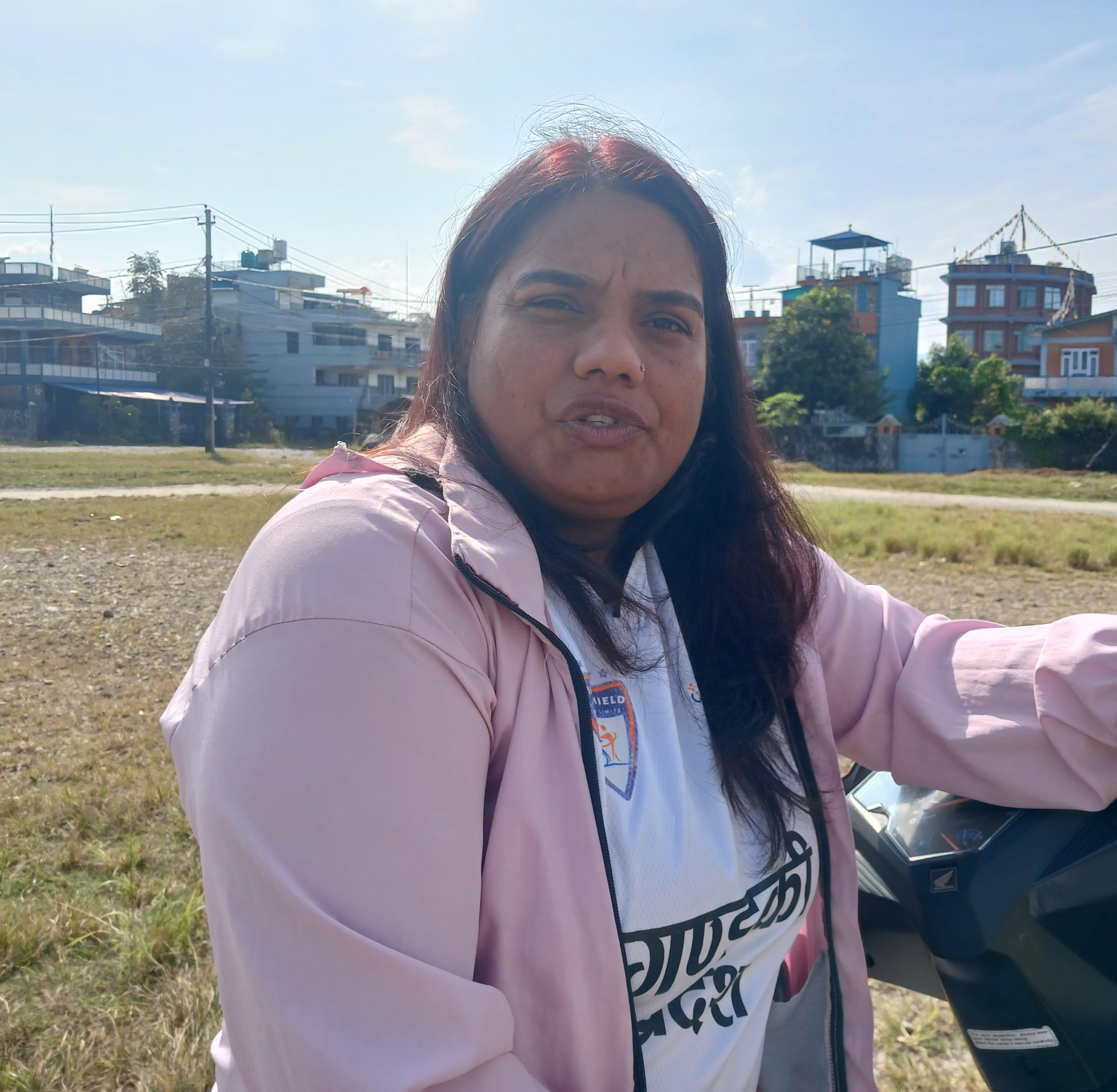
Similar concerns are raised by Anjana KC, who has lived with disability since birth. Wheelchairs often do not fit into public toilets, forcing her to drink less water to avoid needing the washroom. She has worked on many disability rights cases and says the situation of disabled women is far worse than most people imagine.
She recalls her college years, when her mother carried her on her back to classes. She constantly worried about getting her period unexpectedly. “That caused a lot of mental pressure and affected my mental health,” she says.
Although her situation has improved now that she is financially independent, she points out that many women with disabilities struggle to afford quality pads.
Nepal aims to make public infrastructure accessible by 2030 under Sustainable Development Goal (SDG) 9. It is also committed to SDG 3.7, which focuses on universal access to sexual and reproductive health-care services, including family planning, information and education. But the ground reality is different.
Activists working in the disability sector say that many health service providers are still not sensitised, and institutions remain inaccessible. Infrastructure is only one part of the problem. Stigma can lead to severe violations of rights.
According to Sarita Lamichhane, founder of Prayatna Nepal, there have been cases where women with disabilities were forcibly sterilised or had their uterus removed without consent. “They believe people with disabilities can’t care for themselves, so they use forced sterilisation or hormonal pills to stop menstruation. In some cases, the uterus is removed in women with intellectual disabilities,” she says.
The Nepal government officially recognises 10 types of disability based on bodily features, including physical, visual, hearing, speech, intellectual, haemophilia, and autism. However, addressing layered, intersectional realities still lags.
Data on SRHR specifically for women with disabilities is limited, but evidence shows women with intellectual disabilities are at particular risk. Lamichhane shares the case of a woman with an intellectual disability who was abused repeatedly. She became pregnant twice, and her family aborted both pregnancies. They later used a contraceptive implant to prevent pregnancy, focusing only on avoiding childbirth rather than protecting her from abuse. As a result, the abuse increased.
“Contraceptive devices are misused. They prevent pregnancy, but they do nothing to stop the violence, which often increases,” she says.
Nepal has a National Guideline for Disability-Inclusive Health Services (2019), but there is a significant gap between policy and practice. United Nations Population Fund (UNFPA), in its latest report, highlights several obstacles, including poor integration between SRHR and other sectors, irregular budget allocations from local governments, and a lack of capacity at both local and provincial levels. These gaps mean available schemes and funds are either under-utilised or insufficient. UNFPA itself contributes significant resources to different SRHR programs. In 2024, it committed $5.33 million, the largest portion in its portfolio. Yet it remains unclear whether this level of investment is sufficient to address the scale of the challenges identified.
Several barriers also exist within households, one prominent example is lack of access to toilet. The 2021 census shows that among 559,109 households with persons with disabilities, 5.2% (29,075 households) have no access to a toilet.
Read More Stories

NEPSE falls nearly 75 points as market sentiment wavers
The stock market was unable to maintain the gains seen on Tuesday, slipping...
India has begun its long-delayed population census. Here's why it matters
India has begun the worlds largest national population count, which could reshape welfare...
The United Nations has called on Israel to repeal a law passed by...


Business + Finance + Economy + Tech + Environment + Nepal & South Asia + In-depth Analysis + News + Investigation + Research + Expert Opinion + Anatomy of Complex Issues.