Local Level Mandate | Interim Government | House of Representatives Election
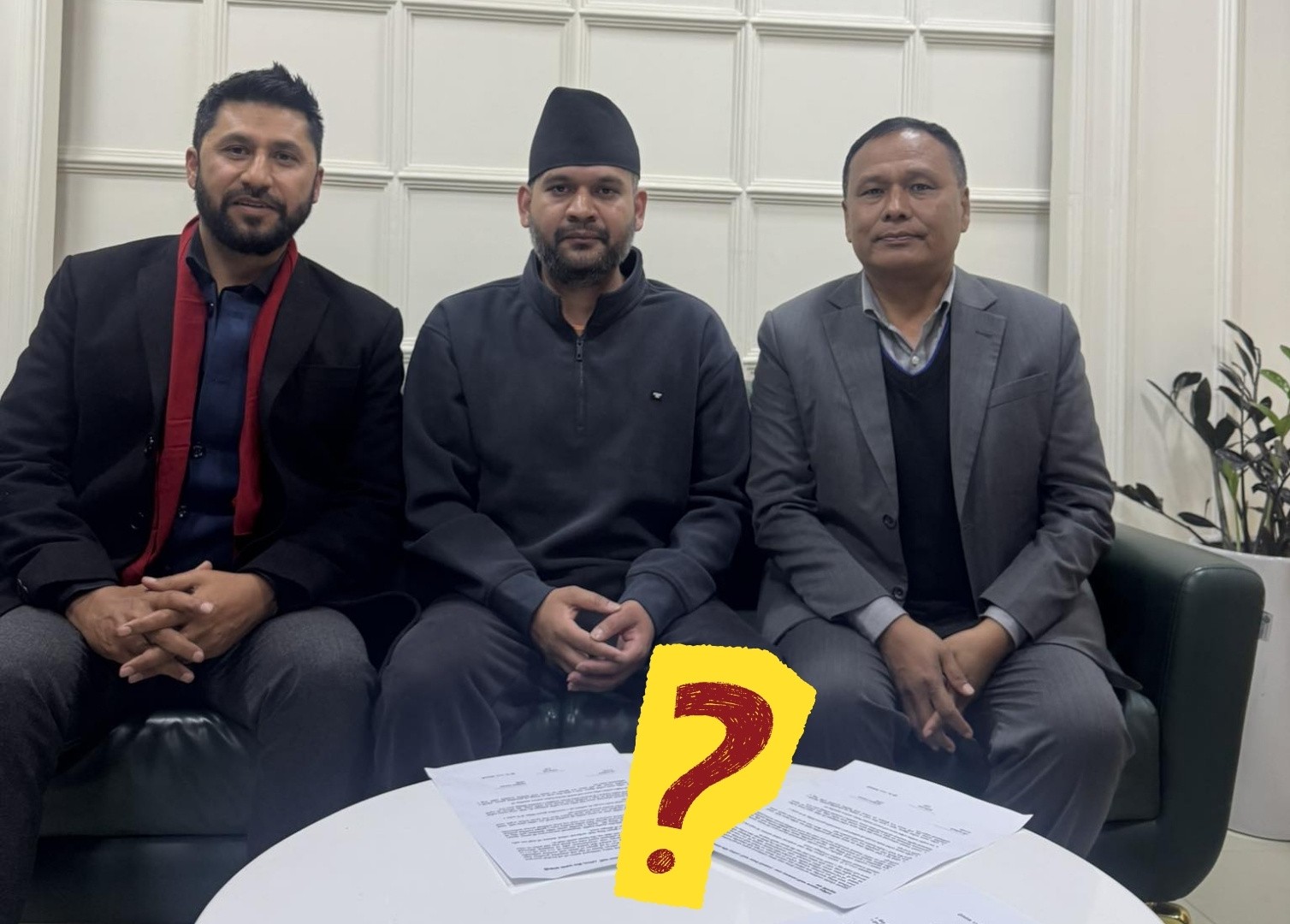
With elections scheduled for March 5 and a new political momentum generated in the aftermath of the anti-corruption protests in September, newly established political actors are drawing increased public attention, not for their political commitments though.
Framing their campaigns on promises of transparency, accountability, integrity, and positioning themselves against the failure of traditional parties, these actors present themselves as alternatives to political establishments. Their actions however reveal contradictions between rhetoric and practice.
Rabi-led RSP attacks the core principles of election system
Nepal’s rising but equally controversial party Rastriya Swatantra Party (RSP) recently submitted its PR list candidates at the Election Commission. What came out was a deeply troubling list that appeared like a PR lottery for insiders. The list included celebrities, business figures, relatives of party leaders, and internet influencers, reeking of favoritism, nepotism and exchanges of favors. Notably, the list undermined the principle of the election system, which mainstream parties long exploited and that the so-called alternative party claimed to stand apart from.
Meanwhile, high-ranking candidates from RSP’s own PR primary were dropped. Bijay Jairu, who secured the highest votes in the Dalit category, was excluded from the final closed list. Following a storm of scrutiny and ridicule, the party leadership then pledged to correct the list stating it was “erroneous,” prepared under haste as the party was at last minute forming an alliance.
Optics however suggest that RSP’s list was deliberate more than a mistake. The party has to manage its internal dynamics in the wake of its Chair Rabi Lamichhane’s fraud allegations and jail-escape controversy, which occurred amid September turmoil, while also accommodating the complexities of its new alliance.
Moreover, the party's current priority is to secure a decisive victory in the upcoming elections rather than focus on principles. Only, a few days later, the party claimed to secure a majority in the upcoming election, while as its economist-turned-politician Swarnim Wagle outlined the party’s philosophy, one of them being inclusivity.
Balen, Harka disregard local government mandate
On December 28, 2025, Kathmandu Mayor Shah and RSP President Lamichhane signed an agreement titled “Broad Unity.” Under the deal, Shah would contest the upcoming parliamentary elections under the RSP banner and, if elected, assume the position of parliamentary party leader.
Similarly, Dharan Mayor Rai has been actively preparing for national elections since registering his newly formed Shram Sanskriti Party with the Election Commission (EC) on November 2, 2025.
Both mayors rose to prominence positioning themselves as independent from the party, launching fierce attacks on mainstream political parties, and securing popular mandates in the 2022 local elections to govern their municipalities for a full five-year term. Their appeal rested precisely on distance from national power struggles.
Their decision to seek national office before completing their tenure raises questions not of legality, but of political ethics and stability, in a system where mid-term elections aren’t new. While the Constitution and electoral laws permit such candidacies, the political message conveyed to voters is less clear. A mandate for local governance is a commitment made to a defined electorate for a fixed period.
To qualify as candidates, both Shah and Rai are required to resign from their mayoral posts by January 19, ahead of the January 20 nomination deadline. Ethically, they should resign as soon as possible. Moreover, Section 39 of the recently approved Election Code of Conduct 2025 provides for the automatic vacation of office upon filing a nomination for federal or provincial elections.
Should their positions fall vacant with more than one year remaining in the term, approximately 15 months in this case, Article 216(9) of the Constitution mandates a by-election to fill the seat for the remainder of the term. Until such elections are held, Section 16(4)(b) of the Local Government Operation Act 2017 allows the deputy mayor to serve as acting mayor.
This chain of events imposes additional administrative and financial burdens on the state, which must prepare for by-elections following national polls. More importantly, it raises a question whether voluntarily abandoning a local mandate mid-term, in a moment of shifting political opportunity, aligns with the ethical standards these leaders claim to represent.
There is little doubt that leaders emerging from local governments bring valuable experience to national politics. Yet the transition from local to national politics carries moral weight. When undertaken without completing an electoral mandate, it risks being perceived as opportunistic.
One can argue that these candidates have little choice due to the recent political upheaval that suddenly changed the country's election timeline, and it’s a matter of practicality rather than opportunism. However, calling the move as “practicality” centers around the politician's career trajectory rather than voters' expectations. It risks setting a precedent of entering a local government position as a stepping stone for the future political advancement, in an electoral system where mid-term polls aren’t uncommon, and local governments are yet to institutionalise.
Another mayor, Renu Dahal from Bharatpur, hailing from Nepali Communist Party (NCP) is also planning to contest the upcoming election from a constituency in Chitwan. Dahal was reelected for the mayor in 2022 after successfully completing her first tenure (2017-022). Previously, Dahal was even a member of First Constituent Assembly through the proportional representation system.
Ghising power plays from within
While some players are planning to exit the government beforehand to contest upcoming elections, others are choosing to play it safe from within.
The current interim government led by Prime Minister Sushila Karki was envisioned as election-centered, non-partisan and technocratic, composed largely of appointed experts rather than political actors.
Her interim Minister Kulman Ghising (now resigned) continuously challenged that premise with dual roles engaging in extensive political exercise while denying his participation at all. Following the December 29, 2025, unity agreement between the RSP and the Ujyaalo Nepal Party (UNP), Ghising, widely known as the UNP’s patron and then an interim minister holding three portfolios, was designated as the RSP’s second-ranked vice-president. Ghising finally resigned after severe criticism.
Another interim minister, Bablu Gupta, was also present at the event and shared photographs from the ceremony on social media. While political participation by private citizens is routine, such visibility from members of an interim government raises concerns about neutrality.
Ghising’s dual role as a sitting minister and a senior party figure sits uneasily with the government’s stated commitment to non-partisanship. Gupta’s public presence at a partisan event, even without formal affiliation, further complicates perceptions of institutional impartiality.
Sudan’s rowdy conduct
Another figure who has risen in the political sphere is Sudan Gurung, whose involvement in the country's political developments since the September protests has been highly controversial, raising serious questions. Gurung has extensively engaged in actions undermining law and order under the guise of protecting the country, including threatening the president to government officials and announcing to sabotage elections if his demands are not met.
From attempting to micro-manage the government to seeking extra-constitutional influence, Gurung has also displayed profound ignorance and disregard for the country’s constitution and electoral process. Yet Gurung was brought in as a mediator to facilitate the Rabi-Balen-Ghising alliance. Gurung has since announced to contest election from Gorkha constituency although he hasn’t confirmed which party he will represent or whether he will run independently. Taken together, the conduct and emergence of Gurung and the country’s other new “forces” raise a critical concern about the future trajectory of the country's central politics.
Read More Stories

NEPSE falls nearly 75 points as market sentiment wavers
The stock market was unable to maintain the gains seen on Tuesday, slipping...
India has begun its long-delayed population census. Here's why it matters
India has begun the worlds largest national population count, which could reshape welfare...
The United Nations has called on Israel to repeal a law passed by...


Business + Finance + Economy + Tech + Environment + Nepal & South Asia + In-depth Analysis + News + Investigation + Research + Expert Opinion + Anatomy of Complex Issues.