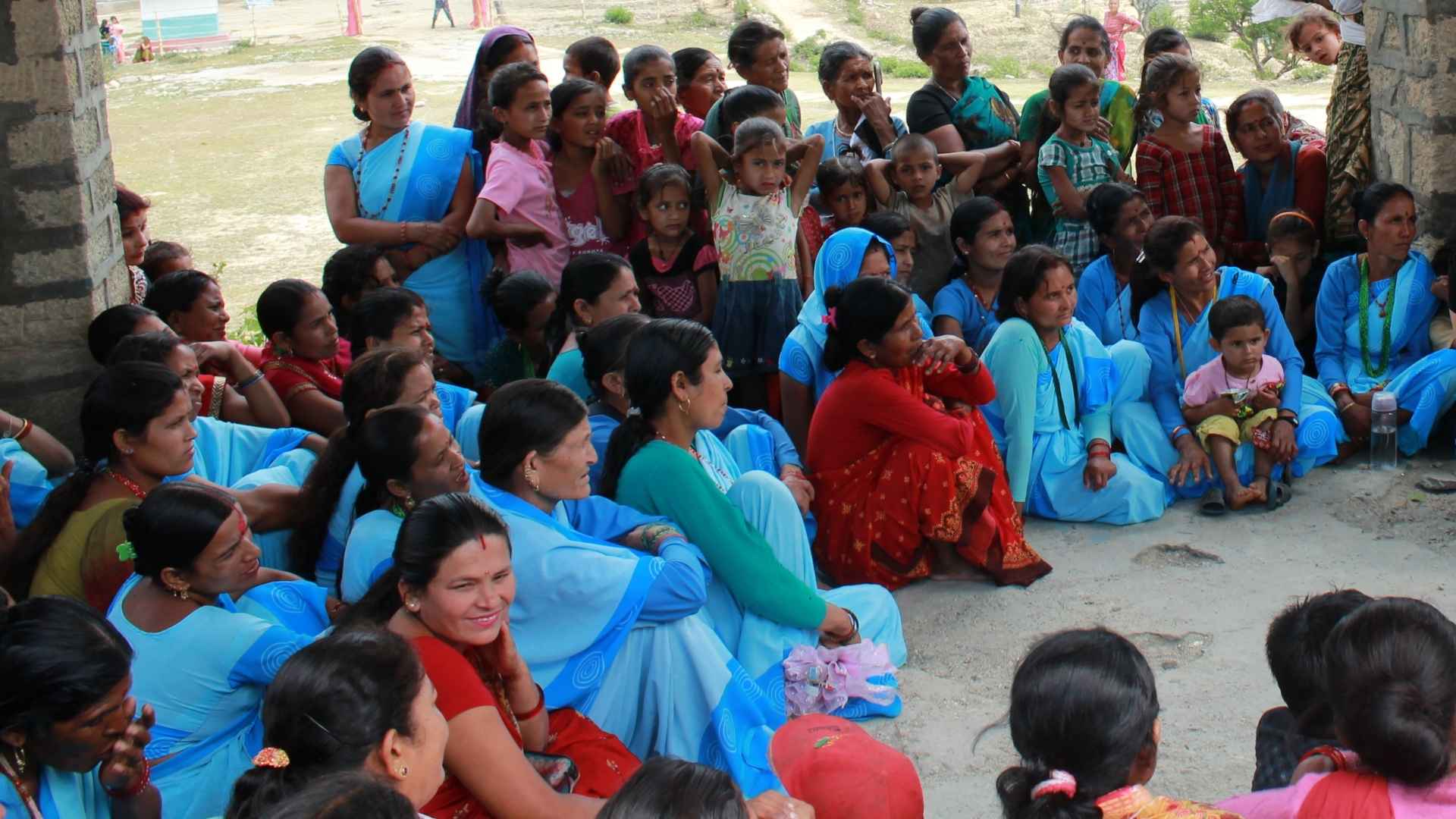
Across 165 directly contested seats, voters have sent 151 men and 14 women to the House of Representatives. Thirteen of those women belong to the Rastriya Swatantra Party (RSP) and one to the Nepali Congress.
The first-past-the-post (FPTP) election, therefore, produced 91.5% male representation.
The National Assembly, elected separately through an electoral college of provincial assemblies and local government nominees, provides partial balance. Of its 59 members, 15 are women. Combined with the 14 directly elected to the House, parliament initially contains 29 women (8.7%) out of 334 seats. This is far below the constitutional minimum of 33%.
To reach that floor, 81 women must come from the 110 proportional representation (PR) seats allocated to the House. In effect, nearly three-quarters of all PR seats must go to women.
RSP’s gender arithmetic
The responsibility of that correction falls mostly on the RSP, which dominates the new House of Representatives with 182 seats.
The constitution requires each party’s parliamentary representation to include at least 33% women when both chambers of the parliament are considered together. Because the RSP holds no seats in the National Assembly, the entire requirement must be met through the House alone.
That means the party must seat 60 women in its 182-member caucus. Of 125 directly elected RSP MPs, only 13 are women, i.e. 10.4%. The remaining 112 seats were won by men, including 77 from the Khas-Arya community. The party had 149 male candidates and 16 female candidates.
This leaves 47 women to be drawn from the party’s 57 PR seats.
RSP’s closed list follows the legal requirement that women appear first within each ethnic cluster. Applying that rule produces the maximum possible female representation from the clusters entitled to PR seats:
In total, the list yields 35 women from PR seats.
Combined with the 13 women elected directly, the party reaches 48 women—26.4% of its caucus, well short of the constitutional threshold. The shortfall is 12 women.
The Election Commission’s intervention
When a party’s PR list cannot produce the constitutionally required share of women even after women-first ordering within ethnic clusters, the House of Representatives Member Election Act (2017) allows the Election Commission (EC) to intervene.
The EC may override ethnic cluster allocation to enforce the gender mandate.
In RSP’s case, the EC drew 12 additional women from the party’s Khas-Arya sub-list, ranked #33 through #44 on the PR list. The Khas-Arya cluster typically receives no PR seats because its representation under FPTP already exceeds its constitutional share.
To create space for additional women, the EC removed 12 male candidates from clusters with PR entitlement: two Muslim men, one Tharu man, six Dalit men, and three Janajati men.
The substitution raises RSP’s total to 60 women—exactly 33% of its 182 seats. The constitutional threshold is therefore met, but only through the EC’s intervention.
The gap that cannot close
Across the entire country, only one Dalit candidate won a direct seat in the election: Khagendra Sunar of RSP from Banke-3.
That is 0.6% of 165 constituencies, compared with the mandated representation benchmark of 13.8%.
The National Assembly currently has four Dalit members, all men. Together with Sunar, the parliament initially contains five Dalit MPs before any PR seats are distributed.
Under constitutional inclusion provisions, 46 Dalit members should sit in a 334-seat federal parliament. The PR system must therefore deliver 41 additional Dalit MPs.
RSP’s Dalit representation
Within its own caucus, RSP should have 25 Dalit MPs to meet the constitutional proportion.
The Election Commission would allocate 18 Dalit PR seats to the party. But RSP’s submitted Dalit list contains only 15 candidates, eight women and seven men. As a result, three seats cannot be filled.
The gender correction then removes the six Dalit men from the list. The outcome: one Dalit MP from FPTP, eight Dalit women from PR. In total, nine Dalit MPs from RSP, against the constitutional expectation of 25.
The gap is 16 seats.
Across the entire parliament, the arithmetic remains stark. With five Dalit members before PR allocation and RSP contributing nine, the final number depends on the other parties’ allocations from their remaining PR seats. Even generous estimates suggest the new parliament may seat only 13 to 20 Dalit members, far below the required 46.
When two mandates collide
Nepal’s PR framework achieved its immediate objective: correcting a parliament that emerged from direct elections overwhelmingly male. Through the EC’s intervention, the system raised women’s representation to the constitutional minimum of 33%.
The numbers for Dalit representation tell a different story.
A single Dalit MP elected in 165 constituencies signals a failure not of the correction system but of the electoral contest itself. When the PR lists were then used to repair that deficit, the gender requirement consumed the remaining Dalit seats in RSP’s allocation.
The result is a structural collision between two constitutional commitments: gender inclusion and ethnic representation.
The Constitution does not rank these mandates. Both were written as parallel obligations, built on an assumption that political parties would nominate diverse candidates in FPTP contests and that proportional representation would adjust the margins.
That assumption collapsed in the 2026 election yet again. RSP secured 125 direct victories with a caucus that is overwhelmingly male and heavily concentrated in a single ethnic community. The PR system is then asked to correct both the gender imbalance and multiple ethnic under-representations within only 57 seats.
It could not satisfy both simultaneously.
Because the gender mandate is numerically precise and enforceable during seat allocation, it prevailed. The ethnic mandate absorbed the loss.
The immediate consequence is visible in the six Dalit men who would not be considered for a seat in the lower House following the gender correction. They represent constituencies stretching from Sunsari to Surkhet, and their removal eliminates what would have been one of the largest groups of Dalit male MPs ever elected to the parliament.
Read More Stories

NEPSE falls nearly 75 points as market sentiment wavers
The stock market was unable to maintain the gains seen on Tuesday, slipping...
India has begun its long-delayed population census. Here's why it matters
India has begun the worlds largest national population count, which could reshape welfare...
The United Nations has called on Israel to repeal a law passed by...


Business + Finance + Economy + Tech + Environment + Nepal & South Asia + In-depth Analysis + News + Investigation + Research + Expert Opinion + Anatomy of Complex Issues.