West Asia Conflict | Humanitarian Crisis | Gaza Strip | Israel-Hamas War | Palestinian Statehood
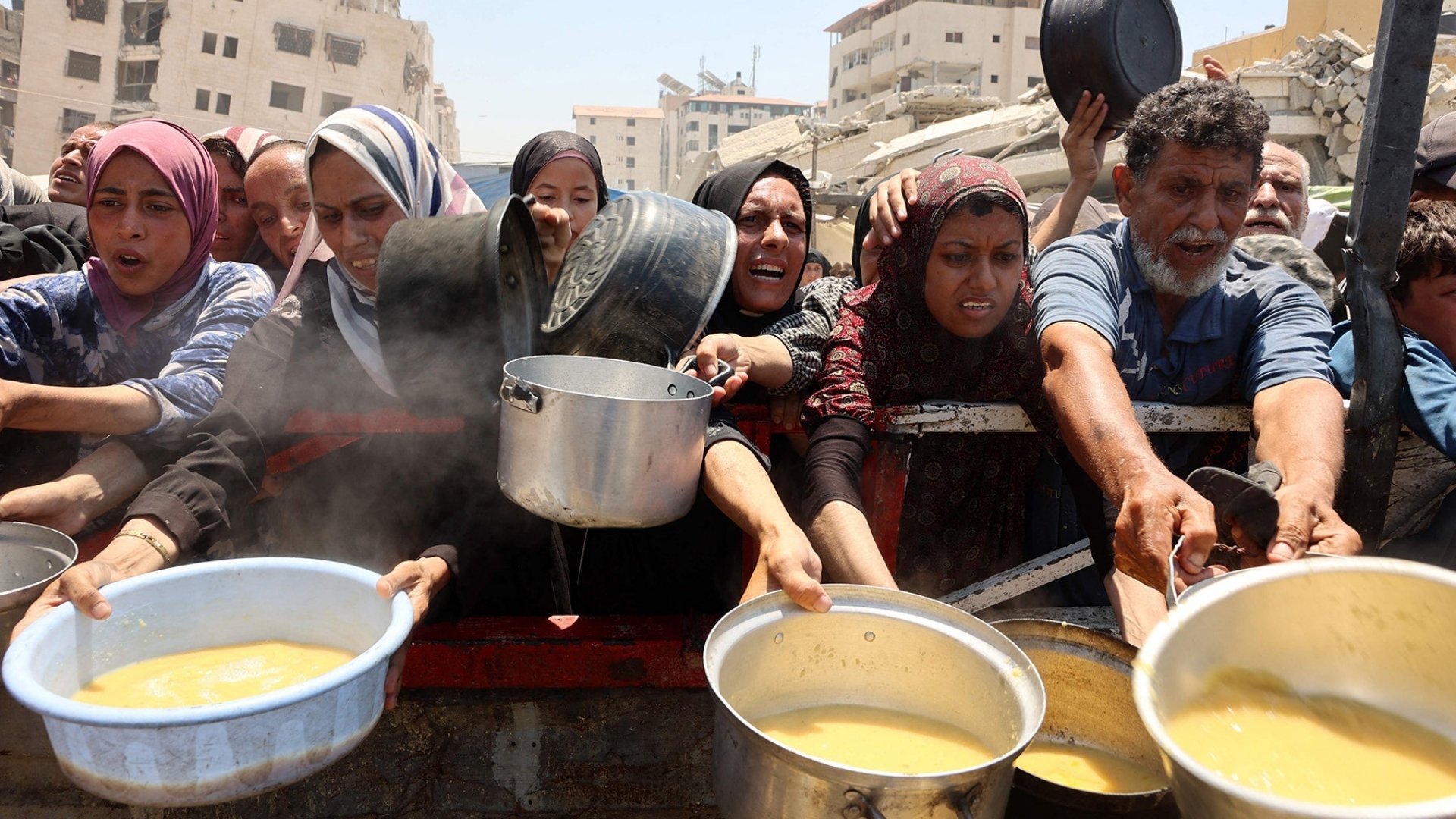
The humanitarian crisis in the Gaza Strip has plunged to “new and astonishing levels of desperation,” with the UN’s food agency reporting that nearly a third of the population is “not eating for days.”
The grim alert comes amid a wave of forceful international condemnation, culminating in Australia accusing Israel of breaching international law and France announcing its intention to recognise a Palestinian state.
In response to the mounting pressure, the Israeli military on July 27 initiated daily 10-hour “tactical pauses” in fighting along key routes to allow aid to reach a population on the brink of famine after 21 months of devastating war.
The World Food Programme (WFP) warned on July 25 that the hunger crisis is dire, with 90,000 women and children in urgent need of treatment for malnutrition. The agency projects that 470,000 people will face “catastrophic hunger”—its most severe classification—through September.
“People are dying from lack of humanitarian assistance,” the WFP stated bluntly.
This crisis is the direct result of the long-running war and a crippling aid blockade Israel imposed for two and a half months starting in March. Though the blockade was eased in May, the average of 69 aid trucks entering daily is a fraction of the 500-600 the UN says are needed.
The war began with Hamas’s October 7, 2023, attack on southern Israel, where militants killed 1,200 people and took 251 hostages. Israel’s retaliatory offensive has since killed over 59,700 Palestinians, according to Gaza’s Health Ministry, which the UN considers a reliable source. More than half of the dead are reported to be women and children. The conflict has also claimed the lives of over 330 staff from the UN’s Palestine refugee agency (UNRWA).
According to the latest report from the UNRWA, covering the period up to July 25, 2025, the health sector is on the verge of collapse, grappling with the spread of infectious diseases.
The report highlights a concerning rise in suspected cases of viral and bacterial meningitis, with the majority of cases affecting young children. Overcrowded living conditions and poor sanitation, particularly in areas like Al-Mawasi in Khan Younis, have led to a surge in water-borne diseases such as bloody diarrhoea.
Furthermore, the report underscores a rapidly deteriorating food security situation. Acute malnutrition among children under the age of five has more than doubled between March and June 2025, a direct consequence of the prolonged siege on the Gaza Strip, with approximately one in ten children screened suffering from malnutrition.
The dire situation is further evidenced by the tragic deaths of 20 children from severe acute malnutrition in July alone, as documented by partner organisations.
Global condemnation and diplomatic shifts
The deteriorating situation has triggered sharp rebukes from even close allies.
“Quite clearly it is a breach of international law to stop food being delivered,” Australian Prime Minister Anthony Albanese said on July 27. “It’s a breach of decent humanity and of morality and everyone can see that.” He called Israel’s denial of aid and the killing of civilians seeking food “indefensible.”
A separate statement on July 25 from him read, “Gaza is in the grip of a humanitarian catastrophe. Israel’s denial of aid and the killing of civilians, including children, seeking access to water and food cannot be defended or ignored.”
The sentiment was echoed at the highest levels of the United Nations. “Conflict continues to spread hunger from Gaza to Sudan and beyond,” UN Secretary-General António Guterres said on July 28, also highlighting Sudan as “the largest humanitarian catastrophe facing our world.” He urged the international community: “We must never accept hunger as a weapon of war.”
The government of Israeli Prime Minister Benjamin Netanyahu “furiously denies” this charge, instead accusing UN agencies of failing to distribute aid and alleging, without evidence, that Hamas siphons supplies.
The crisis has also prompted major diplomatic shifts.
French President Emmanuel Macron announced on July 24 that France will formally recognise the State of Palestine at the UN General Assembly in September. The move, which would make France the first G7 nation to do so, was condemned by Israel and the United States but welcomed by Palestinian leaders.
‘Tactical pauses’ offer limited respite
The newly announced “tactical pauses” will run from 10:00 AM to 8:00 PM local time daily in parts of Gaza City, Deir al-Balah, and Muwasi. While the Israeli military said the move was coordinated with the UN, it comes as broader ceasefire talks appear to be stalled. Israel has clarified that its offensive against Hamas will continue in other areas of the territory.
UN emergency relief coordinator Tom Fletcher cautiously welcomed the pauses, stating his teams “will do all we can to reach as many starving people as we can in this window.” However, aid distribution remains perilous.
The UN reports its convoys are often overwhelmed by desperate crowds, and its human rights office says over 1,000 Palestinians have been killed by Israeli forces since May while trying to get food, mostly near newly established non-UN aid sites.
Read More Stories

NEPSE falls nearly 75 points as market sentiment wavers
The stock market was unable to maintain the gains seen on Tuesday, slipping...

India has begun its long-delayed population census. Here's why it matters
India has begun the worlds largest national population count, which could reshape welfare...
The United Nations has called on Israel to repeal a law passed by...


Business + Finance + Economy + Tech + Environment + Nepal & South Asia + In-depth Analysis + News + Investigation + Research + Expert Opinion + Anatomy of Complex Issues.