Birgunj Water Crisis | Groundwater Depletion | Urban Planning | Chure Environmental Degradation
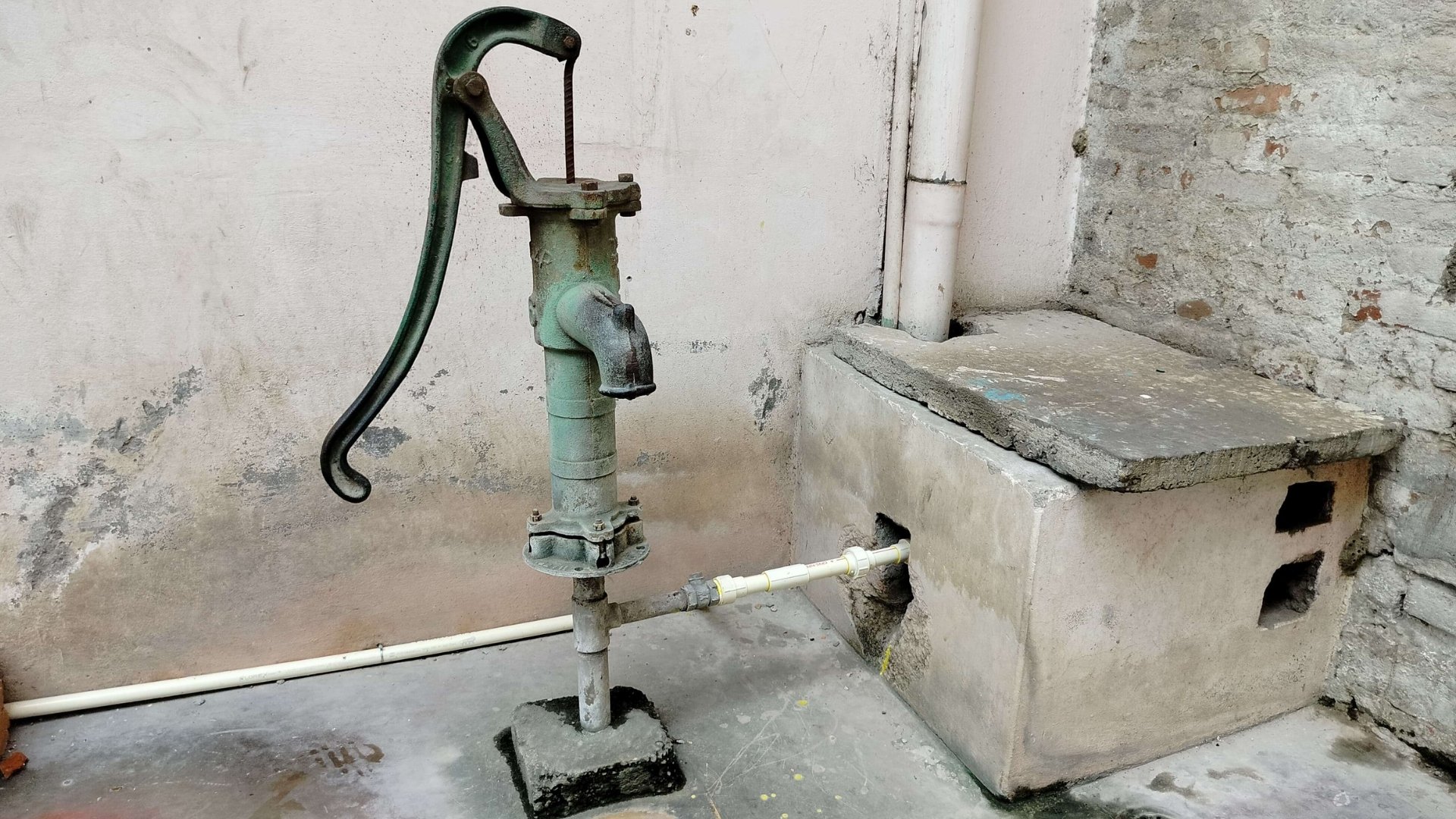
“People in the Gulf buy new clothes because they don’t have water to wash the old ones,” my father would often say more than a decade ago, whenever someone in our house left the tap running. It sounded exaggerated then, absurd even. But his message was clear: don’t take water for granted.
Water has never been just a resource for him. It is also a responsibility. That line quietly shaped how I interact with it today. I make sure taps are tightly shut, check for leaks, and minimise excess while pumping water from our hand pump. He would repeat it often, along with another warning that felt even more ominous: “One day, people in Birgunj will fight over water.”
That day is here. In the plains’ largest urban centre, the crisis has deepened and turned confrontational. Neighbours are arguing. Families accuse each other of hoarding. Rumours fly that only voters of the ruling party are receiving tanker services or deep boring connections. As thirst grows, trust shrinks. Water has become political currency.
From shortage to showdown
With no other option, some residents are paying tens of thousands of rupees to lay private pipelines connected to public deep tubewells—usually by forming consumer groups in line with legal procedures. But in many cases, individuals have bypassed formalities and collected these amounts informally, threatening to bar non-payers from using the public supply. The struggle is no longer just about water. It’s about power, privilege, and survival.
In the summer heat, temperatures regularly cross 42 degrees Celsius, and the ‘feels like’ heat index reads 53 degrees. The WHO and UN-Habitat guidelines recommend 50–100 litres of water per person per day to meet basic urban domestic needs—and up to 100 litres in hotter or higher-need contexts. The absolute emergency minimum is only 15 litres per day or even 7.5 litres in acute phases.
As of July 30, total supply from Khanepani Sansthan pipelines, public deep borings and water tankers in Birgunj adds up to just 10 million litres a day. Assuming a conservative population estimate of one million, each resident receives only 10 litres on average—less than the emergency threshold.
No data, no direction
What makes this crisis more dangerous is the profound ignorance at its core. Birgunj sits atop a fragile aquifer, yet there is no public groundwater database, no reliable monitoring network, and no scientific guideline on how many deep borings are sustainable. This data gap has been repeatedly acknowledged by JICA in 2019 and by UNICEF in 2023.
In the absence of data, politics fills the void. Decisions are shaped by public anger, short-term pressure, and electoral incentives—not science.
Nationally, this local crisis stands in contrast. A 2018 study reports that groundwater across the Terai-Madhes region remains underutilised. Each year, the region receives about 8,800 million cubic metres of groundwater recharge. Of which, only 22% is used for domestic, irrigation and industrial purposes, suggesting untapped potential on paper.
Birgunj, however, tells a different story.
Unregulated deep tubewells are mushrooming. Pumps are drawing water faster than nature can replenish. In dry months, hand pumps fail, and water tables sink below the suction depth. According to Er Rakesh Sah, chief of Birgunj’s Water Supply Unit, over-extraction is already showing signs of ecological stress. So even if Nepal has groundwater to spare, Birgunj is running out.
Collapse, not foresight
This paradox isn’t unique to Birgunj. Cities across Asia are waking up to groundwater—not through planning, but collapse.
Mumbai, India’s commercial capital, once considered groundwater negligible. Planning has proceeded under the assumption that groundwater does not exist in Mumbai. Now, faced with rising urban demand and an unreliable piped supply, the city leans heavily on it—often without permits, recharge systems, or any form of monitoring. As a Scroll.in report revealed, not only hotels but even hospitals and government buildings extract water without fully understanding how much is left or how fast it is depleting.
And when water and power fail together, things unravel faster.
In Iran’s capital, Tehran, extreme heat collided with years of poor planning and underinvestment to bring both water shortages and rolling power cuts. This summer, according to Tehran Times, even hospitals have struggled to function as residents go days without tap water in searing temperatures. Birgunj is no stranger to this: low voltage and erratic electricity supply now threaten not only homes but also water pumps and cooling systems in schools, hospitals. When infrastructure fails across sectors, scarcity becomes systemic.
Jakarta, meanwhile, shows how this can turn irreversible. Unchecked groundwater pumping has caused the Indonesian capital to sink by as much as 25 centimetres a year in some areas. A 2023 study found that poor communities in the city’s north face the worst effects—subsidence and tidal flooding, while the wealthy continue pumping with impunity. The problem is not just environmental; it’s deeply political.
Birgunj may not be sinking yet, but it’s already showing signs of that same injustice. The deeper the crisis, the more access is determined by money and political proximity.
Signs beneath the surface
The warning now feels much closer to home.
Earlier this May, a road in the Gairigaun area of Hetauda, just upstream of Birgunj, suddenly collapsed into a sinkhole—swallowing a truck. Geologists from the Department of Mines and Geology traced the incident to unstable ground, likely worsened by the weakening of soil due to excessive groundwater extraction. The surrounding area has seen a surge in borewells. The land, rich in black clay, is particularly prone to collapse when water is removed.
Birgunj’s soil is different: mostly alluvial, a fertile mix of clay, sand, and silt. But while it may be less prone to sudden sinkholes, the risk of gradual land subsidence from over-extraction still looms. This underscores the urgent need for regulation, monitoring, and preventive action in the region.
Chure is dying, so are the aquifers
Birgunj’s water crisis doesn’t originate from within. Its roots lie in the Chure hills and Bhawar region to the north—critical recharge zones for the plains. Over the years, unregulated quarrying, road construction, and deforestation for state-sponsored mass resettlements have stripped the Chure of its ability to absorb monsoon rain and feed the aquifers.
Against this backdrop, the country’s reforestation achievements with its forest cover increasing from 15% in the 1990s to 45% in the 2020s now seem a flawed narrative.
Additionally, riverbed materials are extracted without scientific oversight. There is no hydrological warning system. No environmental balance sheet. The hills are being criminally gutted in silence. A chilling reminder of how far politically shielded extractive industries can go for private gains came with the killing of 24-year-old Dilip Mahato from Dhanusha, targeted for protesting against illegal sand mining near his home.
The brutal murder and the delayed, diluted justice that followed exposed not only the impunity enjoyed by these operators, but also the state’s quiet complicity in prioritising profits over people and ecology. His death is not an isolated incident—it is a warning of how dangerous it has become to speak out against the forces drying up the land beneath our feet.
Within Birgunj, the crisis is compounded by misplaced urban priorities. Traditional ponds that once absorbed rainwater are now paved over. Roads and footpaths are sealed in concrete. Rain that should recharge aquifers rushes into clogged drains instead. The city looks cleaner on the surface—but it is drying from within. Meanwhile, industries still release untreated wastewater into the Sirsiya River.
This crisis didn’t come unannounced. There were signs of stress. Drying hand pumps, falling water pressure were evident as early as 2023. But government responses have been reactive and piecemeal: emergency tanker services, politically influenced deep borings, and more promises than planning.
The same extractive development model also underpinned the proposed Nijgadh International Airport. The plan, since halted by the Supreme Court, would have razed over 2.4 million trees in the Chure buffer zone, threatening biodiversity, flood control, and the recharge of an estimated 650 million cubic metres of water. That project may have paused, but its logic persists—growth at the cost of groundwater.
Acting before it’s too late
To move forward, science must replace speculation.
Birgunj needs a public groundwater monitoring network to track both extraction and recharge in real time. The government must establish legal extraction limits, particularly in aquifer-stressed zones. Quarrying in Chure recharge areas must be banned, and reforestation prioritised.
Within the city, future construction should follow water-sensitive design principles that promote infiltration and restore traditional ponds. And perhaps most importantly, water governance must be removed from the grip of electoral politics and placed under accountable, independent institutions with technical expertise.
Water does not wait for election cycles.
My father’s warning is no longer just a memory. It’s a mirror, reflecting the crisis unfolding before us. And with growing urgency, it keeps asking: how long will we wait before we act?
Read More Stories

NEPSE falls nearly 75 points as market sentiment wavers
The stock market was unable to maintain the gains seen on Tuesday, slipping...
India has begun its long-delayed population census. Here's why it matters
India has begun the worlds largest national population count, which could reshape welfare...
The United Nations has called on Israel to repeal a law passed by...


Business + Finance + Economy + Tech + Environment + Nepal & South Asia + In-depth Analysis + News + Investigation + Research + Expert Opinion + Anatomy of Complex Issues.