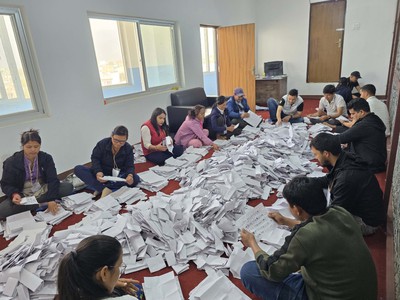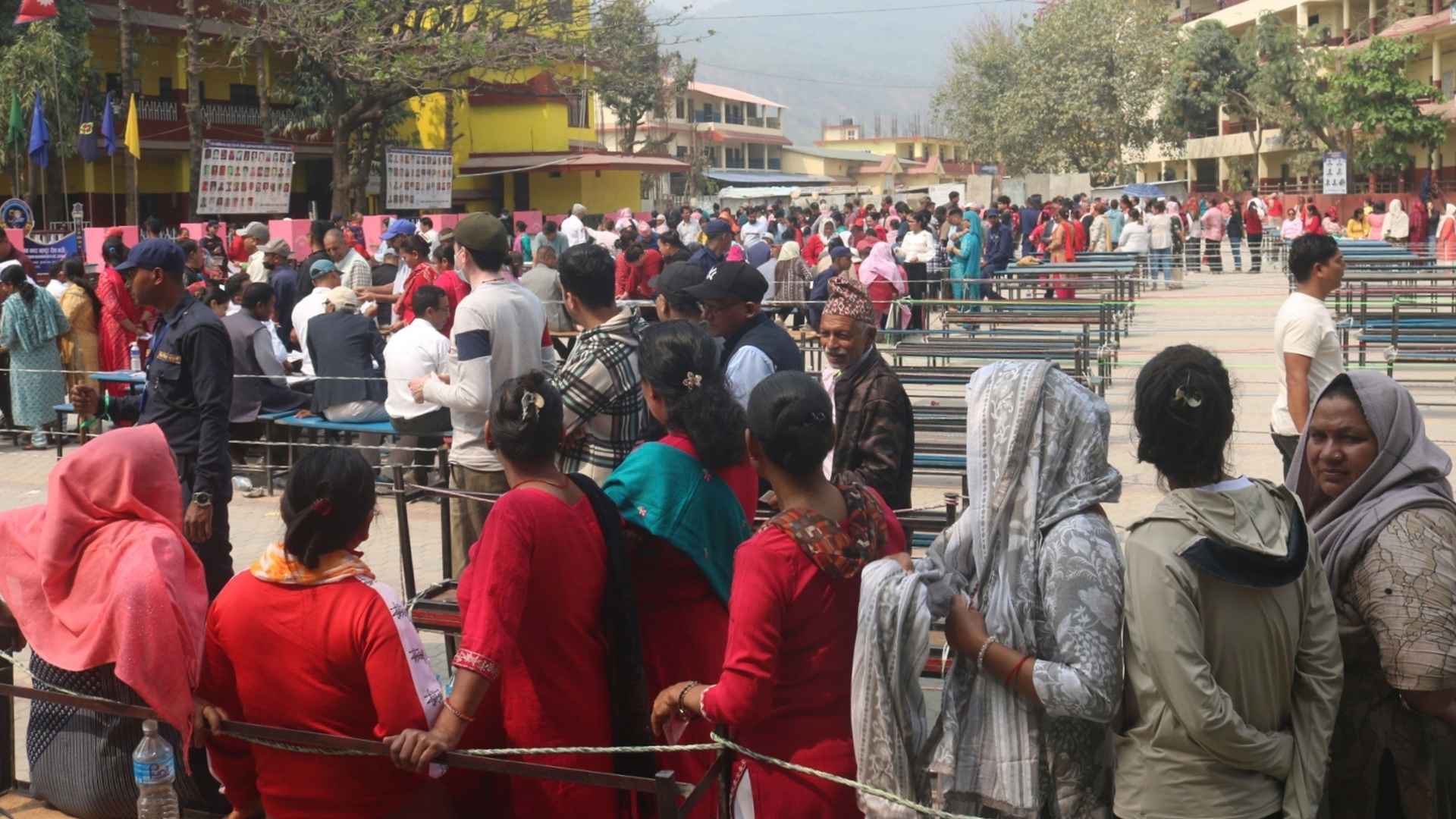
As the final counting of PR votes for the House of Representatives election held on March 5 concludes, the Rastriya Swatantra Party (RSP) is set to be officially announced the largest party in the 275-member lower house. The party however has fallen two seats short of achieving a two-third majority securing 125 seats through the direct elections and 57 through the proportional representation elections totalling 182 seats.
| Party | Total seats through FPTP | Total PR votes | Total PR seats | Total seats in the HoR |
| Rastriya Swatantra Party (RSP) | 125 | 5,167,729 | 57 | 182 |
| Nepali Congress | 18 | 1,757,100 | 20 | 38 |
| CPN-UML | 9 | 1,453,789 | 16 | 25 |
| Nepali Communist Party | 8 | 810,479 | 9 | 17 |
| Shram Sanskriti Party | 3 | 385,806 | 4 | 7 |
| Rastriya Prajantantra Party | 1 | 330,386 | 4 | 5 |
| Independent (Mahabir Pun) | 1 | 22,850 | - | 1 |
Only six political parties out of the total 67 parties that contested the elections will now have their presence in the House of Representatives with all of them gaining the status of a national party.
Some of the established political parties who failed to secure national party status are Janata Samajwadi Party Nepal led by Upendra Yadav, and Janamat Nepal led by CK Raut, including the newly formed Ujyalo Nepal Party led by Kulman Ghising. None of these parties secured any seats through FPTP elections either.
Shram Sanskriti Party led by Harka Sampang is the only new party to gain national party status in this election securing three seats through direct elections and four through PR.
The results indicate a dramatic shift in Nepal’s political landscape compared to the 2022 Lower House election, where the established party held sway.
| Parties | Final number of seats in 2022 election |
| Nepali Congress | 88 |
| CPN-UML | 79 |
| CPN (Maoist Centre) | 32 |
| Rastriya Swatantra Party | 21 |
| Rastriya Prajatantra Party | 13 |
| Janata Samajwadi Party | 7 |
| Nepal Communist Party (Unified Socialist) | 10 |
| Janamat Party | 6 |
| Loktantrik Socialist Party, Nepal | 4 |
| Nagarik Unmukti Party | 3 |
| Nepal Worker and Farmer Party | 1 |
| Rastriya Janamorcha | 1 |
| Independent | 5 |
What qualifies as a national party?
Under the existing law, Article 52 of the Political Parties Act, 2073 (2017), a political party qualifies as a national party if it fulfills both of the following conditions in a federal election for the House of Representatives (HoR):
If a party fails at even one criteria, it does not get the national-party status.
In the 2022 general election, seven parties had national-party status under these laws although there was representation of 12 parties in the lower house.
The then Madhab Kumar Nepal-led CPN (Unified Socialist) party had fallen short in the PR threshold of 3% securing only 2.83% of the total votes.
Failing to get 3% of the total votes means the party gets no seat under the PR system.
Additionally, the recognition of a national party status gets a parliamentary office at the parliament’s premises along with perks and benefits for its chief whip such as a secretariat, staff, and a vehicle.
Read More Stories

NEPSE falls nearly 75 points as market sentiment wavers
The stock market was unable to maintain the gains seen on Tuesday, slipping...

India has begun its long-delayed population census. Here's why it matters
India has begun the worlds largest national population count, which could reshape welfare...
The United Nations has called on Israel to repeal a law passed by...


Business + Finance + Economy + Tech + Environment + Nepal & South Asia + In-depth Analysis + News + Investigation + Research + Expert Opinion + Anatomy of Complex Issues.