Democracy in practice | Elections | political literacy | Constitution
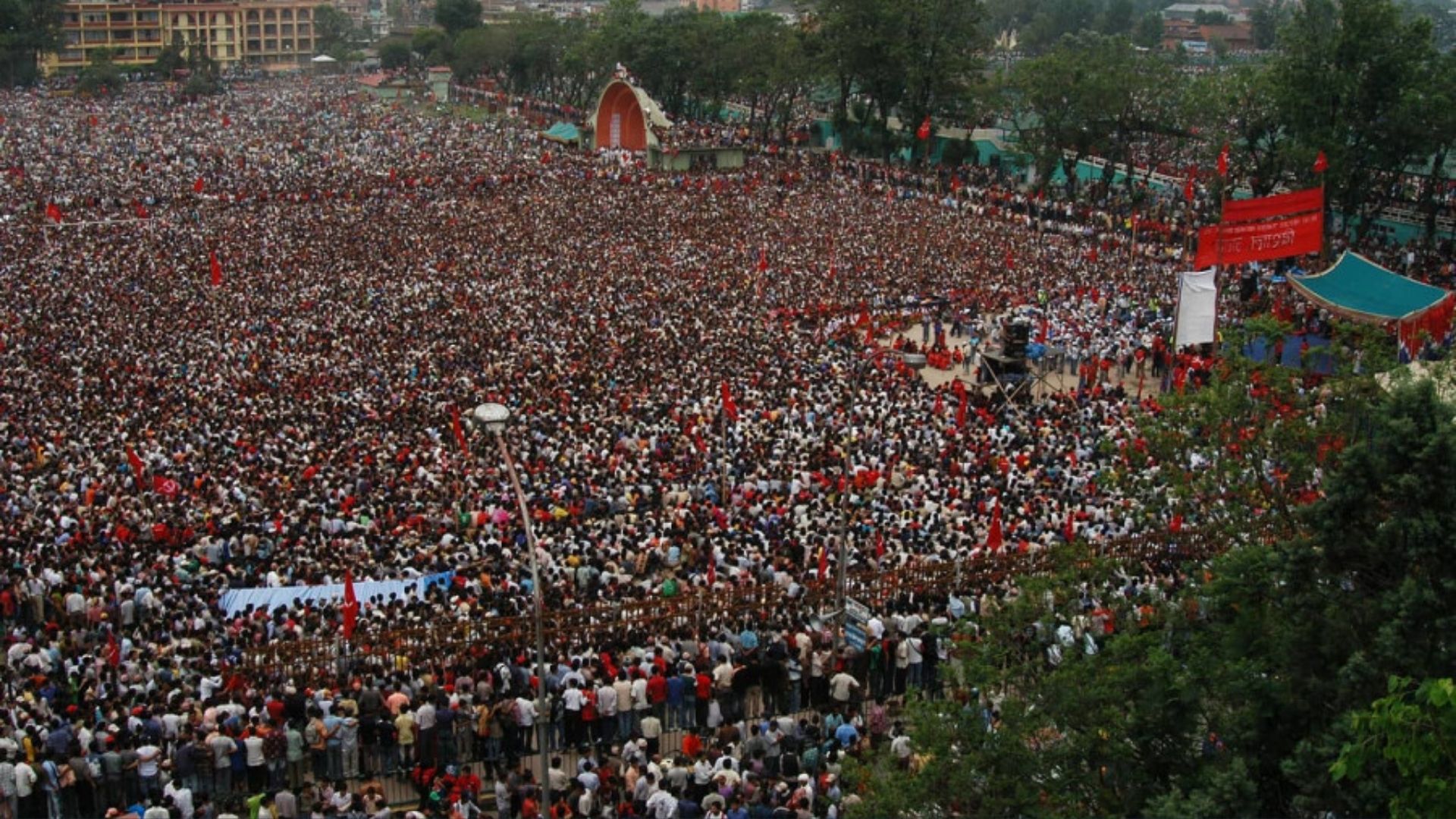
When the 2022 House of Representatives elections concluded, the outcome was a hung parliament. Uncertainty meant a series of shifts in alliance and power between the three largest parties and prolonged ambiguity over government formation and stability. Good governance receded into the back seat, and public frustrations, building for decades, simmered across the nation.
The recent September protests and their aftermath dramatically altered that political landscape. It overthrew the elected government and shook traditional political parties, long perceived as kleptocratic—compelling political actors throughout the country to confront the reality that ignoring public frustrations can erupt into severe national consequences.
There is a renewed surge of political enthusiasm, particularly among young people, reflected in the 837,094 new voter registrations. At the same time, the upheaval exposed deep vulnerabilities.
Chief among them is the alarmingly low level of political and constitutional literacy among the country’s population. Many citizens struggle with complexities within political systems, constitutional structures and democratic processes and the idea and role of institutions, a gap that could potentially prolong instability. Radical ideas are being floated, which require changes in the constitution. While discussions on such ideas are important, they can only be addressed via people’s proactive representation in the lower house to come. The risk is heightened in a climate with a trust vacuum proliferated with hate, misinformation, disinformation and headline journalism.
Clearly, the September events have upended the nation, forcing it into uncharted terrains. An interim government now leads the country, and Nepal is on the verge of snap elections, with 99 days to go. What was originally scheduled for two years from now has been pushed forward, a shift that brings its own set of challenges and shortcomings for a country yet to institutionalise democratic processes.
A key concern is whether absentee voting could be operationalised this election, a lack of which has left millions of internal and migrant voters politically disenfranchised. While discussions surrounding absentee voting have been intense, failure means voters will have to wait another full electoral cycle, five more years, rather than two. The latter wasn’t a guaranteed provision either.
Read also:
- The time is now: Operationalise absentee voting
- How millions of Nepalis are exiled from voting
- Elections, Costs and Constitution
- To save republic from bananas
- Women candidates win voters’ confidence despite political parties mistrust
Questions also loom about the government’s constitutional status, which remains under review in the Supreme Court with as many as 10 writs filed at the court challenging the validity of the government and demanding the reinstatement of the dissolved lower house. CPN-UML, which headed the previous government, is planning on filing another. There is a real chance the existing interim government could be overturned. Such uncertainty underscores the delicate nature of the current transition.
While there is no certainty that elections will happen this March, it remains true that only elections can take the country forward, whether they are held now or a few months later.
Despite all the complications, politicking has begun in the backdrop of the announced election. Traditional powers seek to salvage their plummeting reputations, and alternative and newly formed forces in the form of political parties strive to make their mark. Several ‘Gen Z’ groups have started planning for engagement in electoral politics. As of November 25, the number of parties registered with the Election Commission has reached 132 from 124 over a month ago, while 80 of them have registered for the March elections.
In this context, the_farsight introduces a dedicated beat, Democracy in Practice, covering electoral reform, political finance and intra-party democracy.
Over the next months, this beat will focus on three major structural issues that deserve analysis, reflection and discourse. It will include dedicated materials around the foundations of political literacy. These issues, by no means, are all-encompassing but rather potential points of departure in the current context.
The beat will explore Nepal’s socio-political and economic history, unpack structural issues and spark informed debate on specific policy solutions towards a revitalised political system/culture. It will not only highlight the ‘What’ but also ‘How’ of Nepal’s past, present and future, but also make attempts to integrate historically marginalised voices and perspectives.
Ahead of the planned elections, the project will also provide independent and impartial candidate profiles, giving readers the tools to make informed decisions when they go to cast their votes.
Read More Stories

NEPSE falls nearly 75 points as market sentiment wavers
The stock market was unable to maintain the gains seen on Tuesday, slipping...
India has begun its long-delayed population census. Here's why it matters
India has begun the worlds largest national population count, which could reshape welfare...
The United Nations has called on Israel to repeal a law passed by...


Business + Finance + Economy + Tech + Environment + Nepal & South Asia + In-depth Analysis + News + Investigation + Research + Expert Opinion + Anatomy of Complex Issues.