Local economy | Governance | Environmental Policy | Rural Economy | Bamboo | Market
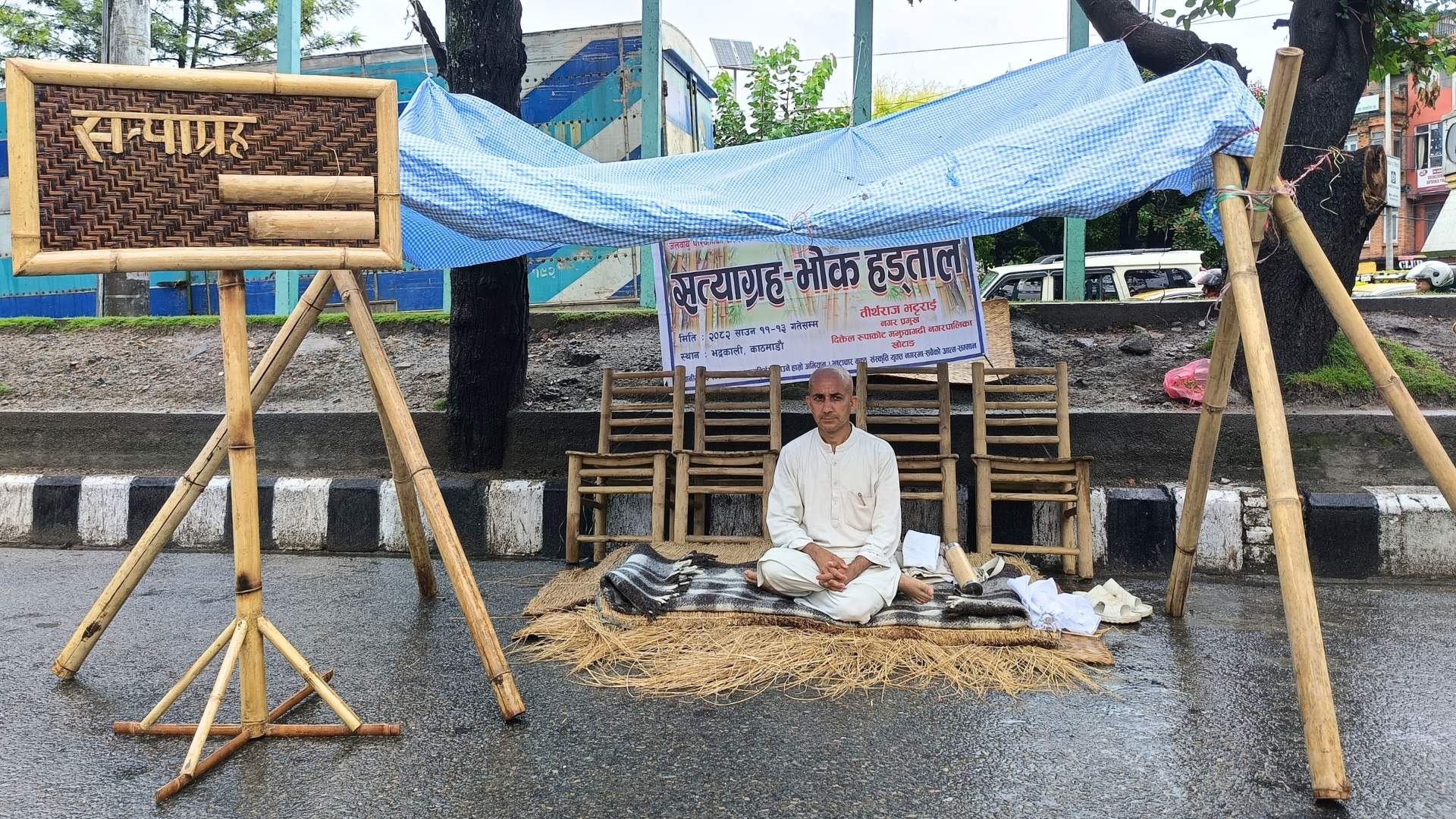
Tirtharaj Bhattarai, mayor of Diktel Rupakot Majhuwagadhi Municipality in Khotang, has launched a hunger strike, naming it ‘Satyagraha’ at Maitighar Mandala, Kathmandu demanding a series of policy interventions from the federal government on environmental protection, sustainable development, and local governance reform.
The protest began on July 27, with Mayor Bhattarai symbolically shaving his head, walking barefoot to the protest site, and covering his mouth with a cloth. He has pledged to observe a limited hunger strike from 9 AM to 5 PM until July 29, before launching an indefinite fast-unto-death from July 30 if his seven-point demand charter remains unaddressed.
At the core of Bhattarai’s protest is the claim that the federal government has failed to empower local governments with the necessary policy tools to address pressing ecological, infrastructural, and governance issues. The mayor said he had been sending proposals to the Office of the Prime Minister and other ministries for over a year without receiving any response.
The municipality attempts to connect locals with employment opportunities by preserving biodiversity and culture, utilising local resources and materials as much as possible, reads the public statement issued by the mayor.
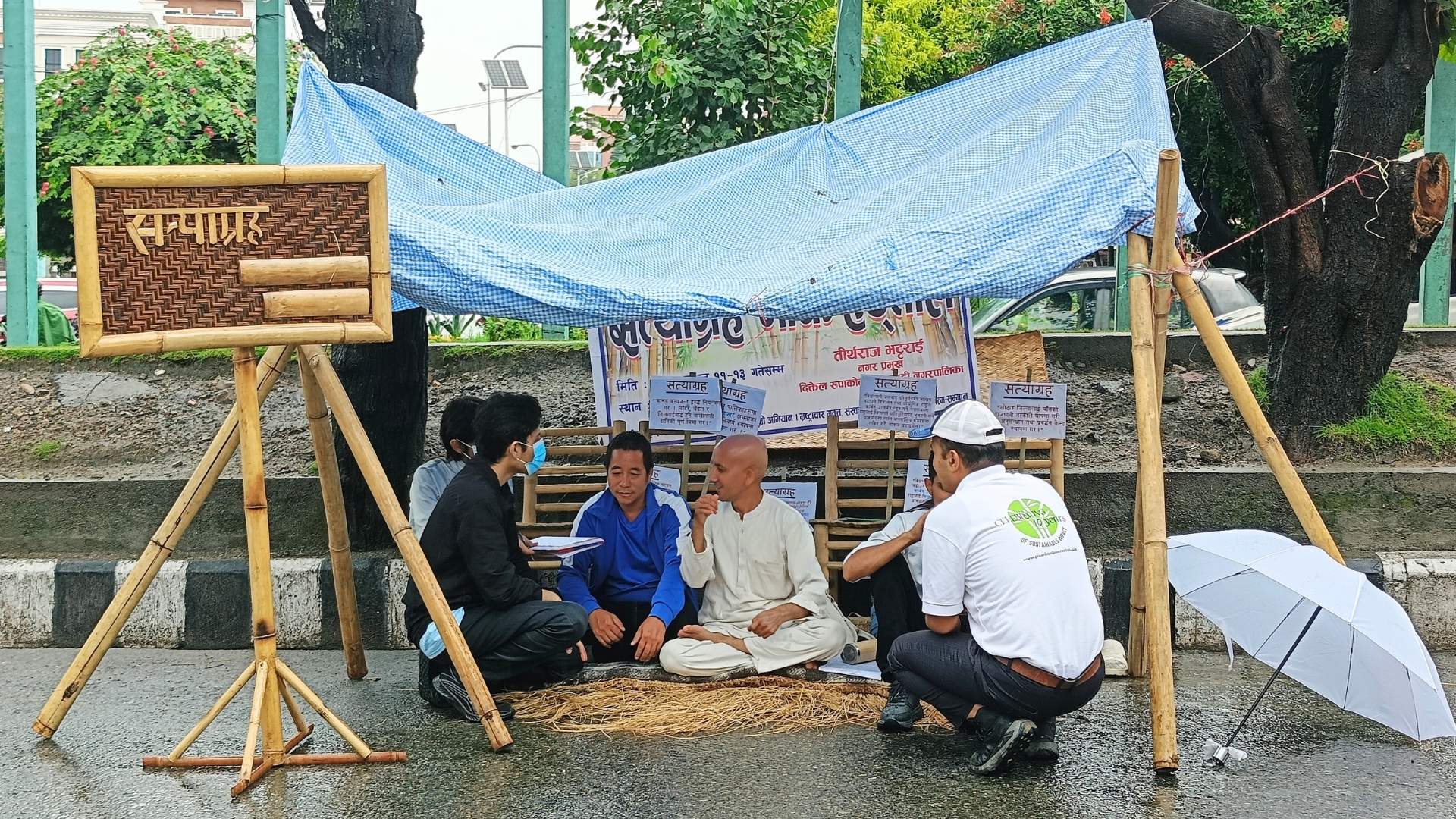
“What does the government lose by making a policy?” Bhattarai questions, with demands spanning a wide range of national concerns:
His demands also reflect frustration over the federal government’s inaction on local initiatives. Earlier this year, Bhattarai’s municipality hosted the First National Bamboo Conference, which declared Khotang the “Capital of Bamboo” in the presence of provincial and federal officials. That declaration, he says, has yet to receive formal federal recognition.
That delay reflects a broader policy gap. In December last year, the Ministry of Industry, Commerce and Supplies had introduced a directive mandating public entities to use Nepal-made products in their procurements. But despite its potential as a sustainable resource, bamboo was absent from the list of items outlined in their schedule for building materials.
The private sector has echoed the mayor’s call. Pranav Pradhan, managing director of Green Bamboo Creation, said Nepal’s bamboo market—estimated at NRs 75 to 100 crores annually—remains underutilised due to regulatory hurdles, particularly the absence of bamboo in the national building code. As a result, eco-friendly infrastructure projects cannot obtain building permits or access credit, pushing builders toward conventional materials.
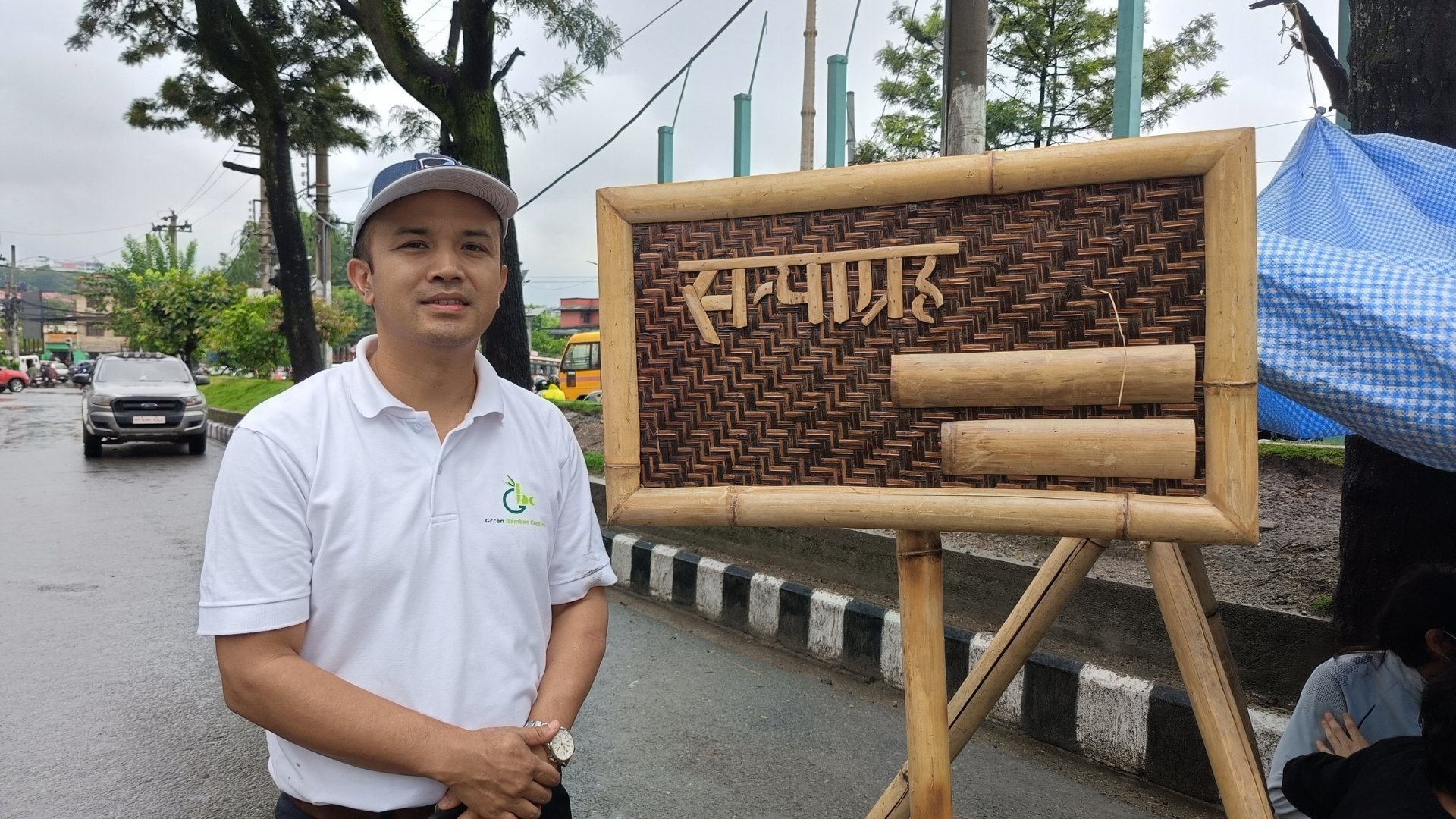
“Bamboo consumption is rising, and we’ve seen efforts from small enterprises to large industries trying to capitalise on it. But each faces its own challenges,” he said. “We’ve been trying to get their attention for over a year and a half. But with no one listening, we’ve been left with no choice but to act.”
Pradhan argues that promoting bamboo would not only be environmentally friendly but would also channel money directly into the rural economy, as 100% of the raw material comes from Nepali farmers.
“This is not about more budget,” Mayor Bhattarai stated. “It’s about policy. The government must take responsibility for what happens next.”
As of now, there has been no official response from the federal government regarding the mayor’s demands.
Read More Stories

NEPSE falls nearly 75 points as market sentiment wavers
The stock market was unable to maintain the gains seen on Tuesday, slipping...
India has begun its long-delayed population census. Here's why it matters
India has begun the worlds largest national population count, which could reshape welfare...
The United Nations has called on Israel to repeal a law passed by...


Business + Finance + Economy + Tech + Environment + Nepal & South Asia + In-depth Analysis + News + Investigation + Research + Expert Opinion + Anatomy of Complex Issues.