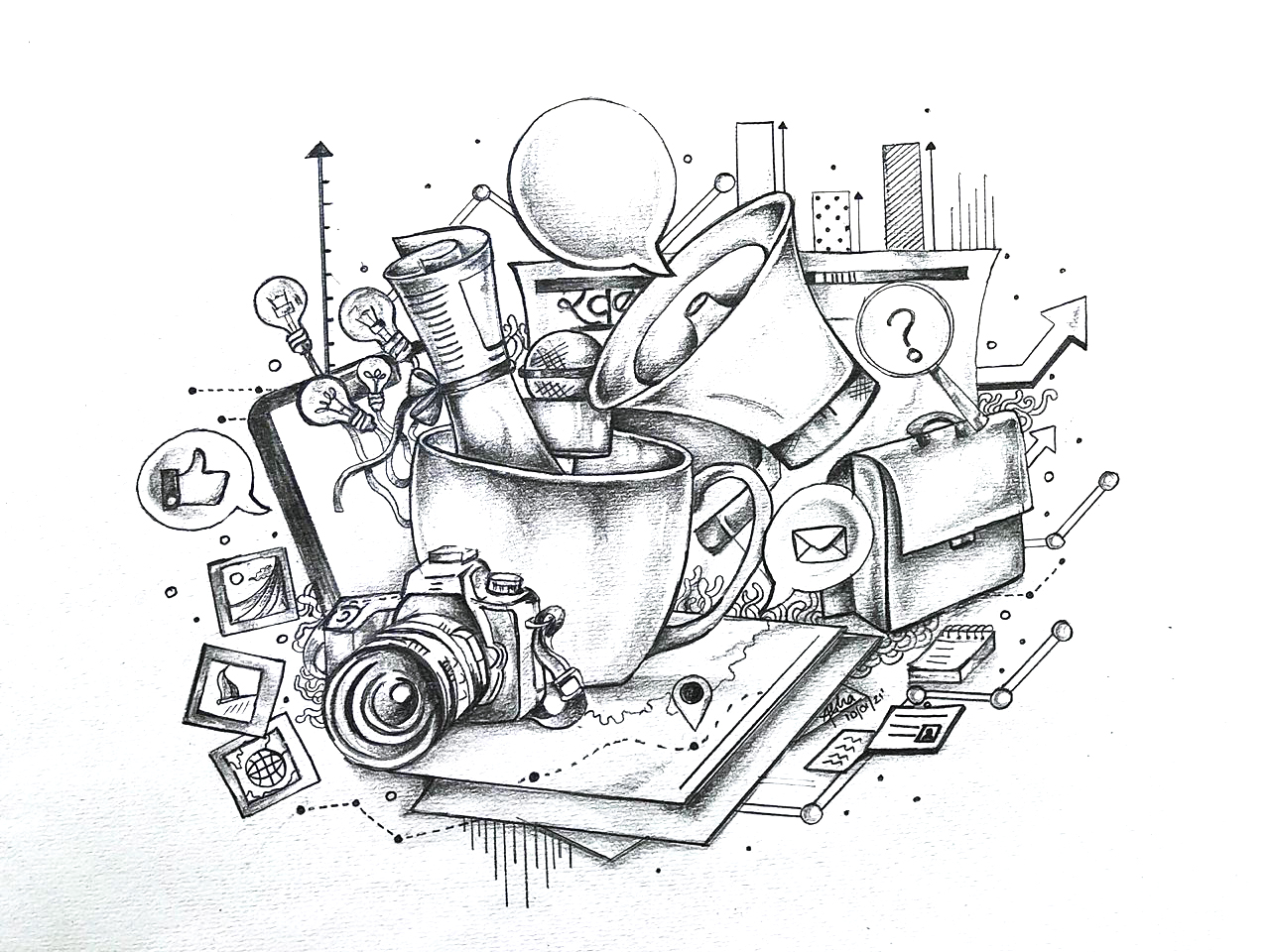
Mobocracy | Populism | social media outrage | moral verdicts
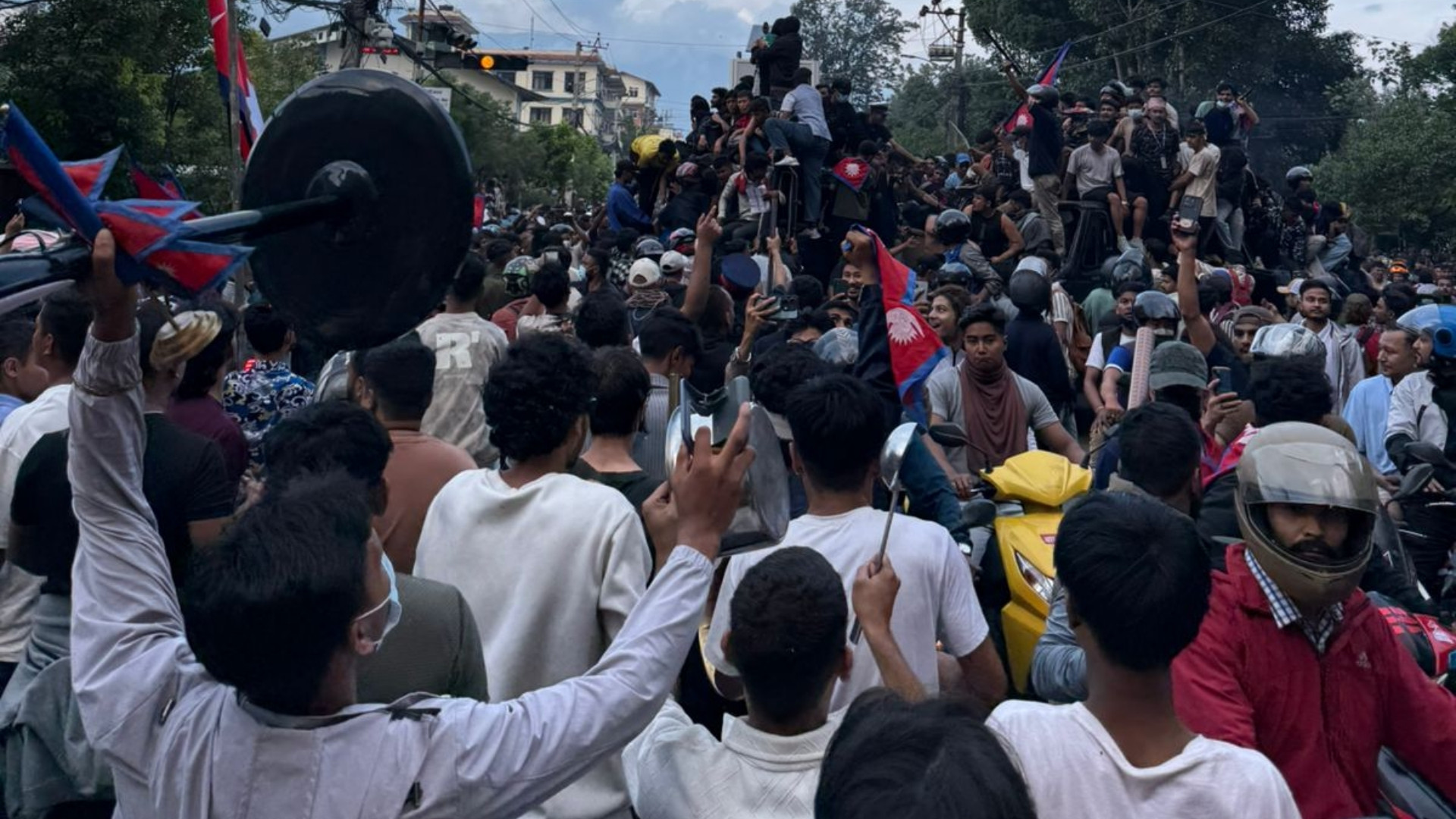
Nepal formally remains a democratic republic. We vote regularly, governments change through parliamentary arithmetic, courts function and the constitution still stands. Yet beneath this constitutional surface, an uneasy question keeps returning: has democracy in Nepal begun to drift towards mob rule?
Whether Nepal's democracy has quietly slid into mobocracy is not a question with a neat, definitive answer. It depends on perspective, evidence and interpretation. Yet the question itself has become unavoidable in recent times, as street pressure, viral outrage and social media trials increasingly shape public discourse, political decisions and even state behaviour.
This is not an accusation against people, nor a romantic defence of elites. It is a concern rooted in recent political behaviour, public discourse and the growing influence of unfiltered emotions over institutions, expertise and due process.
A new form of mobocracy has emerged in Nepal, driven by social media. This phenomenon distorts values by portraying unrighteousness as virtue and virtue as unrighteousness.
The new mob: Digital, fast and unaccountable
In contemporary Nepal, mobocracy rarely appears only as physical crowds on streets. A newer and more powerful form has emerged through social media. Online outrage travels faster than facts and moral judgement is often delivered before evidence or due process. In this ecosystem, unrighteousness can be framed as virtue and virtue as betrayal. Complex policy debates are reduced to slogans; institutions are pressured to respond not to law, but to trends. Public figures are declared guilty or heroic overnight, often without evidence, context or accountability.
This is not democratic participation in its healthy form. Democracy depends on informed consent, institutional balance and respect for law and process. When decisions are shaped primarily by who shouts loudest or trends fastest, democracy risks slipping into mobocracy, a rule by collective impulse rather than collective reason.
Most of the recent controversies reveal this tension clearly. Governments hesitate not because of constitutional barriers, but because of anticipated public backlash. Institutions often appear more afraid of hashtags than of law.
The social media multiplier
Nepal's political culture has mostly been emotional, but social media has magnified it beyond control. Platforms reward outrage, not accuracy. Moral certainty travels faster than verified facts. A complex policy issue becomes a matter of instant loyalty: you are either "with the people" or "against them."
In this environment, virtue is often redefined. Patience is labelled weakness. Nuance is seen as betrayal. Those who ask for evidence are accused of defending wrongdoing. This inversion of values is one of the clearest symptoms of mob behaviour, where righteousness is measured by volume, not validity.
Plato's warning, Nepal's reality
More than two millennia ago, Plato compared the state to a ship caught in a storm. Everyone wants to steer. No one accepts discipline or possess expertise. The loudest sailor wins, not the most qualified navigator. The ship does not sink because of the storm, but because no one knows, or respects, navigation.
Plato observed this in democratic Athens, which ultimately executed Socrates by popular vote. His fear was not dictatorship imposed by force, but ignorance empowered by numbers. When popularity replaces wisdom, governance becomes performance. When applause decides leadership and votes decide truth, societies stop asking who is qualified and start asking who is liked.
Nepal's recent political experience echoes this anxiety. Demagogic promises, emotional nationalism and simplified enemies have often replaced serious debate on governance, economy and state capacity. Expertise is distrusted, institutions are accused of bias and anyone who urges patience or complexity risks being labelled anti-people. Political leaders increasingly speak in slogans rather than substance, because truth is harder to sell than hope.
Freedom without discipline
Democracy promises freedom, but freedom without discipline is fragile. Nepal today enjoys unprecedented expressive freedom, yet lacks a matching culture of accountability. Speech is free, but consequences are selective. Accusations are made freely, but retractions are rare. Emotional mobilisation is easy; institutional reform is slow and unpopular.
Plato warned that democracy decays when opinion replaces knowledge and emotion replaces reason. The next stage, he said, is chaos, followed by a desperate search for order. History suggests that societies exhausted by disorder often welcome strong authority, even at the cost of freedom.
Nepal's frequent calls for "strong leadership" and impatience with parliamentary process should be read carefully. They reflect frustration, but also signal how quickly democratic fatigue can turn into authoritarian temptation.
Are all opinions equal?
Socrates argued that not all opinions deserve equal weight. One would not allow an untrained stranger to perform surgery simply because he demanded it loudly. Then why should running a complex state require less expertise?
Democracy gives equal voting power to the informed and the indifferent. That is its moral strength, and its structural weakness. The result is politics driven by persuasion rather than competence. Leaders are rewarded for telling people what they want to hear, not what they need to hear.
Nepal's repeated cycles of unrealistic promises, economic mismanagement and policy reversals illustrate this clearly. Elections change faces, but not capacity. Popularity triumphs over preparedness.
Nepal's choice
Democracy does not always select the best leader. It often selects the best performer. When capable people withdraw from public life in frustration, manipulation fills the vacuum. As Plato warned, the penalty for refusing to govern is being governed by someone inferior.
Nepal is not doomed. Its democracy has not collapsed. But it is under strain, not from enemies of democracy, but from its careless use. Democracy does not usually die through coups. It erodes through applause, shortcuts and the gradual replacement of reason with rage, institutions with impulses and citizenship with fandom.
The choice before Nepal is not between democracy and authoritarianism. It is between a democracy anchored in institutions, protecting dissent, valuing expertise and critical thinking, or one driven by emotion, spectacle and mobs.
The sea is rough. The ship is large. Everyone has a voice. But unless we relearn the value of knowledge, restraint and discipline, shouting directions will not save us from the rocks.
Read More Stories

NEPSE falls nearly 75 points as market sentiment wavers
The stock market was unable to maintain the gains seen on Tuesday, slipping...
India has begun its long-delayed population census. Here's why it matters
India has begun the worlds largest national population count, which could reshape welfare...
The United Nations has called on Israel to repeal a law passed by...


Business + Finance + Economy + Tech + Environment + Nepal & South Asia + In-depth Analysis + News + Investigation + Research + Expert Opinion + Anatomy of Complex Issues.