Research from Rural Nepal | Agricultural Loss | Child Labour | Brick Kiln & Carpet Factory
“Earlier, spraying pesticides once or twice was sufficient, but now even spraying three times is not enough to control pests,” said a 54-year-old male farmer from Rautahat. Another, aged 38, described watching his corn and rice yields fall by three-quarters, with similar declines in millet and buckwheat.
Farmers in the district have begun to abandon corn. “People stopped planting corn because of pests,” a local representative told researchers.
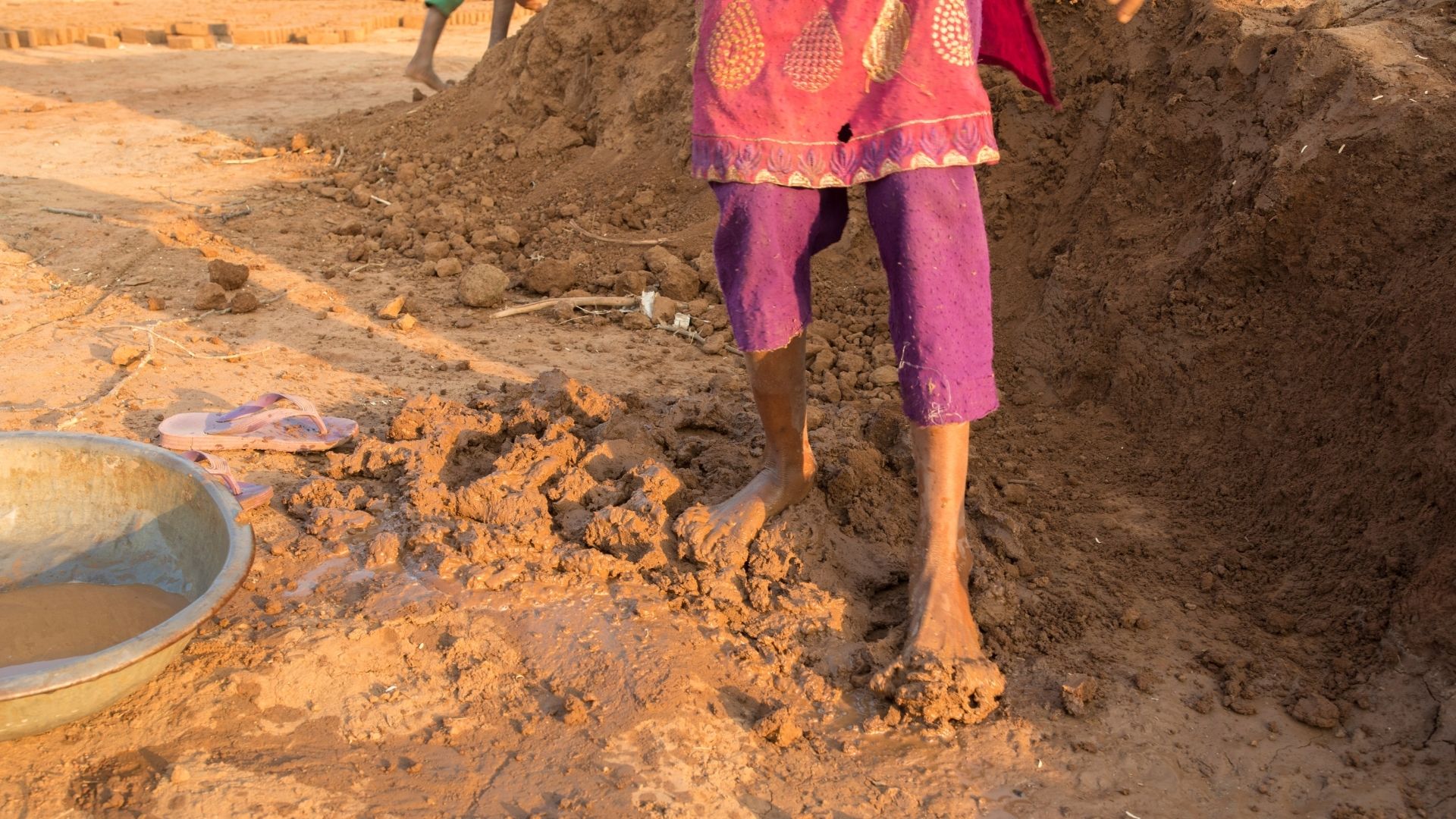
These testimonies are among dozens gathered in a new study revealing how climate change is placing growing pressure on rural livelihoods across Nepal, contributing to the rising number of adults and children seeking work in the country's carpet factories and brick kilns.
The study, jointly conducted by US-based GoodWeave International and Nepal-based New ERA, titled ‘From Risk to Resilience: How Climate Change is Deepening Child and Forced Labor in Nepal, and what to do about it’ connects the dots between climate shocks, livelihood collapse, and labour exploitation in two of Nepal’s most hazardous sectors—carpet factories and brick kilns.
The climate–labour connection
The study focuses on eight climate-vulnerable districts, Sindhupalchowk, Kavrepalanchok, Makwanpur, Ramechhap, Sindhuli, Sarlahi, Rautahat, and Bara, which have long been a steady source of migrant workers, including children, to Kathmandu’s carpet and brick industries.
In these communities, worsening droughts, pest infestations, landslides, and floods have eroded agricultural productivity and income. As crops fail, families are forced to migrate, often into exploitative labour arrangements.
Of the 1,023 people surveyed, including parents of current and former child labourers, adult brick and carpet workers, and female-headed households, 35% said that climate events influenced their or their children’s decision to work in these sectors, while 17% said climate stress played an extreme role.
Brick workers were the most affected. Nearly three-quarters (73%) said changing climate patterns factored into their migration decisions, and almost half (48%) called the influence “extreme.” Respondents most often cited prolonged drought, pest infestations, floods, and landslides as the most destructive events.
“Every morning, migrant [labourers] from rural Nepal go to work in carpet factories and brick kilns... Many are children earning money to support their families,” the report notes.
When climate stress pushes children into labour
The study illustrates how collapsing rural economies feed into Nepal’s long-standing problem of child and forced labour, still prevalent despite legal prohibitions.
“The production has decreased by about three out of four parts… in both corn and rice yields,” said a 38-year-old male farmer from Rautahat. “We used to sell harvest for income, but now we barely produce enough for ourselves,” echoed a 38-year-old female farmer from Sindhuli.
For many families, migration is no longer a choice but a survival strategy. “Those who do not have enough food to last the whole year have been affected the most,” said a 28-year-old female farmer from Makwanpur. “To buy rice, they have to weave carpets. That is the only skill they have; they do not have other options.”
The Government of Nepal deems both carpet weaving and brick making “hazardous work,” meaning children under 18 are legally prohibited from engaging in them. Yet data from the International Labour Organisation and Nepal’s National Statistics Office in 2021 estimated that nearly 1.1 million children are engaged in child labour, about 200,000 of them in its worst forms. The US Department of Labor’s 2024 list of goods produced by child and forced labour includes Nepali bricks and carpets, underscoring continued risks of exploitation.
While the link between poverty and child labour is well known, the study provides rare empirical evidence of climate change acting as a new and intensifying driver.
Food insecurity, debt, and migration
Among surveyed households, 91% reported reduced agricultural production due to climate events, 80% lost income, and 46% lost farmland. Among households of child labourers, 28% ran out of food in the previous year, nearly seven times higher than in comparison households.
“When there wasn’t enough rain, our production dropped, and we had to buy rice from outside,” said a 17-year-old boy from Sindhuli, previously employed in a carpet factory. “My brothers used to send money to sustain the household.”
For others, migration came after exhausting all other means. “One person from our village went to work in a brick kiln for the first time this year,” recalled a 37-year-old female farmer from Makwanpur. “There was no rice or maize harvest, so he had no choice.”
Households that fell into debt because of climate shocks were 6.3 times more likely to attribute migration to climate change. Those who ran out of food were 5.9 times more likely to do so. Families with agricultural land were less likely to see climate as a factor.
A 15-year-old boy, previously in child labour, shared: “At home, we didn’t have enough to eat, so I felt the need to start earning. When I was in the fifth grade, I was 10 years old. I wanted to go to work mainly because there was not enough food at home.”
Changing landscapes, drying streams
Across all eight districts, respondents reported witnessing climate shifts firsthand. Meteorological data from 1994 to 2024 corroborate their observations: rainfall has become erratic, winters drier, and summers hotter.
“There’s no rain when it’s supposed to come. Even the sources of water are drying up. Our stream has no water anymore. We raise a few cows and goats, but they don’t have water to drink,” said a 47-year-old male farmer from Rautahat.
Bara, Sarlahi, and Makwanpur have seen sharp rises in summer temperatures and declining humidity. Rautahat alternates between floods and water shortages. Sindhuli and Ramechhap face emerging water stress, while Sindhupalchowk and Kavrepalanchok have recorded reduced winter rainfall and a greater risk of landslides.
“As temperature increased, even after using vitamins and medicines, cauliflower production was not possible,” said a 37-year-old female farmer from Rautahat. “The first and most important thing needed to cope with climate change is irrigation,” added a 28-year-old female farmer from Sarlahi.
The faces behind the statistics
The data expose structural inequality beneath the climate–labour nexus. Most affected households belong to Janajati and Dalit communities, already marginalised in access to land and education.
Among adult carpet workers, 79% never attended or dropped out of school early; for brick workers, that number rises to 74%. Nearly all child labour households earned less than NRs 186,000 ($1,328) a year, the lowest among surveyed groups.
Female-headed households, though not more severely impacted than others, also face compounding pressures. While remittances have boosted incomes, many still report food insecurity and limited access to adaptation resources.
A 14-year-old boy, previously in child labour, said: “The community should offer more support to people like my mother, especially single women. If everyone in the village comes together and builds a school, children won’t have to come all the way to work in carpet factories.”
A search for resilience
When asked how their resilience could be strengthened, three-quarters (74%) of respondents said they needed financial support such as credit, grants, or compensation to recover from climate losses. Nearly half (46%) called for training in alternative livelihoods, including vocational skills and drought-resistant farming.
“If families are given a foundation for livelihood or income generation, this issue can be resolved,” said a 47-year-old male ward chair from Sindhuli. “In such cases, children will not have to work for money.”
Local leaders and farmers also stressed adaptation. “The first and most important thing is irrigation,” said a farmer from Sarlahi. “Tree planting and forest conservation should also be prioritised,” added a 36-year-old female farmer from Rautahat.
A 31-year-old female ward chair from Sindhuli said, “If farmers are provided with new techniques and training in agriculture, they could improve their income, which would reduce the need for children to work.”
A child rights crisis in the making
The study concludes that the climate crisis is no longer only an environmental or economic concern. It is a human rights emergency.
“Climate change is not only an environmental issue, it’s a child rights issue,” the report warns. “As climate impacts intensify, children’s safety, education, and freedom are increasingly at risk.”
New ERA’s Dr Udbodh Rijal, Ganesh Sharma, and Ujjwal Upadhyay coordinated the fieldwork and authored the report. The research was funded by Minderoo Foundation’s Walk Free initiative.
The study is among the first to empirically trace how climate stress is deepening the cycle of child and forced labour in Nepal. It paints a grim picture of the future if nothing changes: a warming world where environmental degradation erodes livelihoods, and the poorest, especially children, bear the heaviest cost.
Read More Stories

NEPSE falls nearly 75 points as market sentiment wavers
The stock market was unable to maintain the gains seen on Tuesday, slipping...
India has begun its long-delayed population census. Here's why it matters
India has begun the worlds largest national population count, which could reshape welfare...
The United Nations has called on Israel to repeal a law passed by...


Business + Finance + Economy + Tech + Environment + Nepal & South Asia + In-depth Analysis + News + Investigation + Research + Expert Opinion + Anatomy of Complex Issues.