Federal Civil Service Bill Nepal | Cooling-off Period in Bureaucracy | Civil Service Politics
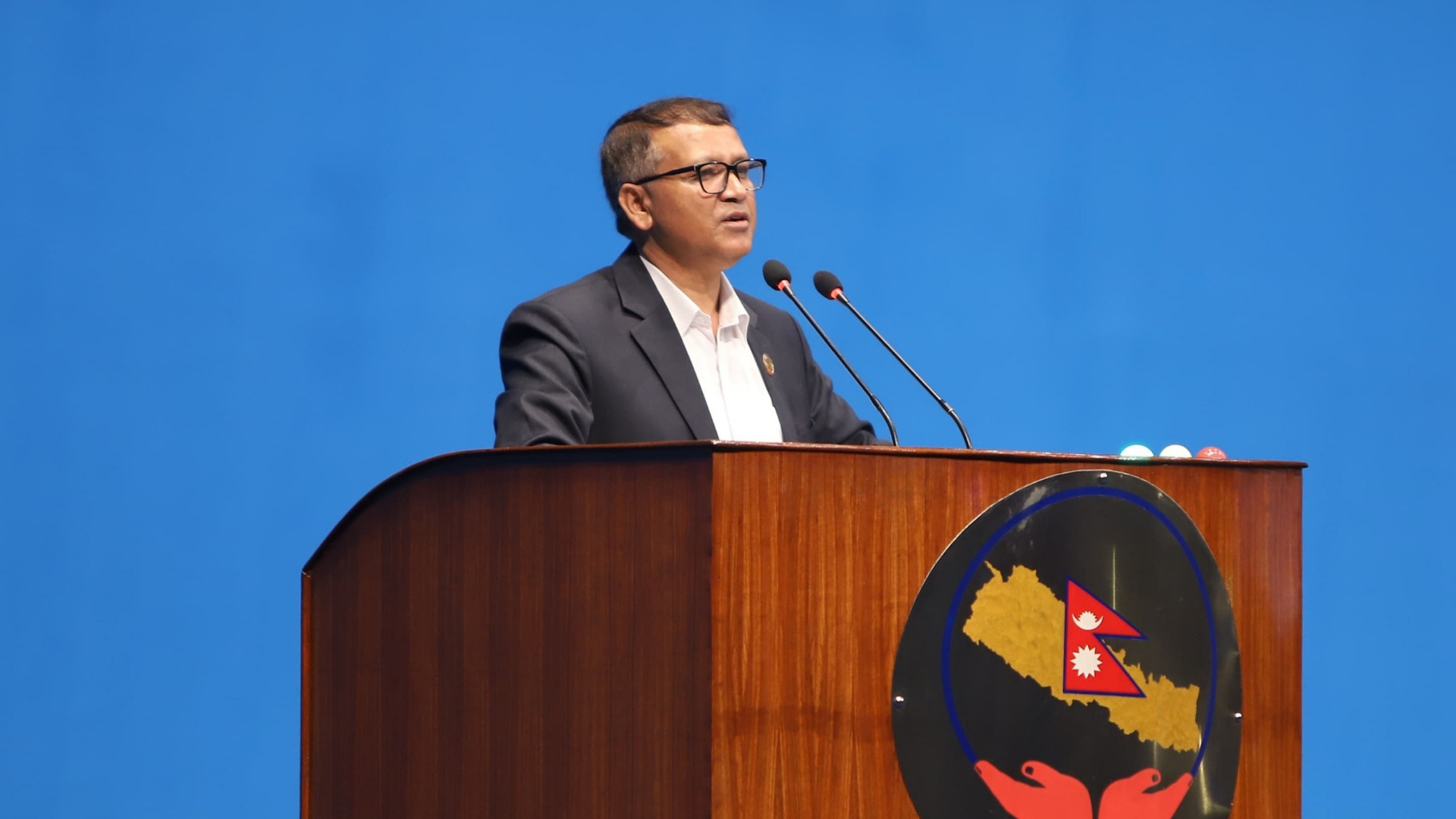
In mid-2025, the Parliament was working on a major governance reform through the Federal Civil Service Bill, 2024. This bill sets the rules for hiring, managing, and retiring civil servants. Among its provisions was one that particularly stood out—the cooling-off period.
This rule, included in Clause 82(4) of the bill, required former civil servants to wait two years before taking up positions in constitutional bodies, diplomatic missions, and state-run institutions.
The idea was to curb undue influence and politicisation in such appointments. The rationale was clear: to prevent conflicts of interest, protect institutional independence, and uphold the neutrality of the civil service.
Without such a guardrail, bureaucrats could walk straight out of powerful roles, often with insider knowledge and political proximity, and into equally influential positions where that past power could be misused. It risked creating a revolving door between bureaucracy and politics, blurring the lines between public service and political patronage.
Cooling-off periods are a global best practice designed to deter favour trading, protect oversight institutions from politicisation, and maintain public trust in government appointments.
But just before the bill reached the full House, a new line appeared.
Clause 82(5), quietly inserted, created a loophole. It essentially nullified the cooling-off requirement, allowing high-ranking bureaucrats to take political or appointed roles immediately after retirement.
Who added the clause? No one knows
What followed was confusion and suspicion.
Lawmakers, including those in the State Affairs and Good Governance Committee that steered the drafting of the bill, claimed to be unaware.
Its Committee Chair Nepali Congress lawmaker Ram Hari Khatiwada publicly stated, “We were confident the cooling‑off period remained intact when the Parliament passed the bill. But now, it seems someone inserted the word ‘except’—misleading lawmakers.” The version of the bill that passed through the committee wasn’t the version forwarded to the House of Representatives for voting, he admitted.
Even the then Minister of Federal Affairs Raj Kumar Gupta reportedly denied knowing how or when the new clause was inserted. He instead alleged the addition was deliberate, stating someone “instructed the person who held the pen” in an interview with the parliamentary probe committee.
Multiple media reports revealed that there was high-level lobbying to remove the cooling-off period. Senior bureaucrats, including Chief Secretary Ek Narayan Aryal, met with the Prime Minister, Speaker of the House and top political leaders. They argued that the cooling-off rule was unconstitutional and discriminatory.
Meanwhile, many junior and mid-level bureaucrats voiced concerns that exempting senior officers would tighten the already congested promotion ladder within the civil service, favouring elites and stalling merit-based growth.
A special parliamentary probe, and what it found
The backlash led to the formation of a seven-member special parliamentary probe committee in early July 2025, chaired by Nepali Congress lawmaker Jeevan Pariyar, to investigate how the clause made it into the final draft.
After 29 days of investigation, the committee presented its findings to the House on August 5. The probe concluded that the insertion of Clause 82(5) was deliberate, not a clerical error or editorial mishap. The added line, it found, had not passed through the committee but was retained in the version sent for approval—undermining both process and trust.
While the report did not recommend disciplinary action, it held Committee Chair Khatiwada and Committee Secretary Suraj Kumar Dura morally responsible for the failure to ensure due parliamentary process, and failing to vet the final bill version, respectively.
It also flagged a broader institutional breakdown, pointing to weak coordination between drafters, lack of clause-by-clause review, and the absence of procedural safeguards like a keeling schedule to prevent unauthorised changes.
A keeling schedule is a document used in English law to show how an existing statute would look after proposed amendments are incorporated. It’s essentially a redlined version of the original act, displaying deletions as struck-through text and additions as italicised text.
The report also exposed how senior bureaucrats had lobbied intensely behind the scenes. Chief Secretary Aryal and others had approached political leaders to oppose the clause, raising questions about procedural integrity and executive overreach.
Meanwhile, CPN‑UML lawmakers formally submitted amendments to remove the cooling-off provision entirely, while other parties proposed tweaking it—some seeking to restore it fully or even lengthen it to three years.
The rule was restored, but damage was done
Eventually, amid mounting public and media pressure, Clause 82(5) was removed. The original Clause 82(4) with the two-year cooling-off period remained intact. The amended bill then proceeded to the National Assembly without the controversial exemption.
But by then, the episode had already triggered a broader debate—about ethics, transparency, and the silent levers of elite influence within Nepal’s bureaucracy.
Real-world cases: When the line blurs
The controversy gained deeper relevance with the release of a Special Court verdict in late July that revisited the case of Prem Kumar Rai, former Home Secretary, who was appointed as Commissioner of the CIAA in December 2020 and has served as its chief since February 2021.
His appointment was widely seen as politically influenced due to his proximity to the then Prime Minister KP Sharma Oli.
The court ruling from December 2024 on the infamous wide-body aircraft procurement case questioned why Rai, who chaired the oversight subcommittee as Secretary at the Ministry of Culture, Tourism and Civil Aviation and Nepal Airlines Board Chair, was spared investigation while others were convicted.
It directly questioned his moral and legal authority to lead the anti-corruption body, reinforcing why cooling-off periods are critical.
This wasn’t an isolated case.
These appointments bypassed institutional professionals, reflecting how Nepal’s constitutional bodies, foreign missions, and other state institutions have turned into landing pads for politicians, loyal bureaucrats, and politically affiliated technocrats.
A system ripe for manipulation
The controversy is about more than one clause or one official. It reveals how fragile lawmaking can be in a country where powerful interests can rewrite legislation behind closed doors, and no one steps forward to claim responsibility.
It also highlights how deeply entangled the top layer of the country’s civil service has become with political patronage. Loyalty, not performance, increasingly shapes career trajectories.
This is not a technical debate. It’s a political one. And it matters for anyone aspiring to a career in governance, development, or public accountability.
When rules like the cooling-off period are weakened, it sends a dangerous signal: influence beats integrity.
What comes next?
The bill is now with the National Assembly. Amendments have already been proposed—some to tweak the clause, others to lengthen the waiting period to three years.
But the larger question remains: can Nepal build systems that protect public institutions from political expediency?
For a generation of young Nepalis hungry for clean governance, this is more than parliamentary theatre. It’s a reminder that power doesn’t always announce itself. Sometimes, it moves quietly, between clauses.
And the job of watching it—and pushing back—belongs to all of us.
Read More Stories

NEPSE falls nearly 75 points as market sentiment wavers
The stock market was unable to maintain the gains seen on Tuesday, slipping...

India has begun its long-delayed population census. Here's why it matters
India has begun the worlds largest national population count, which could reshape welfare...
The United Nations has called on Israel to repeal a law passed by...


Business + Finance + Economy + Tech + Environment + Nepal & South Asia + In-depth Analysis + News + Investigation + Research + Expert Opinion + Anatomy of Complex Issues.