Public Holiday | Blanket Ban | Governance | HoR 2026 | Holi Season
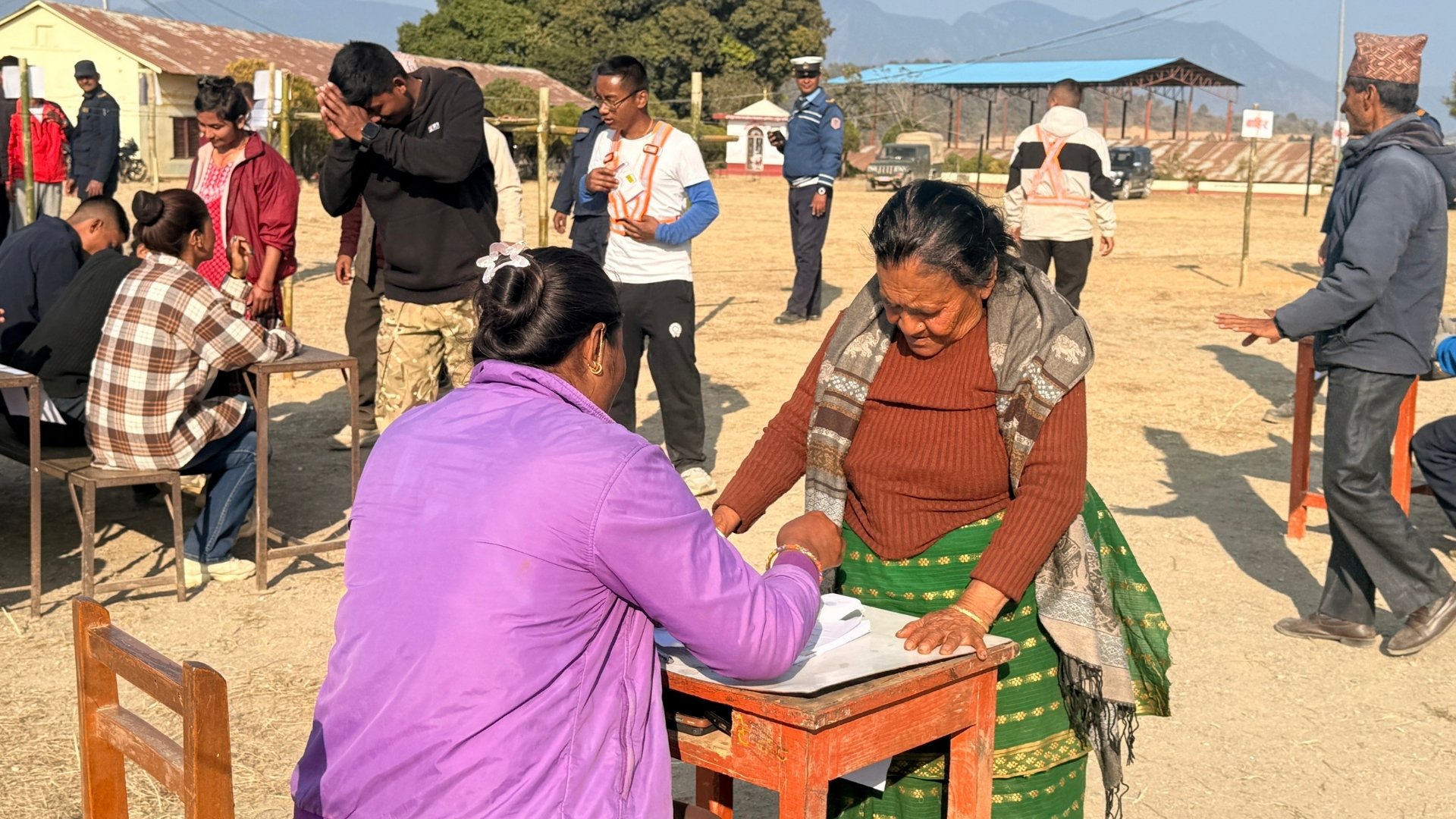
Nepal is gearing up for the March 5 elections, and the government’s solution to every logistical headache seems to be the same: declare a holiday. Polling day itself is a holiday, of course, but March 4 and 6 have been added as well. It’s the kind of shortcut that gives the impression of citizen care, but in reality, it is easier than actually managing systems. Take public transportation.
During Dashain and Tihar, hundreds of thousands of people flee Kathmandu Valley, cramming buses, microbuses and jeeps beyond capacity just to reach family homes. Tickets are scarce, journeys are long, yet at least people have a choice.
Come election season, the government’s plan to stop all public and private transport, except for a handful of emergency vehicles and those with special passes, on polling day is drastic. Suddenly, the everyday struggle of a voter living outside their constituency turns into a near-impossible puzzle.
Six months were more than enough to design voting arrangements for citizens residing within the country but outside their electoral constituency. Internal migration is no secret. Students, workers and renters move districts for study and employment. Yet, instead of facilitating absentee or out-of-district voting, the state subtly chose restriction over reform.
This blanket restriction is not just inconvenient; it may actively discourage citizens from voting. For those whose polling booths are far away, or for voters who have moved into another electoral constituency, the only realistic option becomes walking on foot. Many of them may simply stay home.
What is meant to ensure “order and security” risks suppressing participation in the most fundamental act of democracy.
The logic of extra holidays is similarly thin. This year, Holi falls on March 2 and 3. Holi is itself a major travel period, with people returning to their hometowns to celebrate. In that context, designating March 4 as an additional nationwide holiday makes little practical sense. Travel has already happened for the festival.
For private sector firms in particular, granting leave to employees who are voters in another district should be a discretionary matter between employer and employee. The government’s blanket intervention removes flexibility and imposes uniformity where nuance would suffice. Schools close, businesses pause, and the ordinary rhythm of life is suspended, all in the name of administrative caution.
Then there is the alcohol ban.
The District Administration Office in Parsa has already moved beyond recommendation. On February 26, it announced a prohibition on the sale, distribution and consumption of alcohol from February 27 until the final election results are declared.
The notice cites the need to ensure a “clean, fair and fear-free” election environment, referencing guidance from the Election Commission Nepal, directives from the Home Ministry, and a decision of the District Security Committee. In other words, what was framed nationally as a recommendation has, at least in Parsa, already materialised into an enforceable order.
Local businesses have pushed back. The Parsa Liquor Entrepreneurs Association issued a public statement the same day, expressing “serious concern” over the decision.
The association argues that liquor businesses are already financially weakened by the country’s economic slowdown. It reminds the state that alcohol sales are a significant contributor to tax revenue.
More pointedly, the timing collides directly with Holi, one of the biggest annual sales periods for liquor traders. Many entrepreneurs reportedly took loans from banks, cooperatives and informal lenders in anticipation of festival demand. To impose a shutdown a week before Holi, they argue, is to push already fragile businesses toward crisis.
If shops cannot operate, they ask, how are loans, bank installments, household expenses and taxes to be paid? Who bears that responsibility?
These are not trivial questions. They expose the economic ripple effects of what appears, on paper, to be a simple law-and-order measure.
The Election Commission’s broader proposal for a nationwide alcohol ban seven days before polling until final results are declared has not yet been universally enforced. The alcohol ban raises practical and political questions. By recommending such sweeping rules, the commission is making life harder for police, who are already stretched thin and managing multiple election duties. In practice, the matter will likely become “grey,” as many businesses may continue selling despite the prohibition, creating confusion and undermining the very order the rule is supposed to ensure.
The pattern is hard to ignore: when the government chooses holidays as a shortcut, regulatory bodies seem encouraged to imagine equally sweeping prohibitions.
Instead of demonstrating that systems, transport, security and voter facilitation, are robust enough to function, the state appears to prefer shutting things down. This is not security; it is administrative convenience masquerading as public interest.
Many countries conduct elections with only the polling day off, if at all. Systems are designed to operate under normal conditions, not exceptional suspension. The test of governance is not how effectively it can halt movement, close shops and declare holidays, but how confidently it can keep society functioning while safeguarding the vote.
Nepal’s elections should be about enabling citizens, not confining them. Voters deserve freedom to move, options to exercise their rights and systems that work for them. Extra holidays, transport bans and sweeping alcohol restrictions may project a “sense of security,” but they also risk eroding participation, burdening businesses and normalising shutdowns as a substitute for governance.
At the end of the day, it is easier to declare a holiday than to manage a system. But elections should be about democratic participation, not administrative convenience.
Read More Stories

NEPSE falls nearly 75 points as market sentiment wavers
The stock market was unable to maintain the gains seen on Tuesday, slipping...
India has begun its long-delayed population census. Here's why it matters
India has begun the worlds largest national population count, which could reshape welfare...
The United Nations has called on Israel to repeal a law passed by...


Business + Finance + Economy + Tech + Environment + Nepal & South Asia + In-depth Analysis + News + Investigation + Research + Expert Opinion + Anatomy of Complex Issues.