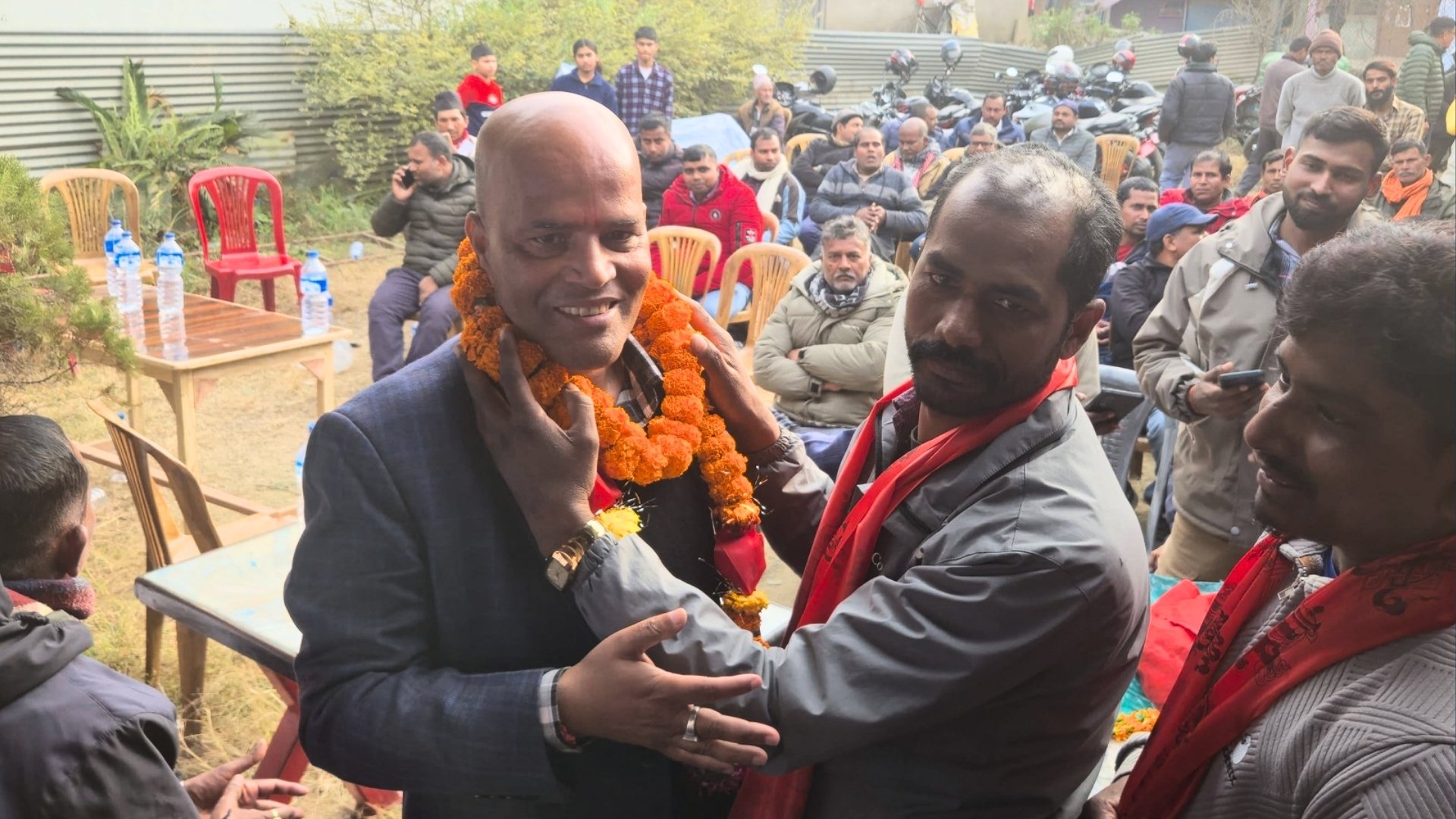
Dr Amresh Singh is a politician and academic whose public career bridges higher education, Madhesh-based activism, and national parliamentary politics. He has a PhD in International Relations from Jawaharlal Nehru University. Prior to full-time politics, he served as a professor at Amrit Science Campus, lectured at various institutions, and was a board member of Gorkhapatra (1997). His professional background combines academic research, political strategy, and policy advisory roles.
Singh’s early political engagement traces to the Madheshi rights movement. He was affiliated with the Madheshi Janaadhikar Forum (MJF) until 2008, participating in early Madhesh activism before transitioning into mainstream national politics. He later joined the Nepali Congress, where he remained from 2013 to 2022.
He has held elected office across three national electoral cycles:
In early 2026, Singh joined the RSP.
Singh’s legislative identity is anchored in representation, transparency, decentralisation, and institutional accountability. During the 2015 constitution-drafting process, he formally registered a nine-point note of dissent advocating a population-based representation and a greater inclusion of Madhesi and marginalised communities.
In parliamentary practice, including his work on the State Management and Good Governance Committee, he emphasised financial transparency and stronger oversight of public expenditure, raising concerns about corruption and accountability gaps.
Additionally, he has consistently opposed what he describes as “Kathmandu-centric” governance, calling for equitable budget allocation across all 77 districts, particularly for peripheral constituencies such as Sarlahi-4.
His fiscal position includes caution against unsustainable foreign borrowing for non-productive projects, favoring economically productive public investment instead. He has also proposed merit-based reforms in health and education, including reducing partisan influence in appointments and restructuring school governance mechanisms.
Following his move to the RSP in 2026, he aligned with the party’s “Citizen Contract” (Nagarik Patra) framework, promoting time-bound public service delivery and enforceable accountability for administrative delays.
For the upcoming elections, Singh has framed a youth-led “Gen-Z” governance agenda centered on renewing political culture and institutional practice. He positions himself against what he describes as entrenched “old-school” politics, advocating generational transition within party structures and public institutions.
Singh has also been involved in several controversies. During the 2015 constitutional process, he received criticism and a formal warning from Nepali Congress leadership over comments implying potential national instability if Madhesi demands were ignored.
In May 2023, he removed his shirt and vest during a House session to protest being denied time to speak on corruption, drawing criticism for breaching parliamentary decorum.
In June 2025, during a budget debate, he sarcastically suggested leasing districts to foreign powers due to perceived development neglect; the remark prompted backlash and was ordered to be expunged from the record.
He has also faced accusations of political opportunism for moving across parties, from MJF to Nepali Congress, then serving as an Independent after not getting a ticket to contest the 2022 election, and later joining the RSP. In a recent RSP convention, in strongly worded remarks, he said that if Balen did not become prime minister, he would self-immolate on the spot in the rally area.
Top priority if elected
Major concerns
Priority change for one-term
Read More Stories

NEPSE falls nearly 75 points as market sentiment wavers
The stock market was unable to maintain the gains seen on Tuesday, slipping...
India has begun its long-delayed population census. Here's why it matters
India has begun the worlds largest national population count, which could reshape welfare...
The United Nations has called on Israel to repeal a law passed by...


Business + Finance + Economy + Tech + Environment + Nepal & South Asia + In-depth Analysis + News + Investigation + Research + Expert Opinion + Anatomy of Complex Issues.