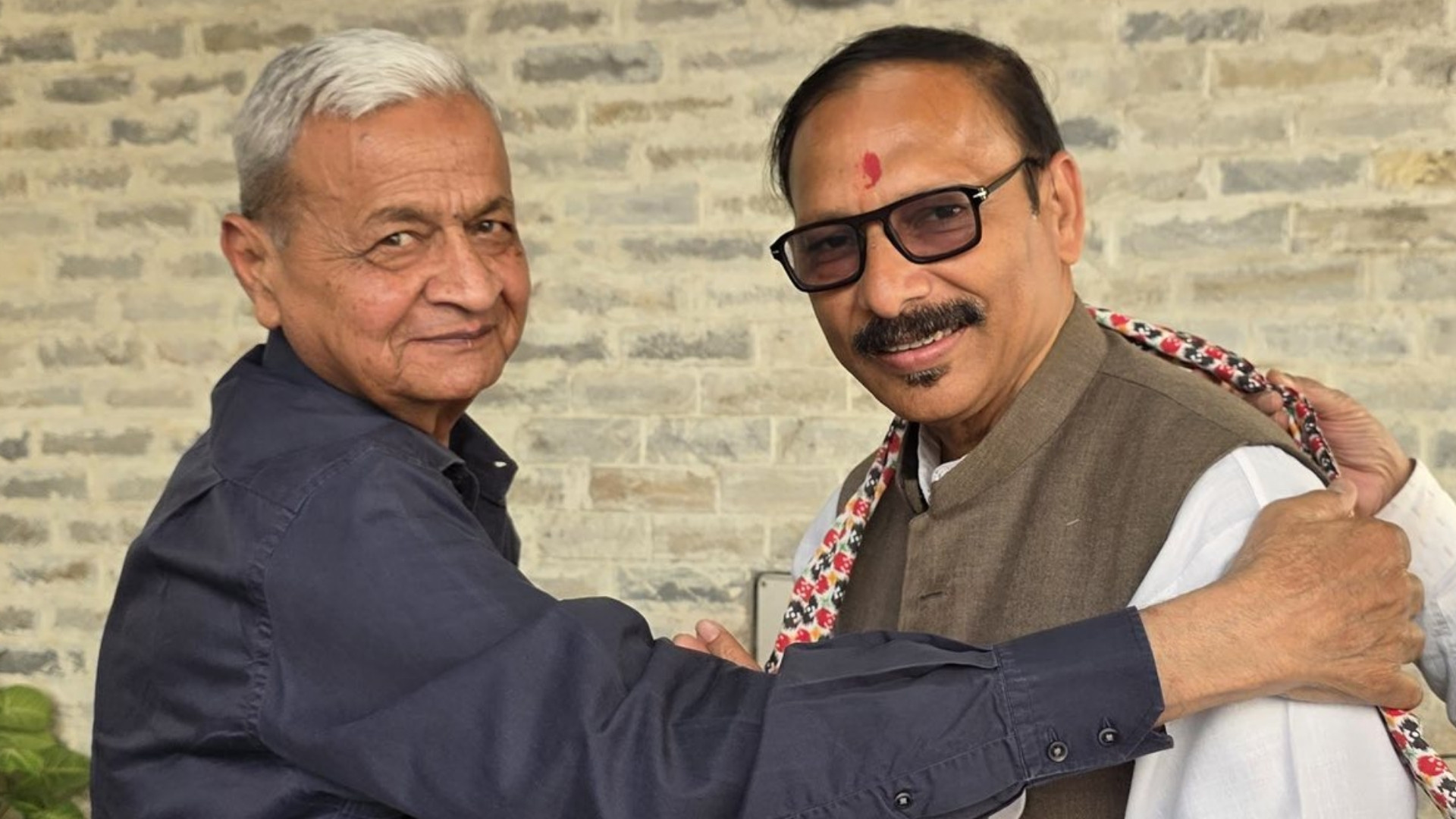
Ashok Kumar Agrawal is a businessman and industrialist affiliated with the Janata Samajwadi Party (JSP). He holds a Bachelor of Commerce degree from Bihar University, India, and brings over 30 years of industrial and trading experience to public life. He currently serves as an Executive Committee Member (Provincial Group) of the Federation of Nepalese Chambers of Commerce and Industry (FNCCI) and previously chaired the FNCCI Road Transport & Transit Committee (2017–2020). He has also led the Birgunj Chamber of Commerce & Industries and is a Founder Member of the Intermodal Development Board in Nepal.
Ashok is the Chairman of Yash Group of Companies and Director of Yash Petrochemical Company. For his contributions in trade and transit, he received an outstanding award from Nepal’s Customs Department and an honor from the Federation of Indian Chambers of Commerce and Industry (FICCI). While he has not held elected or legislative office, his profile reflects extensive engagement in industrial, trade, and transit policy platforms.
[Recommended: What’s inside Janata Samajwadi’s election manifesto?]
Ashok argues that the country has long been steered by a limited circle of interests, a pattern he believes must end. He is contesting the upcoming elections on a bold manifesto which requires rigorous advocacy and concrete legislative action. His core agenda includes advocacy for Birgunj Centered economic prosperity. He advocates for transforming Birgunj into an “economic capital”, shifting it from a transit point to a self-sustaining industrial hub.
This includes infrastructure upgrades along the Birgunj–Pathlaiya Industrial Corridor and streamlined customs processes, including upgrading the Sirsiya Dry Port and the Integrated Check Post (ICP) to reduce local traffic congestion for residents of Parsa-2. He further emphasises industrial expansion, logistics hub development, and regionally balanced economic growth.
He advocates for agricultural reform through improved value chains, structured market linkages and state guaranteed minimum market prices for produce to stabilize farming income. Additionally, he proposes extensive cold storage infrastructure and incentives for youth-led agri-enterprises.
His manifesto also emphasises efficient digital governance, including the introduction of a Key Performance Indicator (KPI)–based performance system for bureaucrats and the establishment of a consolidated ‘one-window’ citizen service portal.
His education and health priorities focus on school–industry integration along with skill based training and strengthening local health posts with prevention-oriented services.
Given his extensive corporate background, potential concerns around conflict-of-interest have been noted.
Sidebar
Top priority if elected
Major concerns
Previous experiences that best prepare him for the role
Definition of good leadership
Read More Stories

NEPSE falls nearly 75 points as market sentiment wavers
The stock market was unable to maintain the gains seen on Tuesday, slipping...

India has begun its long-delayed population census. Here's why it matters
India has begun the worlds largest national population count, which could reshape welfare...
The United Nations has called on Israel to repeal a law passed by...


Business + Finance + Economy + Tech + Environment + Nepal & South Asia + In-depth Analysis + News + Investigation + Research + Expert Opinion + Anatomy of Complex Issues.