Religious Tensions | Religious Politics | Rautahat | Birgunj | Terai-Madhes | Madhesh
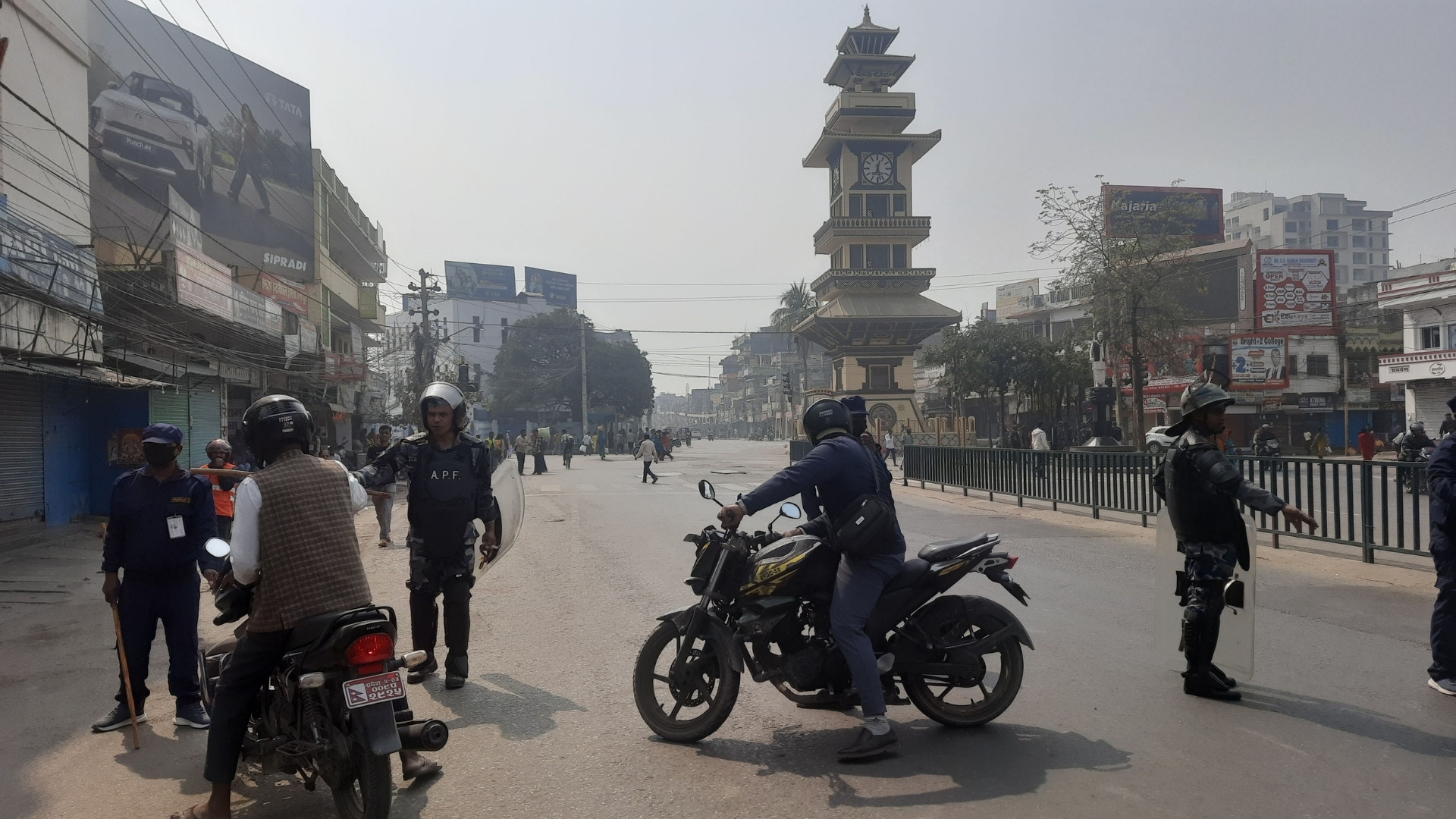
On Monday morning, the District Administration Office in Birgunj imposed an indefinite curfew across major parts of the metropolis, calling it a “preventive and precautionary measure” after tensions flared overnight in Ward 11, Shreepur.
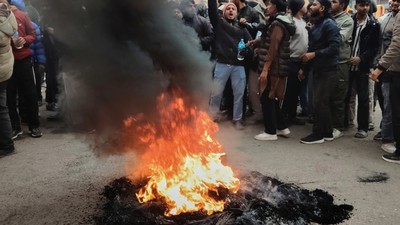
According to Chief District Officer Bholanath Dahal, the unrest began Sunday evening with what he described as a dispute over parking. Stones were pelted. Local media reported that tyres were set ablaze.
Though the identities of those directly involved in the parking dispute remain unconfirmed, the altercation soon took a communal turn. A group of youths identifying themselves as Hindus gathered in a Shreepur locality, alleging that Muslim youths had assaulted them. Security forces were immediately mobilised.
By late night, the alleys had quieted. However, the administration stated that intelligence indicated groups from both communities were preparing protest rallies that could converge in major parts of the city, thereby risking confrontation.
“We imposed curfew as a preventive and precautionary measure,” CDO Dahal told the_farsight over the phone.
The order, however, has sparked criticism from residents and business leaders. Locals argue that shutting down large swathes of the city indefinitely, bringing economic, social and political activities to a standstill just a week before scheduled elections, was excessive.
Some contend that even if tensions lingered, the administration could have confined restrictions to the affected ward rather than paralysing the broader urban core.
They accuse authorities of defaulting to curfew instead of addressing underlying grievances.
A city on edge
Social activist Jai Sah described curfew as “medicine”, a temporary remedy that does not cure the disease. In his view, the administration has repeatedly relied on prohibitory orders while failing to engineer durable, institutional solutions.
Sah questioned the effectiveness of the Samajik Sadbhav Samiti (Social Harmony Committee), a mechanism established by the administration that comprises representatives from various communities, political parties, and civil society. Similar agreements have been reached before, he noted, but implementation has faltered.
Instead, Sah argues for a broader accountability framework that formally involves elected representatives, Members of Parliament, Members of Provincial Assembly, mayors, deputy mayors, chairpersons, vice-chairpersons, and the District Coordination Committee, rather than leaving crisis management solely in the hands of rotating bureaucratic officials. While acknowledging possible legal limitations, he suggested that the CDO’s authority to ensure law and order allows room for practical, inclusive interventions.
His concerns extend beyond communal harmony. Birgunj is Nepal’s largest customs gateway and a major industrial and economic hub. “After the September protests, many investors pulled out,” Sah claimed. “If this pattern continues, the city will lose the very identity it stands on.”
Hari Gautam, President of the Birgunj Chamber of Commerce and Industries, echoed the alarm. Frequent disturbances followed by curfews, he warned, threaten not just the local economy but the national one, given Birgunj’s central role in trade and revenue generation.
Additionally, with elections scheduled next week, candidates have also voiced concerns that the curfew is shortening the campaign period, limiting their ability to reach out to voters.
From Birgunj to Rautahat: A widening arc
The Birgunj curfew comes a day after multi-day violent clashes in Gaur, where an altercation during a Hindu wedding procession passing near a mosque on the evening of February 19 escalated into multi-day unrest.
As the month of Ramadan has begun, media reports indicate that Muslim individuals had gathered at the mosque for the night prayers, which were disturbed by the loud music played in the wedding procession.
Stone-pelting, vandalism and arson followed the next day. Authorities responded with an indefinite curfew and heavy deployment of Nepal Police, Armed Police Force and Nepal Army personnel. The situation in Gaur has largely returned to normal, with stakeholders holding a harmony rally in the Sabgadha village.
Rautahat marked the fourth reported communal clash in less than two months across the Madhesh Province, following earlier flashpoints in the district’s Paroha, Dhanusha and Birgunj in January.
Each incident carried its own trigger, festival processions, alleged social media provocations, and local disputes, but the administrative response has followed a familiar script: curfew, security deployment, and appeals for calm.
Critics say what remains missing is strict legal accountability.
While dozens have been detained in connection with various incidents, long-term prosecutions and transparent investigations have been limited. Observers argue that reactive containment, without consistent enforcement against instigators, risks creating a perception of impunity. Streets quieten temporarily, but mistrust lingers.
Youth at the fault line
Visuals from Gaur, reviewed by the_farsight, showed children and youths hurling stones in different parts of the affected areas and setting motorcycles on fire. The same age-group were seen participating in violent activities in earlier clashes in Rautahat, Dhanusha, and Birgunj.
The frequent involvement of children and young adults is particularly striking. Only 14.5% of Madhesh residents have attained education beyond the school-leaving certificate. Literacy remains below 64%.
Overall unemployment exceeds 20%, rising to 33% among youths aged 15–24—the highest rate in Nepal. Nearly 37% of young people fall into the NEET category, i.e. not in education, employment or training.
Limited opportunity, weak institutional trust and polarising narratives create combustible conditions.
In the plains, where many young people face constrained futures, collective identity, religious or otherwise, can become both shield and sword.
Beyond curfew
In both Birgunj and Gaur, administrators describe their measures as necessary to prevent escalation. Residents, activists and business leaders counter that such steps treat symptoms, not causes.
With elections approaching and tensions surfacing in multiple districts, the question confronting the Terai-Madhes plains is whether governance will move beyond curfew-and-containment toward inclusive political engagement, credible legal accountability and expanded economic opportunity.
While the recent tensions in Birgunj have remained under control, it is the second time the city has been under curfew since January. For Birgunj, a city whose fortunes are intertwined with the country’s trade lifelines, the stakes are particularly high. If cycles of flashpoint and shutdown continue, the cost may not only be communal trust, but economic vitality itself.
Read More Stories

NEPSE falls nearly 75 points as market sentiment wavers
The stock market was unable to maintain the gains seen on Tuesday, slipping...
India has begun its long-delayed population census. Here's why it matters
India has begun the worlds largest national population count, which could reshape welfare...
The United Nations has called on Israel to repeal a law passed by...


Business + Finance + Economy + Tech + Environment + Nepal & South Asia + In-depth Analysis + News + Investigation + Research + Expert Opinion + Anatomy of Complex Issues.